First, Beyonce ducks a question (at pre-Super Bowl press conference) about whether she really lip-synced the National Anthem at the Inauguration, as discussed extensively here , here, and here,
by using Clintonian parsing—no, she wasn’t lip-syncing ( because that means just moving one’s lips to a song, and technically she was singing. It’s just that the audience may have been hearing her recording and not her real voice.) Then she “answers”…by singing the song, brilliantly, without accompaniment. (Of course it was planned.) Then CNN’s awful morning anchor Carol Costello AND CNN’s headline writer state that Beyonce “answered her critics” by doing so.
For the love of…Arrrrgh!
That was NOT an answer! This was masterful, if screamingly obvious (to all but CNN) misdirection and manipulation.The question posed was not “Can you sing “The Star Spangled Banner?,” but “Did you lip-sync?”, which means, as she well knows, “Did you sing it live at the Inauguration, and was the live rendition what we heard?” Her rendition of the song at the press conference was no more responsive to the question than a sudden riff on “Trouble in River City” or “Turkey in the Straw.” Then pathetic CNN calls it an answer, as if singing the song two weeks after the event in question settles the issue. Our professional journalism establishment at work. (in the version I saw, Costello didn’t even mention that Beyonce gave a technical “no” to the “did you lip-sync?” query before bursting into song.
ARRRRGHHH!
Beyonce could have cleared up the controversy weeks ago by either admitting that she lip-synced, or by denying it. Asked about the matter directly, in front of TV cameras, she avoided the question again. That was an answer, all right, but not the one CNN and the singer implied it was.
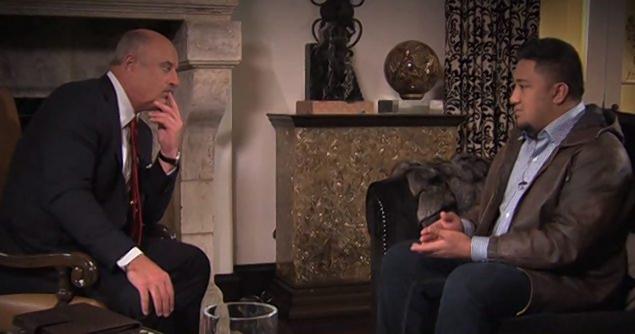
Ronaiah Tuiasosopo, the silly, sick man who hoaxed his alleged friend, Notre Dame star Matti Te’o, into a public humiliation that will shadow the rest of his life, has everything he wants now. “Dr. Phil” is featuring him on his show with a long interview—a match made in the stars, since Phil achieved his fame as a fake doctor, and Ronaiah his as a fake girlfriend to the most gullible college athlete in captivity. More interviews for the hoaxer will follow, with a book and movie deal near certainties. He behaved abominably, and now the American celebrity machine will reward him for it. I predict he’ll travel the same road as other bottom-feeders who have parlayed a lack of principles into fame, however brief. Joey Buttafuoco. Jessica Hahn. Octomom Nadja Suleman.”Tanning Mom”Patricia Krentcil. Levi Johnston. They all were boosted to semi-star status by being slimy, foolish, or both, and Tuiasosopo fits right in. Continue reading →
Illegal? Well, it depends. Just WHY are you breaking the law? Is it for GOOD or ILL?
Another hybrid ethics tale has surfaced! Cross pitbulls (or whatever a reporter thinks passes for one) with the gun law debate and the District of Columbia’s refusal to bring charges against David Gregory for breaking its gun laws on national television, and…bada bing!This (From the Washington Post) :
“The bloody paw prints travel the length of a city block, from a Northwest Washington street corner where police said an 11-year-old was mauled by three pit bulls to the welcome mat at the dogs’ owner’s home. Two days after the attack, in which police said all three dogs were fatally shot, the prints were a reminder of what happened at Eighth and Sheridan streets on Sunday afternoon. Police said a neighbor and an officer shot the pit bulls as they sank their teeth into the boy’s legs, arms, stomach and chest…An uncle of the victim’s said the boy was riding a new Huffy dirt bike with orange rims he had gotten for Christmas. The uncle said his nephew emerged from an alley onto Sheridan Street, where he collided with the pit bulls. D.C. police said the unleashed and unattended dogs attacked the boy before a neighbor who saw it went into his home, got his handgun and fired once, hitting one of the dogs. A D.C. police officer on bicycle patrol heard the shots, and authorities said he shot and killed the other two pit bulls…Of the shooters, the 34-year-old uncle said, “They did the right thing.”
“D.C. police said they are reviewing the incident and have left open the possibility that the neighbor could be charged with violating the District’s gun laws. A police spokesman would not say whether the gun was legally registered. Even if it was, using it on a D.C. street is illegal…”
Some Post readers were appalled that such a heroic action could result in prosecution. Wrote one, indignantly:
“That prosecutors would even consider bringing gun charges against the Northwest D.C. resident who saved an 11-year-old’s life by shooting one of three pit bulls that were brutally mauling the child speaks volumes about the mindless absurdity of the city’s gun laws, to say nothing of the zealous anti-gun sentiment that more broadly permeates officials’ thinking here…If the good Samaritan who acted quickly in this case to save a child possessed his gun unlawfully, police and prosecutors should by all means confiscate it. But contemplating further charges against him is as unconscionable as it is ridiculous.”
No, what’s ridiculous is to have gun laws that are enforced according to the policy that if a citizen does a good thing with his illegal gun, then it’s fine; only bad acts with guns will result in prosecutions. Continue reading →
The Daily Beast, through the words of columnist David Frum. calls the latest disgraceful example of the news media bending the truth to manipulate public opinion regarding gun control, “The Newtown Heckling Controversy,.” This places that website on this train wreck as a Big Lie player. The classic formula for a Big Lie smear, for those of you who have read your Goebbels followers, is to make a blatantly false assertion, make the target of the unfair accusation deny it, and then treat it as a legitimate “controversy.” There is no controversy here, only liars and those who want to benefit from the lie, because there was no “heckling.” The real news story here is that the United States has not only developed an arrogant and ethics-free media establishment that no longer can tell true from false, it is getting more brazen by the day. There must be accountability.
The incident—or, as journalists who have decided that their jobs are not to report the news but to drive public policy in their favored direction would call it, the opportunity—occurred during the testimony before the Connecticut legislature by a parent of one of the Sandy Hook victims. [Note:I believe strongly that such testimony is itself unethical. Sorry. Legislation should be based on research, analysis, balancing, and objective analysis of what is in the best interests of the the public. There is literally nothing these parents contribute to this process, other than confusion, emotion, and dramatic video footage. They are not experts on guns, violence, the culture, the Constitution or the law. Their position is the epitome of bias. Their opinions are accorded undeserved weight by the media and mush-headed lawmakesr because they have suffered a personal , as if suffering confers sudden wisdom and balanced perspective. I know the practice is virtually routine, but it does no good, a lot of harm, and should be opposed by anyone interested in competent government.] Tearful and distraught, the grief-stricken father, Neil Heslin, said,
” I don’t know how many people have young children or children. But just try putting yourself in the place that I’m in or these other parents that are here. Having a child that you lost. It’s not a good feeling; not a good feeling to look at your child laying in a casket or looking at your child with a bullet wound to the forehead. I ask if there’s anybody in this room that can give me one reason or challenge this question: Why anybody in this room needs to have an, one of these assault-style weapons or military weapons or high-capacity clips.”
He waited, and glanced around the room. Then he said, “Not one person can answer that question!” Whereupon one clear voice with a several others behind it call out,“The Second Amendment shall not be infringed!”
A moderator then says, “Please no comments while Mr. Heslin is speaking. Or we’ll clear the room. Mr. Heslin, please continue.”
This is what happened..this is what obviously happened. Heslin asked the occupants of the room a question posed as a challenge. Pro-gun advocates did not answer, assuming that despite the ambiguous form of the query—Heslin is not a skilled public speaker—it was a rhetorical question. Apparently Heslin didn’t think it was rhetorical, however, because he waited, as if for a response, and then made a statement that concluded unfairly, inaccurately and misleadingly that nobody in the room “can answer the question.” Predictably, a few then did answer his question, only to get slapped down by the moderator.
The headline writer at the Connecticut Post described this scene—falsely—as “Father of Newtown victim heckled at hearing.” That is a lie. Anyone who watches the video and equivocates in calling it a lie is allowing their judgment to be completely liquified by confirmation bias, or trying to facilitate a deception. Continue reading →
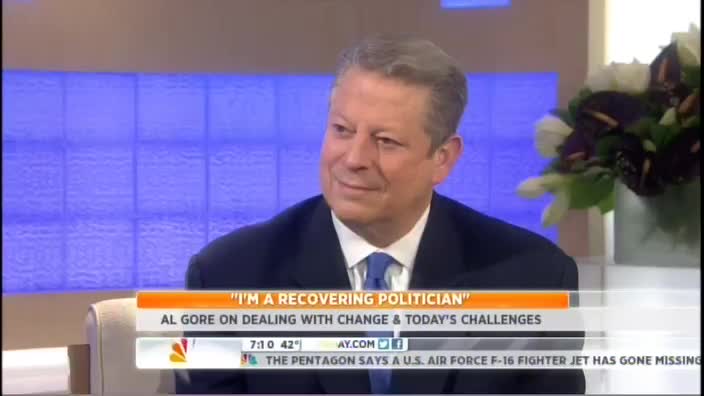
I have no illusions about Al Gore, but he will always occupy a warm place in my heart.
My first run-in with Al Gore was long ago. I had taken over the president’s job at a struggling national health promotion organization, and Sen. Gore was our angel in Congress. Health care screening was his mission back then, and he opened doors to sponsors, allies and funding around the country. Then, one day, he stopped answering our phone calls. We were curtly told that Sen. Gore was no longer the Herald of Preventive Health Care. Now he was the guru of something called “the information super-highway,” and we would have to fend for ourselves. (The organization went belly-up a year later). Thus I learned that Gore was nothing if not opportunistic, and perhaps not the guy you would want to be in a World War II foxhole with if he spoke fluent German.
Still, I can’t imagine how hard it must be to be the unlucky loser of the highest office in the land in one the nation’s rare popular vote/electoral vote splits, and I admire the fact that Al’s not in a rubber room by now. I thought his concession speech in 2000 was one of the high-points of political nobility during my lifetime, and the Saturday Night Live appearance that was Gore’s farewell to politics will always stand as one of the bravest, quirkiest, saddest, funniest, most fascinating public breast-barings in media history. Al is a phony, and an opportunist, and I wouldn’t trust him as far as I could throw him, but he’s lived out a roller-coaster life in the hot lights of center stage, and I’m not certain I could do it any better. Continue reading →
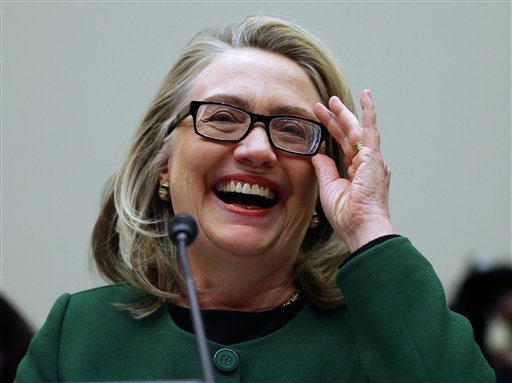
I know I neglected my duty to highlight a truly nauseating example of American political shams at their worst with last week’s dual appearances by outgoing Sec. of State Hillary Clinton on the Hill, where she was ostensibly going to inform Americans what really happened in Benghazi, and why. I apologize. I was preoccupied with the earth-shattering matter of Beyonce’s lip-syncing, and also, I admit, was having a hard time enduring both Lance Armstrong’s act and a Clinton performance in such close proximity. I’m only human, after all. Still, I need to go back a week and examine, if briefly, the ethics stinker that was Hillary on the Hill:
1. Members of this administration keep using the word “responsibility,” but to paraphrase Inigo Montoya, I don’t think the word means what they think it does. Clinton had stated unequivocally that she “accepted full responsibility” for the Benghazi tragedy in October, reiterated that statement last week, and then repeatedly shifted the blame to others or otherwise denied responsibility. She wasn’t responsible for the decisions regarding security, she said. It wasn’t her fault that she didn’t know about cables from Ambassador Stevens’ a month earlier requesting more protection, because “1.43 million cables come to my office. They’re all addressed to me.” Well, who’s “responsible” for a system in which urgent, perhaps life and death messages not addressed to the Secretary of State never reach her desk? She blamed a lack of funding ( a claim that appears to be untrue) was also responsible for the tragedy, and naturally, she can’t be held responsible for that. Clinton’s definition of “responsibility” reveals itself during her testimony as meaning responsible for fixing the problems and systemic failures that led to the deaths of the four Americans, but not really accepting responsibility for what happened–responsibility, in other words, without accountability. Continue reading →
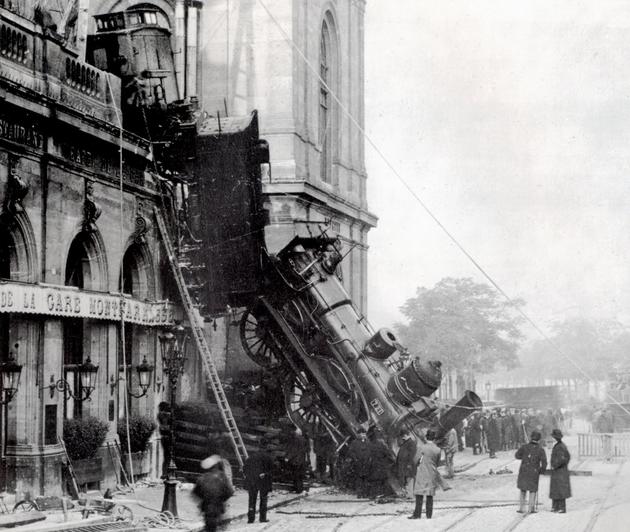
As predicted, this ethics train wreck keep getting bigger.
There was a lot to wince about in Diane Sawyer’s “exclusive” interview two weeks ago with former Congresswoman Gabriella Giffords and her husband, Mark Kelly. The Arizona couple announced their intention to launch a non-profit organization dedicated to more effective anti-gun violence measures, concentrating, predictably, on the prominent features of the maniac’s rampage in Tucson that left Giffords with brain injuries that will impede her for a lifetime. Nothing to wince about regarding the effort, but Giffords’ diminished state—she can speak in only short burst of words, cannot see well out of one eye, and has difficulty walking—is tragic. It reminded me how unconscionable it was that she held her post in the Congress for more than a year when it should have been clear that her disabilities precluded her functioning as a Representative. The disturbing feeling also arose that Giffords, in her current pathetic condition, is now like the children President Obama used as window dressing for his gun-related Executive Orders announcement at the White House, an exploited figure of sentiment and public manipulation being used in the anti-gun wars. Her name was listed as the author of a first person op-ed in USA Today that contained sentences and perhaps thoughts that she cannot possibly compose. Diane Sawyer told us that she will be dragged into Congressional offices with her husband to seek support from her former colleagues, who will be forced, as Sawyer said, to say no “to her face.”
The most substantive wince, however, came from a statement of “fact” by Mark Kelly, who told Sawyer this:
“You know, how do we get to the point where 85 percent of the children in the world that are killed with guns are killed in the United States. That is a sobering statistic.”
This week a fly was buzzing around the President’s head at a White House event this week, and photographers got multiple shots of the insect as it lighted briefly on various parts of the President’s face. One comic use of such a photo is, I suppose, to be expected; we all know a fly on President Bush would have been all over the media. But Drudge has used the photos for two days now. (No, I’m not showing it, and I’m not sending Drudge links for being a sophomoric jerk.) It’s not funny. It’s unfair, mean-spirited, rude and disrespectful, and would be for any President.
Perhaps this week will go down in history as the Week of “What Difference Does It Make?”.
What difference does it make whether or not the Obama Administration misled the public for days about whether the Benghazi attack was a spontaneous demonstration over a video or a planned terrorist attack, indignantly asks Hillary Clinton. What matters is that four Americans died!
What difference does it make that Lance Armstrong doped to win his titles and lied about it for 15 years, poignantly ask Armstrong’s defenders. What matters is that his foundation helped cancer sufferers!
What difference does it make whether or not the version of Beyonce singing “The Star Spangled Banner” Americans heard during the Inauguration was live or studio-recorded, asks comic-turned radio pundit Dennis Miller. She’s hot!(By the way, my conversation about this issue with Bill O’Reilly before Miller issued his verdict—and referred to me as “Daddy Warbucks”—can be viewedhere.)
Now we have a much ridiculed scandal over the fact that Subway’s vaunted “footlong” subs are in fact only around 11 inches, which has spawned viral videos and at least two lawsuits. Ethically-challenged Chicago Trib blogger Eric Zorn carries the flag for this latest army of “What difference does it make?” lie enablers. His argument, predictably, comes down to a cross between the Stephen Colbert-Jon Stewart market-tested “Let’s exaggerate this real issue and make it look ridiculous” formula and the Golden Rationalization, “Everybody Does It”… Continue reading →



 Ethics Alarms