Ethics Check: Sen. Bob Menendez’s Dominican Republic Sex Scandal

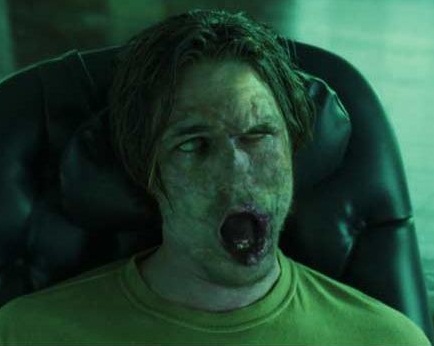
“…and how could you see him with that gray thing covering your face?”

The Daily Caller is breathlessly promoting this as a sex scandal, so I should let it speak for itself:

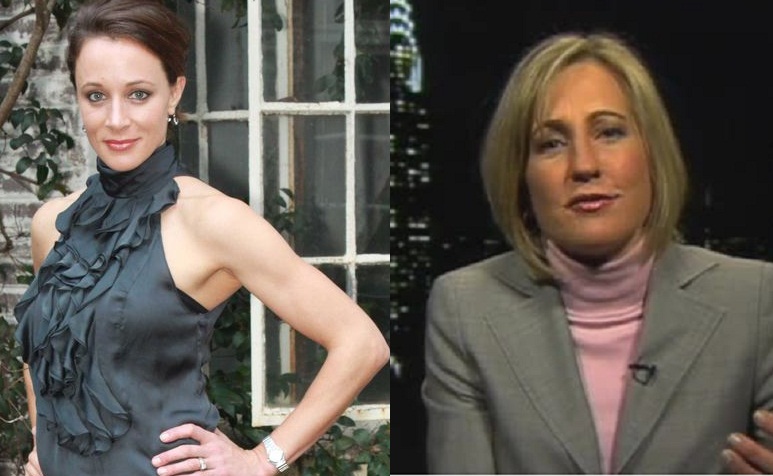
“Two women from the Dominican Republic told The Daily Caller that Democratic New Jersey Sen. Bob Menendez paid them for sex earlier this year.
In interviews, the two women said they met Menendez around Easter at Casa de Campo, an expensive 7,000 acre resort in the Dominican Republic. They claimed Menendez agreed to pay them $500 for sex acts, but in the end they each received only $100.”

Assuming that the story is accurate, which we cannot know at this point (if ever), what does it signify regarding Menendez’s fitness to be a U.S. Senator? Well, he didn’t break any laws: prostitution is legal in the Dominican Republic. The Senator wasn’t betraying his wife: he is divorced.

The incident reflects badly upon his character if, as the women allege, he agreed to pay them one fee and stiffed them (poor choice of words, sorry) cheated them by paying them less, with a “take it or leave it, I’m a U.S. Senator” brush-off. That’s truly unethical and mean behavior, and would demonstrate actual contempt for women (as opposed to much of what Menendez’s party has been labeling as such this election season) as well as a penchant for abusing power and breaking his word.

However, the Senator could also be a victim of some women seeking a pay-off after a commercial dispute, or a failed shakedown. Given the uncertainty, I don’t believe it’s fair for this incident to hurt Sen. Menendez’s standing with his constituents or the public, and The Daily Caller was wrong to publicize it.
_____________________________

Facts: Daily Caller

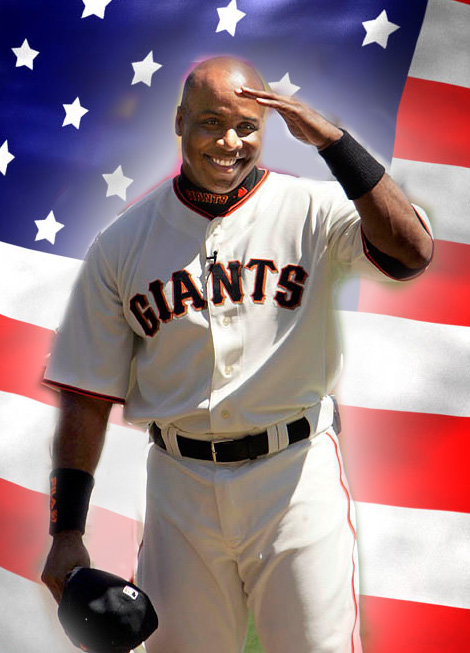
Graphic: Daily Caller

The Benghazi Express: It’s Hard To Hide An Ethics Train Wreck

Did you hear the gross and inappropriate remark Joe Biden made to the father of one of the soldiers killed in the Benghazi attack? Of course not! Because it makes the Vice President appear to be a clueless and insensitive fool…we can’t have THAT…not before an election!

It’s pretty simple, really. The American people have a right to know what really happened in Benghazi, and as new questions keep arising, the appearance of a cover-up on the part of the Obama Administration keeps getting more difficult to deny.

  • On 9/11 of 2012, an armed attack on the American embassy in Libya left four dead, including the Ambassador. After the attack, the only official U.S. comment was on the website of the Cairo embassy, which had experienced a violent protest, disavowing an anti-Islam film trailer that had been posted on YouTube, essentially suggesting that the violence had been provoked by offensive American speech.
  • Many days afterward, that remained the official position of the Obama Administration, to such an extent that ten days after the raid the U.S. Ambassador to the U.N. visited all the Sunday talk shows to describe the attack as spontaneous, not planned terrorist actions, and sparked by indignation over the video. President Obama went before the U.N., and again disavowed and blamed the video. Continue reading

Forget Balancing: Lance Armstrong Is a Villain

A constant conundrum faced by every culture is how it should categorize significant individuals whose positive contributions to society and civilization are marred by other acts that range from the unethical to the despicable. How much bad can a great man do and still be called “great”? How much wrong can a good woman engage in and still fairly be remembered as “good”? Can one wonderful act erase a lifetime of bad conduct? Are some bad acts so terrible that nothing can compensate for them? Every real human being is going to yield to some temptations, make some bad choices, be selfish, be cruel, lie, or worse. If we insist that all our heroes have an unblemished record in every aspect of their lives, we simply forfeit our heroes.

One reaction to this persistent dilemma is that we tend to be reluctant to look under the rock of a heroes accomplishments for fear that we will be disillusioned, or once the rock is lifted, we will attempt to rationalize into invisibility the ugly things we find there, or insist that they don’t matter. Of course they matter. It matters that Thomas Jefferson, who gave this nation its beating heart, didn’t pay his debts, cheated his friends and refused to live up to his own ideals. It matters that Clarence Darrow, who saved over a hundred men from execution, was a terrible father and husband and an unethical lawyer. It matters that Arthur Miller, whose plays dramatized the plight of the aging worker and the dangers of political persecution, rejected his mentally-challenged son, leaving him institutionalized and without contact from his father, though he knew who his father was. Charles Lindbergh, Jackie Kennedy, Diane Fossey, Thomas Edison, George Washington, Andrew Jackson, Frank Sinatra, Ted Kennedy, Pete Rose, Lillian Hellman, Walter Cronkite, Hillary Clinton—the list of the great, near-great, lionized and admired who behaved less than admirably or worse in significant ways can circle the globe. In assessing their character, as well as whether their lives deserve to be regarded as positive or negative influences on their society, fellow citizens and civilization, all we can do is apply a complex balancing formula, with factors in their lives weighted according to ethical principles, experience and our own priorities.

The question of how this balance should be applied has been raised in recent weeks in the wake of the final verdict on Lance Armstrong’s cycling career, which was decisively removed from the categories of “alleged misconduct,” “controversies,”and definitely “witch hunts” for all time as mountains of documentation, lab tests, and testimony moved it squarely into the categories of “outrageous cheating’, “criminal activity”, “corruption” and “fraud.” Continue reading

Cognitive Dissonance, Corruption, and Patrick Moran

This video creates a major cognitive dissonance problem for me.

James O’Keefe, of ACORN take-down infamy, who engages in unethical journalistic practices to catch conservative foes in incriminating or otherwise damning statements, once again succeeded in exposing serious corruption, this time in the Virginia Democratic Party and more specifically on the staff of Northern Virginia Congressman Jim Moran. O’Keefe and his “Project Veritas” are the epitome of “the ends justify the means” philosophy of political warfare, and they are neither trustworthy nor admirable. Nonetheless, the video his dishonest methods produced provides important information to the public, and its message should not be ignored or minimized because it is the product of lies and a hidden camera.

Jim Moran is my Congressman, and has been for decades. There is no question that Moran is untrustworthy; there is substantial evidence that he is corrupt and has the values of a thug. We can add to this evidence that fact that his son Patrick, as the O’Keefe video shows, was happy to volunteer information to a starnger he thought was an aspiring voter fraud conspirator just how to cast Democratic votes for a hundred or so Virginians who weren’t going to visit the voting booth. Patrick Moran was the Congressman’s campaign field director at the time; he is also the nephew of Jim’s brother, who heads the Virginia Democratic Party. Patrick has since resigned, saying, naturally, that he made “a mistake.” In his exit statement to the media, Moran said:

“In reference to the ‘O’Keefe’ video, at no point have I, or will I ever endorse any sort of illegal or unethical behavior. At no point did I take this person seriously. He struck me as being unstable and joking, and for only that reason did I humor him. In hindsight, I should have immediately walked away, making it clear that there is no place in the electoral process for even the suggestion of illegal behavior: joking or not. In regards to my position on the campaign, I have stepped down because I do not want to be a distraction during this year’s critical election.”

Watching the video, his characterization of the incident is risible, but you can decide for yourself. In my view, Moran endorses illegal and unethical behavior by having the conversation, and not immediately responding to the initial inquiry by saying, “Neither this campaign, nor this party, tolerates what you are suggesting, which is an illegal attempt to subvert the Democratic process. What’s your name? I’m calling the police right now.” Continue reading

Ethics Dunce: The New York Post

Autumn Pasquale appears to have been murdered by the two boys who lived next door because they wanted her bicycle.

From today’s New York Post:

“A New Jersey mom ratted out her teen sons for the murder of a 12-year-old girl after reading a Facebook posting hinting that one of them wanted to go on the lam, law-enforcement sources told The Post.”

Wrong. A courageous mother made the most difficult ethical decision of all, placing her duties as a citizen,  a member of the community and a neighbor above her duties of loyalty and love as a mother, to report her two sons for the murder of the 13-year-old girl who lived next door.

The Post’s use of the term “ratted out” is irresponsible and offensive. “Ratting out” is a pejorative term for reporting crimes to the police, and the foundation of a resilient and warped ethical code that works to the benefit of inner city thugs and gangs while undermining efforts to combat crime. The mother is an Ethics Hero, and deserved respect and admiration from the Post, not derision as a “rat.”

You can read the Post story here. A more responsible version is here.

The Global Warming Debate Is The World Series of Confirmation Bias

Confirmation bias is the dastardly human thought tendency that makes objectivity virtually impossible, and fair analysis nearly so. It is the human instinct to view external facts and events in such a way that they confirm preexisting beliefs, or, if they challenge these beliefs, to find reasons to distrust the facts or explain them away.

A line in a Washington Post book review caused me to realize that nothing  exemplifies confirmation bias at work better than the global warming controversy. It was a review by Post business editor Alan Sipress of “Spillover,”  a new book about how pandemics spread. He wrote:

“This year, a mild winter and an unusually hot summer — which look suspiciously like results of man-made climate change — yielded a bumper crop of virus-carrying mosquitoes. The result is an unprecedented outbreak that has sickened people in almost every state.”

Wait a minute: why does the past year’s mild winter and unusually hot summer “look suspiciously like results of man-made climate change”? Were there never mild winters with scorching summers before scientists developed climate change models? And why do those two factors, when paired, “look suspiciously” like man-made climate change? What about the winter and summer of 2012 screamed “man-made”? Continue reading

Ethics Quote of the Week: Ann Althouse

“The silent sadness of the CBS newswoman’s face at 0:29… hilarious. So funny that these newsfolk don’t activate actorly skills to project the appearance of professionalism and neutrality.”

Attorney/blogger Ann Althouse, commenting on the doleful expression on CBS newswoman Norah O’Donnell’s face after the report that the network’s focus group of undecided voters scored last night’s debate a victory for Mitt Romney.

The video:

Althouse’s observation is perceptive, as hers often are. Although many studies have found that the facial expressions, body language and vocal inflections of broadcast news journalists influence audience perceptions and opinions, and carry at least as much potential for bias and slanted reporting as the news content itself, few of O’Donnell’s colleagues, if any, make any effort to ensure that these non-verbal communications are objective as a matter of professionalism and fairness. This is because broadcast journalism has largely abandoned fairness, objectivity and professionalism as priorities or industry standards. Continue reading

The Ryan Soup Kitchen Photo: Everybody Does It, But It’s Still Unethical

In the early 1960s, as the Great Leap Forward led China into political, social and economic disasters, the opposition to Mao Zedong’s leadership grew; Chairman Mao’s reaction was to purge the party leadership of intellectuals and officials in what is now termed, “the Great Proletarian Cultural Revolution.”

Mao Zedong’s hold on the leadership of China was shaky as he passed 70; even slaughtering more of his enemies and rivals wasn’t working. On July 16th 1966, Mao sought to debunk rumors that he was frail and ill by staging photographs of him vigorously swimming in the Yangtze River.  It was called, “The Swim Seen Round the World.” The Chinese press did its job, describing Mao’s cheeks as “glowing” and “ruddy,” his stroke steady and strong. “Our respected and beloved leader Chairman Mao is in such wonderful health!” one press report enthused.

In the West, however, there was more skepticism. Time reported that Mao swam “nearly 15 km in 65 minutes that day–a world-record pace, if true.” The photos of the swim, which showed an oddly solemn group of floating heads, were widely believed to have been doctored. As it turned out, the photos were real; Mao really did take a swim, though the event was staged, and nobody knows how long the swim lasted or how far Mao paddled. What are such photo ops? Are they deceptive? Are they ethical? Continue reading

Ethics Alarms Verdicts: The Second Debate

Some Ethics-related conclusions on Wednesday’s second Presidential debate:

Were the candidates uncivil?

I didn’t think so. There were a lot of Twitter comments about Gov. Romney being disrespectful to the President. The deference due to the President of the United States isn’t an issue when debates hew to the formal, detached format of the past. In those debates, the tone of the exchanges are so muted that the two candidates could be in different time zones. Once a different tone is set, with either candidate directly challenging statements while the other candidate is speaking, that tradition has fled, as it did last night. The challenger to a sitting President can hardly be told that he needs to be deferential in a debate; that is the equivalent of asking him to fight with one hand tied behind his back. I thought that both candidates were within the bounds of civility under the circumstances. It was certainly not the civility that I complimented in the second debate—it was a heated, sometimes rancorous argument, but it was the argument of two passionate, forceful, serious public servants, and it served the public well. Neither candidate displayed the contemptuous, rude attitude that Joe Biden adopted in the Vice-Presidential debate. Biden crossed the civility line, but the President and his challenger did not.

Was the moderator biased? Continue reading

Debate Alarm: The Fake Statistic Strikes Again

Outrageous.

That damn statistic again. Well, there goes THAT head!

Candy Crowley, disgracefully, chose another question at a Presidential debate—the last one was 12 years ago—based on the completely false and misleading statistic, made up by activists, that women earn “72%” of what men do in the workplace, suggesting that there is widespread gender discrimination in wages. It’s not true; it hasn’t been true for decades. It’s a myth, and one that misleads the public by being given this kind of publicity and credibility. ( The question Crowley allowed even lowered the fake percentage an extra, and fake, 5% from the “77%” Bernard Shaw negligently used in a question to Joe Lieberman. in 2000.) I’m glad Romney didn’t dignify it with a direct answer—he was placed in the position of either telling the questioner, “That stat is imaginary,” or furthur imbedding it by treating it as reality.

I’m generally a fan of Candy’s, but this was irresponsible, and I’m disappointed in her. Public policy debate shouldn’t be framed by simple-minded, misleading factoids, and it is the duty of journalists to insist on facts.