Ethics Dunce: Tucson’s NBC Affiliate KVOA

Next  Monday night’s“Law & Order: LA” episode involves “a crazed gunman” who “goes on a rampage at a political rally, killing a state senator.” Sound’s upsetting. Hmmmm...where have I heard of something like that happening?

Oh, right.

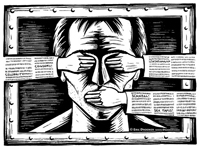
Tuscon, Arizona, where the NBC affiliate, KVOA  has decided that residents are not only too traumatized  to view such an episode “ripped from the headlines,” but apparently to be in the same city where anyone else can view it. Station president and general manager Bill Shaw explains that “the Tucson community is still going through the healing process” and NBC’s show has too many similarities to “that horrible day.” KVOA will broadcast the episode on May 17 starting at 1:05 a.m, because…gee, I can’t figure out what the logic is. To make the show as difficult and inconvenient as possible to see for those in the Tucson area who want to see it?  To punish NBC for broadcasting it at all? This is paternalism of the most offensive and insulting kind.

The censorship of the TV episode is an abuse of the station’s responsibility to the community, and if I was in a position to do so, I’d pull KVOA’s license. Who are the station execs to decide what network fare is or isn’t too traumatic for its viewers? Why would a Tuscon resident who would be traumatized by a fictional drama based on January’s tragic events in the city watch the show? Why shouldn’t a viewer who feels up to the task be allowed to see what everyone else in the country is watching? If the episode is a masterpiece, or sets off a national debate, what right does Bill Shaw have to take Tucson citizens—of all people— out of the debate?

The station’s decision is unfair, disrespectful, presumptuous, an abuse of power and, as is often the result of such ingredients, utterly, utterly stupid.
The Uncommon Common Dilemma

Emily Dickinson, he's not.

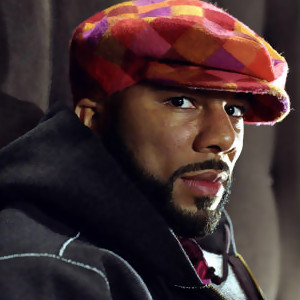
It is unusual to encounter a situation where there is no course that doesn’t violate some legitimate ethical principle. The dilemma involving rapper Common’s controversial invitation to the White House is one of them. None of the options are strictly ethical, and this has led advocates both for and against his inclusion in Michelle Obama’s poetry event, “An Evening of  Poetry at the White House,” to behave unethically themselves. Let’s see: what comes closest to being ethical conduct of the possible outcomes?

Option A: Michelle has her poetry event, but doesn’t invite any mainstream rapper. Ethical breaches: Incompetence, bias, censorship, dishonesty.

Rap is the most dynamic and popular form of poetry in America today. Having an event to “showcase the impact of poetry on American culture” at the White House that excludes popular rappers is absurd on its face; it would be like the White House celebrating the influence of sports in American culture and omitting football. Continue reading →

What Do you Call A Newspaper That Defends Outrageous Journalistic Practices? How About “Di Tzeitung”?

If Di Tzeitung had covered the Civil War

If I could pronounce it, the Brooklyn-based Hasidic newspaper Di Tzeitung would be useful shorthand  for “shamelessly using rationalizations to defend indefensible conduct.”

Last week, the newspaper ran the now-familiar photo of President Obama, Secretary of State Hillary Clinton, and others in the White House Situation Room, except that in Di Tzeitung’s version, Clinton  and the only other woman present, Director for Counter-terrorism Audrey Tomason, had magically vanished. Di Tzeitung had airbrushed them out, Politburo-style.

Of course, publishing the photo of a historic news event and altering it to convey misleading or false information (in this case, “Hillary wasn’t there”) is a substantial and wide-ranging violation of core journalism ethics, a breach of the reader’s trust, unfair, dishonest, misleading, incompetent and disrespectful. The altered photo was alternately condemned and mocked all over the media and blogosphere. Yet Di Tzeitung is largely unapologetic, and made it clear that it would do the same thing again if the opportunity arose. In a prepared statement, the editors explained why they did nothing “wrong”…well, almost nothing…challenging the Olympic record for rationalization by a news organization along the way: Continue reading →

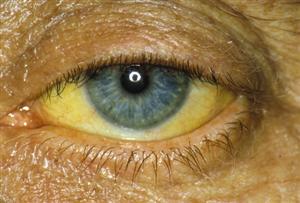
The Jaundiced Eye of Noam Chomsky

I’ve been enduring, teeth gritted, the America-hating propaganda of Noam Chomsky since my college days. He is a brilliant linguistics professor who has credibility as a social critic only because his world view—briefly put, that the United States is evil, and anything that indicates otherwise is the result of a conspiracy–has been so supportive of and nurturing to the extreme Left. It is hard to quantify how much harm he has done to this nation or how many potentially productive minds, foreign and domestic, that he has warped with his bile, but I am sure it is substantial on both counts.

We are fortunate, I guess, to have his assessment of Osama Bin Laden’s death, recently published and available for reading here. The piece is res ipsa loquitur that the man is so consumed with unreasoning hatred for his country that he cannot process the truth or think straight, but I know that plenty of Chomsky followers will be cheering. Thus I am grateful that Christopher Hitchens has authored an admirable take-down of the professor, here.

The Great Norwalk Kindergarten Heist

The Tanya McDonald controversy

A homeless woman is facing 20 years in prison if she is convicted of stealing over $15,000 of Norwalk, Conn. taxpayer funds. The details of her crime are controversial: she lied about her residence to get her child into what she believed was a better school system, but one that, as non-resident, she was not entitled to use. The details also create a tangled mess of law, justice, ethics, fairness, compassion, public policy, finances, class and education.

Let’s try to unravel it, shall we? Continue reading →

Guess Who Invited Donald Trump to the White House Correspondents Association Dinner?

OK, who's the wiseguy that brought the skunk to the picnic?

I missed it, but the Washington Post of April 28 revealed who it was that invited Donald Trump, fresh from a month of trying to make the President’s citizenship a campaign issue while denigrating Obama’s integrity, legitimacy, and honesty, to the annual light-hearted White House Correspondents Association dinner, where the President is always a featured “performer.” It was buried in the gossipy Style section, but there was the culprit. Who invited him?

The Washington Post invited him, that who.

Inviting Trump to that event is in approximately the same good taste as inviting blogger Pamela Geller to a Park51 (a.k.a. “the Ground Zero Mosque”) controversy, or allowing a group of “Truthers” to crash a testimonial to Dick Cheney.

What could the Post have been thinking? “He’s a fascinating figure to Washington right now!” the Post’s representative breathlessly explained on the 28th. We are to assume, then, that if the dinner was being held this week and Osama bin Laden hadn’t been dispatched (most respectfully, of course) to Davy Jones’ Locker, the Post might have invited Osama’s bullet-riddled corpse to slump at its table.

The Post was stirring the pot, is what it was doing, and that is not the media’s proper of ethical role. If the intention was to set up Trump, who had been called everything from a joke to a fool to a thug to a racist by various Post writers only days before, to be insulted to his face by host Seth Myers and the President, that is taking sides in the news rather than reporting it. If it the intent was to position volatile elements together in the hopes of sparking a story, that is unethical  journalism too.

The paper got both results that it presumably desired: Trump was a sitting duck at the dinner, and then he embarrassed himself by later complaining about the skewering he so richly deserved. It also, not for the first time, showed how rusty those old ethics alarms are at the offices of Washington, D.C.’s most prestigious newspaper.

[Thanks to sharp-eyed Post reader Robert Sher.]

Ethics Hero: Washington Post Columnist Carolyn Hax

I’m breaking some precedent here: I don’t usually pick Ethics Heroes based upon writing alone, and I don’t usually reprint long sections from someone else’s column. But relationship advice columnist Carolyn Hax has long displayed a brilliant feel for ethical analysis, and expresses it sharply and entertainingly to the great benefit of her readers. Good general readership ethical analysis is all too rare, and she deserves accolades.

Today she provided as clear and as deft a lesson in how responsibility, honesty, fairness, bias and accountability work as I can imagine, while chiding a man who wants to rescue a younger woman from the relationship he didn’t have the guts to pursue herself. It shows her at her best, and is impeccable ethics as well. Brava!

Here is the inquiry and Hax’s response: Continue reading →

Comment of the Day: “Death Photo Ethics”

Tim LeVier elaborates on the ethical awkwardness of President Obama’s stated rationale for not releasing Osama’s death photos, the topic of the post, Death Photo Ethics: Continue reading →

Death Photo Ethics

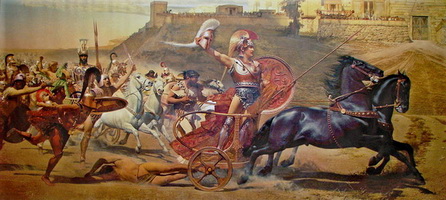
Even before Achilles dragged the corpse of Hector behind his chariot through the dust around the walled city of Troy, the tradition of demoralizing the enemy by degrading and displaying the bodies of its dead heroes was well-established. The United States was horrified when this was done to our fallen servicemen in Somalia, and it is one of the most barbaric and unnecessary practices of war.  While the Geneva Convention doesn’t mention the displaying of enemy corpses, a 2005 publication by the Red Cross called Customary International Humanitarian Law does. It was written to address issues that international treaties omitted, and its Rule 113 reads:

“Each party to the conflict must take all possible measures to prevent the dead from being despoiled. Mutilation of dead bodies is prohibited. Continue reading →

In Search of Accountability, Fairness, Justice and a Champion: the Unending Persecution of Anthony Graves

Job would pity Anthony Graves

Governments and other bureaucracies are capable of unimaginable callousness, stupidity, and wrongful conduct, allowing individual fools to multiply their power to harm exponentially, and then to see an inhuman computer-driven monstrosity run amuck as everyone denies responsibility. You could not devise a better example of this process than what Texas is doing to Anthony Graves.

He is an innocent man convicted of murder in 1994 who was released last October after spending 18 years in prison, condemned to death. He had been convicted with fabricated evidence and coached testimony employed against him by former Burleson County District Attorney Charles Siberia, and a state investigation got a Texas judge to set Graves free. But the maw of Texas bureaucracy wasn’t through ruining his life. Continue reading →