One of the reasons I launched The Ethics Scoreboard and later Ethics Alarms was that I felt the media did not recognize ethics stories and failed to cover them. Well, more ethics stories are finding their way into the news, but true to the warning “Be careful what you wish for,” the reports usually botch them, and get the ethics lessons wrong. The saga of Enzo and the “Barefoot Contessa” was a particularly nauseating example, but there have been others recently. For example… Continue reading
Journalism & Media
The Strange and Telling Case of the Illiterate Novelist
I have noticed of late a disturbing trend, the literary equivalent of those who play their car radios and sound systems at ear-splitting volume with the windows down, or youths who converse in shouts in public places. The trend is proliferation of the proud and unapologetic illiterates, authors of e-mails, blog posts or even published material who regard the basics of punctuation, grammar, spelling and rhetoric as an annoying inconvenience, and who not only pay little heed to these archaic matters, but also display no regret about the barely readable products that result.
At this point, I am less concerned with why so many of those who communicate in writing are so shamelessly sloppy, and more interested in what the trend signifies for our society. Perhaps some insight can be gained by examining a recent exchange between a grammar and spelling-challenged novelist and a reviewer of her work on a book review blog called “Books and Pals.” Continue reading
The Ethics of Nailing Barry Bonds
Baseball’s all-time home run king Barry Bonds is finally on trial for perjury and obstruction of justice relating to his 2003 testimony before a grand jury that he never knowingly used steroids. It looks like he may get convicted too, even though the one man who could harm him most, his trainer and childhood pal Greg Anderson, once again has refused to testify and is in jail for contempt of court. (Many—including me— believe that Anderson has a promise of a pay-off from Bonds.)
Essentially everyone who isn’t actively trying to protect Bonds, completely ignorant of the facts of his career, or mentally handicapped knows he was lying and knew it at the time of the grand jury hearings. Barry has been both lucky and relentlessly dishonest, however, seemingly happy to spend the millions he made while cheating and permanently damaging his sport, and pleased with himself for retiring in possession of baseball’s most prestigious home run records, the most homers in a single season, and the most homers in a career. That Bonds achieved these, and several of his Most Valuable Player awards, while enhanced with the surreptitiously induced body chemistry of a Bulgarian weight-lifter in the 1972 Olympics doesn’t seem to faze him at all. Meanwhile, critics are dredging up the old rationalizations to defend Bonds, none of which apply to his current fix. Continue reading
The Message or the Messenger: The Mysterious Foundation For A Better Life
The Foundation for a Better Life sponsors those slick TV spots promoting ethical values like kindness, sportsmanship, charity, and sacrifice. I have long wondered where they came from, and belatedly visited the organization’s website, Values.com, where I spent quite a while clicking through their extensive links to descriptions of core ethical values and inspiring stories. Not bad. The only deficiency I could see with the site was the lack of any explanation regarding how the Foundation was funded, who ran it and who was responsible for it. The site describes itself thusly:
“The Foundation is a non-profit 501(c)(3) organization, started in 2000. Our sole objective is to promote positive values, using print and broadcast media.
We want the stories we share about the positive actions and values of others to serve as inspiration for someone to do one thing a little better, and then pass on that inspiration. A few individuals living values-based lives will collectively make the world a better place.
The Foundation does not have a political or religious agenda. Our values are selected with the hope that most individuals would find these values universal, encouraging, and inspiring. The Foundation acknowledges that each person has a unique lens through which he or she views the world. Naturally there are religious, nonreligious, political, and cultural views that give meaning to our lives. Our objective is to provide a wide spectrum of values without any intended agenda or slant and provide an uplifting message around each one.”
And this appears to be exactly what the Foundation does. Continue reading
Sunday Ethics Blast: An Overly-helpful Teacher, A Hands-on Youth Counselor, A Poverty Program Slacker and a Redeemed Ethicist
Here are some quick links and observations to get your ethical juices going this Sunday… Continue reading
One More Reason To Defund NPR, or “Boy, Did I Ever Go Into The Wrong Profession!”
The primary reason to end funding for NPR and PBS is that the government shouldn’t be funding competitors of private broadcasting organizations.
The second reason is that anything public broadcasting does that is sufficiently popular and valuable (“Sesame Street,” “The Prairie Home Companion,” “Car Talk,’ et al.) will be picked up by commercial stations, and those programs that are not should not be underwritten by taxpayer dollars.
The third: NPR’s audience is narrow and affluent, and doesn’t require a public subsidy, particularly when cutting down the budget deficit is a national priority.
Finally, NPR can’t be trusted with public funds. It claims to be objective, but isn’t; it is mismanaged, and isn’t appropriately frugal with taxpayer funds.
This comes under the final category. The salaries of the top NPR talent do not reflect restraint in expending precious resources. Continue reading
Final Ethics Verdict on TSA’s Feel-Up Pat-down
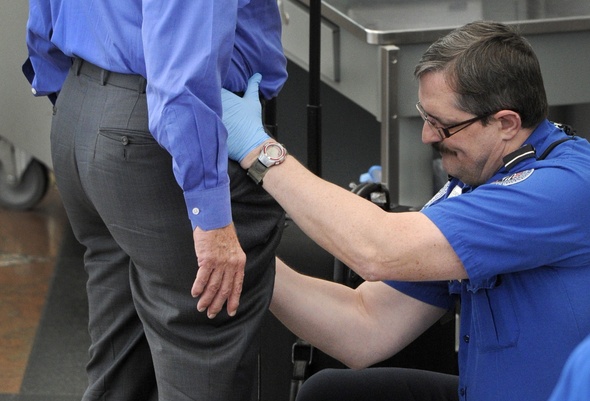
I was flying this week, and the security procedures were smoother than ever. Now I am certain that my molestation at check points last year was unethical, and have sufficient evidence to conclude that it was based on government incompetence and willful disregard for my comfort, dignity, and rights. I am also wondering, more than ever, if the ardent, supposedly liberal defenders of the indefensible feel-up pat-downs have learned anything about the dangers of blind government obeisance and partisan loyalty. I hope so.
The saga so far: Continue reading
Unethical Website of the Month: Renew America
Renew America, an extreme conservative political blog, wins this month’s unethical website distinction by virtue of running a jaw-dropping article by Bryan Fischer, one of the blog’s founders. This is a tough one, because I would normally focus my attention on Fischer himself, whose views are at best absurd and at worst insane. But he clearly believes them, so I cannot fairly say he is lying. The website, however, assuming there are others involved in its management other than Fischer, is recklessly misinforming its presumably ignorant and gullible readers, since no one who isn’t reckless and gullible could possibly finish reading a piece including historical and legal fantasy like this: Continue reading
Face-to-Face With a Subject
In February, my monthly legal ethics course for the D.C. Bar had a surprising attendee: former Senator Arlen Specter. I didn’t realize he was among the attendees until the break, when he walked up to me, looking like the photo of him I had placed in a PowerPoint presentation the very night before. He had a big smile, and barely gave me a chance to blurt out, “Hello, Senator,” before he grabbed my hand in a steel grip, pumped it, looked directly into my eyes, said, “Good job!” and slapped me enthusiastically on the back. Continue reading
Unethical Quote of the Week: Detroit News Business Editor Sue Carney

"The new model is so ugly that...What's that? They give us HOW much ad money? Uh..hey, what a GREAT looking car!
“We made several changes to the online version of Scott’s review because we were uncomfortable with some of the language in the original. It should have been addressed during the editing process but wasn’t. … the changes did not fundamentally change the thrust of Scott’s piece … a car dealer raised a complaint and we took a look at the review, as we would do whenever a reader raises a flag. The changes were made to address the journalism of the piece, not the angst of a car dealer.”
—Sue Carney, business editor of The Detroit News, lying her head off to rationalize a disgraceful instance of a newspaper changing its content—a car review— to serve the interest of an advertiser.
How often does an ethical news publication publish an article then go back after it has run and change the text, over the objection of the reporter who wrote it, not correcting an error but softening an opinion? Answer: never, by definition. Continue reading