Nuclear Crisis Ethics

Meltdown! Radiation! Mutations! Well, I guess that's all we have to know.

I just heard, for the twelfth time, Sen. Joe Lieberman telling “Face the Nation” that the United States should put the brakes on nuclear energy plant construction “right now until we understand the ramifications of what’s happening in Japan.” Meanwhile, the anti-nukes crowd is out in full force, seeing Japan’s crisis as their opportunity to scare the bejesus out of the public, which is nervous about nuclear energy anyway since they know nothing about it, other than that something bad happened at Three-Mile Island, the Russians had a catastrophe at Chernobyl,  Jane Fonda made that scary movie, “The China Syndrome,” where they shot Jack Lemmon— “And don’t they make bombs with that nuclear stuff?”—and the fact that Homer Simpson works for a nuclear plant that creates three-eyed fish and is run by that evil old Montgomery Burns. Continue reading

The Bi-Partisan and Unethical Niggerizing of Political Discourse

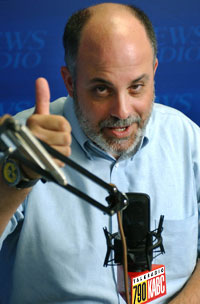
Marl Levin, virtuoso niggerizer

The ethics problem with the use of “nigger,” or “bitch,” or “fag,” or any of the other culturally disapproved denigrating labels for human beings belonging to particular groups, is not that they are insulting—adults should be able to  handle mere insults—but that they unfairly diminish the status of individuals, their character, opinions and deeds before they have had the opportunity to be judged on their merits. It isn’t the words, but the effect, in essence sticking a foot out to trip a runner at the beginning of the race—and the race may be a job, an election, a debate, an argument, or policy deliberations.

The No-Labels movement focuses on characterizations and civility, but these are far too vague as concepts to enforce culturally, and subject to easy manipulation for political ends. John Avlon, a leader of No-Labels, still calls politicians he disagrees with “wingnuts.” Why? Because, well, they are wingnuts! Just ask John. Niggerizing, however, goes well beyond labels, and fair people should reject it from either side of the political spectrum. It is a bully tactic, and it is a dishonest debating technique, completely delegitimizing an adversary before addressing his arguments, or giving them an objective hearing. Continue reading

The Tears of Keith Ellison

The grand drama at Rep. Peter King’s Congressional hearings investigating the radicalization of American Muslims last week was provided by Rep. Keith Ellison, who broke down crying while telling the story of a Muslim-American hero, Mohammed Salman Hamdani, who rushed to lower Manhattan on the morning of Sept. 11, 2001 to assist in rescue efforts, and died in the collapse of the World Trade Center. Ellison said:

After the tragedy some people tried to smear his character solely because of his Islamic faith. Some people spread false rumors and speculated that he was in league with the attackers only because he was Muslim. It was only when his remains were identified that these lies were fully exposed. Mohammed Salman Hamdani was a fellow American who gave his life for other Americans. His life should not be defined as a member of an ethnic group or a member of a religion, but as an American who gave everything for his fellow citizens.

I found the performance odd and vaguely troubling, and now that I’ve thought about it for a few days, I know why. The statement by Ellison, who converted to Islam, and the tears that accompanied it, raise a few ethical issues, beginning with the Ethics Alarms standard, “What’s going on here?” Continue reading

The Times’ New Ethicist Commits Malpractice

The new Times "Ethicst" shows her dark side.

Randy Cohen’s replacement as “The Ethicist” in the New York Times Magazine, Ariel Kaminer, had a flawless maiden flight last week, but crashes and burns on her first question this week. As was too often true of Cohen, she messes up in the area of honesty and legal ethics.

The inquirer, an applicant for law school, had asked a former professor to write a recommendation.  The professor, an apparent creep, said she was too busy—Honestly: writing recommendations for students applying to graduate students is part of her job, and how long does it take?—but if that if the student would write it, she would gladly “edit as needed” and submit it under her own name. Ariel’s inquirer felt uncomfortable writing her own letter of recommendation, but did not “wish to jeopardize my chances of being accepted into my top-choice school by being overly conscientious.” Ariel’s question to answer: is it ethical to draft the letter? Continue reading

Comment of the Day: “Why NPR’s Wrongs Don’t Make James O’Keefe Right”

Rick comments on my ethics verdict regarding the most recent James O’Keefe “sting,” this one exposing a biased NPR exec and an ethically-weak NPR fundraiser: Continue reading

Unethical Quote of the Week: CNBC Financial Analyst Larry Kudlow

We've all been there, Larry. Still sounded awful, though.

The human toll here looks to be much worse than the economic toll, and we can be grateful for that.”

CNBC’s financial guru Larry Kudlow, discussing the economic implications of the Japanese earthquake and its aftermatha legitimate topic—while giving an instructive demonstration of how tunnel-vision and focus on one objective above all else can disable an ethics alarm, momentarily, or even permanently.

The quote speaks for itself, but here are a few comments: Continue reading

Why NPR’s Wrongs Don’t Make James O’Keefe Right

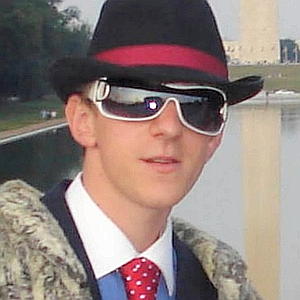
James O'Keefe, Ethics Corrupter

And the NPR Ethics Train Wreck continues

Between union hysteria in Wisconsin, carnage in Libya, and tsunamis, the fact that James O’Keefe’s fake Muslim billionaire act exposed more NPR integrity issues was drowned out by shouting, gun shots and water. In fact, the second victim of O’Keefe’s sting may have taught us more about NPR than the first.

In the surreptitious audiotape of  NPR’s continued encounters with the fake potential big bucks donor, NPR’s director of institutional giving, Betsy Liley, is heard advising the supposedly wealthy Muslim donor how the network could help “shield” his group from a government audit if it accepted the $5 million he was offering. It seems pretty clear from the tape that this was not what the sting was set up to prove: what the “Muslim donor” really wants is to get a promise from NPR that it will slant the news content the his way if the gift is big enough. Liley stood her ground on this core journalistic principle admirably—so much for the claim that George Soros bought NPR’s advocacy with his recent gift—but fell into another trap of her own making.

NPR spokeswoman Dana Davis Rehm said in a statement that Liley’s comments on the tape “regarding the possibility of making an anonymous gift that would remain invisible to tax authorities is factually inaccurate and not reflective of NPR’s gift practices. All donations—anonymous and named—are fully reported to the IRS. NPR complies with all financial, tax, and disclosure regulations.” That’s undoubtedly correct; Liley was not merely ethically wrong but also literally wrong, for what she was suggesting almost certainly couldn’t happen. However, the fact that she would say such a thing believing it could happen, or think it was acceptable if it did happen, or try to acquire a large donation by persuading a donor to believe it could happen, all point to the one conclusion: NPR’s culture is ethically compromised, and the organization’s leadership has failed to meet its obligations to create an ethical culture  there. The sting is more disturbing than the earlier one that caught an outgoing NPR executive taking extreme partisan positions that belied NPR’s position that it is objective and unbiased. The comments of Ron Schiller just confirmed what many, including me, thought was already apparent in the tone of NPR’s work. I had also always assumed, however, that the place was professionally and ethically run (excepting the tendency to fire employees for expressing politically incorrect opinions on Fox News).

So this settles it, right? O’Keefe is a hero?

No, he’s not. James O’Keefe, in fact, is an ethics corrupter, an individual who weakens the public’s ethics by encouraging it to accept his dubious values. Continue reading

Wisconsin Wars: The Democrats’ Unethical Ethics Complaint

Wisconsin Democrats have filed an ethics complaint against Governor Scott Walker.

The complaint, and the filing of it, are unethical. Really, really, really unethical. Here’s why. Continue reading

The NPR Ethics Train Wreck

Ethics train wreck scholars take note: when an organization’s image and existence is based on multiple lies, an ETW is inevitable.

Oh NO! It's another Ethics Train Wreck!

National Public Radio is now in the middle of a massive, six-months long ethics train wreck that began with the hypocritical firing of Juan Williams on a trumped-up ethics violation. The disaster exposes the culture of dishonesty and entitlement at the heart of NPR, and by extension, the Corporation for Public Broadcasting. To the extent that their supporters blame anyone else, it is evidence of denial. This is a train wreck, however, and the ethics violators drawn into the wreckage are many: Continue reading

Fired for Applauding: The Warped Ethics of Sports Reporters

I missed this story, because I regard auto racing as interesting as beetle mating, but it is an important one.

"Yeah, I report on it, but I really don't give a damn."

Trevor Bayne won the Daytona 500 last month, and the unexpected victory of the youngest Daytona champion ever provoked audible glee in the press box. One of the reporters on the scene, Sports Illustrated freelancer Tom Bowles, explained on Twitter and his blog why his applauding for a sporting result, considered a cardinal sin in the sportswriting profession, was not a sin after all.

He was fired. Continue reading