1. Incompetent elected official of the moment, since there are so many revealing themselves lately I can’t keep up with them…it’s New Jersey Governor Phil Murphy! Asked by Fox News host Tucker Carlson if he realized the Bill of Rights prohibited his order prohibiting religious gatherings, the Democratic leader said,
“That’s above my pay grade, Tucker.I wasn’t thinking of the Bill of Rights when we did this.”
Then he blathered on about how he consulted “experts” and religious leaders.
2. I don’t understand this story at ALL. NASCAR star Kyle Larson was competing in an iRacing event on Sunday when he lost communication with his spotter on his headset.
Larson was participating in the Monza Madness iRacing exhibition race over the weekend. Video from another competitor’s twitch stream caught Larson blurting out “nigger” across the audio channel where drivers can talk to all competitors. When a driver speaks on that channel, their name appears on each driver’s screen. In the video, Larson said: “You can’t hear me? Hey nigger…” Another driver said: “Kyle, you’re talking to everyone, bud.” “Yep, we heard that,” said another. Yet another said, “Yikes.” Continue reading →
This translated (by Mort Shuman) Jacques Brel song made my mother depressed and crazy, yet she insisted on playing it. She was like that. You know…Greek. I’m really glad that she didn’t live to see this particular ordeal through, because I would have made my folks live with us for the duration, and I would definitely be crazy by now.
I did not know John Denver recorded this; as with everything else he sung, he does a masterful job. He fought depression his whole life, which astounded me, given his public demeanor, when I first learned that. That was before I learned how common and pervasive this terrible illness is. They are not being hyperbolic when they say that a protected lockdown will eventually cause a lot of suicides.
1. One more from “Social Q’s. In the same column that triggered me regarding this issue, there was another interesting query :
Like millions, I am working from home and spending lots of time videoconferencing with co-workers and clients. My boss conferences in from his home office, where, behind his smiling face, hangs a painting of a cyclone tearing through a city. He may be so used to it that he’s oblivious to the bad message it sends. He’s not a friend, but we have a cordial relationship. Should I point out that the painting may upset people?
I am less interested in this question for its ethical issue, which is not worth discussing–“No, you idiot, you do NOT have any business telling someone forced to participate in a video conference that he has an obligation to decorate his home to please other participants and to avoid “upsetting” the hypersensitive!”—than I am curious about how anyone would get the idea that such an obligation exists. It’s not as if he has a swastika or a Confederate flag hanging behind him, or erotic art, or a historical photograph that could fairly be called unduly provocative.
I find this to be a nascent totalitarian mindset, requiring conformity in all things, and it scares me to death, frankly.
2. The indoctrination problem. I just got the latest copy of the Georgetown University Law Center alumni magazine, and was impressed by how large, slick and professional it has become in the decades since I put together the first issue when I was the GULC Director of Development under Dean David McCarthy. Oh, they changed the name a few years ago: the Dean and I had called it “Res Ipsa Loquitur,” which should come as no surprise to any regular readers here. The real revelation, however, is what a pure progressive and partisan indoctrination factory the school has become. Justice Ginsburg welcomed the incoming class. Nancy Pelosi and Henry Louis Gates ( of Beer Summit fame) addressed the graduating third year students. New York Solicitor General Barbara Underwood successfully sued the Trump Foundation, so she was worthy of an honorary degree.
The featured interview in the issue: Justice Elena Kagan. A new Workers Rights Institute has been launched. Invited to serve on a panel about “Challenges to the Rule of Law,” was George Conway. The school just dedicated its “green spaces” to Democratic D.C. Delegate Eleanor Holmes Norton. There is a major article about our obligation to guarantee the health of “migrants,” the current cover-word of choice meaning “Illegal immigrants.” Of course, there’s a climate change activist piece, an anti-nationalism piece, and a pro-diversity piece. Continue reading →
It’s not often that I post a comment that is mostly links and quotes as a Comment of the Day, but Dr. Emilio Lizardo (That’s his real name, by the way..KIDDING!) performed a real service by gathering this information in one place as a follow-up to the “Unethical Headline” post of last night.
II fear I buried the lede in that one, so some more follow-up is coming. Just two points, and I’ll turn it over to the doctor. Comparing the Wuhan virus outbreak deaths to greater numbers involving routine, yearly, largely unavoidable deaths in the US is a dishonest way to minimize the significance of the current threat. This device is used by the “save the economy, let ’em die” advocates, who are multiplying among conservative commentators. It was also the despicable strategy used by apologists for the terrorists after 9-11, like Michael Moore, though comparing the number of weekly auto fatalities with bomb attacks that murder 3,000 Americans is self-evidently moronic.
On the other side, comparing the current epidemic deaths to wars is an equally dishonest strategy of those trying to make the current situation as terrifying as possible to promote fear and facilitate political gain.
These are two sides of the same unethical coin. (And now you know what the graphic above means)
Unethical? Nah! And, of course, it’s not personal; it’s business. Not. And this narrative has been taking place for a week or so:
NYT “News Analysis” – 1 April
“Under the best-case scenario presented on Tuesday, Mr. Trump will see more Americans die from the coronavirus in the weeks and months to come than Presidents Harry S. Truman, Dwight D. Eisenhower, John F. Kennedy, Lyndon B. Johnson and Richard M. Nixon saw die in the Korean and Vietnam Wars combined.
One of the policy and medical ethics issues that is looming larger as the pandemic continues is the requirement that hospitals not be burdened by “non-essential surgery and medical procedures.”
I agree: it would have been better if Ethics Alarms has more precisely defined “essential surgery and medical procedures” in the previous post on the issue, when I examined the question of whether abortion can be ethically put in that category as Texas and Ohio have decreed. Abortion, as that post noted, is a particularly poor choice for such analysis, given that our society cannot agree on what it is, other than the Supreme Court’s ruling that whatever it is, a woman has a Constitutionally right to do it.
Incidentally: can we agree that there is also a constitutional right to have any surgery or medical procedure? It hasn’t been specifically stated by the Court, but I assume that the abortion precedent applies to everything else as well, from having a kidney transplant to getting a wart removed to acquiring breast implants. These would all fall under the right of privacy and inalienable rights of life, liberty and the pursuit of happiness. Forbidding any surgery, non-essential or otherwise, is a big deal, and my guess is that a judicial challenge to the whole concept would stand a substantial chance of success. What is essential surgery to me might not be such to you, but frankly, my dear, I don’t give a damn, and unlike an abortion, my procedure isn’t killing anyone. Continue reading →
Interestingly, the usually busy street bordering on our cul de sac looks just like this right now, except Gary Cooper isn’t anywhere to be seen…
1. What? The U.S. does NOT have more Wuhan virus cases than China? How can that be??? Senator Ben Sasse (R., Neb.), hardly a knee-jerk Trump apologist, who sits on the Senate committee that deals with classified intelligence, said the Chinese Communist Party continues to lie about the death toll from the virus. He has said information he has viewed shows the United States does not surpass China in terms of deaths. This was obvious to anyone not actively trying to use the spread of the illness for partisan advantage, but it’s nice to have confirmation.
“The claim that the United States has more coronavirus deaths than China is false,” Sasse said yesterday. “Without commenting on any classified information, this much is painfully obvious: The Chinese Communist Party has lied, is lying, and will continue to lie about coronavirus to protect the regime. Beijing’s garbage propaganda shouldn’t be taken seriously by the World Health Organization, by independent journalists, or by the American epidemiologists who are going to beat this terrible virus.”
This, of course, further impugns the news media. Stephen Kruiser wrote,
“Every day, they find new ways to reinforce the “Enemy of People” status that they have been earning every day in the Trump era. They’ve routinely scolded anyone who accurately refers to the virus as being of Chinese origin, screaming “RACISM!” as if they were getting paid each time they uttered or typed the word. What has been most insidious has been the parroting of whatever China reports about the virus. Almost everyone in American media has been acting as ChiCom public relations lackeys, taking everything that the Chinese government says and passing it along without questioning any of it.”
I have managed to post twice about the name game, and the ridiculous effort to find some way to justify not identifying the Wuhan virus by its place of origin, a campaign led by, naturally enough, its place of origin. The first post focused on the idea that calling a Chinese virus a Chinese virus was “racist,” a concept so devoid of reason and logic that it made my brain hurt.
The fact that the concept was enthusiastically embraced by such proven blights on the political scene as Rep. Omar was one major clue that dastardly motives were involved. This was a pretty much flat out resort to Big Lie #4 in the “resistance” Big Lie tool box, that one being “Trump is a racist/ white supremacist.” It was a short post, because there was no legitimate argument to rebut. Continue reading →
Oh, fine. I get up, still groggy, from a perfectly lovely nap, my defenses are down, I’m still savoring that dream where Mookie Betts, Chester A. Arthur and Danny Kaye drop by with some macaroons, and what is the first thing I read?
This–and
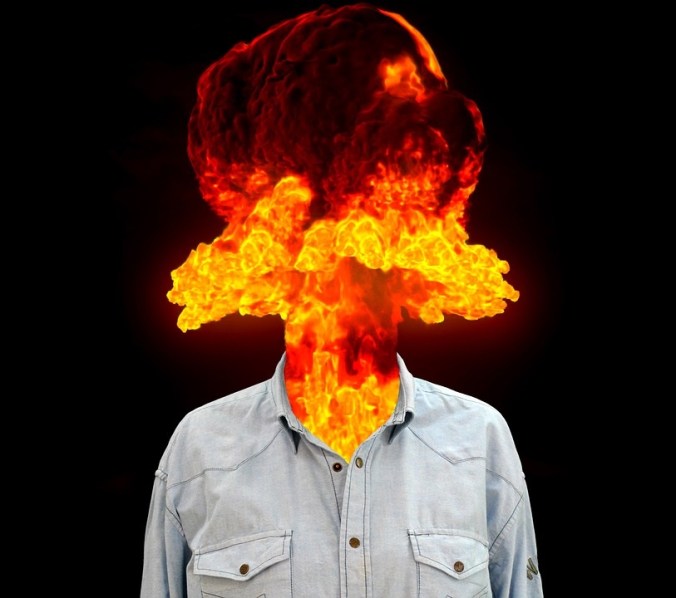
KA-BOOM!
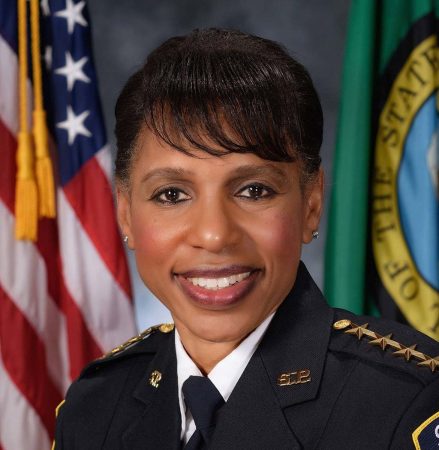
There goes my head, all over my office and this transcript I have to read in ten minute increments because it’s so boring. Oh, thank you, thank you so much, City of Seattle and your ridiculous Chief of Police, Carmen Best! Continue reading →
Stop blaming my favorite animal, the pangolin, or the so-called “scaly anteater,” for the pandemic!
That’s a tree pangolin above in a defensive posture. Ever since the nexus for the outbreak of COVID-19 was traced back to a wet market in Hubei province, scientists have been looking for the virus’s heritage.It’s possiblethat the virus emerged in a colony of horseshoe bats in Yunnan, a province that borders the south-east Asian country of Myanmar. But some fingers are also pointing at the pangolin, which was once believed to have bats in its ancestry. The animal, like others that American wouldn’t recognize, is the most trafficked beast in the world due to the supposed health benefits of its scales, with most of that traffic ending in China. A search for the “missing link” in the chain of the emergence of SARS-CoV-2 has uncovered two close cousins of the variety of coronavirus that started the pandemic in Wuhan in pangolins smuggled into China. Not THE virus, however. Here’s a photo of a pangolin unfurled:
1. It is outrageous that a U.S. newspaper would include this sentence…From an article about the joys of Randolph Scott Westerns by Times film critic Ben Kinegsberg: “The depiction of Native Americans as horse-eating, husband-killing savages doesn’t sit well in modern eyes, and the name of Henry Silva’s character in “The Tall T” is so offensive it cannot be printed.”
Well, it has to printed somewhere, or the information itself has been permanently erased! If a newspaper is going to start purging words, names, history and facts, where does it stop? I’ve been trying to imagine what name could justify the Times refusing to reveal it, other than “Voldemort.” What could it be? Let’s check the Internet Movie Database (the film is “The Tall T“)… Continue reading →
1. The Sisyphus Report. Ethics Alarms is currently at its all time high water mark for followers, a number it has reached three times previously, only to fall back, sometime precipitously.
When you are trapped in your home, you tend to obsess about such things.
2. You know why, but still…the mainstream media isn’t fact-checking or pointing out the blatant, insulting lie from Nancy Pelosi yesterday regarding the House Democrats’ alternative “stimulus” bill that “Everything we’re suggesting just relates to COVID-19. It’s not changing policy except as it applies here.” That bill included [Pointer: The Blaze]:
A bailout for the U.S. Postal Service
Student loan debt forgiveness
Required same-day voter registration
Airline emissions standards regulations
Study on climate change migration
Collective bargaining provisions
Increased federal minimum wage for companies that accept government loans
Publication of race and pay statistics for corporate boards
I’m not even mentioning things like the millions designated for the Kennedy Center, because that was technically related to addressing harm caused by the pandemic.
As I and many others noted, the Democrats’ grandstanding effort to stuff the rescue bill with progressive agenda items related to climate change, the Green New Deal and other social justice wish list items was political posturing for the base, which was forgivable as long as they didn’t try to hold the nation hostage, which they didn’t, at least for very long. But Pelosi’s denial that her party did what it did in plain sight (for anyone who bothered to read the bill about it) is the stuff of Jumbos, and the news media was obligated to let the public know.
They haven’t, and presumably won’t. Instead, journalists will continue to factcheck and scream about every lazy, non-substantive misstatement of facts by the President, and back the Democratic cant that President Trump always lies.
A party whose leadership issues pure disinformation like Pelosi’s should be estopped from using the “Trump lies”refrain. Continue reading →
Observing the slow but steady deterioration of Jake Tapper, whom I once cited as an example of an ethical, objective and trustworthy journalist—it seems so long ago—has been excruciating to watch. He signaled yesterday that his transformation into just another AUC hack (That’s the Axis of Unethical Conduct: Democrats, the “resistance,” and the progressive mainstream media) is complete.
Tapper was interviewing Rep. Ocasio-Cortez on his “State of the Union.” She blathered, as she is prone to do,
“We’re hearing every step from this administration- first, we were hearing it was a hoax, then we were hearing that everything is fine, then we were hearing that the fundamentals of the economy was OK – until the crash comes.”
Jake, from CNN, not State Farm (that’s him on the left above; yes, he used to be white) just let all of that go.
Well, as has been shown again and again to be of no avail as far as the Big Lie-masters are concerned, the President did NOT say the virus was a hoax. (he also never said that “everything is fine,” but never mind). I most recently explained this two days ago, here, and I’m sick of repeating it, frankly.
When he was properly criticized for allowing a false “resistance” narrative to go out over CNN’s imprimatur (whatever that’s worth these days) without uttering a peep of protest, Tapper issued this damning excuse via Twitter: Continue reading →







 Ethics Alarms