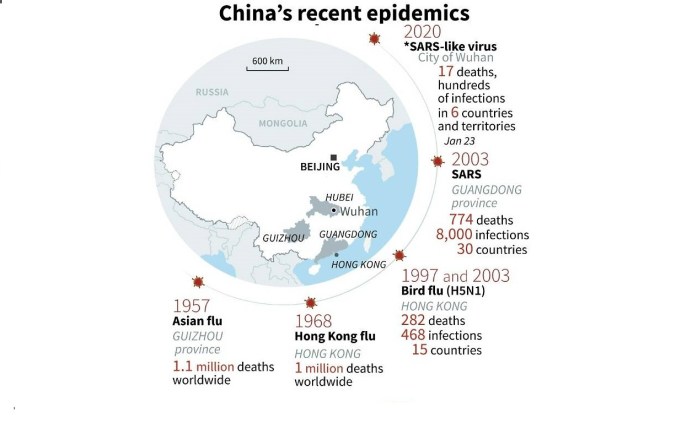
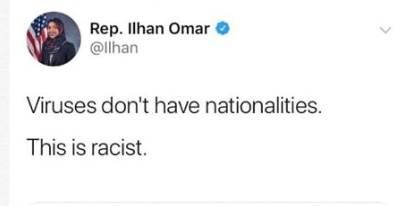
Incredibly, reporters asked President Trump multiple times yesterday to account for a rumor that one of his aides had referred to the Wuhan virus, aka “Century 21”, or something like that, as the “Kung Fu Flu.” (Heh. )
A. It isn’t “racist” if someone, or many people, did use the quip, and B. Why is that even worthy of discussion? I may be wrong, but as the news media’s efforts to use Big Lies to impugn the President are based on slimmer and more trivial excuses, I expect the majority of the public to eventually figure out what’s going on.
Axios just released a time line, based in part on a new study of how the virus took hold in China. It introduces its work this way:
Axios has compiled a timeline of the earliest weeks of the coronavirus outbreak in China, highlighting when the cover-up started and ended — and showing how, during that time, the virus already started spreading around the world, including to the United States.
Why it matters: A study published in March indicated that if Chinese authorities had acted three weeks earlier than they did, the number of coronavirus cases could have been reduced by 95% and its geographic spread limited.
This timeline, compiled from information reported by the Wall Street Journal, the Washington Post, the South China Morning Post and other sources, shows that China’s cover-up and the delay in serious measures to contain the virus lasted about three weeks.
The study, by Southhampton University, is here.
The information indicates clearly that China is accountable. China is responsible for the severity of the pandemic. China deserves to have that responsibility recognized, and those trying to use race-baiting and linguistic stunts to assist in the cover-up are assisting a brutal totalitarian regime. Those who are doing this out of animus for the President are beneath contempt.
No, China should not be asked to pay reparations for its unfortunate role in the crisis, though a recent poll asserts that 42 percent of Americans “feel that China should pay at least some of the world’s coronavirus bills.” This kind of disaster could happen to any nation, though, as you can see in the chart above, it keeps happening to China. It is more likely to happen in a nation like China, that obstructs the free flow of information. It still didn’t intend to infect the world.
I assume.
However, China should accept responsibility, as well as the shame of having a pandemic named after a Chinese starting point.


 Ethics Alarms