Ethics Observations On Three Recent Judicial Decisions

)

I.

An appeals panel throws out the emoluments lawsuit filed by D.C., Maryland.

A three-judge panel of the US Court of Appeals for the 4th Circuit  held that the District of Columbia and Maryland lack standing to sue President Donald Trump over claims related to his hotel in Washington, D.C. The court  ordered a lower court to throw out the lawsuit with prejudice, meaning the lawsuit alleging violations of the Constitution’s emoluments clause could not be refiled.

Good.

The Emoluments Clause nonsense has been one of the more contrived “resistance” theories and this lawsuit was part of the organized plan of harassment against the President. Two Democratic jurisdictions filed this purely political suit as their contribution to the “resistance.”

“Even if government officials were patronizing the hotel to curry the President’s favor, there is no reason to conclude that they would cease doing so were the president enjoined from receiving income from the hotel,” the 36-page opinion said. “The hotel would still be publicly associated with the president, would still bear his name and would still financially benefit members of his family….Neither [emoluments] clause expressly confers any rights on any person, nor does either clause specify any remedy for a violation.”

The unique conflicts of interest issues presented when a multinational business owner becomes President was never imagined by the Founders, and once Trump was elected it was too late to deal with the problem equitably. The Democrats and the news media, not to mention Trump’s Republican rivals for the nomination and the legal establishment—and commentators like me, all neglected their duty to raise the issue in a timely fashion, mostly because they never thought Trump would win. They are all at fault for their own mistake. At some point, however, the issue has to be examined fairly and non-politically, with rules emerging that do not make the Presidency unachievable by anyone who is not a professional politician.

II

Continue reading →

Unethical Quote Of The Week: An Ice Cream-Licking, Fame-Seeking Moron

“All I wanted to do was be famous.”

—Accused ice-cream carton-licker, Lenise Lloyd Martin III, a 36-year-old unemployed man who has been arrested in Louisianan for making a video of himself licking a carton of ice cream in the Big B’s Supermarket in  Belle Rose.

“It’s a shame,” commented Matt Walters, who works at the store. “A grown man doing something like that.” Yes, that’s a shame, but a greater shame is a grown man thinking like that, and a culture that raises its children to believe that fame itself is an accomplishment, regardless of what one is famous for.

The internet and social media have spread this disease of ethics and the mind, but it began long before the web took over our lives. Andy Warhol’s prescient quote, “In the future, everyone will be world-famous for 15 minutes”, first appeared in the program for a 1968 exhibition of his work at the Moderna Museet in Stockholm, Sweden. We saw the hints of the cultural malady with the advent of television, as we saw ordinary Americans getting a thrill from acting like giddy fools behind announcers and TV journalists when they saw a TV camera.

This compulsion spawned such pop culture freaks as “Rocken Rollen” also known as Rainbow Man, who somehow managed to get himself and his rainbow-hued Afro on camera at dozens of live sporting events. At least he stayed in the stands; another example of the phenomenon was fans who ran out on the field mid-game hoping that a TV camera would capture their moment of “fame.”

Clearly, the culture is sending a toxic message to our youth. The movie and subsequent TV series “Fame,” following the travails of aspiring teenage performers, both pushed the false concept that being famous itself is an achievement:

Baby, look at me
And tell me what you see
You ain’t seen the best of me yet
Give me time
I’ll make you forget the rest
…
Don’t you know who I am
Remember my name!
Fame!
I’m gonna live forever
I’m gonna learn how to fly, high
I feel it comin’ together
People will see me and cry,
Fame!
I’m gonna make it to heaven
Light up the sky like a flame,
Fame!
I’m gonna live forever
Baby, remember my name
Remember, remember, remember, remember
Remember, remember, remember, remember…

Continue reading →

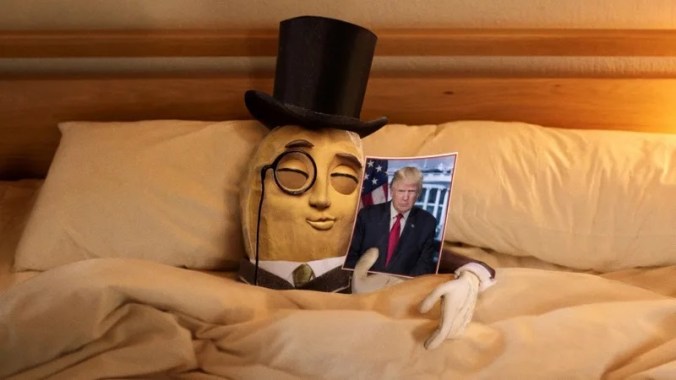
Morning Ethics Warm-Up, 7/9/2019: Then They Came For Mr Peanut…

Good Morning!

1. From what cultural hell in America did this conduct ooze out of? A family got in a brawl in the middle of Disneyland, as on looking children screamed. See?

Nice.

The family was escorted out of the park, and criminal charges are being sought.

This entire family is so devoid of  functioning ethics alarms that it lacked the basic civilized instincts not to a) physically attack each other b) physically attack each other in public c) physically attack each other in a family venue that represents the opposite of what they were doing.

In some kind of record for inappropriate understatement, Disney said that  the company “does not condone this type of behavior.” That’s reassuring.

2. Congratulations to the U.S. Women’s Soccer Team, but its captain is still an asshole. I fully endorse—well, 95%— Washington Post columnist Mark Thiessen, who had this to say about Megan Rapinoe, the team captain who has been grandstanding her hatred for President Trump by refusing to respect the National Anthem abroad. He writes in part,

Rapinoe is not playing for the Trump administration; she is playing for the United States. It’s one thing for a professional athlete to protest the national anthem, but quite another for a member of Team USA to do it. Rapinoe is protesting the Stars and Stripes while wearing the Stars and Stripes. That’s not OK. Representing your country is a privilege, not a right. If she really feels she can’t show respect for the U.S. flag and anthem, then she shouldn’t wear the U.S. jersey. Here’s the worst part: What she’s doing is selfish. Her protest comes at a time when the U.S. women’s team has taken an important stand against gender discrimination. They are suing the U.S. Soccer Federation because, despite being more successful on the field than the men’s team, and bringing in more revenue, they are paid significantly less than the men. They have a point, and the World Cup is a chance to rally the country behind their cause. But instead of unifying Americans behind her team’s admirable fight for gender equity, Rapinoe is dividing Americans with her anthem protests. Untold numbers of Americans who might have been inspired to support the team’s cause have been alienated by its leader.

Thiessen is talking about cognitive dissonance here: he’s pointing out, correctly, that people are less like likely to rally with even a just cause when its advocates are assholes.

My 5% objection is that the women’s team will have a strong claim to equal pay when they prove that they can play soccer as well as the men’s team. Continue reading →

Ethics Observation On The Tempe, Arizona Starbucks Incident

Ethics Alarms does not endorse any organized boycott efforts against any product, business or organization. However, if any corporation is begging to be boycotted, it’s Starbucks…

In case you missed it:

On July 4th, six Tempe, Arizona police officers visited a local Starbucks to get some coffee. The officers paid for their beverages and stood together, sipping coffee and chatting. A barista approached one of the officers, whom she apparently knew by name because he is was a frequent customer, and informed him that a customer  currently in the store “did not feel safe” because of the police presence. She asked the officers to move out of the customer’s line of sight (!) or to leave entirely.

The officers  left, but apparently reported the incident to the Tempe Officers Association, which described the incident on Facebook and added,

This treatment of public safety workers could not be more disheartening. While the barista was polite, making such a request at all was offensive. Unfortunately, such treatment has become all too common in 2019. We know this is not a national policy at Starbucks Corporate and we look forward to working collaboratively with them on this important dialogue.

The Tempe Police put out their own statement:

Starbucks, proving at least that it has not completely lost its mind, quickly apologized to the  Department, with a representative meeting with the police chief.  The statement:

“When those officers entered the store and a customer raised a concern over their presence, they should have been welcomed and treated with dignity and the utmost respect by our partners (employees). Instead, they were made to feel unwelcome and disrespected, which is completely unacceptable,”

Observations: Continue reading →

An Ethics Quiz Returns With A New Context And An Ancient Conundrum, And The Answer, My Friends, Is Still Blowin’ In The Wind…

The Ethics Quiz from 2013, “Peter’s Problem,” that I have re-posted in its entirety below has come circling around like boomerang, in a different context. Then, singer activist Peter Yarrow of Peter,Paul and Mary fame was being attacked by the political Right, which argued that his participation in a political campaign event for a Democratic Congressional candidate was proof of that candidate’s poor judgment. Yarrow, as we were told by PBS when it raised fund by showing Peter,Paul and Mary concerts, had answered a knock on his hotel room door naked when  two teenage sisters, 14 and 17, stopped by in 1969 to seek an autograph. The 14-year old got a lot more than his signature. Yarrow was eventually charged with taking indecent liberties with a minor, pleaded guilty and was sentenced to three months in jail. President Jimmy Carter pardoned him in 1981.

Lat week, Yarrow’ s past (he was 31 then; he’s 81 now)  caused one of his appearances to be cancelled, but this time it wasn’t those Puritanical conservatives complaining about Yarrow’s “if it feels good, do it” sexual misconduct (which most of Yarrow’s younger fans in the Peace and Love Era didn’t think was misconduct at all), but the Left’s #MeToo furies.

Yes, Peter Yarrow and his critics have boarded the Harvey Weinstein Ethics Train Wreck.

Since that rollicking night in 1969 , Peter Yarrow has solidified his folk singing and progressive activist status without further public blemishes, and having him associated with an event has usually been regarded as a positive, not a negative, feature when progressives and their causes are involved. John Kerry had him sing at his wedding. Bill Clinton featured him at an Inauguration. He has collected lifetime achievement awards like little Jackie Paper collected painted wings and giant rings.

Last week, however, the Colorscape Chenango Arts Festival, which had  had described Yarrow in its advance publicity for his participation in its annual  September festival as  one of “America’s longtime favorite musicians and performers,”  canceled his appearance, saying in a statement…

“Some members of our community expressed concern, and after further investigation and careful consideration the decision was made to remove Yarrow from the music schedule.”

In the 2013 post, , I criticized Yarrow’s apologetic statement at the time, which was tainted by rationalizations. His statement last week was much better: Continue reading →

From The Ethics Alarms “Awwww!” Files: The Happy Shoplifter

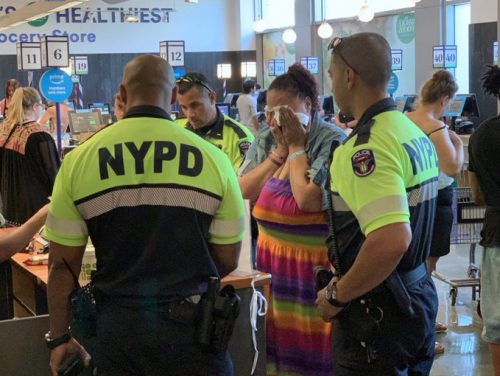
At a Whole Foods in New York City,  a woman attempted to steal some food and was detained by supermarket security officers. Three police officers on the scene, however, chipped in and paid for the food she had been seen slipping into her shopping bag.

Naturally the heartwarming scene was  captured in a photo, showing the woman’s tears of gratitude. Their deed, as well as the woman breaking into tears, was captured in a photo that was shot by a customer who described himself as heartened by the unexpected gesture. “It was a nice moment for, you know, people, it was compassionate and the woman obviously was really grateful,” the amateur photographer said.

The police department approves, I guess.  NYPD Chief Terence Monahan tweeted, “Cops like Lt. Sojo and Officers Cuevas and Rivera of the Strategic Response Group are the kind-hearted cops who quietly do good deeds for New Yorkers in need.”

Is this the new department policy then? When officers decide that a thief is in genuine need, they will now pay for the merchandise stolen? I may have rolled out of bed bitter and jaded, but this seems like the “Awww!” Factor, where sentimentally appealing conduct is mistaken for ethical conduct. From the Ethics Alarms glossary: Continue reading →

Prison Labor Ethics

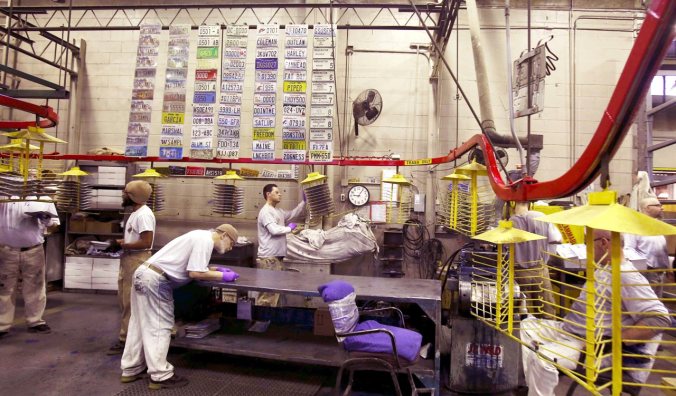
Prison labor is an ethics issue that I have never considered before. Apparently that’s true of a lot of people. In Massachusetts, an Amherst-Pelham Regional High School  student named Spencer Cliche (great name!) was challenged to undertake an investigative journalism project, He eventually published a 3,000-word exposé  on prison labor topic in his school’s newspaper.

The high school, it seems, had contracted with a local prison to re-upholster its auditorium seats,  taking its low bid for the job over another bid by a local business. As a result of the uproar sparked by Spencer’s work, the school superintendent issued a statement to school staff members promising never to contract with the prison again.

It does not appear, however, that this decision was based on  careful balancing of the ethics issues involved, but rather, as usual, a lazy capitulation to avoid an emotion-based controversy.

The local  newspaper, The Daily Hampshire Gazette, eventually picked up the story. as did a local radio station that featured Cliche’s report as the “question of the morning.” Then the issue was raised by The Marshall Project, a prison and justice system reform project.

In addition to routine prison labor, which is usually handled in a prison facility, there are also state-run “correctional industries,” such as MassCor, which arranges for inmates to do work for  schools, nursing homes, towns, non-profits and other institutions. Obviously, their costs are lower than competing businesses, because prisoners earn less than a dollar an hour on average for their labor, according to Prison Policy Initiative.

Thus we have multiple looming ethics issues, among them…

  • Is it ethical to force prisoners to work at all?

I don’t see how an honest argument can be formulated that argues that it is not. Work organizes the time and attention of the jailed, keeps them occupied, minimizes boredom and the opportunity to get into trouble. Social justice advocates seem to think that prisons should be like summer camps, with sports, crafts, and other pleasant diversions. That approach is both expensive and undeserved. Prison, among other things, is and ought to be punishment.

  • Is it ethical to pay prisoners less than the minimum wage? Isn’t forced labor with no compensation or minimal compensation virtual slavery?

Convicted prisoners forfeit most of their constitutional rights. Some forms of forced labor might rise to the level of cruel and unusual punishment, and prison labor is ripe for abuse (just ask Andy Dufresne, the protagonist of “The Shawhsank Redemption”), but criminals are a burden on society, and warehousing them is expensive. There is nothing unethical about requiring those who have imposed that burden to help alleviate it.

  • Are prison-based businesses like MassCor unethical?

 Cara Savelli, a spokeswoman for the Massachusetts Department of Correction interviewed by the student journalist, defended the program, saying,

Continue reading →

Ethics Warm-Up, 7/3/2019: Holiday Follies [UPDATED]

The end of Pickett’s Charge, July 3, 1863

Happy weird mid-week day before a holiday when almost nobody seems to be working…and remember Pickett’s Charge, July 3, 1863.

But ethics never takes a break…

1. Oops! Did we miss the real holiday? On this date in 1776, John Adams wrote to Abigail that the day before, July 2, 1776, the Continental Congress had voted to declare American independence from the British Empire. Adams predicted that July 2 would eventually be celebrated by every generation of Americans with parades, speeches, songs and fireworks, which Adams called  “illuminations.” Why did he turn out to be wrong? Oh, because history is messy, mistakes don’t get corrected, and tradition becomes more important than facts. (Once again, “The Man Who Shot Liberty Valence” rule applies: “When legend becomes fact, print the legend!” )

What happened on July 4th? The unsigned but ratified Declaration was sent to the printer on that date, and the printer dutifully marked his prints with “July 4, 1776”. The delegates didn’t start signing the document until August 2, and all the signatures weren’t down on parchment until November. The dramatic depiction of the signing taking place on July 4 in the musical and movie  “1776” is fake history.  It’s not all Broadway’s and Hollywood’s fault: the iconic painting “Declaration of Independence,” by John Trumbull, a version of which hangs in the Capitol Rotunda in Washington and which the actors are staged to re-enact in “1776” is often captioned “July 4, 1776.”

Trumbull’s artwork actually shows the moment on June 28 when the Declaration drafting committee officially presented its work to  the chairman of Continental Congress. John Hancock, There never was a signing ceremony.

Nonetheless, July 4 has, for some reason, been an unusually felicitous and significant day in U.S. history. It would be difficult to pick another that carried so much history, even without being the chosen date to honor the nation’s founding. Three of the first five U.S. presidents died on July 4, with John Adams and Thomas Jefferson famously dying on that date within hours of each other in 1826, fifty years after….the Declaration was sent to the printer.

But July 4, 1803, was the day word arrived from Paris that the Louisiana Purchase was complete, having been signed by Napoleon.  Without it, the United States would have been a very different country, and a much weaker and poorer one.

July 4, 1863 also was the date Robert E. Lee acknowledged his defeat at Gettysburg after his desperate, risky, massed attack on the Union line across a fence-strewn field and up a grade into artillery fire failed. That defeat probably sealed the fate of the Confederacy, and meant that this unique nation would, despite a bloody close call,  have a new birth of freedom, and that government of the people, by the people, for the people, shall not perish from the earth. Continue reading →

OH! The Teen Who Raped A Drunken Girl And Sent The Video Of Him Doing It To His Pals On Social Media “Has A Good Family!” That Changes Everything, Then! [UPDATED]

A New Jersey Appeals Court has reversed a decision of a Family Court judge who has a claim on the title of “Most Incompetent Judge Ever.”

The facts showed that  a drunk 16-year-old boy raped an even more drunk  16-year-old  in the basement during a party. The boy recorded a video of  himself penetrating her from behind, and then shared it on social media among friends along with a text that said, “When your first time having sex was rape.” The victim could barely recall the incident, and when she confronted her attacker, he denied that he had raped her  even as he continued to circulate the video. When the victim, known only in public records as Mary, an alias, because of her juvenile status, learned this, she had her mother contact authorities.

The Monmouth County prosecutor’s office wanted the boy to be tried as an adult. They applied for a waiver of his juvenile status, arguing that the alleged assailant’s actions were “predatory and sophisticated.”  “At the time he led ‘Mary’ into the basement gym, she was visibly intoxicated and unable to walk without stumbling,” the prosecutor wrote. “For the duration of the assault, the lights in the gym remained off and the door was barred by a foosball table. Filming a cellphone video while committing the assault was a deliberate act of debasement.”

In criminal law, the defendant’s lawyer always tries to get a “good judge,” and in this case, the accused rapist teen hit the jackpot. Judge James Troiano of Superior Court was the ideal judge for this defendant, because he apparently leads his profession in rationalizing idiocy. “Good,” in this case, meant incompetent. Continue reading →

Ethics Dunce: Professor Lara Bazelon [UPDATED]

The click-bait headline is, “I’ve Picked My Job Over My Kids : I love them beyond all reason. But sometimes my clients need me more.”

The author is well-published law school professor Lara Bazelon, who often opines at Slate. I could, but I won’t, give Bazelon the benefit of the doubt, assuming that as a lawyer and advocate, the article is intentional hyperbole and intended to both spark debate and to assuage the conscience of other working moms. Lawyers, however, are not supposed to mislead or lie. If Bazelon doesn’t believe that she has picked her job over her kids, then she shouldn’t write it. If she does believe it, then she is rationalizing away a breach of duty.

There are millions of working mothers who have no choice other than to work when their children may need them, but Bazelon is not one of them. She writes, Continue reading →