Ethics Quiz: The Macaque’s Selfie

Macaque

The wonderful photo above has gone viral on the web, and is also causing serious debate among intellectual property lawyers. The weird tale is as follows:

Wildlife photographer David Slater was visiting a national park in North Sulawesi to photograph the wildlife. His subject was a group of crested black macaques, and when he left his camera unattended, the primates took advantage of the opportunity. Apparently attracted by the reflection and the noise the camera made when activated (the implications of the macaques doing this because they were interested in photography are too disturbing to contemplate, so I won’t),  one macaque took hundreds of photos of itself. Most were blurry and out of focus, just like the pictures my dad took, but a few were superb selfies that would have Ellen DeGeneres eating her heart out.

Wikimedia took the clear images off of Slater’s website, adding them to its collection of royalty-free graphic, and sending them all over the web as a result.  Slater now demands that the images be taken down or that he be paid for them. While Wikimedia argues that either the monkey owns the copyright for the photos or nobody does, the photographer claims that being the owner of the camera, and the artist who created the circumstances under which the macaque was inspired to release his inner Richard Avedon, he alone is the owner of the photographs.

As you might expect, copyright law is unclear on the issue of lower primate selfies, an art form that was not anticipated as the law evolved. I don’t care about that: today’s Ethics Alarms Ethics Quiz is about fairness:

Should Slater have full ownership of the macaque’s creations?

Continue reading

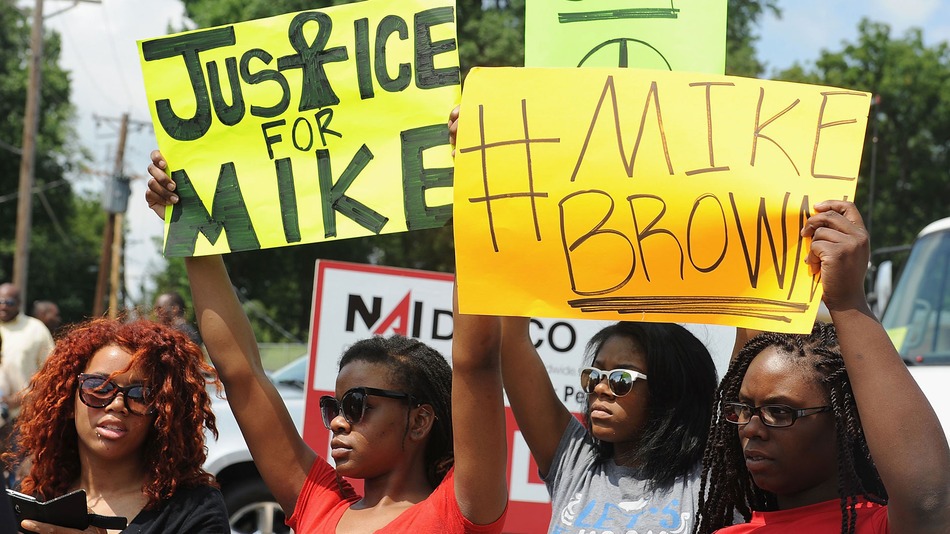
Ferguson’s “How Dare You Challenge Our Narrative?” Protest

Mike-Brown-Signs

There was another large demonstration in Ferguson last night. This one appears to have been more proportionately and wisely managed by Ferguson police, who still had a bad day that didn’t do much to erase the impression that its leadership is not equipped to deal with the challenges posed by race politics in 21st Century America. The inexplicably delayed information on the circumstances surrounding the shooting death of teenager Michael Brown, including the name of the officer involved (who can now count on receiving death threats and having celebrities try to help vigilantes by tweeting his address), “infuriated”  Brown’s family and the African American community in Ferguson, on the theory that video showing Brown robbing a convenience store and assaulting its owner was an attempt to smear the victim of a racist killing, and to “justify” an execution.

It’s an unethical theory, and the news media and fair observers should reject it. Indeed, they have a duty to reject it.

A young man is dead, and that is a tragedy. Another young man, the one who shot him, is also involved, and his life, while not over, is going to be permanently scarred in the best case scenario. If “justice,” the word that the demonstrators in Ferguson and elsewhere are using as a mantra, is being used to mean what it is supposed to mean (and, it is not), then the young police officer deserves justice too. That means, at very least, waiting until all the facts are known that can be known, and making a dispassionate, objective, non-politically motivated analysis of what occurred, who was at fault, what crimes, if any, were committed, and how to prevent such incidents in the future.

Is that too much to ask? To insist upon?

So it seems. Continue reading

Mid-EthicsTrainwreck Observations On Ferguson

train_wreck

1. This is traveling the identical route as the Trayvon Martin-George Zimmerman fiasco, and I wonder when the intentional similarity will begin dawning on the public, discrediting the participants and embarrassing the news media, which is as Pavlovian as the most conditioned canine.

2. In an environment where race grievance vultures lie in wait, the usual rule of prudence—an ethical value— for law enforcement becomes a fatal error. Now, if a police department waits and investigates before making an official report or filing charges when a white individual has killed a black one, it will be spun by those seeking to find sinister motives, and the news media will take the cue.

3. As in the Martin case, the victim was immediately portrayed by his family as being as threatening as a Care Bear, except for his race. Martin was introduced to the public by the news media with an old photo that made him look about 12. Michael Brown was introduced by his promising future: he was going to college, and his parents were proud of him, as if these factors are proof of unquestionable virtue and innocence. He was unarmed, and a teenager. But as I learned for the first time by seeing the surveillance video of the alleged robbery, he was a huge teenager. A man that big doesn’t have to be armed to be dangerous. Naturally, all public impressions of the incident were formed before any of this came to light. This also addresses the new outrage by protesters that the video was released to “justify” the killing. The video let us know that Brown wasn’t a harmless kid, and that’s valid information now. Continue reading

When Ethics Becomes Impossible: Captain Johnson’s Ferguson “Solution”

Ron Johnson

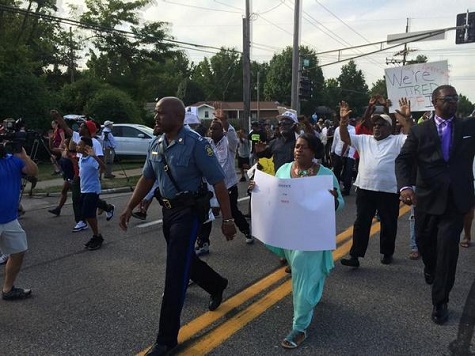
Yesterday,  Ferguson, Missouri’s newly appointed police commander, Capt. Ron Johnson of the Missouri State Highway Patrol, walked with those protesting the shooting of African American teenager Michael Brown.The police shooting in Ferguson this week and its aftermath became an instant Ethics Train Wreck, its carnage seeded by tragedy, local tensions, growing distrust of police nationwide, worsening race relations exacerbated by Democrats and the media resorting to race-baiting to stifle criticism of the Obama administration, as well as such episodes as Occupy confrontations with police in Oakland and the Trayvon Martin-George Zimmerman fiasco.

Johnson’s actions calmed what had been escalating violence, with community protests spilling over into looting, irresponsible and inflammatory statements being made by both police and protesters, and an excessive, military-style response by St.Louis police that treated sometimes over-enthusiastic demonstrating as if it was Rodney King-style rioting. What Johnson did worked, in other words, and that’s both the best and the worst that can be said about it. Ethically, it was the best available option. When a situation reaches the ethics chaos stage that Ferguson has, however, this is rough utilitarianism at best. Continue reading

Police Misconduct, Professional Courtesy, and the Insideous Virtue of Loyalty

"No, I still have your back...I'm just going to have to give you a speeding ticket, that's all!"

“No, I still have your back…I’m just going to have to give you a speeding ticket, that’s all!”

In 2011, Florida Highway Patrol Trooper Donna Jane Watts pulled over—after a brief chase– an off-duty Miami police officer whose vehicle she clocked at over 120 mph. Lead-footed officer Fausto Lopez explained to Watts that he was late for an off-duty job. The tradition among police, as in other professions (like the law and politics), is to extend “professional courtesy” in such situations, or as I call it, unwarranted privilege and corruption.

 Watts, however, arrested Lopez, who had a history of reckless driving, and he was eventually fired. Continue reading

Is There An “Almost Naked Lovely Lawyer Principle”?

cathy-mccarthy

Not really.

But it’s complicated.

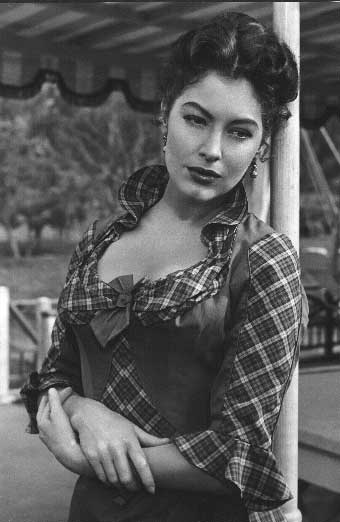
Cathy McCarthy (above) is a 2013 graduate of Loyola Law School-Los Angeles, and she is sounding the clarion call for the right of bikini model-lawyers to be taken seriously. She wrote…

I graduated law school a year ago after receiving an academic scholarship and passed the California Bar last November on my first try. I am also a model and have had moderate success, building fan base of over 26,000 people where I do mostly bikini promotions. Does this make me better or worse at my job? According to some people, it makes me unable to be taken “seriously” in the business community. In fact, two weeks ago, I was reprimanded by a coworker for my online presence and was told to “handle the situation.”I fought back and was ultimately let off the hook, but this is not the first time that I have faced backlash from colleagues who think that a lawyer should not also get the privilege of “looking hot in a bikini.”

Unlike the case with primary and secondary school teachers, where a published presence on the web that is sexually provocative can interfere with a healthy student-teacher relationship, there is no automatic impediment to a lawyer client relationship posed by the lawyer moonlighting as a bikini model, a fold-out, or even a porn star. The profession acknowledges this in several legal ethics opinions affirming lawyers’ First Amendment rights. Lawyers can express themselves any way they choose, provided that it does not undermine their ability to represent their clients in any way. Continue reading

The O’Bannon Case: A Judge Explains How The Law Requires An Unethical and Corrupt Practice To Be Fair….But It’s Still Unethical and Corrupt

NCAA-ban

Now that a federal judge has declared the elite student-athletes at big time sports colleges to be what they are…paid mercenaries…and the sports programs at such institutions to be what we always knew they were…cynical sideshows that sacrificed education to greed…will the pubic, the media, educators, and universities now stop this slow-moving ethics train wreck?

Of course not.  If they cared about how high-profile college sports were warping both America’s education and its values, they would have addressed the problem decades ago. They would have stopped it before, for example, schools started paying football and basketball coaches more than any professor. They would have stopped it before prestigious schools gave degrees to graduates whose entire education was a sham, who took ridiculously easy courses and who were held to infantile academic standards, all so rich, fat alumni would continue writing checks. They would have stopped it before a revered football coach held such power in a university that he was able to persuade the school’s leadership to allow a child sexual predator operate on campus.

U.S. District Judge Claudia Wilken, in a 99-page ruling agreeing with the claim of a group of plaintiffs fronted by former UCLA basketball player Ed O’Bannon, issued an injunction against the NCAA from “enforcing any rules or bylaws that would prohibit its member schools and conferences from offering their FBS football or Division I basketball recruits a limited share of the revenues generated from the use of their names, images, and likenesses in addition to a full grant-in-aid.”

The ruling will be appealed, and some of its legal conclusions certainly seem debatable. That is not my concern. The opinion effectively kills the fiction that the semi-literate youths who perform on-the-field heroics to burnish the images of universities and attract huge broadcast fees are what the NCAA, alumni, students , the schools and the media pretend that they are. Now that we know they are not truly students, what persuasive ethical justifications can be given for them to play college sports at all?

My answer?

None. Continue reading

Tony Stewart, the Suspicious Death of Kevin Ward Jr and NASCAR’s Bizarro World Ethics

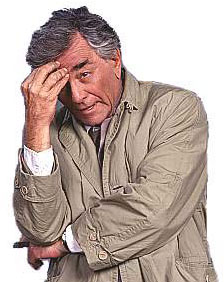
If a real Columbo was on his case, Tony Stewart might be in trouble.

If a real Columbo was on his case, Tony Stewart might be in trouble.

The word “ethics” and NASCAR should never be uttered in the same sentence without irony. After all, the sport arose out of the exploits of outlaw bootleggers. The current billion dollar sport’s culture regards cheating as “breaking rules and getting caught doing it.” The fact that the team manager of one of the sport’s biggest stars would see no reason for his meal-ticket not to compete today just because he was being investigated for what might have been a mid-race homicide yesterday shouldn’t shock anyone.

In case you missed it Saturday (I did, having a visceral aversion to NASCAR stronger than my dislike of nightcrawlers), NASCAR superstar Tony Stewart drove his car into twenty-year-old driver Kevin Ward Jr., killing him, during a dirt-track race at Canandaigua Motorsports Park  in upstate New York. Ward’s car and Stewart’s car had swiped each other during the race, disabling Ward’s vehicle. Ward left his car and was walking on a track with the caution flag out, waving his arms and pointing at Stewart. One car swerved to avoid Ward, but Stewart’s hit him, injuring him fatally. Until the media and public began to register its objections, Stewart was preparing to race today as if nothing had happened. As recently as this morning, Stewart team manager Greg Zipadelli called it “business as usual.”

It’s business as usual in a culture where a participant who just killed someone in public under suspicious circumstances sees no reason to show, or even fake, any remorse or contrition whatsoever. Here’s the latest entry on Tony Stewart’s website, at least as I write this:

“Thanks to everyone who participated in this week’s edition of “Tony Trivia.” This week’s answer: There’s no track on the circuit where Tony Stewart is more dominant than at Watkins Glen International.”

[UPDATE: At 1:pm Sunday, Stewart finally posted the statement about the accident that is now up on the site. Note that he says nothing about his part in the accident at all. It could be about any NASCAR accident, anywhere.]

Call me a silly sentimentalist, but if I ran down another racer and killed him, I would make certain that a public statement expressing sorrow and regret at the incident would be up on my “official website” before the first ESPN headline was written about the incident. Meanwhile, why would NASCAR allow a racer to compete after an incident like this? Oh, that’s right: because the only ethics in NASCAR involve making money, protecting its stars, winning races, and keeping the fans entertained. After all, having Stewart race today would be a great story. Will he kill again? Will any driver have the guts to point at him this time?

Yes, it’s Bizarro World ethics again, another culture with inverted values like the fictional cube planet in Superman comics, where idiotic clones of Superman and Lois Lane think, live and speak illogically. Continue reading

KABOOM!* Kitten-Shooting By The Police…In Front of Children

kittens

(Normally a story like this would make my head explode, but my head is apparently too disgusted to blow.)

This incident sounds like a sick joke in “Policy Academy 6” that ended up on the cutting room floor, but unfortunately, it really happened.

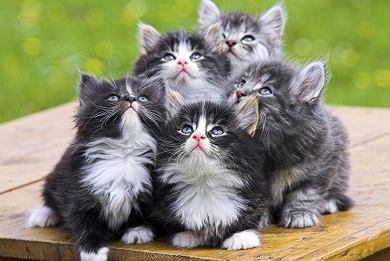
Dispatched to a home to deal with a feral mother cat and her five adorable kittens discovered in the yard, Bob Accorti, the Humane Officer for the North Ridgeville Police Department, told the homeowner that the animal shelters were full but that he would make sure that the cats went to “kitty heaven.” He then too out his revolver and shot the five kittens, estimated to be between 8 and 10 weeks old. The homeowner’s children, aged  5 months to 7 years, watched in horror from inside the house.

The mother cat escaped during the slaughter.

After a complaint of animal cruelty was raised by the Ohio Society for the Prevention of Cruelty to Animals, NRPD Chief Mike Freeman responded that no discipline was necessary or appropriate, as he reasoned that “animal organizations accept shooting as an acceptable means of euthanasia.”

The chief did concede that Accorti could have communicated better with the homeowner about how the kittens would be killed.

Ya think???

Be thankful for small mercies: Accorti was the Humane Officer. I assume one of the non-Humane officers would have stomped the kittens to death.

Let’s see…

Was shooting the kittens necessary?

Continue reading

Marion Barry and The Julie Principle

Poor Julie. Luckily for her, she didn't exist. Washington, D.C. does.

Poor Julie. Luckily for her, she didn’t exist. Washington, D.C. does.

The Washington Post just discovered that D.C. Councilman Marion Barry is unethical, and boy, is it steamed!

Well, that’s not quite fair. The Post editors authored an editorial about Barry’s latest example of his complete rejection of ethical principles other than his guiding star, which is “If it’s good for Marion Barry, it’s good for everyone else.” Barry recently published a self-congratulatory, delusional autobiography (I nearly wrote about it, but I was afraid doing so would make me nauseous), “Mayor for Life,” and right in the acknowledgments, he announces that one of his council aides, LaToya Foster, spent “nights, weekends, and many long hours of assistance” working on book at taxpayer expense.  Using D.C. government employees as his personal staff was standard operating procedure for Barry during his various pre- and post-crack terms as mayor, so there is little chance that he played it straight this time. No chance, really. A Washington City Paper investigation of calendar entries and emails showed that Foster’s work on Barry’s book “stretched far beyond her off-hours and into the D.C. Council workday, an arrangement that appears to violate D.C. Council ethics rules.”

The Post should stop editorializing about Barry’s ethics and instead focus attention where it might do some good: the D.C. voters and citizens he has thoroughly exploited and corrupted. Barry is a prime example of what I have dubbed The Julie Principle, evoking the famous lyrics of Julie’s lament in “Show Boat,” “Fish gotta swim, birds gotta fly…”   If Oscar Hammerstein was writing those lyrics today about Barry, the song, sung by voters of D.C.’s Ward 8, would go,

Fish gotta swim, birds gotta fly”

Marion Barry will cheat, steal and lie..

Can’t help loving that man of mine. Continue reading