In the Wake Of The BP Disaster, Another Andersonville Trial

Someone has to be held responsible, even if nobody is to blame.

Someone has to be held responsible, even if nobody is to blame.

I don’t know about you, but I was certainly surprised to discover that in the view of the Justice Department, two men I had never heard of, Robert Kaluza and Donald Vidrine, were the ones responsible for the April 20, 2010 explosion of a BP oil rig that caused millions of barrels of oil to leak into the Gulf of Mexico for months, polluting the waters and the shores and causing billions of dollars of damages. That is the clear implication of the decision to prosecute the two rig  supervisors for manslaughter in the deaths of the eleven BP workers who perished in the blast.

Obviously, this makes no sense at all. Other government authorities have treated the BP spill as resulting from a complex series of errors, misjudgments, and regulatory violations on the part of several companies and their management teams. The allocation of responsibilities and damages will take years to unravel. How then can Kaluza and Vidrine, who are accused of disregarding abnormally high pressure readings that according to the government should have alerted them to the danger of a  blowout at BP’s Macondo well, be the ones facing criminal charges and prison time? How can this be fair, just, or even possible?

It isn’t fair or just. It is possible because it is easier to finger the two middle-managers who inherited the flawed well equipment that was a ticking time bomb than to put a whole company, or many companies, behind bars. As the F.B.I. agent investigating the theft of the Declaration of Independence keeps telling Nicholas Cage’s treasure hunter in the Dan Brown rip-off  movie “American Treasure,” “Somebody has to go to jail.” Kaluza and Vidrine may be the designated villains for the BP spill. Their only crime was one of moral luck: they were in the wrong place at the wrong time, the final links in a tangled chain of incompetence, corruption and miscalculations. Continue reading

Ethics Dunce: Rapper and Hip-Hop Music Mogul Ryan Leslie

I wouldn't mess with this guy. No way.

I wouldn’t mess with this guy, Ryan.  No way. But be my guest…

The real mystery for me in this silly scenario is why the rapper would think he could publicly promise a $1 million reward and not have to make good on it. Any rational theories will be received with pleasure.

Ryan Leslie, who has penned a hit song or two and performs as a hip-hop artist himself, had his laptop and external hard-drive stolen while he was on tour in Cologne, Germany two years ago. Apparently he felt that the demos and songs on the equipment had potential, because he offered $20,000 for the laptop and hard-drive’s return. When that didn’t work, he upped the reward to $1 million. A man named Armin Augstein found the computer while walking his dog in a park not far from where the computer had been taken, and he turned it over to German police. When the man claimed his reward, Leslie refused to hand it over, claiming that Augstein must have been involved in the theft, though police found no evidence supporting that allegation. Continue reading

Judge Norman’s Dilemma Becomes The ALCU’s Problem

Cruel and unusual punishment? Guess again…

You’re a judge. You have power, in your sentencing, to make various miscreants suffer all sorts of creative punishments, as long as they fall well short of the rack and wheel. For example, a judge in Cleveland recently sentenced a woman (who had driven her car up the side-walk to get around a stopped school bus carrying special-needs children) to carry a sign proclaiming herself an idiot. You are faced with a troubled young man who appears to have received almost no instruction, in his 17 years, in the particulars of right and wrong. You see no productive purpose in locking him up and throwing away the key, for what he needs is a transfusion of ethics. What do you do?

In the throes of this very dilemma, Oklahoma district judge Mike Norman was sentencing Tyler Alred  for DUI manslaughter. Alred was driving his Chevrolet pickup drunk in  2011 when he hit a tree, ending the life of his passenger and friend, 16-year old John Dum. The judge gave Tyler a deferred prison sentence provided that he attend church every Sunday for the next ten years, as well as graduate from high school and welding school. Both Alred’s attorney and the victim’s family agreed to the terms of the sentence. Continue reading

Elmo and the One Recant Rule

When we last left the sad saga of Kevin Clash, the Muppets puppeteer whose voice and hands give cute little Elmo his panache, the 23-year-old man who had accused Clash of having underage sex with him had recanted, agreeing with Clash’s defense that their relationship was consummated later, when both were consenting adults. I opined that this would do little to rescue Clash’s career, as the most innocent Muppet on Sesame Street could not survive being operated by a man who was now associated with gay sex, consensual of not. This likely result seemed unfair to Clash, but is nonetheless a responsible decision on the part of Clash’s employers, the Children’s Television Workshop, whose duty is to their mission and core audience, not to one unmasked Muppet.

Clash’s prospects have not improved. It was revealed last week that the recant was bought and paid for by Clash, who handed Sheldon Stephens $125,000 to deny his previous accusation and never to raise it again. Needless to say, a recant induced by monetary compensation is not a reliable one, and leaves as many questions open as the original claim, if not more. In a settlement, the accuser is paid to drop any legal action, but doesn’t agree to retract the original claim. What Clash did is called “buying testimony,” or ” a pay-off.” Continue reading

The Despicable Non-Crime of Briana Augustenborg

Alexander Jordan, 2002-2012

In US v. Alvarez, the U.S. Supreme Court upheld the 9th Circuit’s ruling that the Stolen Valor Act, which made it illegal to claim military honors that one has not in fact received, was unconstitutional. There is, the courts say, a Constitutional, First Amendment right to lie. Fraud—using lies for monetary profit, is already a crime, the courts argue, and so is slander. Making up stories about yourself and others may be unwise, annoying, even hurtful. Still, it is protected speech; so sayeth a majority of the U.S. Supreme Court, and it is now the law of the land.

This was a bad ruling, and I was surprised at it. Briana Augustenborg shows why.

One day this year she shared a story with a co-worker about a little 10-year-old boy she knew who was terminally ill with leukemia. The boy, Alex, was a big fan, she said, of Eagle Valley (Colorado) High School’s  football team. The colleague, a woman named Holly Sandoval, had a son that played on the team, and she offered to share the story with her son and get the team to sign a football for Alex. Continue reading

Welcome To The World Of “Expert Witnesses”

Then there’s the arrow that reads, “Willingness to say what we need to win the case.”

It doesn’t happen often, but it does pay well and can be interesting: occasionally I accept an engagement as a testifying ethics expert in a law suit. I have a rule, however, that surprisingly (or not) seems to come as a shock to many potential clients. They may be buying my opinion, but they are not necessarily buying the opinion they want. After I review the facts, documents and issues involved, I will render my opinion, but no promises. I won’t take a case unless I generally agree that the theory of the side hiring me is plausible, but after all the facts are in and I’ve done my analysis, if the case of the client whose lawyer hired me is weak, I will say so.

Strangely, some lawyers seem to have a problem with this, even when the expert insisting on integrity is an ethics expert. I am currently in settlement mode with a law firm that hired me to render my opinion regarding the billing submitted by another firm to the law firm’s client. Part of their argument, in claiming malpractice against the billing firm, was that its billing was excessive, unreasonable and inflated, a violation of  Rule 1.5 of the Rules of Professional Conduct governing lawyers. I reviewed the billing statements, and they could have been inflated—some of the methods of stating who did what work was vague, and there sure was a lot of work billed on the matter, by an astounding number of lawyers—-but I could only assess that to a level of certainty sufficient to be certain in my own mind, much less state it under oath, if I could examine what all that work produced. This the law firm that hired me refused to produce, perhaps because the time it would have taken me to review it thoroughly would have been very expensive. But how could I decide whether the amount of money billed for a product was unreasonable without being able to determine what the product was? I couldn’t. Thus my written opinion stated what I could say honestly and with authority: based on the billing statements and the materials I was allowed to review,  I could only speculate on whether the billing was proper or not. It was possible. More than that, I could not say.

The law firm was not happy, although they never spoke to me about it. The firm just settled the case, and never paid me. (My very reasonable fee for services was $6,000, and if you’ve ever spent much time reviewing legal billing statements, you would know that they got off cheap.) You see, it didn’t really want an ethics expert, or an independent expert, or an honest, informed, professional analysis. They wanted a pre-determined opinion, bought with cash, delivered to specifications. Well, they won’t get that from me.

Welcome to the world of “expert witnesses.”


Meet the Grants!

Hmmm…I wonder who’ll play Jennifer in the Lifetime movie?

If this developing story from Seattle was a Lifetime Network movie, I would regard it as proof positive that LMN was running out of plausible plots. Since it appears to be real, I regard it as proof positive that life is running out of plausible plots.

Meet the Grants. They make fun couple David Petraeus and Paula Broadwell look like Mike and Carol Brady.  Described as a Seattle “power couple”, he’s a successful lawyer, and she’s city prosecutor. He’s also an accused serial rapist.

Dan Grant faces seven charges of raping Chinese women working as massage therapists, and another charge for first-degree burglary. He has pleaded not guilty to all charges. The chances that there is sufficient evidence to charge a Seattle lawyer as a serial rapist and that the evidence is nonetheless erroneous are slim, as are the chances that the police would charge the husband of a prosecutor without an air-tight case. Still, the word alleged needs to be attached to all of this. This isn’t just alleged, however: a recently released search warrant shows that prosecutor Jennifer Grant moved her husband’s SUV from in front of the massage parlor where he allegedly raped one of the Chinese women to a location far away from both the parlor and the Grants’ home. Gee, thanks, honey! Now why would she do that? The Good Wife Prosecutor swears that she took no evidence from the SUV except a garage key card, but a search warrant affidavit indicates that police believed that the vehicle contained a knife, condom wrappers, phony police ID and DNA. Continue reading

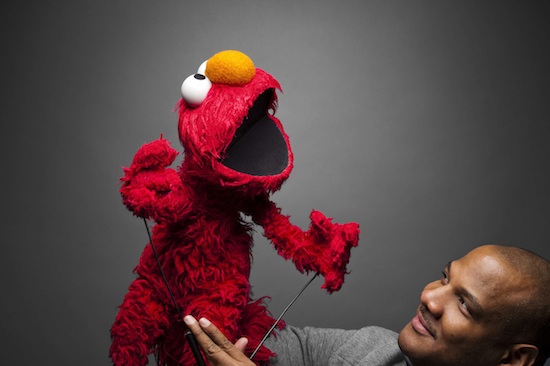
Ethics Quiz: Elmo’s Problem

And now, Muppet ethics.

Sorry, Elmo.

Kevin Clash is the voice and operator of beloved Elmo, the cute lttle red monster  on “Sesame Street.”  A young man has accused Clash of molesting him when he was a teen.  Clah denies the allegations, claining that the relationship was between consenting adults. The Children’s Television Workshop says its investigation did not substantaite the accusation; nonetheless, Clash is being disciplined for says the show, is being disciplined for “inappropriate use of company email,” and is unlikely to have his hand in Elmo any time soon, if ever again. The alleged victim is probably not through with Clash, and this could get ugly.

Your Ethics Quiz challenge, should you choose to accept it, is this:

Assuming nothing illegal is proven regarding Clash’s sexual relationship with the accuser, and it remains a “he said/he said” dispute, should Clash remain the voice and puppeteer behind “Sesame Street’s” most innocent character? Continue reading

There Is Nothing Noble About A Deathbed Confession…

Don’t you just hate it when you think you are going to die and confess a horrible crime and then you miraculously recover?

…which is why this O. Henry-esque story makes me smile.

Someone stabbed Joyce Goodener in the neck, set her on fire and bludgeoned her to death with a cinder block in 1995. Nobody was arrested for her murder. But three years ago, James Washington, a Tennessee prisoner, thought he was dying from a heart attack. The downside of confessing to a crime right before you kick off is nil, and the up-side might be admission through the Pearly Gates, so Washington confessed to a prison guard that he had killed Goodener. “I have something to tell you. I have to get something off my conscience and you need to hear this,’” he told the guard, James Tomlinson. “I killed somebody. I beat her to death.”  He confessed all the gory details. Then, conveniently unburdened, Washington waited to go into the light, to mercy, forgiveness, and maybe a nice pair of wings and a golden harp.

Oops. He recovered. Now he’s facing at least another 50 years in prison.

There is nothing admirable or ethical about a death-bed confession. It doesn’t show contrition, honesty, accountability or good citizenship. Such confessions are examples of self-serving cowardice. Although it is true that the world would be a better, safer place with Washington gone, the fact that he now has to face earthly retribution rather than reap the benefits of heavenly absolution is the essence of justice.

But hey, thanks for sharing, James!

_____________________________________________
Facts and Graphic: Daily News

Offense By Proxy: “Laugh At The Crippled Girl!”

The Offender and his friend,the Unoffended Offended.

Forest Thomer II  says he was conducting  “guerrilla marketing” when he went to a May 23 “Party in the Park”  hosted by the local Cincinnati Chamber of Commerce. Pointing to Ally Bruener, wheelchair-bound because of Muscular Dystrophy, he quizzed various groups in the crowd, asking, “Do you want to laugh at the crippled girl?” Then Bruener, who is an aspiring comic, wheeled up, told a joke and announced the location and time of  her next performance.

Surprise! Someone was offended—so offended that the police were called. They threatened to shock Thomer with a taser and then arrested him, charging disorderly conduct by virtue of “grossly abusive language.” This could have sent Thomer to jail for a month. When Thomer’s attorney made it clear that he was going to argue censorship, the city changed the charge to “Turbulent behavior,” whatever that is. Amazingly, this ridiculous case actually went to trial, and after four days that could have been better spent making napkin holders out of popsicle sticks, a jury found Thomer “not guilty.” Continue reading