I really don’t know what to make of this, but I think it means something,and whatever it is, it’s important to remember and learn from it. Now if I could only figure out what it is.
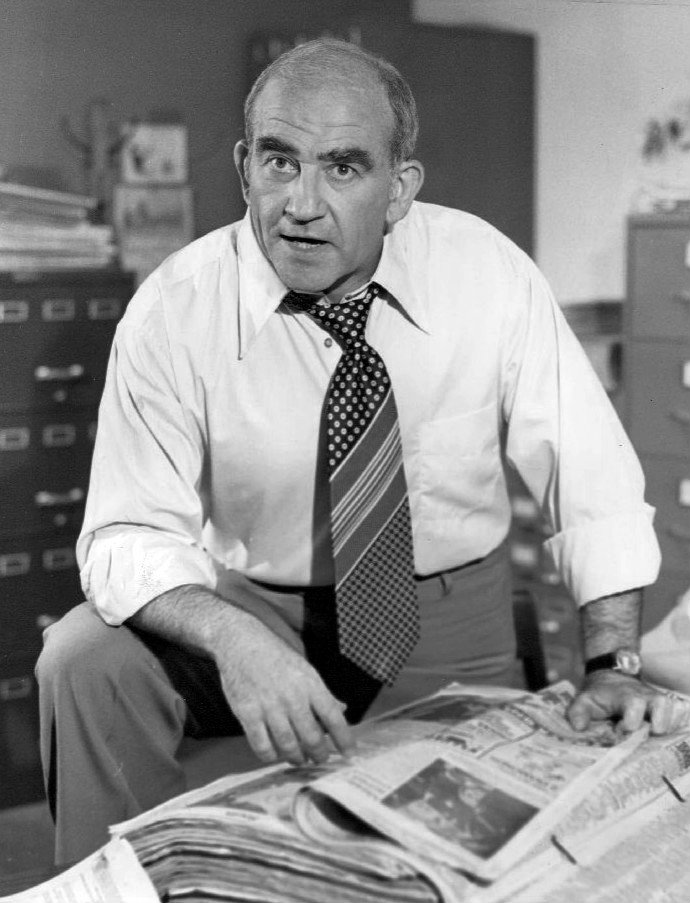
Here is what Ed Asner, the elderly “Mary Tyler Moore Show” and “Up” actor—he was also a bad guy in one of my favorite John Wayne Westerns, “El Dorado”—said in response to an interviewer’s question about why the Hollywood anti-war left was staying out of Obama’s self-made Syria controversy, in such marked contrast to its vocal opposition to the Iraq invasion (Where have you gone Janeane Garafolo, our nation turns its lonely eyes to you…OOOOO! ).
Spake Ed:
“A lot of people don’t want to feel anti-black by being opposed to Obama.”
Now, Asner has long been a vocal member of the Hollywood liberal activist community. Presumably, he still is well-connected and knows something about the culture and political pulse in Tinseltown. So I want to know: What can we glean from this ridiculous statement? What does it mean? Continue reading →
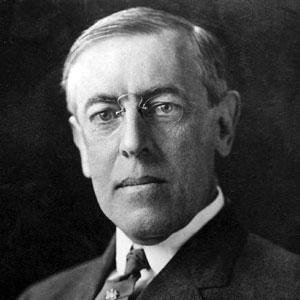
“Berg is not uncritical of Wilson’s biggest lapses — his tolerance of segregation, his suppression of civil liberties and his “highly questionable” actions (or paralytic inaction) after the stroke he suffered in 1919, during his grueling campaign to win Senate approval of the League of Nations.”
—Former Clinton Speechwriter and author Jeff Shesol, in his Washington Post book review of historian Scott Berg’s new biography of Woodrow Wilson, “Wilson.”
All right, he was a racist, but he was GREAT racist, right, Jeff?
There is a nasty piece of dishonesty in this quote, all the more sinister because it slides right by, altering your understanding of history and reality without you even knowing it. (Is it any surprise that Shesol wrote speeches for Bill Clinton?) Did you catch it?
It is the phrase, “[President Woodrow Wilson’s] tolerance of segregation.”] Continue reading →
I live in the Washington, D.C. area, and at this moment even the beginning of the NFL season, usually the one thing everyone here (except me) usually cares about, is being over-shadowed by the drama of the looming Congressional vote on Syria. What was assumed—why, I cannot imagine–to be a likely rubber stamp with only an insufficient number of Republicans providing opposition because, as we all have been told repeatedly, they will oppose the President on anything, has materialized as strong bi-partisan opposition. The Washington Post estimated last night that the votes in the House are currently running 3-1 against the symbolic-and-deadly-but-promised-to-be-non-committal missile strikes on pre-announced targets. This is the most encouraging development in the government since President Obama was elected, I am tempted to say. It shows that this is not a nation of lemmings, and that the separation of powers has its virtues after all. Nonetheless, interesting ethical arguments are arising in favor of votes both no and yes.
The no arguments are varied, and reach the same conclusion from different positions, some more ethical than others. The pacifist Left and the isolationist Right, both irresponsible and dedicated to ideology over reality, are on the same path here, and would be on that same path even if the President’s argument for missile strikes was strong. Others, including me, but also those who supported more extensive military action in the Bush administration, fault the plan because of its dubious results, its contradictory logic, and the feckless and troubling way the President brought us to where we are.
I just heard an interview with a Republican House member who announced that he reversed his initial support for the missile strike after hearing Obama’s remarks in Sweden. After hearing Obama appear to deny that he drew the red line—a rhetorical point that was too cute by half and clumsily stated—this Congressman decided that he couldn’t believe anything Obama said or promised regarding Syria, including his assurances that nothing would lead to “boots on the ground.” (I would argue that his assurances that nothing would lead to boots on the ground is, if not dishonest, frighteningly irresponsible.)
The yes arguments are more perplexing. Naturally, there are those who, against all logic, simply adopt the contradictory and militarily nonsensical arguments John Kerry was asked to present to the Senate (apparently because President Obama knows that he appointed an inarticulate—but loyal!!!—dim-bulb, Chuck Hagel, as Secretary of Defense—but that is another, though related, issue). Liberal columnist Eugene Robinson, who has won an Affirmative Action Pulitzer Prize and who has proven that he will cheer whatever his fellow-African American in the White House does, even if he makes a decree like the South American rebel-leader-turned-dictator in Woody Allen’s “Bananas”...
“From this day on, the official language of San Marcos will be Swedish…In addition to that, all citizens will be required to change their underwear every half-hour. Underwear will be worn on the outside so we can check. Furthermore, all children under 16 years old are now… 16 years old!”
made this “argument”…
“The issue can’t be who wins that country’s civil war. It has to be whether the regime of Bashar al-Assad should be punished for using chemical weapons — and, if the answer is yes, whether there is any effective means of punishment other than a U.S. military strike…Let me clarify: I believe that a U.S. strike of the kind being discussed, involving cruise missiles and perhaps other air-power assets, can make it more likely that Assad loses. But I also believe that — absent a major commitment of American forces, which is out of the question — we cannot determine who wins.”
Gee, thanks for clarifying, Eugene!
Other, more coherent voices argue for endorsing Obama’s plan do sent a few missiles—not any that might hit Assad or his weapons, mind you– because they argue, even if the plan is weak, misguided, dangerous or certifiably bats, the President and, by extension, the United States will be dangerously weakened if a call to arms is rejected. This is essentially the argument of rational conservative James Taranto. Here is former Bush speechwriter Michael Gerson, this morning:
“…During the Syrian crisis, the Obama administration has generally waged a war of words and then used those words casually and clumsily. President Obama declared that Assad “must go” when his departure seemed inevitable — without a strategy, or even the intention, to achieve this goal when it became difficult. He drew a chemical-weapons “red line” that became a well-trodden thoroughfare. The Obama administration revealed details of an imminent military operation, which was promptly repudiated by the parliament of our closest ally, then abruptly postponed. The administration seemed to indicate that United Nations support for a military strike was needed — before declaring it unnecessary. It seemed to indicate that a congressional endorsement was superfluous — just before staking everything on securing it. Obama is inviting members of Congress to share responsibility for a Syrian policy that has achieved little to justify their confidence. In fact, he has undermined political support for the legislative outcome he seeks. For more than five years, Obama has argued that America is overcommitted in the Middle East and should refocus on domestic priorities. Now he asks other politicians to incur risks by endorsing an approach he has clearly resisted at every stage…”
Wait…this is how Gerson argues that Congress should vote yes? Indeed it is…
“Legislators are not arguing between preferred policy options, as they would on issues such as health care or welfare. They are deciding if they will send the chief executive into the world with his hands tied behind his back. This would be more than the repudiation of the current president; it would be the dangerous weakening of the presidency….even if this military action were wrong or pointless, it would have to be sufficiently dangerous to justify the gelding of the executive branch on a global stage. A limited military strike may be symbolic. But for Congress to block that strike would be more than symbolic. It would undermine a tangible element of American influence: the perception that the commander in chief is fully in command.”
This is a good time to stop and offer today’s Ethics Alarms Ethics Quiz, based on the reasoning of Gerson and others:
Are members of Congress ethically obligated, by loyalty and responsibility for the image and credibility of the U.S. abroad and to avoid weakening the institution of the presidency, to support the missile strikes on Syria, even if they and their constituents believe that to do so is wrong and misguided?
Some Senators are Red, and some are Blue. Then there’s Ed Markey…
Massachusetts Senator Ed Markey, who is at least temporarily filling John Kerry’s seat in the U.S. Senate, listened to the testimony and questioning regarding President Obama’s embarrassing plan to attack Syria just enough to kill a few people and be annoying (to prove he really, really meant what he said about that red line), and then cast his vote on the Senate Foreign Relations Committee’s compromise resolution approving the attack as “present.” Why? Well…
1. He’s a long-time Democratic loyalist from the House, and would no more oppose a Democratic president than fly…
2. He’s from peacenik Massachusetts (just like me!), and he knows that in the only state to give George McGovern its electoral votes, voting to drop missiles on foreign land that haven’t attacked us first is very unpopular, and…
3. He’s a lily-livered coward and a disgrace to his state.
Markey is also a liar, as his ridiculous “explanation” for his abdication of responsibility shows: Continue reading →
Today, at his press conference in Stockholm, President Obama raised many a hackle by saying,
“First of all, I didn’t set a red line,” Barack Obama said today at a press conference in Stockholm. “The world set a red line. The world set a red line when governments representing 98% of the world’s population said the use of chemical weapons are [sic] abhorrent and passed a treaty forbidding their use, even when countries are engaged in war.”
The President’s critics take this as yet another of his habitual accountability dodges, even though, for once, he didn’t blame George W. Bush. I will give the President the benefit of the doubt here, as he was speaking extemporaneously and is infamously imprecise when he is not delivering a prepared speech. He is saying that the bright line prohibition on chemical and germ warfare was not devised by him, that it is a matter of international law of long-standing, and that his red-line statement only re-affirmed the United States’ pre-existing obligation, in his view, to take action when such a line is crossed. I have no problem with that; the problem is, as this episode has shown, that President Obama did not and does not mean what he said, and the consequences he has devised for the crossing of that red line by the Assad government manage to be weak, insignificant, inadequate, cynical, cruel, dangerous, misdirected, ill-timed and illegal (under international law) all at the same time. That’s quite an accomplishment, but not one I’d want my mother to hand on the fridge.
The Wall Street Journal’s James Taranto, who, at his best, delivers a clarity of ethical analysis and a precision of language that are unsurpassed in U.S. punditry, moved on from mocking the latest red line clarification to an excellent discussion of why the credibility of the American President, and leaders generally, is so important. Credibility is the practical result of integrity: that is the ethical virtue President Obama’s handling of this matter betrayed.
Indecisiveness and narcissism makes great drama, bad leaders, and gets people killed , too.
I try to think about the ethics of war as little as possible, much less write about it. It is too frustrating, and ultimately a waste of time: the same debates and philosophical arguments have been made, eloquently and passionately, for not just hundreds but thousands of years, and only the mechanics of warfare have changed.
My father, a war hero and a man who would have loved to have devoted his life to the military if his wounds hadn’t prevented it, used to say that war was the stupidest of all human activities. “There is nothing good about war,” Dad said. “Yet it is sometimes necessary and unavoidable. And don’t ask me to reconcile those statements: I can’t. Nobody can.” I remember asking him about General Patton, who led my father and his comrades during the Battle of the Bulge. “Patton supposedly loved war,” I said. “He did,” my father replied. “He was insane.” He loathed Patton.
The Syria crisis has triggered all the same arguments again, and I want no part of them. Ethical analysis doesn’t work where warfare is concerned. The conduct of ritualized killing combatants and innocents is, at best, an extreme utilitarian act that always creeps into ethically indefensible “the ends justify the means” territory before the end of hostilities. So many invalid rationalizations are used to justify killing—“It’s for a good cause,” or the Saint’s Excuse, prime among them, with “They started it!” following close behind—that it is useless to tote them up. The war most often cited as a “moral war,” World War II, still involved the killing of innocent non-combatants by the Allies. ( My father remained amazed at the efforts at “limited war” in Iraq, noting that Allied soldiers were expected to accept civilian deaths as unavoidable and not a matter of concern. He also felt that the current dedication to half-measures just guaranteed longer wars, more deaths, and less satisfactory results. “It’s war,” he said. “You can’t make it humane or sensible; you can only make it shorter. Telling the military that it has to waste time and military personnel to avoid civilian deaths makes no sense. There is no such thing as a humane war.” Naturally, he approved of Truman’s decision to drop the atom bomb, in part, he admitted, because he was slated to be in the Japanese mainland invasion force that was likely to sustain up to a million casualties.) The Allies engaged in atrocities too, such as the fire-bombing of Dresden.
You want to talk about the problem of supporting terrible people and factions to defeat another? World War II is the champion on that score. The U.S. partnered with Stalin, who was a greater mass murderer than Hitler, and defeated Japan, the enemy of China, allowing Mao, a greater mass murderer than Stalin and Hitler combined, to enslave a billion people. The peace negotiated after the Second World War was only slightly less destructive than the one that ended the First World War (and led directly to the Second): The U.S. handed over half of Europe to Communism, laying the seeds of the Cold War that only avoided ending humanity in a nuclear holocaust by pure moral luck. The fact that WWII is the “best” war powerfully makes the case: ethics and war have nothing to do with each other. Each renders the other useless and incoherent. Continue reading →
“Can we please drop/reform the “liberal” and “conservative” labels already? You state that Benedikt is a bad liberal; not quite true, she is utterly illiberal. She argues for state-compelled coercion circumventing individuals’ choice of how to raise their children. Her argument rests on illogical Marxist claptrap that prioritizes “the good of society” ie: the collective, over individual free will. I take back my previous statement, she is not illiberal, she is positively anti-liberal.
“I realize that this is quibbling over semantics, but in this case a rose by any other name really does smell differently. The Left and Democrats in general have self-identified for decades as “liberal”. While this label may have been appropriate 50 years ago, it certainly is not now. The Republicans’ social conservatism is rightly derided as illiberal in that it expects individuals’ sexual preferences to be dictated by the state. However, the Democrats’ claims of being “liberal” are becoming more laughable everyday; so much so that they have essentially become a parody of the classical liberal values they assure the population that they stand for. In fact, it appears as though the only things the Democrats envision people being free to do are the things the social conservatives oppose; in short, the Republicans want the state in your bedroom, the Democrats want the state everywhere else.
“We don’t have a “conservative” party and a “liberal” party, we have two statist parties with no alternative. Take gay marriage. I gave tentative applause for the Obama admin taking an explicit stand in support of it (truth be told, IMO the true “liberal” stand on this issue would be for the state to get out of the marriage business altogether, straight, gay, polygamous, whatever and let freedom of association dictate how people live with one another, but I guess that makes me a radical…). However, look at the illiberal consequences of this stance; wedding vendors with an admitted religious opposition to gay marriage but no prejudice against gays personally being forced by the government to render services against their will to gay weddings (see NM supreme court case). It’s beyond belief and IMO a violation of the 13th amendment; how can that be considered “liberal”? Continue reading →
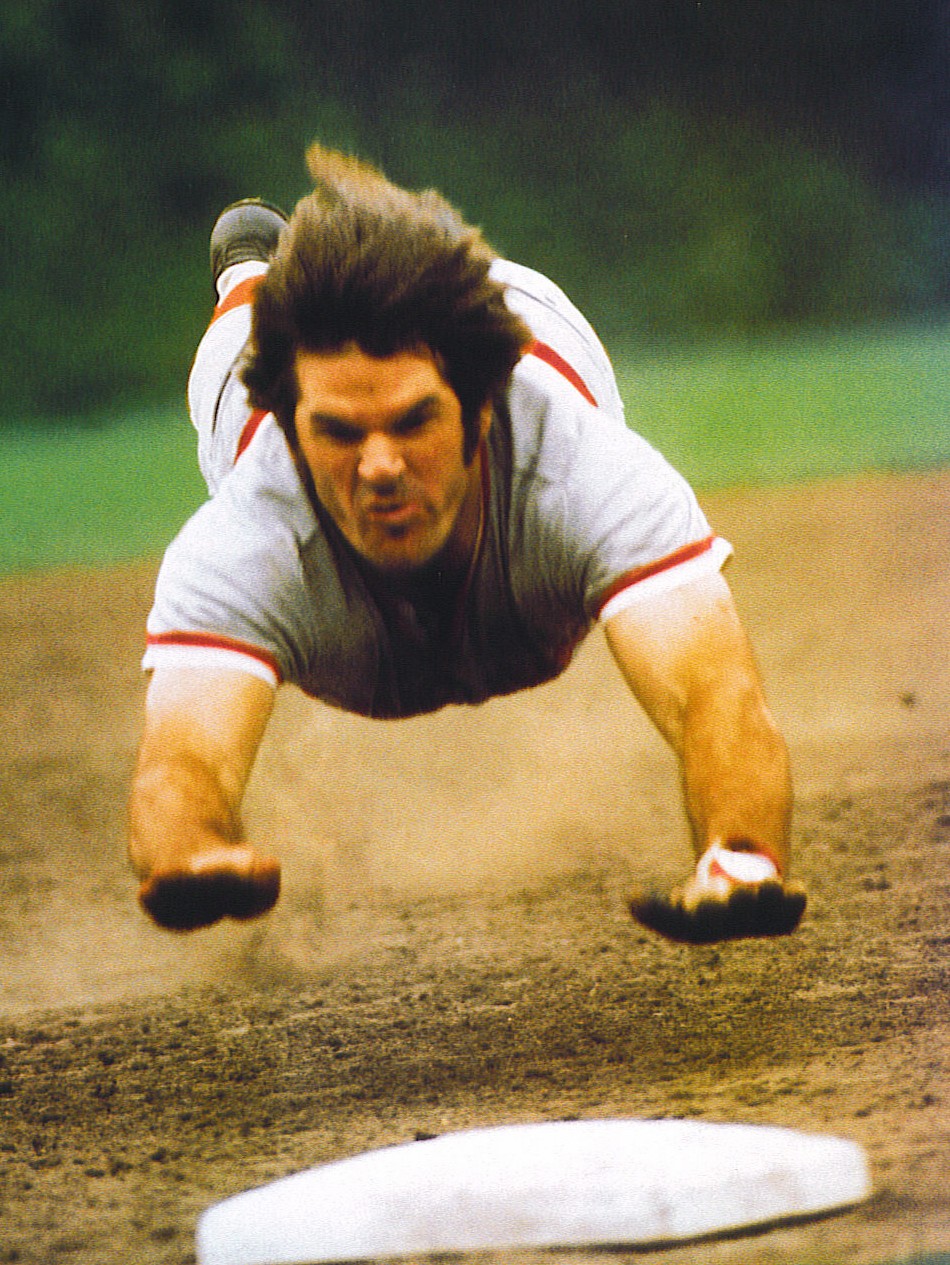
Pete Rose may have been a fool who gambled on baseball, but he never, ever, failed to run hard to first base.
The Washington Nationals’ blossoming star outfielder Bryce Harper provided a graphic lesson in the importance of these ethical values in the breach of them last night, when his lapse of character on the field contributed to a loss D.C.’s struggling major league baseball team could ill-afford.
The Nats have been one of the baseball season’s greatest disappointments. A team that had the best record of all last season and was widely favored to be a World Series contender, it has barely won more games than it has lost, and is hopelessly trailing the Atlanta Braves for the National League East championship. A wild card berth in this season’s play-offs also looked like a futile hope, until a recent winning streak and a flash of 2012 brilliance allowed fans to dream of a thrilling late-season comeback. It is possible, but time is running out, and every game counts. To have any chance, the Nats have to win games like last night’s against the sub-par Mets.
With the Mets leading 3-2, Washington had mounted a two-out rally, and had runners on first and second base. Harper, the team’s youngest, most exciting and most talented player was up at bat, but he bounced an easy ground ball to the Mets second baseman. Clearly disgusted with his failure to come though in the clutch, Harper merely jogged to first base. If he had run hard, which was his trademark last season when Harper’s energy and enthusiasm made him an instant fan favorite, he would have reached first base safely, loading the bases, for the fielder unexpectedly booted the ball. But because Harper was loafing, the second baseman had time to recover and throw to first for the out. It was the last chance the Nationals had to tie the score, and they lost a game that the team needed to win. Continue reading →
“You’re right, Abe; they’re all rock-heads. I’d like to beat some sense into them with a big stick, but I have no arms.”
Not a single invited member of the Republican leadership accepted an invitation to attend the official March on Washington anniversary event yesterday.
This is practically all that needs to be said. That fact alone is sufficient to show an appalling lack of leadership, respect, common sense, common purpose, values and priorities within the highest reaches of the party.
Everyone had a “good reason,” of course—Boehner, Canter, McConnell, McCain, Romney, both Bushes, But the excuses don’t matter. A responsible, intelligent, public minded, fair and statesmanlike political organization would have made certain that a representative delegation attended, and prominently so. How or why no major Republican figures were present is irrelevant. If the commemoration of the March on Washington, Dr. King’s iconic and transformative speech, and the cultural transformation of America that they helped achieve are as important to the party as they must be--because of the GOP’s origins, because of what it represents, and because, dammit, Republicans are Americans, then attendance was mandatory. They manage to make it to the State of the Union and Presidential inaugurations, because they recognize it as important to do so. They should be able to recognize that showing solidarity with the Democrats, African-Americans and the public on the core principle of equal rights for all is even more important. Continue reading →
“The vision preached by my father a half-century ago was that his four little children would no longer live in a nation where they would judged by the color of their skin but by the content of their character. However, sadly, the tears of Trayvon Martin’s mother and father remind us that, far too frequently, the color of one’s skin remains a license to profile, to arrest and to even murder with no regard for the content of one’s character.”
–— Martin Luther King III, the son of the martyred civil rights leader and humanist, speaking in front of the Lincoln memorial before thousands gathered on the National Mall to commemorate the upcoming 50th anniversary of Dr. Martin Luther King Jr.’s 1963 March on Washington, and his iconic “I have a dream” speech.
The passage was despicable and inexcusable, an insult to his father’s legacy and all of the courageous and sincere Americans, black and white, who have worked hard and effectively this past half-century to make remarkable progress toward the society that Rev. King envisioned.
“The tears of Trayvon Martin’s mother” have exactly nothing at all to do with racial profiling or a “license to murder.” King’s son, proving once again that greatness of character and mind is seldom passed on to succeeding generations, chose to engage in divisive, misleading and cheap rhetoric that undermine his father’s goal of bring the races together. In this he was certainly consistent with the motivations of the event’s organizers, prominent among them Al Sharpton, whose paycheck and existence on the national scene depends on furthering the illusion of widespread racial discord, prejudice and injustice.
Even allowing for the excesses of oratory, the younger King’s speech deliberately misrepresented the historical, legal and factual record, which is this: a mixed-race citizen was pre-judged to be guilty of racism and murder by the color of his skin, and then demonized in order to provide a rallying point for a race-based political agenda. The civil rights establishment, aided by a complicit media and irresponsible politicians, distorted the facts of a tragic encounter so effectively that most Africans-Americans believe the lies rather than the facts, and bullied a politicized prosecution into bringing a criminal case to trial it could only win by jury intimidation, for it did not have sufficient evidence. Against all odds, a courageous jury embodied the best of the American justice system by properly acquitting an unpopular defendant who could not be proven guilty beyond a reasonable doubt, a standard that is crucial to maintaining racial justice in the courts. Despite this inspiring display of character, the organizers of today’s event, its supporters, and most of those in attendance, have chosen to judge those jurors as biased, comparing them to the bigoted jurors in the Emmett Till murder trial, based on the color of their skin.
How immensely hypocritical, destructive and sad.
Martin Luther King propelled the cause of racial harmony and justice forward on August 28, 1963.
Today his son made pushed that cause backward to-day in favor of hate, suspicion, and ignorance, 50 years later.