Ethics Observations On The NSA Surveillance Revelations….

NSA

My current ethics observations on the unfolding NSA story:

  • I do not have enough facts to conclude that what NSA whistleblower Edward Snowden did was truly heroic, but if one is going to be a whistleblower, Snowden did it the ethical way. Snowden decided not to hide his identity, and accepted responsibility for his actions. If his motives are as he has represented them-—“I understand that I will be made to suffer for my actions,” but “I will be satisfied if the federation of secret law, unequal pardon and irresistible executive powers that rule the world that I love are revealed even for an instant,” he wrote in a note accompanying his first set of leaked documents—-then he acted courageously and selflessly. Whether or not he also acted responsibly depends on whether he correctly weighed the possible harm of his leak against its benefits. Since its benefits include exposing what may well be ruled to be an unconstitutional and overly broad violation of citizens’ rights, I’m not certain any harm would sufficiently outweigh them in ethical balancing.
  • If it is true, as he says, that Snowden himself had the power to examine private communications of citizens who were not suspected of any crime, then the representations of Sen. Feinstein, the President and others that the NSA program was reasonable and not an abuse of power is not only untrue, but a lie. Snowden is a high school dropout, a consultant, about whose judgment, reliability and trustworthiness the NSA knew next to nothing, and what they thought they knew was obviously wrong, since he betrayed the agency. If such massive power to invade private communications and thoughts is casually placed in the hands of such an individual by a security agency, what other faceless future power-abusers have been similarly armed? Continue reading →

Eric Holder Has President Obama’s “Confidence”—What Does That MEAN?

Uh, Mr. President? When "mediocre" is puffery, something's wrong.

Uh, Mr. President? When “mediocre” is puffery, something’s wrong.

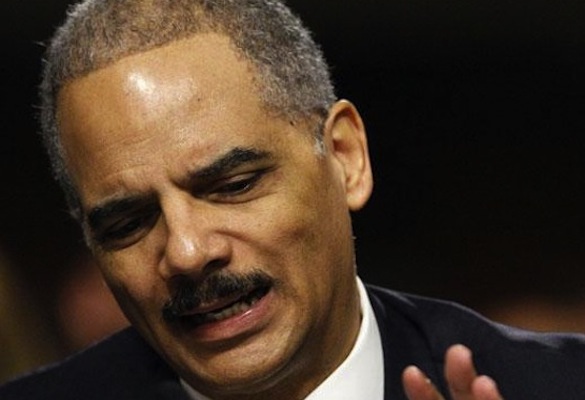
Two weeks ago, the various pundits on multiple current events talk shows agreed that the hopeless, untrustworthy, bunging and double-talking Attorney General, Eric Holder, would remain in office despite evidence beyond a reasonable doubt that he is a liability in the job, as long as “he retains the President’s confidence.” Sure enough, after another week in which Holder’s Justice Department came under even more bipartisan fire, White House political hatchet-woman Valerie Jarrett told the press that Holder  “will be in his position for quite a while” and “continues to have the president’s full confidence and respect.”

Not to be unkind, but this tells us that… Continue reading →

Ethics Dunces: The Wall Street Journal Editors

nsa-wiretap-eagle_0There may be good arguments to support that massive trolling of Verizon Business phone records by the NSA revealed yesterday, but so far, the justifications are either disingenuous, rationalizations, or leaps down the slippery slope. None exemplified this better than the Wall Street Journal, in its editorial defending the recently revealed surveillance. My favorite paragraph:

“The critics nonetheless say the NSA program is a violation of privacy, or illegal, or unconstitutional, or all of the above. But nobody’s civil liberties are violated by tech companies or banks that constantly run the same kinds of data analysis. We bow to no one in our desire to limit government power, but data-mining is less intrusive on individuals than routine airport security. The data sweep is worth it if it prevents terror attacks that would lead politicians to endorse far greater harm to civil liberties.”

Hmmm.

  • “The critics nonetheless say the NSA program is a violation of privacy, or illegal, or unconstitutional, or all of the above.” “The critics?” Can someone honestly say that taking my personal and private phone communications data without my knowledge or consent is not a violation of privacy?  To argue that is the definition of Orwellian. “We’re not violating your privacy, we’re just secretly examining your private communications.” Oh. Continue reading →

Ethics Quote of the Week: The New York Times

Late to the party

“Within hours of the disclosure that the federal authorities routinely collect data on phone calls Americans make, regardless of whether they have any bearing on a counterterrorism investigation, the Obama administration issued the same platitude it has offered every time President Obama has been caught overreaching in the use of his powers: Terrorists are a real menace and you should just trust us to deal with them because we have internal mechanisms (that we are not going to tell you about) to make sure we do not violate your rights. Those reassurances have never been persuasive — whether on secret warrants to scoop up a news agency’s phone records or secret orders to kill an American suspected of terrorism — especially coming from a president who once promised transparency and accountability. The administration has now lost all credibility. Mr. Obama is proving the truism that the executive will use any power it is given and very likely abuse it.”

—–The New York Times, a largely passive Obama cheerleader and enabler for the past four years, in an editorial regarding the revelations of NSA monitoring of personal phone calls of American citizens, The Times approvingly quoted Representative Jim Sensenbrenner, (R-WI), who introduced the Patriot Act in 2001, that “Seizing phone records of millions of innocent people is excessive and un-American.”

There is not much that needs to be added to this, except… Continue reading →

Indoctrination Ethics: Boy, Do I Ever Hate Thinking Like This, And Curse The Irresponsible Leaders Who Made Me.

constitution-burning1

In Huntingtown, Maryland, a school bus driver heard an 11-year-old boy talking about how he wished he had a gun to protect everyone from bad guys. You know—like a normal American kid, or at least like how a normal American kid used to be able to think of himself, until silly, freedom-fearing, anti-violence fanatics and ideologues were allowed to get their hands on the controls of the culture. But this is 2013, and we have an irresponsible President who speaks about justifying any measure “if it will save the life of just one child.” So the bus driver reported this innocent conversation to the principal, who suspended the sixth grader for ten days, telling him that “with what happened at Sandy Hook if you say the word ‘gun’ in my school you are going to get suspended.”

Fact: This is blatant indoctrination, state-sponsored bullying and attempted mind-control. Continue reading →

A Handy Review of Dishonest Scandal-Obscuring Talking Points

Ah, yes, such pretty "talking points"!

Ah, yes, such pretty “talking points”!

Let me begin by noting that I would not prefer to keep writing posts about Benghazi, the I.R.S., Attorney General Holder, and his inept and politicized Justice Department. All of the related scandals involve outrageous misconduct by the Democratic administration, together with the resulting attempt by Republicans to both uncover what occurred in the face of concerted Administration stonewalling and obfuscation, and to score political points while embarrassing President Obama and Democrats in the process. Since in this matter the offenders are either Democrats or those under a Democratic administration, it is impossible to comment on the matter fairly with out appearing partisan to some otherwise reasonable readers.

I should not have to write repeatedly about these collective failures, fiascoes and abuses of power, and would not if the leaders responsible would just tell the truth, stop spinning and using smoke screens, apply appropriate sanctions and consequences to the individuals involved. This Administration refuses to do that, and too many major media outlets refuse to do their jobs and pressure them to do that. Instead, a massive disinformation campaign has been mounted, presumably coordinated by the White House and the highest levels of the Democratic party, to minimize the situations involved, confuse the public about what occurred, misrepresent the seriousness of the implications of the events, and allow them all to fade away, ideally while performing political jiujitsu on Republicans and promoting a public backlash that might even benefit Democrats, as the impeachment of President Clinton did in 1998.

This must not be allowed to happen. I am under no delusions that I have any influence over whether it does happen or not: this blog has a good sized audience for an ethics blog, but that is like a restaurant saying that the pickled lizard-brains seem to be popular tonight.  I do believe that publishing my best objective ethical analysis during this disturbing  period might, might, somehow bolster the efforts of those who do have such influence.

Yesterday at the Congressional hearings on the I.R.S. targeting of conservative groups, a couple of misleading arguments by administration defenders officially reached dishonest talking point status, joining many others we have heard for the past two months (or more) and continue to hear. “Talking points,” used in this context, are arguments, statements and phrases devised by political strategists,  usually field-tested in focus groups and polls, and then emailed out to officials, party members, operatives, talking heads, friendly journalists and columnists and others to repeat in public statements in the media, over and over again, to influence public opinion. They are designed to shift blame, confuse the issues, inject false facts, and to appeal to rationalizations and bad logic.

It’s a cynical exercise, and infuriatingly obvious to the relative  few Americans who watch a lot of TV, listen to a lot of interviews and check multiple sources, have open minds and IQ’s above freezing.  It’s ridiculous, in fact: suddenly Democrat after Democrat after progressive talk show host (or, at other times, Republicans and conservative talking heads—this is not restricted to Democrats)  “independently” make the same dubious points using almost the same words.  But I’m not the target audience; they know anyone paying close attention is on to the technique. It’s aimed at those less involved citizens who pick up on the new excuses and circulate them to their friends and colleagues, who may not be paying attention to the media at all. It’s aimed at partisans controlled by confirmation bias: you will instantly see the talking points repeated in blog comment threads. These kinds of talking points are designed to make coherent debate and analysis impossible.

Before addressing yesterday’s  additions to the current talking point garbage pail, let’s review the haul so far. Now take your Pepto Bismol…

Benghazi Continue reading →

Sarah Murnaghan’s Lungs: Unfortunately, Sebelius Is Right

Secretary Not-A-Death-Panel

Secretary Not-A-Death-Panel

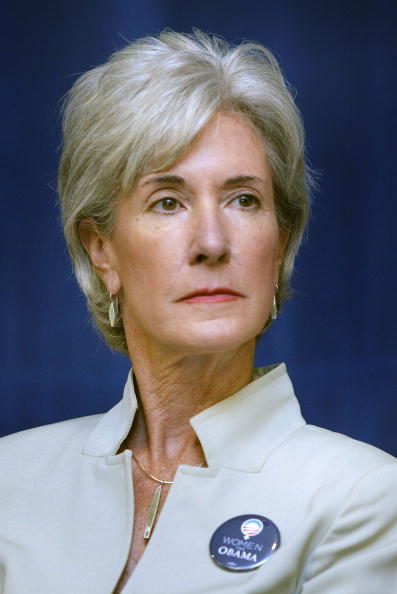
Secretary of Health and Human Services Kathleen Sebelius is refusing to intervene so that ten-year-old Sarah Murnaghan can jump ahead in line to get the urgent lung transplant that will save her life. Naturally, Sebelius is being attacked as  heartless, and conservatives are having a field day equating her decision with Sarah Palin’s infamous “death panels” characterization of Obamacare.

The manner in which organs are allocated for transplants is justly controversial, obviously flawed, and arguably unethical. Any real person whom the system will fail, however, instantly becomes sympathetic beyond the mere faceless numbers she is being compared to. Sebelius is quite correct: if the girl is moved ahead in line, someone else won’t get lungs, for this is musical chairs and a zero sum game.  If she was to make an exception to the policy for this case, it would be impossible for her to deny the next case, and soon Kathleen Sebelius would indeed become a one-woman death panel.

That’s not what she is doing now. What she is doing is adhering to an existing policy in which there are winners and losers, and the losers die, until the policy is reviewed and perhaps changed for the better. Her decision isn’t cold-hearted, cruel or unkind. It is responsible, fair and courageous. The alternative is to have no policy at all.

_________________________________________

Source: NBC News

“Hello, Hello, Hello…Hello!” An Ethics Dunce Trio: Newspaper, Sportswriter, President

the-three-stooges

I have a lot of catching up to do with ethics issue backed up as far as the eye can see, so I will try to deal efficiently with the three Ethics Dunces that confronted me this morning:

Ethics Dunce #1 : The Washington Post Continue reading →

Ethics and “Casey At The Bat”

casey-at-the-bat-1888-granger

Today is the 125th anniversary of the publication of “Casey at the Bat,” arguably the most popular and famous of American poems, the creation of humorist Ernest L. Thayer in 1888.

The poem carries many  lessons relevant to ethics and life within its tale of the hometown hero who fails spectacularly just when heroics are most needed and anticipated, such as…

  • Don’t promise what you cannot be sure of delivering.
  • Good faith failure isn’t unethical, a sin or a crime, but it still carries with it the need for someone to accept responsibility for it.
  • The focus of disaster is always on the last individual who might have prevented it, but that is neither fair nor logical. The Mudville Nine lost the game, not Casey.
  • Expecting miracles, last-minute rescues, heroic intervention and infallible rescuers is foolish and irresponsible.
  • Respect your adversaries, for your own sake as well as theirs.
  • “Pride goeth before a fall.”

Today, however, I am struck by how neatly the poem reminds us that in baseball there is no spin, no rock to hide under and no Fifth Amendment to claim. When a player fails, or makes a mistake, or misbehaves, it is usually all out on the field, watched in person by thousands, seen on TV by millions, and recorded forever. There is usually no way to deny or hide responsibility, and indeed part of the professionalism of baseball is accepting that, facing the media and the public, and saying, “That was on me. I failed. I’ll do better next time.”

Most of the time, that’s all the crowd asks after failure. Honesty and accountability.

As long as Casey doesn’t keep striking out, that is.

Here’s the poem, recited by the now-forgotten Bob Hope sidekick Jerry Colonna, he of the rolling eyes:

________________________________________

Spark: Craig Calcaterra

Graphic: Fine Art America

The White House Is Lying To Us. Again. Why?

David Plouffe...or Dan Pfeiffer...it doesn't matter, really...the voice is the same.

David Plouffe…or Dan Pfeiffer…it doesn’t matter, really…the voice is the same.

Nobody of sound mind who listened to top White House advisor (he’s the current David Axelrod) David Plouffe spin like the Wheel of Fortune on ABC’s This Week with George Stephanopoulos could continue to deny that the White House, a.k.a Barack Obama, is determined to obscure every thing and anything it can that might help us assign accountability for the Administration’s negligent oversight and management, if not outright abuse of power. The smoking gun was that this pre-programmed, trained and paid mouthpiece said this:

PLOUFFE: Well, I’d say first of all, you know back in the previous — or the prior administration, the NAACP was investigated after Republican members of Congress asked for it. But there’s been no suggestion — the independent — the prosecutor looked at this — excuse me, the inspector general, and said there was no politics involved in this. No one has indicated at all that the White House is involved. The IRS director was appointed at — under President Bush, served under both presidents attested. No one from — so, this was not a political pursuit.

I don’t know if it was “a political pursuit” or not, but I do know that when the people in power desperately don’t want their fingerprints to be found on something potentially sinister like this, I am more suspicious than I would be if they just let the facts out: Continue reading →