Eight Glasses of Water and the Climate Change Bullies

Never mind.

A surprising new report announces that the well-established health standard that we should all drink at least eight glasses a day is a myth, with no data to support it.  Moreover, the report says, drinking so much water may actually be harmful.  Meanwhile, widespread acceptance of water and hydration as a health benefit has led directly to the explosion in the use of bottled water, wasting money and creating an environmental crisis with so many discarded plastic containers.

I would hope that such news, and we get these kind of sudden “never mind!” stories with fair regularity, might convince some of the more insulting critics of global warming skeptics to temper their contempt.
The ideologues and conspiracy theorists who refuse to accept that the world is warming—though nobody really knows how much or how long—and that the effect is likely caused by mankind—though nobody can say with certainty that mankind can reverse or stop it—are rightly derided, up to a point. But those who question the astonishing certainty with which some climate change scientists, Al Gore, and a passel of pundits, columnists and bloggers who barely passed high school chemistry claim to know what the effects of global warming will be, even though doing so requires extensive estimates, extrapolations and assumptions, are being no more than prudent, considering how frequently far simpler scientific conclusions have proven to be flawed, exaggerated, or as may be in the case of  the eight glasses of water, just plain wrong. Prudence is especially appropriate when speculative science transmuted into doctrine calls for huge expenditures of scarce resources and the re-ordering of national priorities, effecting nations, commerce, businesses and lives. Continue reading →

Fact Checker Ethics: Alibis For Obama, Part I

The Washington Post “Fact Checker,” Glenn Kessler, is among the most biased of the breed. On the issue of the Obama Administration’s outright dishonesty on Social Security, however, he is embarrassing his paper and the entire Fact-Check community.

Lately, his strategy has been to bury obvious dishonesty by the Obama Administration and Democrats regarding Social Security in technical details, excusing straightforward misrepresentation (how’s that for an oxymoron?) and encouraging readers to shrug, give up, and move on

How nice for the President to have political allies posing as objective truth-tellers. Continue reading →

Barn Doors + Anger + Ignorance + Irresponsible Legislators = “Caylee’s Law”

When someone first mentioned the wave of support for “Caylee’s Law,” proposed legislation so far pending in four states making it a felony for a parent not to report a child’s death within an hour or a missing child within 24 hours, I responded that it “sounded like a good idea.”  Lots of dumb things sound good to me before I think about them. “Caylee’s Law,” is in fact a terrible idea, and about 10 minutes of quality thought illuminates why.

The law is the result of multiple factors more related to human nature than sound law enforcement. When something unpopular and frustrating happens, like the death of Caylee Anthony and her mother’s subsequent acquittal of murder charges, the response is often to try to fix the problem with a law. Such laws are often formulated in the heat of emotion and sentiment rather than careful reasoning and consideration, and the result is  bad laws that cause more problems that they solve.

These laws also embody the Barn Door Fallacy. Society passes broad-based measures to stop an unusual occurrence that has already done its damage, and that may be extremely unlikely to occur again. Nevertheless, society and the public saddle themselves with expensive, inconvenient, often inefficient measures designed to respond to the rare event. One shoe bomber, and millions of passengers have to remove their shoes to go through airport security. One adulterated bottle of Tylenol, and every over-the-counter drug bottle requires a razor blade and the manual dexterity of a piano virtuoso to open. Two sick boys shoot up Columbine, so third graders get suspended for bringing squirt–guns to school. Continue reading →

Attention FCC: What the News of the World Scandal Reveals About Rupert Murdoch

Rupert Murdoch

Concluding that the News of the World scandal in Great Britain shows that Rupert Murdoch has less than a sufficient reverence for ethics, journalistic or otherwise, is an intellectual achievement well within the powers of Forrest Gump.  Concerns about the integrity of the Australian media magnate have been voiced since he first stuck his kangaroo’s nose in the American media tent. As is too often the case here, legitimate points were minimized by their linkage to political bias: was Murdoch bad for American journalism because he was unethical, or because he was conservative? His most vocal critics, being from the Left, regard the two as the same, which allowed Murdoch to accumulate defenders on the political right who should have been just as wary of his methods and ethical deficit.

Now his flagship tabloid, The News of the World, has folded in the midst of a still-unfolding scandal. You can read details here; the important thing to know is that the tabloid was essentially lawless. Continue reading →

Thanking Dick Williams…Finally

The late Dick Williams, doing what great leaders do

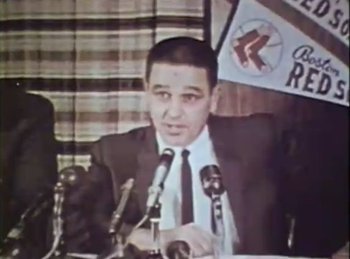
If you are not a baseball fan, or under the age of thirty, you probably never heard of Hall of Fame manager Dick Williams, who died yesterday at the age of 84. I never met Williams myself, but I have been indebted to him for four decades. I never told him the immense difference he made in my life, just by doing his job.

In the winter of 1967, I was a devoted fan of my home town team, the Boston Red Sox, and had been since 1962.  Over that period I had listened to every single baseball game on my transistor radio when a game wasn’t on TV, which was most of the time, or when I wasn’t at the game, which was almost always the case. I was the only person I knew who followed the team, and for good reason: it was torture. The Red Sox were hopelessly mediocre on the way to awful, and hadn’t had a winning season in more than ten years.

It is a great character builder to follow the fortunes of a terrible baseball team. Almost every day, for six months, you are let down, and yet return to the scene of your despair the next, attempting to muster hope while steeling yourself against likely disappointment. You find yourself finding things to appreciate other than winning: the gallant veteran player who “plays the right way” (Eddie Bressoud, shortstop, 1962-1965); the exciting rookie who gives promise of a better future (Tony Conigliaro, right fielder—rest in peace, Tony); the unique talent who is worth watching for his own sake (Dick Radatz, relief pitcher, 1962-1966). These things help, but following a perennial losing team and caring about them is like being punched in the gut four or five days a week without knowing which day you’re getting it.

Since 1965, I had always reserved seats for the first day of the season and one of the last two home games, just in case those last games would be crucial to a (hahahaha!) Red Sox pennant drive. This was especially pathetic, since the team was getting worse. They had finished in a tie for 9th place in 1966, and as the 1967 season loomed, Vegas had them installed as 100-1 underdogs to win the American League pennant. In truth, the odds should have been longer. Nonetheless, I wrote the Red Sox and got my tickets, this time for the next to last day of the season.

The team was full of rookies and near rookies, and appropriately had hired a minor league manager, Dick Williams, to be the new skipper. Williams was something else, however: he was a gifted leader. One day, in the middle of Spring Training, a Boston scribe asked the new manager what the prospects were for the upcoming season. Would the team escape the cellar? Would there be forward progress? Williams’ answer was instant front page news:

“We’ll win more than we lose.” Continue reading →

Fick Sighting in Prince George’s County

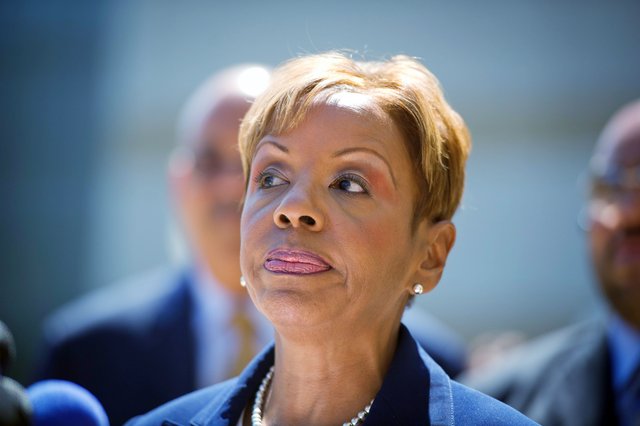
Leslie Johnson, fick.

Ethics Alarms recently coined the useful term fick to describe the especially shameless individual who violates society’s ethical norms openly, publicly and flagrantly, without remorse or apology. It takes a certain kind of anti-social arrogance to be a true fick, with the gold standard established by Michigan lottery winner Leroy Fick, a millionaire who happily continues to collect food stamps because of a statutory loophole despite howls of indignation from his neighbors in one of the most fiscally-challenged states in the nation.  Other ficks who have come to light include Hugh Heffner despicable ex-fiance Crystal Harris, who plotted to humiliate him at the altar to launch a reality show. Of course, there is  longstanding Octo-fick Nadya Suleman, and celebrity fick Charlie Sheen.

Now lucky Prince George’s County in Maryland has a bona fide fick of its own.  Continue reading →

Ethics Quote of the Day: The Washington Post

OK, Tea Party, this should be right up your alley.

“We hope that some members of Congress’s new “Tea Party Caucus” can make it down to the fireworks Monday night. It might be a good time to reflect on the primary motivation for the original Boston Tea Party, which was that Americans should not be taxed by a government in which they had no parliamentary representation. That right to a voting representative is still denied to all who live in the nation’s capital, and some of them must be wondering why members of Congress who so revere the Founders haven’t done something about it.”

—The Washington Post editorial board, in a “footnote” to its editorial about the enduring importance of the Declaration of Independence.

Little more needs to be said. The fact that the citizens of the District of Columbia, who number more than the populations of several states, are unrepresented in the House and the Senate is beyond disgraceful. Yes, there are troublesome issues to be worked out. It is also clear that if the either political party placed a higher priority on fairness and self-government than it did on political considerations, the problem would have been settled by now—after all, the District has been without representation for more than 200 years.

Most of the blame, however, goes to the Republicans, who have been obstructing D.C. representation for the most naked of self-serving motives: it is a predominantly African American, knee-jerk liberal city, and would surely contribute two Senators and one Representative to the Democratic cause. (This is also an example of a self-fulfilling prophecy, since the memory of how the GOP blocked its citizens from the most basic American right will and should keep the District deep blue until the stars turn cold.)

Well, too bad: the fact that most DC residents are Democrats is no excuse for keeping them from meaningful participation in national lawmaking. The Post is exactly right: if the Tea Party has integrity and is true to its principles, it will firmly endorse representation for the District of Columbia. This would also have the beneficial side effect of ending the liberal trope that the Tea Party is racist at its core. The main reason for doing it, however, could be more obvious. It is the right thing to do, and overdue as well.

Ethics Quote of the Era: Thomas Jefferson and the Continental Congress of 1776

“We hold these truths to be self-evident, that all men are created equal, that they are endowed by their Creator with certain unalienable Rights, that among these are Life, Liberty and the pursuit of Happiness.–That to secure these rights, Governments are instituted among Men, deriving their just powers from the consent of the governed, –That whenever any Form of Government becomes destructive of these ends, it is the Right of the People to alter or to abolish it, and to institute new Government, laying its foundation on such principles and organizing its powers in such form, as to them shall seem most likely to effect their Safety and Happiness.”

—-The Declaration of Independence, authored by Thomas Jefferson, edited, ratified and signed by him,  Button Gwinnett, Lyman Hall, George Walton, William Hooper, Joseph Hewes, John Penn, Edward Rutledge, Thomas Heyward, Jr., Thomas Lynch, Jr., Arthur Middleton, John Hancock, Samuel Chase William Paca, Thomas Stone, Charles Carroll, George Wythe, Richard Henry Lee, Benjamin Harrison Thomas Nelson, Jr., Francis Lightfoot Lee, Carter Braxton, Robert Morris, Benjamin Rush, Benjamin Franklin, John Morton, George Clymer, James Smith, George Taylor, James Wilson, George Ross, Caesar Rodney, George Read, Thomas McKean, William Floyd, Philip Livingston, Francis Lewis, Lewis Morris, Richard Stockton, John Witherspoon, Francis Hopkinson, John Hart, Abraham Clark, Josiah Bartlett, William Whipple, Samuel Adams, John Adams, Robert Treat Paine, Elbridge Gerry, Stephen Hopkin,  William Ellery, Roger Sherman, Samuel Huntington, William Williams, Oliver Wolcott
Matthew Thornton.

Ethics Heroes all.

Thank you, guys.

(You can read the entire document that changed the world…undeniably for the better…here.)

More Than a Fool: Bachmann, John Quincy Adams, and Wikipedia

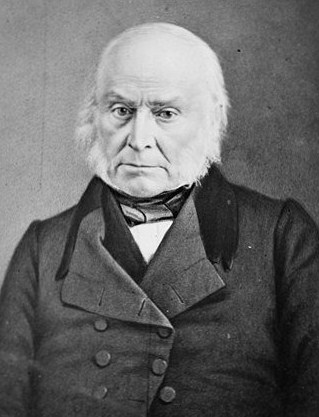
John Quincy Adams, Sixth President, slavery foe, and time-traveling Founding Father

I will strive a bit longer to avoid concluding that Michele Bachmann is as irresponsible, dishonest and dangerous as I strongly suspect that she is, though my determination may not last the time it takes to write this post. I won’t wait any longer to conclude that she is a fool.

In one short week since the controversy erupted over Fox News anchor Chris Wallace daring to ask her on the air, “Are you a flake?” and her subsequent botching of both her answer and the question’s fevered aftermath, she has stumbled into two flaky episodes. One—her mixing up Western movie star icon John Wayne with serial child killer John Wayne Gacy—was at least funny. The other, far less forgivable—her claim that the Founding Fathers “worked tirelessly until slavery was no more in the United States”—has signature significance. Continue reading →

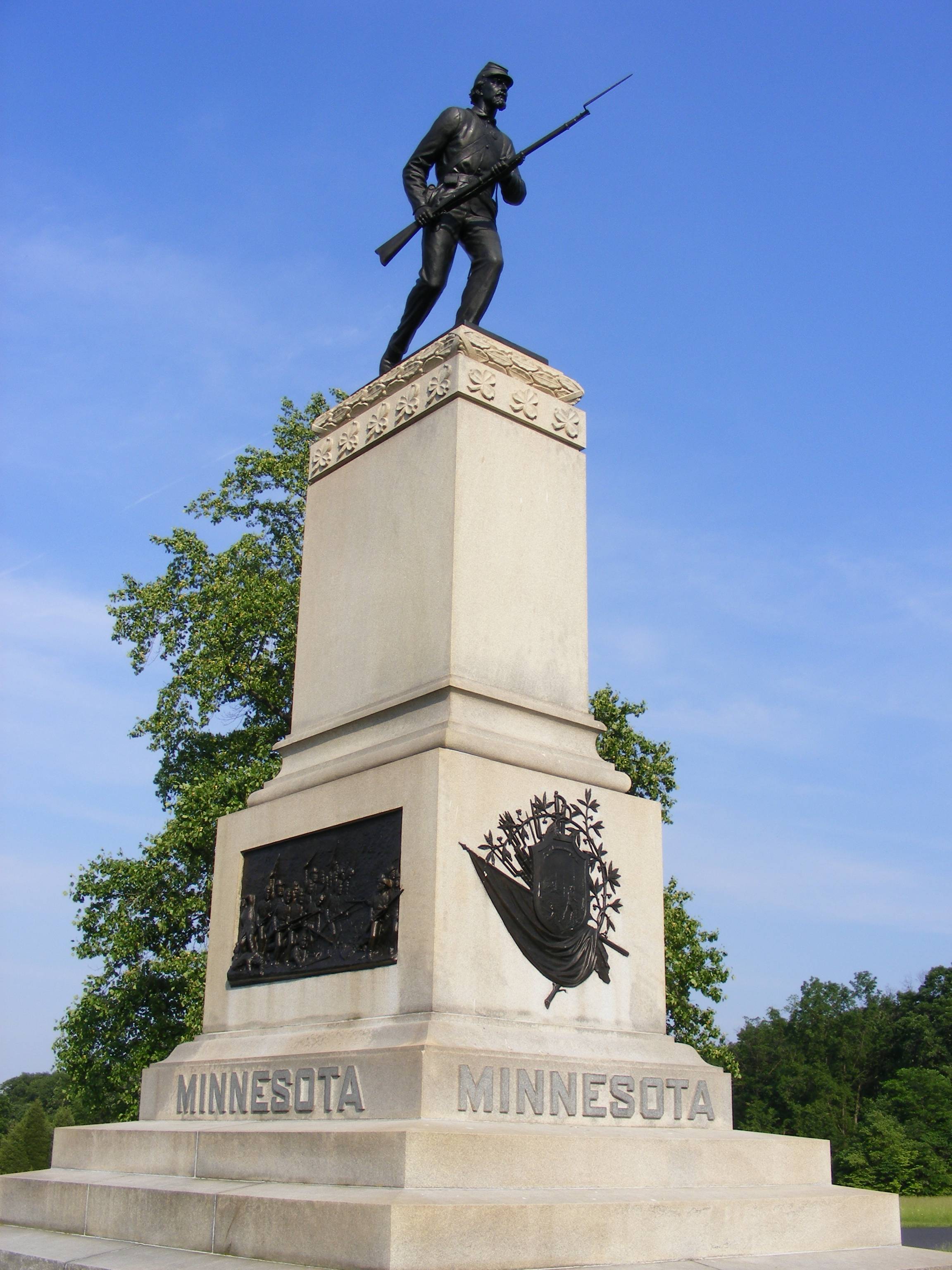
July 2: A Good Day to Thank Minnesota For Saving The Country

If you know anyone from Minnesota, today would be a good day to say “thank you.”

July 2 was the second day of the decisive Civil War battle at Gettysburg, Pennsylvania, and the most complicated and wide-ranging day in the conflict. So much was going on at Seminary Ridge and Cemetery Ridge, on Little Round Top, the Peach Orchard, Devil’s Den and a half dozen other key features on the battle field that whether an instance of heroism was recorded or forgotten is as much a matter of chance as anything else. Even determining what was the turning point in the day’s conflict, which ultimately was won by the forces of the North, is an exercise in searching for order in chaos.

There is no question, however, that the First Minnesota Volunteer Regiment’s astonishing heroics stand out even among the many other examples of gallantry on that day. The battlefield monument to the First Minnesota is the one of the largest erected to any Union regiment, and yet it has not guaranteed our cultural memory of the epic sacrifice those soldiers made. Other second day exploits, due to sometimes arbitrary choices made by historians and film makers, have taken up the limited space available in the public’s attention to the details of the Civil War.

This is an injustice. As the battle raged for Cemetery Ridge, crucial high ground occupied by Union forces, General Winfield Hancock saw a serious breach in the Union line, and realized that Wilcox’s Alabama Brigade had to be opposed and stopped in their advance until he could round up reinforcements. He ordered the First Minnesota to charge the brigade and hold the position, even though its 262 men would be outnumbered by a force of more than 1200.  Continue reading →