Believe It Or Not! The Incoherent Hollywood Casting Rules Get Even More Incoherent And Hypocritical In A “Lord Of The Rings” Controversy

To bring you up to date, The Great Stupid mated with the Diversity, Equity and Inclusion cult to bring forth the following casting rules for movies, theater, TV and commercials. Per Tom Hanks, only gays can play gay roles, but gay actors can play “cis” characters. It’s fine for Andy Garcia to play Sonny Corleone’s son in “Godfather 3,” but verboten for a non-Hispanic performer to play a Hispanic character. Presenting a real life “character of color” as white in a film is despicable whitewashing, but presenting Aaron Burr, Thomas Jefferson and Alexander Hamilton as non-white in a hit Broadway musical is brilliant, and playing Joan of Arc as a nonbinary individual who goes by “they” is illuminating. Marilyn Monroe being played by a Hispanic actress is testimony to her versatility and range, but Natalie Wood playing Maria in “West Side Story” was a shameful relic of Hollywood racism. Changing the genders and races of popular comic book characters is social justice progress, unless they are changed to white or male.

All clear now?

The eagerly awaited Amazon spectacular “The Lord of the Rings: The Rings of Power” is being skewered on social media and fan sites because the production, led by a creative team that is ostentatiously woke (Brain-melting quote by Executive Producer Lindsey Weber: “It felt only natural to us that an adaptation of Tolkien’s work would reflect what the world actually looks like.”), has cast actors who do not resemble how Tolkien described their characters and has them doing things the characters in the books would never do. For example—The Horror!—there’s a black elf. “Rings” fanatics are screaming foul, so, naturally, Weber has called the casting critics racists.

Continue reading

“Freefall” Ethics Reflections: “Is This It?”

British novelist William Golding, whom you probably know best as the author of “Lord of the Flies,” wrote a disturbing novel the year I was born called “Freefall.” It was on the reading list of a literature course I took as a college junior, and though it was easily the least well-known of the novels we studied (and is one of Golding’s least-known books as well), “Freefall” is the one that has most echoed back to me at various times over the decades.

The first-person narrator is a miserable and depressed man, an artist, imprisoned in a German prisoner of war camp during World War II and awaiting torture in a small, dark store room. In fear and isolation, he finds his mind reviewing the minutiae of his life, as he searches for the exact moment when his life went horribly and irretrievably wrong and he lost control. In flashbacks, he constantly stops, sometimes after re-living what seems to be the most trivial event, and asks “Was this it? Was this the moment?’

I thought about “Freefall” once again this morning, as I tried to process a series of absurd and incomprehensible recent occurrences and statements. “Is this it?” I found myself wondering, like Golding’s pathetic hero, “Is this it? Is this the moment The Great Stupid completely obliterates all reason and leaves the United States public wandering around aimlessly moaning like the zombies in ‘The Walking Dead’?”

No, it’s not a particularly momentous chain of events, just one that can’t happen anywhere that has sturdy values, trustworthy leadership, and functioning ethics alarms.

Continue reading

The Great Stupid Marches On: Plant Name Political Correctness And The Wandering Jew

Sometimes it all seems too much to bear. When I stumble upon something like this, I feel like smashing my head with a croquet mallet enough times to reduce my brain function to that of Margorie Taylor Greene or Cori Bush, and spending the rest of my days watching “Three’s Company” re-runs. Then I decide to write a post, and realize that once again, the most appropriate graphic is the “Blazing Saddles” “You know: morons” video clip. I could use that clip on ten posts a day now. More. Why do I bother writing this blog if insane ideological extremism is making the culture, society and public dumber by the second?

But I digress.

Let me tell you a story…

Continue reading

The Weird Pledge Of Allegiance Mystery: There’s Something Unethical Here, But Who Knows What?

The Pledge of Allegiance is an endlessly fascinating bit of Americana. A powerful snippet of poetry, an assertion of patriotism, a throw-back to simpler times, an anachronism, a culture war battleground: whatever it is, the Pledge is important. For me, it was the first thing I memorized after “Now I lay me down to sleep…” My lifelong interest in and obsession with the American Presidency was probably seeded when my first grade class stood every day to recite the Pledge while looking at the American flag with a framed photograph of President Eisenhower next to it. Now we learn that there is a controversy over who wrote it, and it is quite a tale.

The New York Times, reminding us what an excellent job it can do when it isn’t engaged in partisan spin and propaganda, broke the story yesterday.

Continue reading

Ethics Quote Of The Month: Prof. Michael Ignatieff

“Lincoln should be with us all these days especially since ‘malice toward none’ has been replaced by malice toward all, as if in our ideological arrogance we have forgotten that neither God nor justice is necessarily on our side.”

-Philosophy scholar Michael Ignatieff, Ph.D. professor at  Central European University in Vienna, Austria, in his recent book, “On Consolation,” his examination of how figures in history, literature, music, and art searched for solace while facing tragedies and crises.

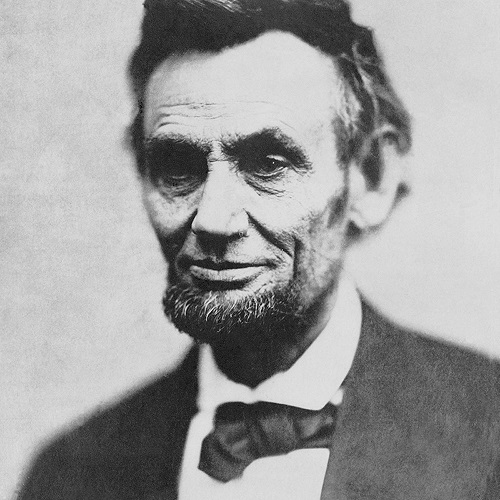
In a chapter devoted to Abraham Lincoln’s Second Inaugural Address, delivered in March 4,1865, near the end of the Civil War and with his own assassination six weeks away, Ignatieff explains that Lincoln concluded that “neither side could ever know what God intended by the fiery trial,” so “the victor had no right to raise the sword of vengeance while the defeated had the right to claim the dignity of honorable defeat. Humility about the ultimate meaning of the war, in other words, created the space for mercy.” Continue reading

The New York Times Has An Outbreak Of Integrity In The Midst Of Its Progressive Bias Fever!

books

The Times has compiled its list of the “best books of the last 125 years” as part of the celebration of the 125th anniversary of its Book Review Sunday supplement. Readers are invited to vote for their favorite on the list of twenty-five.

Here is the list:

Continue reading

“Moby-Dick” Ethics

Moby

Today marks the 170th anniversary of the publication of Herman Melville’s “Moby-Dick” or “The Whale”(never forget that hyphen!). What does the 19th century novel with the most famous opening line in American literature have to do with ethics? Oh, only everything…and not just ethics, but leadership, values, perspective, chaos, hubris, and the ethics-related fact that you never know how things will work out, so all you can do is the best you can.

“Moby-Dick” was Jack Marshall, Sr.’s favorite novel by far, and he had read almost every classic of his era and going back 200 years before he was in high school. I read the book in a tattered hard-cover edition full of my dad’s notes in the margins. (If only I could have read his handwriting!) “Moby-Dick” is tough sailing; public schools did Melville no favors by making high-schoolers read it, even in the redacted versions. Hollywood did even more damage: the book cannot be filmed. The best and most profound parts of novel are the narrator, Melville/Ishmael’s philosophical musings, like when he asks what a dead whale might be thinking when a harpooner nearly downs in its brains.

Eventually, I was able to honor both Dad, Melville and Orson Welles by mounting a production of Welles’ brilliant (but flop) theatrical version, “Moby-Dick Rehearsed,” which I repaired thanks to my father’s comments and inspiration. It was, by far, the most successful production of the American Century Theater’s two decades, the most successful professional production Orson’s invention has ever had, and my most satisfying experience as a director.

Continue reading

Ethics Quiz: The Perfect Murder Assignment

lamb murder

“Ick” or ethics? This recurring question seems to be at the core of a controversy at Central Valley High School in Spokane, Washington. Ninth graders in a language arts class were instructed to compile the components of the “perfect murder.”

The assignment read, in part:

“Turn the following into real sentences and put them in a paragraph briefly explaining, ‘the perfect murder.’ Items should appear in your paragraph according to the order of importance. There are 10 ideas here, so if you remove one you have to add an idea of your own.

  1. It should be easy to arrange.
  2. It should leave no clues.
  3. There should be no noise.
  4. It should look like suicide.
  5. It should take place in a lonely, isolated place.
  6. It should not be cheap.
  7. No violence should be necessary.
  8. It should look like an accident.
  9. It should be quick.
  10. The murderer should have a good alibi.”

Continue reading

Introduction To “Thoughts On What An Ethical Solution To The Abortion Ethics Conflict Might Look Like, Part 2: A Solution” [Updated]

Uncle_Toms_Cabin_by_Harriet_Beecher_Stowe

I’ll post the 25 stipulations from Part I at the bottom of Part II for easy reference; I’ll be quoting the number in some cases. But not right now…I realized that an introduction is necessary.

It’s important to clarify an essential point up front: as long as the two sides in the abortion controversy refuse to acknowledge the validity of the other side’s interest and concern, no solution to the problem is possible, and until that point, it is almost a waste of time discussing it. In this respect, it is like another ongoing ethics conflict, the dispute between Israel and the Palestinians. (That one I believe is hopeless, and the only solution is an unethical one: a war that leaves one side or the other standing. That may happen; I don’t see it as a likely resolution of the abortion question.

Related to this condition precedent to any resolution is the fact that the pro- and anti- abortion sides (Let’s send “pro-life and “pro-choice” to ethics hell where they belong) must stop demonizing the other. That practice makes compromise and literally impossible, and a problem like abortion cannot be addressed ethically without the recognition that balancing of interests must occur at some level.

In this area, abortion separates itself from the ethics and human rights dispute it most resembles. The analogy is useful in some respects (as we shall see), but not in the area of compromise. The period preceding the Civil War was a fiasco of attempted compromise regarding slavery, and every attempt made the situation worse, more unethical, more unjust, and more contentious. Slavery really is an absolutist problem: it is absolutely wrong, and there are not ethical principles on both sides, unlike abortion. The pro-slavery case was economic, making slavery an ethics dilemma (non-ethical considerations vs ethical ones), unlike abortion. Because abortion is an ethics conflict, each side must accept a solution that is partially unethical, or there will never be a solution.

Continue reading

Return To”Field Of Dreams”

Field of Dreams2

Baseball had a rare PR triumph earlier this month when it held a regular season game between the New York Yankees and the Chicago White Sox in the Iowa cornfield diamond that was the setting for the cult movie favorite “Field of Dreams.” The TV ratings were the best for any regular season broadcast in 16 years. That’s amazing, but maybe it shouldn’t be. Despite rumors of its demise, baseball still has a cultural bedrock of tradition, nostalgia and history unmatched by any other sport, professional or amateur. So many Americans would not tune in to a baseball game if they didn’t still have a flicker of affection for the sport, and if your argument is, “Yeah, but that’s just because of the movie,” the movie wouldn’t have become iconic if a lot of people didn’t care about baseball. As Terrence Mann said,

Now my confession: I’m not a wild fan of the film, nor that scene. The scene in particular is unforgivably stagey and artificial: it’s right out of the (much better) book, “Shoeless Joe,” and not even the great James Earl Jones could make it sound like anything but a recitation. I got annoyed, during the hype for the game broadcast, with “Field of Dreams” being repeatedly called “The greatest baseball movie.” I don’t regard it as that; I think it just barely makes the top five, and I could be talked out of ranking it that high.

For good reasons, many baseball writers, fans and bloggers have criticized the film over the years, and not just because it is shamelessly manipulative. But it is that. Baseball writer Craig Calcaterra, a vocal debunker of the film, writes,

“I will fully admit that a story about a father and son repairing a longstanding rift over a game of catch — with or without the magical realism elements — could form the basis of a MAJOR chills moment in an absolutely fantastic movie. The problem, as I’ve said in the past, is that “Field of Dreams” does not earn its chills moment. It is lazy in that it does not sketch out the dispute between Ray and his dad in anything approaching realistic terms — it’s dashed off in the rushed intro with almost no details — and it does nothing to explain why Ray’s moving the Earth and the Heavens to bring his dad back to that ball field is so important or why it serves as the “penance” Ray must pay for whatever reason. With no buildup or backstory, there’s no payoff.”

But worse, for me and others, is the slipshod handling of baseball history. “Shoeless Joe” Jackson was not innocent of taking a bribe to throw the 1919 World Series, he was guilty. He was not a thoughtful, wise-cracking Ray Liotta, he was just north of being a moron. He batted left-handed, and famously so, not right-handed like Liotta. When Frank Walley’s character, a magically reincarnated and youthened old ballplayer named Archie “Moonlight” Graham, whose single appearance in the major leagues was in 1905, is nearly beaned by a close pitch, he says “Hey ump, how about a warning?” Umpires didn’t warn pitchers for throwing at batters in 1905, and not for more than a half-century after that. Sloppy.

Continue reading