Yoga Class Discrimination Based On Race: It’s Benign Because Gay, Non-White Progressives Are Doing It!


Yoga

“War is peace, freedom is slavery, ignorance is strength”—I wonder how George Orwell missed “Segregation is Integration”? Maybe because that was too obviously ridiculous even for Big Brother to pull off….or so he thought.

Apparently yoga and meditation studios in multiple locales in the U.S. are running “no whites allowed” classes in the interests, say the operators, of making Eastern self-help disciplines more accessible to “people of color” [ I detest this phrase, but I’m quoting] by excluding people of less valued color—that is, whites. The New York Times just published an uncritical profile of such a place in Oakland, by a reporter who shrugged off the fact that she was refused in her request to attend a class because she was too little “of color.” Incredibly, the Times reporter just accepts the Bizarro World logic and utter hypocrisy fed to her as if it makes as much sense as “freedom is slavery” makes to poor Winston after his brain cells have been scrambled by the threat of rats eating his face.

“Specific classes at the center bar white or straight people — in order to be inclusive of some, they exclude others. Those who run the center say that the practice ultimately makes the center community more diverse…Brenda Salgado, the director of the center, said that as part of its diversity efforts, the center has four different sitting groups that meet weekly. “An L.G.B.T.Q.I. sitting group, one for people of color, a Friday open sit, open to everyone — those can fluctuate between 50 or 100, Ms. Salgado said. “We also have the Every Body Every Mind group, for people with disabilities and chronic illness.”

For all but the “open sits,” the expectation is that only people who identify with the target group will attend. (I learned as much when my request to attend People of Color Yoga was turned down.) And for open sits, organizers use a Web application to ensure that white people do not crowd out others. When the spots allotted for white people fill up, registration is capped to save spots for others.”

Oh, naturally: quotas too! Continue reading

Ethics Quiz: Al Roker’s Unethical Selfie And Malfunctioning Ethics Alarm

Roker-selfie

The question here is a simple one.

On the scene of the devastating flooding in South Carolina, Today Show weather man Al Roker tweeted a selfie of him and  NBC colleagues beaming happily in front of a collapsed highway and a trapped car, with the caption “My crew and I getting ready to report on East Coast flooding from S. Carolina on @NBCNightlyNews with Kate Snow.”

Yes, after many complained on social media about the discordant juxtaposition of cheerful self-promotion and tragedy, Roker apologized, but not before.  The basic question is “What the hell is the matter with these people?“, or as today’s Ethics Alarms Ethics Quiz asks,

Is Roker’s insensitivity signature significance of a malfunctioning ethics alarm, or just an excusable one-time mistake?

Continue reading

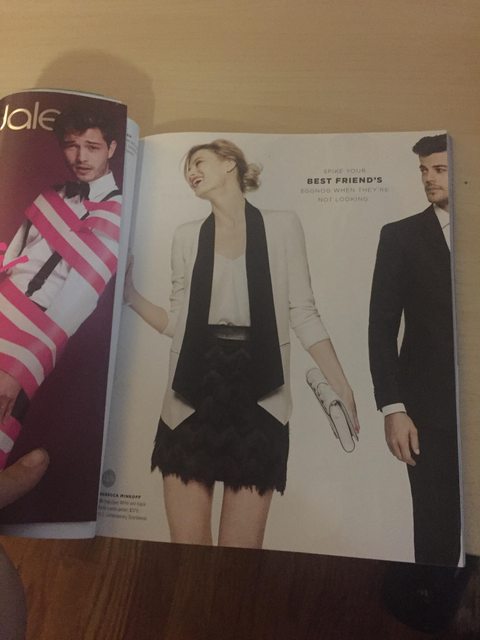
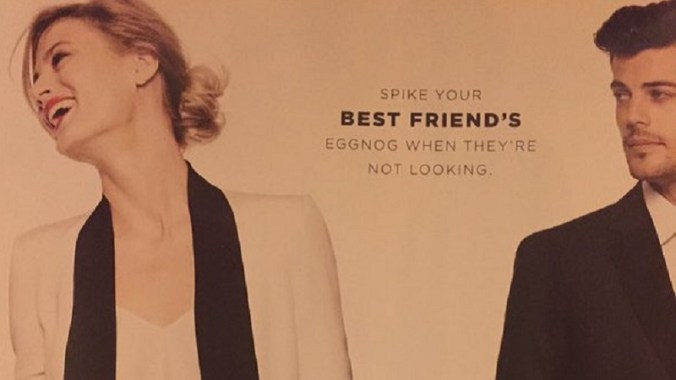
Consider: The Fact That People Are Attacking This Ad As Sexist And Racist Is A Big Reason Donald Trump Is Leading In The Polls…

It’s called advertising …. to men who like looking at beautiful women.

The Horror.

If this video advocates unethical conduct, I’d appreciate someone telling me what it is. No, treating the problem of illegal immigration as a joke is not the same as arguing that it is a joke. Try again.

Thank you.

________________________

Pointer: Instapundit

Ethics Quiz: The Duchess of York’s Website And The Duke of Plazatoro

The category is Celebrity Ethics, Royal Ethics or Marketing Ethics, depending on your point of view. Unfortunately for ethical clarity, how you answer today’s Ethics Alarms Ethics Quiz may depend on which category you choose.

Sarah Ferguson, Duchess of York, is embarrassing the Royal Family again, only this time it isn’t by throwing snowballs at photographers or by not being as demure and lovely as the late Princess Diana. This time, the self-exiled and divorced Fergie is trading on her title to make a living as an internet huckster. She has a website that peddles a juicer for weight loss and “The Perfecter Ultra”:

The Perfecter Ultra Heated Styling Brush combines innovative ionic technology with pure black tourmaline heating plates for ultimate convenience in achieving salon quality hairstyles at home. Create silky straight styles or beautiful bouncing curls, reduce frizzies or add volume to thinning hair, the Perfecter Ultra is the remarkable styling tool that does it all.

The Duchess has also been appearing on QVC, the cable shopping network where shopping addicts, lonely recluses and easy marks hang out. Among the Royals, with whom she is already on the outs, this is considered…unseemly. Concludes Tom Sykes at the Daily Beast:

“Her website majors in its attempts to cast her shill as public service, saying, “One of my missions in life now is to help people fight their weight challenges so they can live longer, healthier and happier lives. Take it from me: you can do it!”  But the truth is, Fergie is selling her title, and getting paid a no-doubt healthy fee for her promotional activities.”

There’s little doubt that “selling her title” is a fair description.

Your Ethics Alarms Ethics Quiz of the Day is…

As Duchess of York, does Sarah Ferguson have an ethical obligation to behave like the symbol of the British Commonwealth that she and the rest of the Royal Family is, or can she ethically use her title as she chooses, including to sell junk on the internet?

Continue reading

Law vs. Ethics: A Snatched Bar Mitzvah Gift, A Leaky AG, An Embarrassing Scoreboard, and”OINK”

Oink

I try to keep my legal ethics seminars up-to-the-minute, so while preparing for yesterday’s session with the Appellate Section of the Indiana Bar, I came across a bunch of entertaining stories in which the ethics were a lot clearer than the law, or vice-versa. All of them could and perhaps should sustain separate posts; indeed, I could probably devote the blog entirely to such cases.

Here are my four favorites from the past week’s legal news, involving a mother-son lawsuit, a brazenly unethical attorney general, a college scoreboard named after a crook, and police officer’s sense of humor: Continue reading

The Next Time You See One Of Those Opera Commercials About Selling Structured Settlements, Think About “Rose”

Rose

Because I worked as the general counsel for the late Richard Halpern, a kind and brilliant man, I know a lot about structured settlement, and also about the slimy businesses that conspire to destroy them. Richard’s company, The Halpern Group, worked with trial lawyers to develop structured settlements for successful plaintiffs who had won long-term damages for catastrophic injuries due to medical negligence, product liability or other torts. Most of these clients were poor, and if their millions in damages, designed to help them survive the rest of their lives, were awarded in lump sums, the result would almost always be catastrophic. These were poor people, for the most part, with poor families and poor friends and neighbors, none of whom had any experience or success managing money.  Drop millions on someone who has never had luxuries of any kind, and a spending spree as well and handouts to needy or greedy friends and acquaintances were sure to follow. For their own protection (or the protection of minors needing lifetime medical care), these plaintiffs of Rich’s lawyer clients were advised to forgo a big lump sum in favor of an annuity which would pay out regular amounts over time.

The plaintiffs own the income stream, but not the annuity itself. With assured income developed according to projected needs, the plaintiffs and their families could be assured of security and relative comfort and well-being—relative, because damages can seldom make up for broken bodies, minds and lives. Let me take over for myself here, from a post I wrote on this topic almost exactly six years ago.

Once they are on their own, however, the compensated victims are targeted by viatical settlement companies, both those with cute opera-singing commercials and those without. They undermine the sound advice of the attorneys with slogans like “It’s your money!” and try to persuade the former plaintiffs to unstructure the structured settlement by selling the annuity’s income stream to the viatical settlement company at a deep discount. Result: the annuity company gets the regular income at bargain rates, and the victims get a new, smaller lump sum to dissipate in exchange. The statistics say that the customer of the viatical settlement company will run out of cash long before he or she runs out of the need for it. But for the company, it’s a sweet deal.

It’s also despicable. The viatical settlement industry like to use lottery winnings, which are usually paid out in annuities like structured settlements, to justify their business. Lottery winning are windfall funds; while the same dissipation  hold for those lump sums (most multi-million dollar lottery winners have no money left after five years), the winners are usually no worse of after the money has been blown than they were before their number came up. When the money is a settlement for an injury, however, losing it is calamity. I would consider a viatical settlement company that only bought the income stream from lottery annuities ethical. There is no such company, however. The victims with structured settlements are a much larger and more lucrative market.

I have written about these legal but unethical businesses more than once. The first time, on The Ethics Scoreboard, I described a viatical settlement company only by using quotes from its own website, and explained what it meant, accurately. The company’s lawyers demanded that I take down the post, claiming that I had disparaged them (by using their own words and making it clear how they made their money.) I was in no position, with a family, a struggling business and aging parents, to engage in a legal battle of principle (though I suspected the company was bluffing, and I didn’t know Ken White and Marc Randazza then, both courageous blogging lawyers who assist bloggers who are threatened, like I was being threatened, to silence them. I took down the post. Continue reading

Ethics Quiz: The Looney Tunes Cartoon Disclaimer

Warner Brothers Warning

Above is the disclaimer shown at the beginning of each DVD in the Looney Tunes Golden Collection: Volume 4, Volume 5, and Volume 6 sets, as well as the Daffy Duck and Foghorn Leghorn Looney Tunes Super Stars sets and the Warner Bros. Home Entertainment Academy Awards Animation Collection:

Your Ethics Alarms Ethics Quiz of the Day:

Is the warning that introduces the Warner Brothers classic cartoon videos fair and responsible?

Continue reading

Of Gluten, Bacon, And Reverse Deceit

gluten free baconThere is no valid scientific evidence that gluten–the protein in wheat, barley and rye—is harmful in any way unless you suffer from Celiac Disease, which few people do, or have an allergy to it, which isn’t common either. Somehow the food and nutrition scammers, aided by aging hippies, vegans and none-too-bright celebrities like Gwyneth Paltrow have convinced a depressing number of people that gluten is generally deadly, and this has created a boffo market for food marked “gluten free” and sold at unethically high prices, since they are supported by gullibility and little else.

Yesterday, I noticed that Boar’s Head pre-cooked microwave bacon is prominently labelled “gluten-free.” Now, correct me if I’m wrong, but I’m pretty certain that bacon, like my shoes, the pavement on the street where I live, my cell phone and my laptop, is always gluten-free. I checked my assumption on a gluten website, which confirmed it, but the site also said that you never know when bacon might be cross-contaminated by the nasty stuff, just traces of course, but you never know!!!! 

Apparently you do know if the company says the bacon is gluten-free, although I don’t know why. Nor do I know how you would prove you got sick from the trace gluten on your bacon, nor understand why the bacon doesn’t come with denials of contamination by anything else that might bother some people—-arsenic, peanuts, shellfish, penicillin, lactose, cat hair, broken glass, ISIS. Continue reading

The Vulgarizing Of America

No, this post isn’t about Donald Trump, and I expect the inevitable “Get off my lawn, you kids!” mockery in response to it. All right, I’ll take it. Some adult has to remind the arrested development cases running the media, advertising, business and the nation—OK, I guess this is a little about Trump—that as hilarious as they seem to think boorishness, incivility and vulgarity is, their determination to lower standards of public speech below the water level in the gutter is cultural pollution.

At the televised Teen Choice Awards, Sarah Hyland, the young actress who plays the oldest and dumbest of the two Dumphy sisters on hit sitcom “Modern Family,” moved to the podium to present an award. Who knows, maybe the whole thing was concocted by her publicist to compete with the week’s buzz over the revelation that Ariel Winter, who plays the youngest and smartest sister, just had breast reduction surgery. Whatever the cause, Hyland tripped awkwardly on the way to the microphone and screamed out, as she recovered her balance, “Are you fucking kidding me??”

I did say she played the dumbest sister—good casting!

Hyland apologized to the audience and later on Twitter…for tripping. E!, which plays the role of the dumbest cable channel, responded on its website, “Oh, Sarah, you’re the best!” and “We’ve all done it!”

We’ve all screamed “fuck” in front of a formal wear-attired audience and TV cameras? Continue reading

Fake Charities Update: The Unethical Conduct That Makes All Of Us Worse

scamsIt’s one of the world’s oldest scams, one of the most lucrative and perhaps the most damaging: people preying on the best instincts of human beings to take their money for personal gain. The internet has made it easier to do than ever, and the  con is flourishing. I don’t often write about the incidents when they arise, in part because there’s nothing to argue about: everybody agrees that it’s not just unethical conduct, but bordering on evil. Fake charities are worse than scams, however, because they actively make people less kind, generous and caring for their own protection. Every fake charity exposed makes it harder for real charities to help people who genuinely need it. Like a friend of mine who never helped a homeless person again after seeing a beggar whom he had just given 20 bucks on a New York City street briefly get out of his battered wheel chair and nimbly run over to get a cigarette from a compatriot, those who stop trusting pleas for help seldom start trusting again. The fakes make us less kind and generous, and that makes society worse for everyone.

Fake charities large and small have been much in the news lately, so a little catch-up is warranted. Continue reading