Ethics Poison From Nike and Tiger Woods

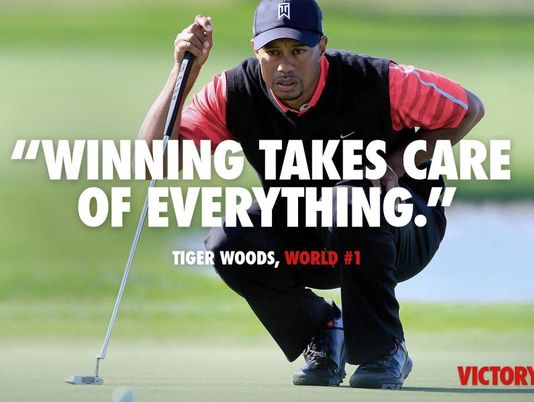
Woods AdWoods Ad2

…and not for the first time, in either case.

But Woods’ new ad for Nike in the wake of his resurgence in his sport, is audaciously unethical, braying a dangerous, corrupting message into the cultural atmosphere, endorsing, in five simple-minded words, consequentialism, the Star Syndrome, the King’s Pass, non-ethical considerations over ethical ones, and “the ends justify the means.” That’s a pretty impressive load of ethics offal in so few words: congratulations to the soulless ignoramus who devised it.

The assorted miscreants, past and present, who would have gladly stood in for Tiger in his damning ad include dictators, despots, mass murderers, gangsters and corrupt politicians like Richard Daley, Marion Barry, Charley Rangel and Tom DeLay, corporate bandits, assassins, robber barons, Wall Street criminals, athletic cheaters like Lance Armstrong and Barry Bonds, serial fathers like the NBA’s priapic stars, arrogant social misfits like Charley Sheen, con artists and liars in all walks of life, and of course, our most popular politician, the man whose entire career is based on Nike’s new motto, William Jefferson Clinton.

I almost forgot the terrorists. Continue reading

Ethics Hero: Lawyer/Blogger Scott Greenfield

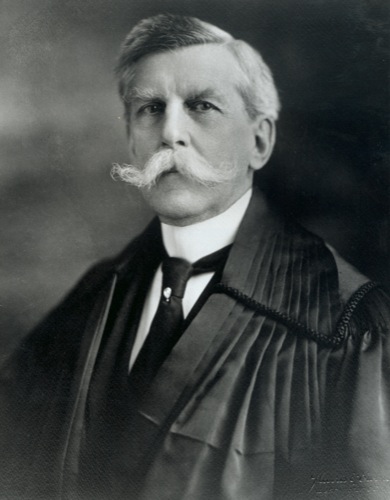
No question: Justice Holmes would think Scott Greenfield is a good man.

No question: Justice Holmes would think Scott Greenfield is a good man.

Criminal defense lawyer and caustic, if trenchant, blogger Scott Greenfield stakes out a noble and correct stand on legal ethics and ethics generally in a superb post titled, “What Tastes Good To You?” Read the entire post, but his essay springs from a question that has been posed in various forums (including,  in slightly different form,the Jack Lemmon comedy “How To Murder Your Wife”), to wit:

If you could commit any crime and get away with it, what would it be? 

Greenfield’s answer, the ethically correct one, is “none” : “Just because we can get away with it isn’t a reason to do wrong.” Thus does he definitively separate himself from what Justice Oliver Wendell Holmes referred to as “the Bad Man” in his famous 1897 essay, “The Path of the Law.”  For Holmes’ “bad man” never breaks a law, but only because he abhors punishment.From this starting point, Greenfield considers a professional debate about whether the legal marketing tactic (as determined by the courts) of buying up another firm’s name as a web “key word” to lead customers to one’s competing firm is “unseemly,” which is to say, unethical, though not technically unethical under the professional rules of conduct. One of the defenders of the practice describes the division on the issue to a difference in “taste,” leading Greenfield to aim carefully and fire: Continue reading

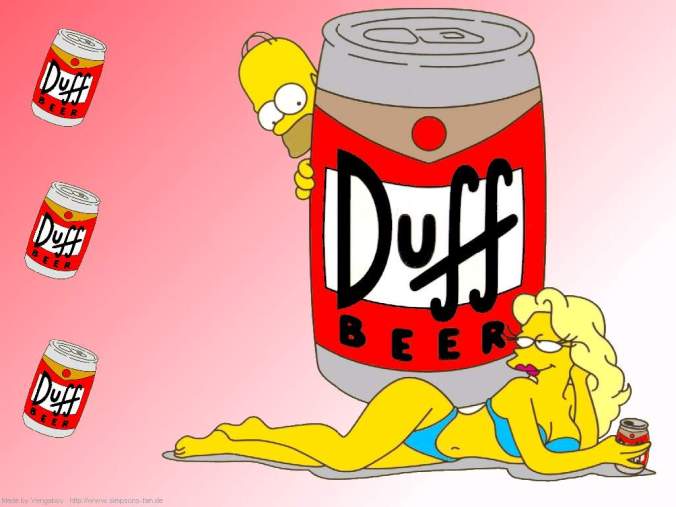
Ethics Hero: Matt Groening

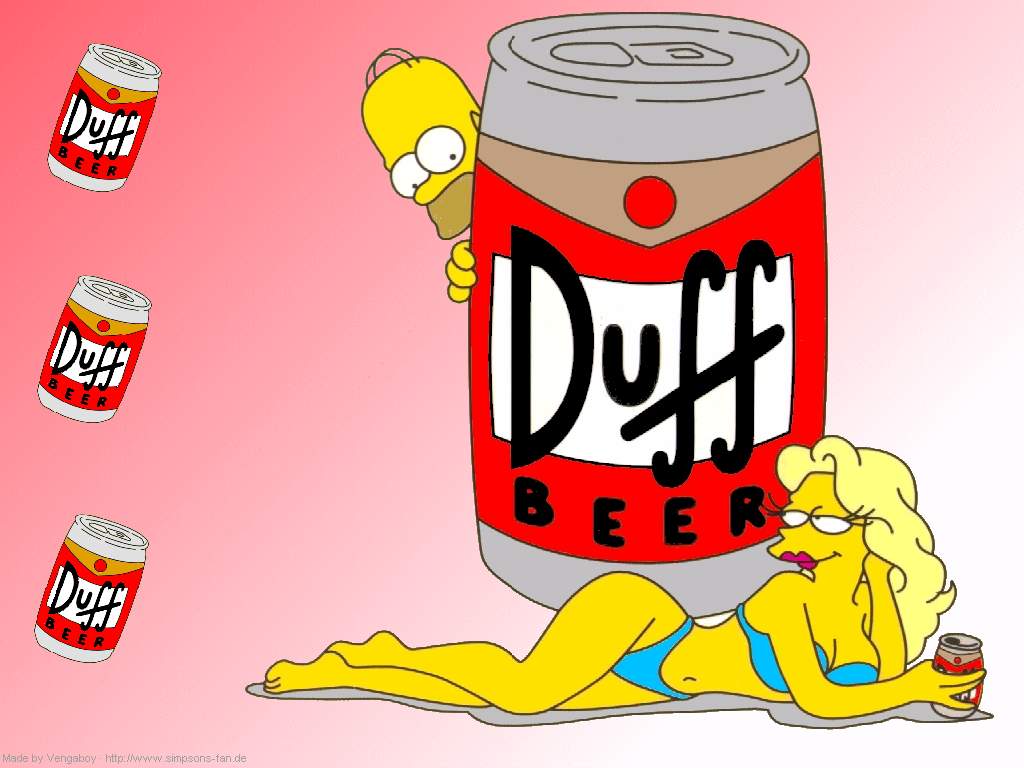
Duff-Beer

Cashing in, selling out, maximizing income, monetizing assets: the crash of 2008 only accelerated what was already becoming a coarsening cultural trend in America, the mania of never, never allowing any opportunity to make money go unexploited. Every creation or idea is copyrighted or trademarked; every open space is marked with a billboard; every person, place or thing imaginable is sponsored or branded, every citizen who does something admirable or remarkable will sell his or her life story or hire someone to write a book. The effect of this on the community, on life itself, is toxic.

When everything is a potential cash cow, then our choice is to milk it or wait for someone else to steal the milk. A Profit Above All mindset turns everyone into a potential competitor, which means that trust becomes impossible. There are only two antidotes for this trend, which I fear is irreversible. One is for there to be so much money to go around that nobody worries about it any more, which is to say that there is really only one antidote. That one is for our society to evolve and reinforce a hierarchy of values in which money, wealth, profit and material things are not seen as ends, but as means to ends, and not the only means to those ends, either. Wealth can lead to freedom, for example, but only if it is joined with proportion, moderation, responsibility, modesty, and restraint. Otherwise, wealth and the pursuit of it can restrict choices and liberty as effectively as chains.

This is why a rare case where someone eschews the opportunity to make a lot of money for no other reason than that he thinks to exploit the opportunity will make the world a worse place is a qualification for the Ethics Hero designation.  I hate the speech in “Traffic” given by Seth Abraham, the loathsome preppy coke-head played by Topher Grace, about how suburban drug users corrupt the inner city:

“Ok, right now, all over this great nation of ours, ‘hundred thousand white people from the suburbs are cruisin’ around downtown asking every black person they see ‘You got any drugs? You know where I can score some drugs?’ Think about the effect that has on the psyche of a black person, on their possibilities. I… God I guarantee you bring a hundred thousand black people into your neighborhood, into fuckin’ Indian Hills, and they’re asking every white person they see ‘You got any drugs? You know where I can score some drugs? within a day everyone would be selling. Your friends. Their kids. Here’s why: it’s an unbeatable market force man. It’s a three-hundred percent markup value. You can go out on the street and make five-hundred dollars in two hours, come back and do whatever you want to do with the rest of your day and, I’m sorry, you’re telling me that… you’re telling me that white people would still be going to law school?”__

I hate it for two reasons. First, it is more or less true, and second, it is only true because the vast majority of people have such a weak commitment to behaving ethically and not selling out, because our culture reinforces healthy ethical values less and less effectively. It shouldn’t be true, and in a rational society, it wouldn’t be true.

So I am giving Matt Groening the Ethics Hero for something that is relatively minor and trivial, because, I guess, it gives me hope. Continue reading

Georgetown Law Center and The Case Of The Double-Crossed Donor

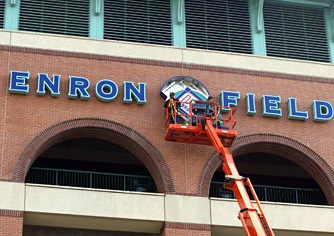
Sometimes those naming deals backfire, you know?

Sometimes those naming deals backfire, you know?

Scott K.  Ginsburg, a media mogul who got a J.D. from Georgetown Law Center in 1978, had been wooed by the school’s development team for a major gift when he was riding high, amassing billions in the 1990s. He agreed to contribute some pocket change–five million bucks—to build a new fitness center that would bear his name. The deal was put into writing, and the University issued a cheerful press release. Then, in 1999, shortly after the agreement was reached,  the Securities and Exchange Commission filed suit against Ginsburg, accusing him of passing along inside information to his father and brother. A jury agreed with the SEC, and he was orderedto pay $1 million in fines. After a flurry of appeals, the verdict stuck. (NOTE: In the first version of this post, I implied that this was a criminal case. It wasn’t: this was a regulatory lawsuit, and a civil verdict. A dumb error on my part, and I apologize to readers and Mt. Ginsburg for the misinformation.)

While all of this was going on, the Law Center, understandably, got nervous. Although Ginsburg was not a practicing attorney at the time, law schools don’t like having facilities named after grads who have been found to have violated laws or regulations in high-profile cases. In 2002, then-Georgetown Law Center Dean Judith Areen sent Ginsburg a letter thanking him for his support but also asking to revise the agreement, eliminating the promise of naming rights.  Areen said the school would find some way to “honor your gift without generating negative media coverage.”  Ginsburg, however, refused to sign on. As the years went by and the school continued to promote his gift as enticement to other donors as well as hitting him up for more money, he assumed the Scott K. Ginsburg Health and Fitness Center was under construction. There’s a fitness center, all right, on the GULC campus, but Ginsburg’s name isn’t on it. Now he is suing the Law Center, alleging that it reneged on the deal. Continue reading

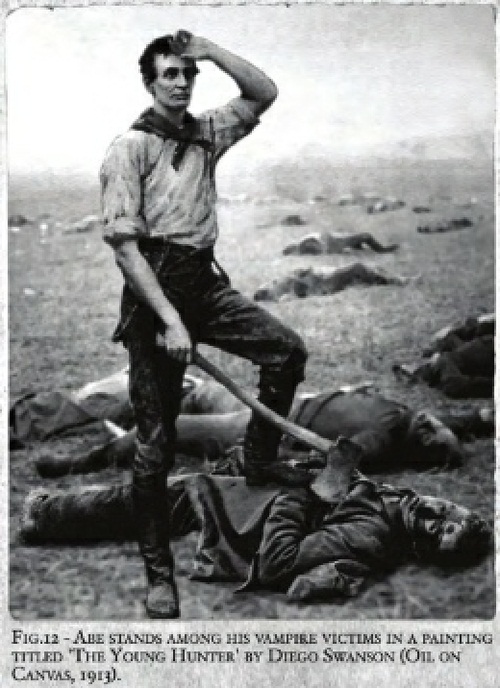
Artistic License, History, and Lincoln’s Green Socks

Of course, some historical fabrications are harmless.

Of course, some historical fabrications are harmless.

Several well-placed critics are taking “Lincoln” screenwriter Tony Kushner to task for what they believe are unethical misrepresentations of fact in the much-praised, and supposedly scrupulously accurate film. He, on the other hand, is annoyed. Kushner counters that unlike in history books where a historian gives a well-researched “a blow-by-blow account,” it is reasonable and ethical for a screenwriter to “manipulate a small detail in the service of a greater historical truth. History doesn’t always organize itself according to the rules of drama. It’s ridiculous. It’s like saying that Lincoln didn’t have green socks, he had blue socks.”

I’m going to spare Kushner lawyerly word-parsing and not hold him to “a greater historical truth,” though I suspect that in his hands (he is a skilled political propagandist as well as writer), we would not be pleased with what that license would bring. A politically sympatico film director named Oliver Stone, for example, thought it served a greater historical truth to present completely fictional evidence that Lyndon Johnson was complicit in John F. Kennedy’s assassination, even though Stone’s vehicle, “JFK,” was marketed as a veritable documentary on the “truth” of the Kennedy assassination. Let’s just say that Kushner feels that in a work of entertainment and drama, strictly accurate representation of all historical facts is impossible and unreasonable to expect or require.

I agree. But there is a big, big difference between the ethics of showing Lincoln wearing the wrong color socks, and representing a highly dubious story as fact to denigrate the reputation of a probable hero, as James Cameron did in “Titanic” when he showed First Officer William Murdoch taking a bribe to let a passenger on a lifeboat ( fantasy), shooting a passenger (pure speculation), and committing suicide (denied by a fellow officer under oath at the inquest). Continue reading

“What Difference Does It Make?”: The Footlong Sandwich Edition

mqdefault

Perhaps this week will go down in history as the Week of “What Difference Does It Make?”.

What difference does it make whether or not the Obama Administration misled the public for days about whether the Benghazi attack was a spontaneous demonstration over a video or a planned terrorist attack, indignantly asks Hillary Clinton. What matters is that four Americans died!

What difference does it make that Lance Armstrong doped to win his titles and lied about it for 15 years, poignantly ask Armstrong’s defenders. What matters is that his foundation helped cancer sufferers!

What difference does it make whether or not the version of Beyonce singing “The Star Spangled Banner” Americans heard during the Inauguration was live or studio-recorded, asks comic-turned radio pundit Dennis Miller. She’s hot! (By the way, my conversation about this issue with Bill O’Reilly before Miller issued his verdict—and referred to me as “Daddy Warbucks”—can be viewed here.)

Now we have a much ridiculed scandal over the fact that Subway’s vaunted “footlong” subs are in fact only around 11 inches, which has spawned viral videos and at least two lawsuits. Ethically-challenged Chicago Trib blogger Eric Zorn carries the flag for this latest army of “What difference does it make?” lie enablers. His argument, predictably, comes down to a cross between the Stephen Colbert-Jon Stewart  market-tested “Let’s exaggerate this real issue and make it look ridiculous” formula and the Golden Rationalization, “Everybody Does It”… Continue reading

The Saga of the Entrepreneural Legal Mentor

"OK, now pay attention. I'll teach you to hunt, but it will cost you..."

“OK, now pay attention. I’ll teach you to hunt, but it will cost you…”

Attorney Kenneth Beck is reeling from a barrage of criticism he has received for placing this ad on Craig’s List:

ARE YOU RECENTLY ADMITTED TO THE BAR, OR AWAITING BAR RESULTS, BUT NEED EXPERIENCE FOR THAT FIRST JOB?

General practice attorney with more than twenty years of experience is willing to train a small number of recently admitted attorneys, or those awaiting bar results. For a monthly fee, you will be able to shadow the experienced attorney, and learn by watching the day to day practice of law. Observe the following types of proceedings, as they occur; Civil Short Calender motion arguments, foreclosure mediation’s, pre-trial conferences, Workers Compensation and Social Security hearings, real estate closings, discovery proceedings and compliance, research and general office operations. …

The unprecedented ad, now pulled, prompted nasty e-mails from his target audience and a lot of ridicule on various legal blogs. Beck hit a nerve, obviously, in fact several: the perceived venality of the profession, the desperate plight of recent law grads in a tight market, the lack of practical training students receive in law school. Some even suggested that the ad rose, or rather fell, to the level of professional misconduct. “Will this kind of revenue producer be censured by the state bar association?”, asked the blog Law and More.

That one is easy: no, because nothing about the ad raises legitimate questions about Black’s trustworthiness or honesty, and there is no clear violation of any existing rules inherent in his proposition. Still, the question lingers: even if this doesn’t nick the Rules of Professional Conduct, is it ethical? Continue reading

Danger! Shameless Opportunists At Work!

Lance Armstrong wouldn't understand this movie at all.

Lance Armstrong wouldn’t understand this movie at all.

Less than two weeks after Ethics Alarms wrote about the ethics-free deliberations in the Lance Armstrong camp about whether or not to finally tell the truth and “apologize,” Armstrong prostrated himself in a 90 minute confession to Oprah Winfrey, who has branded herself as America’s confessor, capable of washing away sin and shame with a hug, a tear, and a stern word.

It makes me want to vomit, frankly.

I saw this coming, of course, as did you. One thing we could count on with Lance (and Bill, and Pete, whose odious club Armstrong joins with the Oprah tactic) was that he would do whatever was necessary to benefit him. There is nothing, absolutely nothing, in common with a genuine confession and a real apology in Armstrong’s 180 degree reversal with Oprah, or in the necessary preparations for it he engaged in, like apologizing to the cycling community and the Livestrong staff. When Armstrong thought he could continue to fool some of the people all the time by lying, posturing, and viciously attacking—sometimes with lawsuits—those who he knew were telling the truth about his cheating, he continued to lie. Now that the jig is up and he has no other options, he’s going to come clean and weep softly with the Big O. Sociopaths are usually very good actors. Some of them have won Academy Awards. Continue reading

Political Correctness, Abuse of Power, the Redskins, and Spite

I’m sure glad I don’t own the Washington Redskins.

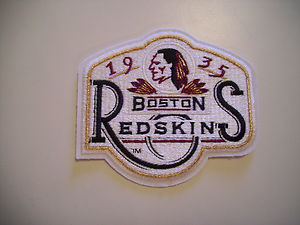
Boston RedskinsI say this without even considering the current problem of having a head coach who let the franchise player ruin his knee. I’m glad I’m not Dan Snyder because the annual sniping about his team’s unfortunate name pulls me in opposite directions ethically and emotionally, and I don’t enjoy being Rumpelstiltskin.*

If I owned the Washington Redskins and was being pragmatic as well as ethical, I’d just bite the bullet (oops! Is that phrase banned now?) and change the team’s name. The debate is stupid, but it’s a distraction no sports franchise needs. I would dig in my heels against political correctness zealots who demand that the Atlanta Braves, Kansas City Chiefs, Chicago Blackhawks and other Native American-themed names get tossed in the ash heap of history, but “redskins” is undeniably a term of racist derision, despite the fact that it isn’t that in the context of football. In football, it just means those NFL players in red and gold that a whole city worships year round.

If, however, I wanted to take a much needed stand against the unethical tactics of political correctness bullies everywhere, refuse to yield to an argument that is as dishonest as it is illogical , I might well do what Snyder has done so far out of pure orneriness and spite, which is to say to the team’s critics, “Stick it!” Continue reading

The Fourth Annual Ethics Alarms Awards: The Worst of Ethics 2012 (Part 1)

Trayvon

Welcome to the Fourth  Annual Ethics Alarms Awards

Recognizing the Best and Worst of Ethics in 2012!

This is the first installment of the Worst. (Part 2 is here, the Best is here.)

2012 inspired over 1000 posts, and Ethics Alarms still missed a lot. And the last week of 2012 was sufficiently ethics packed that the Awards are late this year. My apologies.

In a depressingly unethical year, these were the low points:

Ethics Train Wreck of the Year

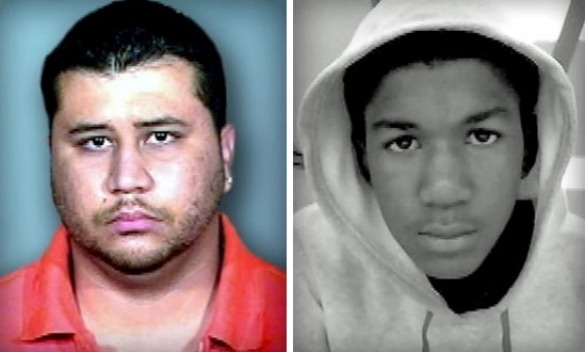
Was there ever any doubt? The Trayvon Martin- George Zimmerman fiasco, naturally, which is far from over. This year’s winner may be the worst ethics train wreck since Monica and Bill were dominating the news.  So far it has involved dubious, unprofessional or clearly unethical conduct by, among others, Martin’s parents, their lawyer, Zimmerman, his wife, the police, Zimmerman’s first set of lawyers, the prosecutor, the Congressional Black Caucus, NBC (which repeatedly broadcast an “accidentally” truncated tape of Zimmerman’s 911 call that made him sound racist), the rest of the broadcast media, conservative talk radio and bloggers (who decided their contribution would be to try to show that Martin deserved to be shot), Spike Lee, Rosie O’Donnell, the New Black Panthers, and President Obama, who ratcheted up the hate being focused on Zimmerman by implying that the killing as racially motivated, and by connecting himself to the victim. Runner-up: The 2012 Presidential campaign.

“Incompetent Elected Officials of the Year” Division Continue reading