Ethics Heroes: Criminal Defense Lawyers Katie Kizer And Amanda Graham

It's hard to picture Perry in a skirt.

It’s hard to picture Perry in a skirt.

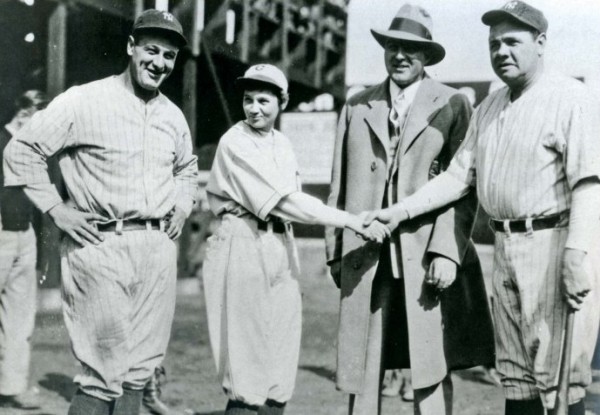
Setting out to change a culture is a daunting challenge, and most of us, given the opportunity to succeed without attempting such a risky task, opt for an easier path. Yet whether it is Jackie Robinson, Danica Patrick, Rosa Parks or Jason Collins, cultures need courageous reformers to keep evolving into more ethical horizons, and fortunately, the heroes eventually come along.

One culture that has been remarkably resistant to change is the practice of law, and the criminal defense bar in particular. Criminal defense is still  overwhelmingly a man’s realm, and a self-perpetuating one. The classic image of the defender of innocent (and guilty) accused criminals has been masculine for centuries, and as a result, few defendants needing a champion are likely to entrust their freedom and perhaps their lives to a defense attorney who looks like one of Clarence Darrow’s young mistresses, Perry Mason’s comely secretary Della Street, or Ann Rutledge. They want Clarence, Perry, or Abe: why take a chance?  Obstructed by such entrenched stereotypes and the need to pay off massive student loans, capable female law grads reasonably choose other legal fields, like family law, where female stereotypes work to their advantage, and avoid criminal law entirely. Consequently, no high-profile criminal trial lawyers with two x chromosomes break through the public’s consciousness, and the bias, the stereotype, and the cycle continues. Continue reading

Ethics and “Casey At The Bat”

casey-at-the-bat-1888-granger

Today is the 125th anniversary of the publication of “Casey at the Bat,” arguably the most popular and famous of American poems, the creation of humorist Ernest L. Thayer in 1888.

The poem carries many  lessons relevant to ethics and life within its tale of the hometown hero who fails spectacularly just when heroics are most needed and anticipated, such as…

  • Don’t promise what you cannot be sure of delivering.
  • Good faith failure isn’t unethical, a sin or a crime, but it still carries with it the need for someone to accept responsibility for it.
  • The focus of disaster is always on the last individual who might have prevented it, but that is neither fair nor logical. The Mudville Nine lost the game, not Casey.
  • Expecting miracles, last-minute rescues, heroic intervention and infallible rescuers is foolish and irresponsible.
  • Respect your adversaries, for your own sake as well as theirs.
  • “Pride goeth before a fall.”

Today, however, I am struck by how neatly the poem reminds us that in baseball there is no spin, no rock to hide under and no Fifth Amendment to claim. When a player fails, or makes a mistake, or misbehaves, it is usually all out on the field, watched in person by thousands, seen on TV by millions, and recorded forever. There is usually no way to deny or hide responsibility, and indeed part of the professionalism of baseball is accepting that, facing the media and the public, and saying, “That was on me. I failed. I’ll do better next time.”

Most of the time, that’s all the crowd asks after failure. Honesty and accountability.

As long as Casey doesn’t keep striking out, that is.

Here’s the poem, recited by the now-forgotten Bob Hope sidekick Jerry Colonna, he of the rolling eyes:

________________________________________

Spark: Craig Calcaterra

Graphic: Fine Art America

Ethics Hero Emeritus: Actress Jean Stapleton (1923-2013)

Edith Bunker, being stifled.

Edith Bunker, being stifled.

Jean Stapleton, the superb character actress best known as “Edith Bunker” from “All in the Family,” has died. She exemplified the actor who, given the chance to use her talents for cultural good beyond mere entertainment, not only did so but did so beyond all reasonable expectations.

Edith Bunker, the submissive, not-too-bright, loving, loyal and thoroughly confused character she played on the 70’s sitcom, always broke my heart. I found Stapleton’s portrayal difficult to watch, even when she was too funny to resist. Edith was an abused spouse who didn’t realize she was being abused. I think many women who were similarly abused resolved to change the course of their lives because watching Stapleton accept being “stifled” and insulted by the man she loved made them recognize the pattern they had accepted too. Yet Edith Bunker, in Stapleton’s hands, made “All in the Family” more than the portrait of a redneck bigot and his enabling wife, broadcast to be mocked by smugly liberal viewers reveling in their intellectual and moral superiority. We felt Archie was redeemable—as indeed the show slowly revealed that he was—-beyond his hard-wired prejudices, in part because such a sweet, good woman loved him. (The other parts included the superb writing of the characters and Carroll O’Connor’s nuanced Archie.) What an achievement Stapleton accomplished by playing a negative stereotype in a way that both promoted sympathy, understanding and rejection, while never becoming so ridiculous that the audience stopped caring about her. She deserved every one of her eight Emmy nominations and three awards: in fact, she smoked the competition every year. There wasn’t a better or more important  performance, male or female, on TV while “All in the Family” was on the air.

That’s not why Jean Stapleton is an Ethics Hero Emeritus, however. Continue reading

Ethics Hero: General Mills; Ethics Dunces: The News Media

Bravo to General Mills for its new Cheerios commercial:

It’s not grandstanding, it’s not in your face, but it’s brave: bi-racial families are so common today that the absence of them in TV commercials could only be the result of a conscious choice by Madison Avenue and Corporate America to avoid offending even those few who should be offended. And TV ads have great cultural force in molding norms, expectations and standards. Some company with a major product needed to take the plunge, and General Mills did it.

I wonder how long it will take them to have a same-sex couple in a Cheerios ad. Continue reading

Now THIS Is Incivility!

"Thank you, counselors. We will proceed to fucking closing statements."

“Thank you, counselors. We will proceed to fucking closing statements.”

I just saw a  local Boston TV ad for Ace Tickets. The slogan at the end was “Sit your Ace down!” So clever! Just throw gratuitous vulgarity into a commercial during a baseball game, doubtlessly viewed by many children, because it’s inherently amusing. The message is that vulgarity is cool, clever and acceptable. Other messages in the media, both in advertising and in pop culture, convey the same permissive standards regarding obscenity. Over on the Drudge Report, a much-admired news aggregator for  political junkies, especially on the right, no mention of Anthony Weiner’s annoying candidacy for Mayor of New York is made without a cheap “weiner” joke. Today, Drudge noted that Weiner was “inching up” in the polls. Get it? HAR!  Just under that “gag,” the news that men favored Weiner in polling was headlined “Male Enhancement.” Soooo witty!  The U.S. is being transformed into one huge junior high school. After growing up in such a vulgar, undignified, sleazy environment, the next generation won’t be prone to inadvertently use words like “fuck” and “shit” in public forums such as live award shows and TV interviews, like our current politicians, newscasters and celebrities. They’ll just use them intentionally, all the time. Won’t that be cool? I’m sure David Letterman thinks so. Cool Dave had A.J. Clemente, he of uttering “fucking shit” on the airways in his debut as a news anchor, as a guest on his show. Dave suggested to A.J. that his ex-bosses were jerks to fire him. Good point Dave! A.J. was just ahead of his time. In a decade or so, “fucking shit” may be the sign-off of the next generation’s Walter Cronkite.

Maybe less than  a decade. Note this account, in a court opinion, of a lawyer’s conduct before a magistrate: Continue reading

James Lipton: Proud To Be A Pimp

James Lipton, circa. 1951

James Lipton, circa. 1951

James Lipton, he of the most pompous interview show in the universe, Inside the Actor’s Studio, has decided to celebrate that franchise’s 250th episode by cheerily revealing that he worked as a pimp in Paris in the 1950’s. This was apparently legal there and then, and Lipton, he tells us, was out of a job, so why not earn your money by recruiting desperate women into accepting cash to have sex with strangers, and take a cut of their proceeds for your trouble?

Lipton tells Parade:

“I had to be okayed by the underworld; otherwise they would’ve found me floating in the Seine.The great bordellos were still flourishing in those days before the sheriff of Paris, a woman, closed them down. It was a different time.”

Oh…you mean there was a time when dealing with organized crime was good? There was a time when it was admirable to trap innocent young waifs into the sex trade because of their poverty? To facilitate adultery and infidelity? To tell women who they had to have sex with, and accept a percentage of their fees for doing so? There was a time when doing all of this didn’t mean you were an exploitive, venal, amoral, low life?

I don’t think so. I don’t think there has ever been such a time, no matter what France may think. Continue reading

Ethics Dunce: Pop Star Katy Perry

When is a sincere apology unethical? Here’s a good example.

Abused and Abuser. Someone please tell Katy Perry which is which.

Abused and Abuser. Someone please tell Katy Perry which is which.

Pop singing star Katy Perry registered an ethically responsible objection via Twitter regarding the Chief Keef song “Hate Being Sober.” She wrote,

“Just heard a new song on the radio called ‘I hate being sober’ I now have serious doubt for the world.”

Me too, Katy.  The artist responsible for this paean to intoxication, however, took offense, and decided to rebut Katy’s tweet with an obscene, abusive, misogynist attack:

“Dat bitch Katy Perry Can Suck Skin Off Of my Dick Ill Smack The Shit out her”

Thus chastened (or intimidated?), Perry apologized to him, writing that she really liked the song, and wasn’t “a hater”: Continue reading

Ethics Quiz: The “Breastaurants”

Playboy bunnies

All right, class…put away your books.

This quiz will count toward your final grade in Ethics 101.

Please watch the following video…about the growing culinary trend of so-called “breastaurants,” Hooters wannabe establishments that sell food service and ogling rights.

Now here is your Ethics Alarms Ethics Quiz for today, a multiple choice. Choose as many of the following to describe the trend as you feel is appropriate:

a. This is entertainment, that’s all. Nothing ethically or culturally objectionable at all.


b. If you thought Playboy Clubs and their “Bunnies” were sexist and demeaning to women, you can’t regard these places as harmless. Same thing, different packages, and more unethical now than then, because we supposed  have learned since then.


c. It’s legal and nobody is making the women do anything they don’t want to do. There’s no offense here. If you don’t like it, don’t eat there.


d. Women desperate for a job in a bad market are being forced to debase themselves. They are victims of exploitation and sexism, that is wrong, and anyone who patronizes such a place is encouraging and endorsing unethical conduct.


e.  The very existence of these establishments encourages sexual harassment and discrimination. There is way to legally prevent them, but no ethical person would own or operate such a place.


f. The “Breastaurants” encourage attitudes and conduct that society is trying to discourage, disapprove, and eliminate. They are ethics corrupters.


g. Allowing children in these places is irresponsible.


h. Voluntarily patronizing any of these places is unethical, as it encourages damaging attitudes toward women.


i. All those cheap breast double-entendres in the ABC story were unprofessional and sleazy.


j. Oh, lighten up! Look at movies. Look at TV. Look at cheerleaders. Look at how high school children dress. It’s just sex, that’s all. Weenie!


k. ARRRRRRRRRGHHHHHHHHH!!!!!

Good luck.

—————————————————

Facts:ABC

Graphic: Betseyj

Ethics Quote of the Week: Chelsea Bacon

“Comedy is not assuming zero responsibility over your actions. It is not telling others how to respond. It is not demonstrating the utmost hypocritical behavior in making callous, lazy, ignorant statements and then lashing out aggressively against critics. Comedy is not free from criticism. This is not an echo chamber containing only yourself and a couple other people exactly like you. You won’t need to do any of these things if you want to be a good comedian, or a decent human being for that matter.”

—-Chelsea Bacon, concluding her account of the reaction she received from male comedians and commenters when she criticized what she regarded as gratuitous sexist jokes.

You might want to read Chelsea's piece, Seth...

You might want to read Chelsea’s piece, Seth…

Bacon takes a brave and ethical stand on unpopular topics among comics, such as whether all jokes are defensible regardless of content as long as they make someone laugh, whether rape is ever legitimate joke fodder, whether exploiting minority stereotypes is fair game in pursuit of comedy, and whether it is inappropriate to criticize comedy material at all. Along the way, the dirty little not-so-secret of the gender imbalance in the comedy world also comes to light.

It is a bold and thought-provoking piece, which you can read in its entirely here.

___________________________________

Pointer: Fark

Source: Little Village Mag

Ethics Quiz: Too Stupid To Be Unethical?

Little Tommy flunked Ethics 101. Should we blame him?

Little Tommy flunked Ethics 101. Should we blame him?

An incident in Jefferson City Missouri nicely raises an issue I think about often.

Capital 8 Theaters in Jefferson City, Missouri sent actors dressed as gunmen, wearing assault gear and carrying what appeared to be semi-automatic weapons, into a screening of the film “Iron Man 3”  last weekend. Really. Apparently the similarity between this scenario and the deadly shooting last year in an Aurora, Colorado movie theater premiering another big budget movie about a superhero never occurred to the theater manager, because he is, you see, a moron. It sure occurred to the patrons, though, and one of them called in the police, saying that gunmen had entered the theater. SWAT teams were called. Luckily nobody was shot or had cardiac arrest, no thanks to the theater.

Interviewed by a local TV station, manager Bob Wilkins was asked if he had any regrets. “No, my job is to entertain people,” he said. Asked if he considered  how  his stunt might affect patrons who remembered the mass shooting in the theater in Aurora, Wilkins responded, “Absolutely. That’s my number-one priority every day. It’s the safety and security of our guests.”

Okay, this pretty much tells us what we need to know about old Bob, so here is your Ethics Alarms Ethics Quiz question:

May abject stupidity be a complete defense to the accusation that one is unethical? Continue reading