1. They are showing “Perry Mason” reruns again on cable TV. That was the show that made my generation want to be lawyers, under the delusion that a defense attorney could regularly prove a criminal defendant innocent. (Pssst! They are almost all guilty.) The show holds up, but boy, Perry was sleazy. In an episode I watched while I was sick, he had his investigator tell the hapless prosecutor, Hamilton Burger (Ham Burger to his friends) that he had found an incriminating piece of evidence that proved someone other than Perry’s client had committed murder. Ham relied on the information and got the killer to confess once he was faced with the production of the “smoking gun.” But Perry’s investigator hadn’t really found anything.
Having one’s agent lie to the state prosecutor is a serious ethics breach. Perry also caused the DA to tell a falsehood to get the confession, though Burger wasn’t lying, since he believed Perry’s contrivance. Prosecutors are no more allowed to lie than other lawyers, but when they do lie “in the public interest,” they seldom get more than a slap on the wrist from courts and bar ethics committees, if that. Burger didn’t seem very upset that Perry conned him, because the real killer was caught. The ends justifies the means, or did in “Perry Mason.”
2. Ick or ethics? A Chinese scientist claims that he had successfully employed embryonic gene editing to help protect twin baby girls from infection with HIV. We are told that bioethicists in China and elsewhere are reacting with “horror.” Writes the Times,
“Ever since scientists created the powerful gene editing technique Crispr, they have braced apprehensively for the day when it would be used to create a genetically altered human being. Many nations banned such work, fearing it could be misused to alter everything from eye color to I.Q….If human embryos can be routinely edited, many scientists, ethicists and policymakers fear a slippery slope to a future in which babies are genetically engineered for traits — like athletic or intellectual prowess — that have nothing to do with preventing devastating medical conditions.”
As with cloning, my view on this controversy is that a new technology does not become unethical because of how it might be used. That unethical use will be unethical, and that is what needs to be addressed when and if the problem arises. (Airplanes could be used to drop atom bombs!) The fear of “designer babies” also seems to be an example of “ick”—it’s strange and creepy!—being mistaken for unethical. Making stronger, smarter, more talented and healthier human beings is not in itself unethical, even if it is the stuff of science fiction horror novels and Josef Mengele’s dreams. Continue reading →
We recently came through the usual Halloween bag of “blackface” controversies, and Ethics Alarms, as it has before, tried to guide the discussion to the material distinctions that social justice warriors, who strategically deal in absolutes when seeking power through real and contrived offense, refuse to acknowledge or are intellectually incapable of doing so. The short version of the Ethics Alarms message: make-up for legitimate theatrical purposes isn’t “blackface,” isn’t “racist,” and shouldn’t be object of knee jerk condemnation based on emotion or ignorance.
Today Turner Movie Classics showed “Swing Time,” the 1936 musical that is probably the high water mark in the Ginger Rogers-Fred Astaire canon. It has the best song (“The Way You Look Tonight”), the best novelty scene (Astaire pretending to be a klutz in a dance lesson with Ginger, then shocking her and her boss—and saving her job— by showing “what a great teacher she is” by dancing, well, like Fred Astaire) and arguably two of the best dances by the two, “Never Gonna Dance” and “Waltz in Swing Time.” The film also contains a controversial “blackface” number, “Bojangles of Harlem,” in which Fred pays homage to two great black tap dancers who were teachers and inspirations for him, Bill “Bojangles” Robinson and John Bubbles. Local TV stations have long been reluctant to show “Swingtime” because of guaranteed complaints that the number is racist, or, if they cut the number (which is unconscionable), complaints pour in from film and Astaire fans that they have defaced a classic out of misplaced political correctness.
If one argues that the number is “racist” because of Fred’s make-up, then one is necessarily arguing that no white performer can ever offer an admiring salute to an African-American great by emulating him. Astaire’s choreography (by Hermes Pan) contained specific references to trademark steps and gestures by both Bubbles and Robinson, though more of the former than the latter. (Some would say, maybe even Fred, that this was because he didn’t dare set himself up to be compared to Robinson, whom many regard as the greatest tap-dancer of them all.) Blackface, as typified by minstrel shows, was a burlesque of negative black stereotypes. There isn’t a hint of this in Astaire’s number: he wears dark make-up because he is honoring two contemporary black dance stars who he knew, learned from, and respected. The make-up is the epitome of a legitimate theatrical device, and racially demeaning neither in intent nor effect. Those who see it as such are either deliberately misconstruing the number, or don’t know what they are talking about. (There is an unfortunate racially demeaning set piece that appears for a couple of seconds at the start, a large caricature of exaggerated black features. You can take the film out of 1936, but you can’t take 1936 out of the film.)
The ironic part of the effort to quarantine “Bojangles of Harlem” is that the number is one of the few reminders in our culture of who Bill Robinson was, and—here’s Jack on his “duty to remember” and cultural literacy soapbox again–he was an important figure in American theatrical, cultural and civil rights history that should be remembered. Instead, Robinson is almost completely forgotten: I bet most of the NAACP members who get up in arms when TMC shows “Swing Time” have no idea how significant Robinson was, and the contributions he made to art and society. Continue reading →
Why sheepish? Well, for an authority on rationalizations, it’s pretty embarrassing to have one of the most famous and oldest rationalizations of them all not appear until the 91st entry on a list being compiled for ten years.
Most people would guess that the old saying comes from Shakespeare. Nope: household name John Lyly, a poet, included the idea in his novel “Euphues: The Anatomy of Wit,” published in 1579, about ten years before the Bard wrote his first play. The novel recounts the romantic adventures of a wealthy and attractive young man, and includes the quote “the rules of fair play do not apply in love and war.”
As often happens, I stumbled on this prominent hole in the list while on another mission. A reader had questioned my criticism of George Bailey and his mother in the Ethics Alarms guide to “It’s a Wonderful Life,” in which they plot to snatch the lovely Mary (Donna Reed) away from George’s obnoxious (“Hee haw!!”) old childhood friend and wheeler-dealer, Sam Wainwright. The reader’s argument was that Mary and Sam had made no commitment, and that she was obviously looking for a better match, so she was fair game for George. This sent me back to the movie, which I watched again last night. The key scene is this one: George is talking to his mother party for younger brother Harry and his new bride… Continue reading →
Some people are now conditioned to see racism in everything, and they are a menace to society, sanity, and the pursuit of happiness.
But I’m getting ahead of myself…
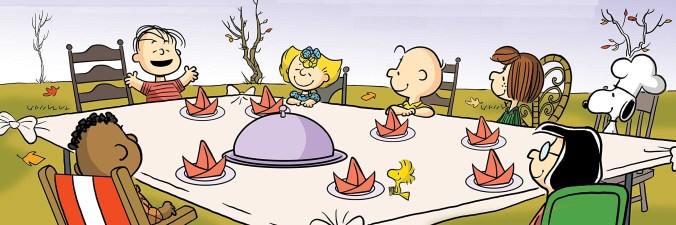
What does it mean that the above scene from ” A Charlie Brown Thanksgiving,” first aired on November 20, 1973 and every year since, suddenly struck some Americans as “racist” in 2018?
Hint: it doesn’t mean that the public is becoming more “woke” to actual racism in America. It means that the relentless effort by one segment of society and many in the news media to use the accusation of “racism” as a political wedge and a weapon to achieve power has officially reached the most dangerous level yet, and is gradually poisoning society. The idea is to make virtually anything potentially “racially insensitive”—choice of words, clothing, casting in TV shows, law enforcement, voting, socialization choices, literally anything and everything, including innocent composition choices in animated cartoons. The objective is to produce fear….fear of making a mistake, fear of offending anyone with hypersensitivity to racial slights, real or imaginary, fear of being labeled guilty of “racism,” which is now the worst crime on earth. This is a sick development that will create a sick society and a dysfunctional culture.
“Franklin, the one and only black friend in the group, is seated by himself on one side of the table while the other is crowded with the rest of the friends. On top of that, he’s sitting in a lawn chair as opposed to everyone else’s proper furniture.”
This is deceit and trouble-making:
There are six human beings at the table, one of whom is black. In fact, the diversity exceeds the percentage of blacks in the U.S. population. There is nothing racist about him being “the one and only.”
Franklin is not sitting “by himself.” He is sitting at the same table with his friends as a welcome guest at a community gathering. Is Linus, who also has one side of the table to himself, sitting “by himself” too? No, he’s a member of the group, at the same table as his friends. Is Marcy, at the opposite end, sitting “by herself?” No, she is also sitting with the group, just like Franklin.
Is having one side of a communal table considered some kind of insult? Not at any table I’ve been seated at. I love having a side to myself. It is also an advantage to be able to look at your family and friends across a table, rather than to have to talk to them by turning your head and craning around. There is a strong argument that Franklin is being treated with special consideration.
Why did the artist set up the table like that? I guarantee it was not to make a racist statement. How can I guarantee that? I guarantee that because 1) the “statement’ would be idiotic 2) because nobody out of millions of viewers saw any such statement for four decades 3) because if you wanted to be hostile to blacks, you could just skip Franklin. Franklin, a minor, (indeed transparently token) “Peanuts” character added to the comic just five years earlier, is at the gang’s celebration in place of Schroader, Violet, Pigpen, and even Lucy, all more prominent characters. So what’s the theory, that the cartoonists gave the black kid a place at the table over major, long-standing characters in order to insult him? How racially paranoid do you have to be to think like that? The answer is “pretty damned paranoid,” and that’s the state of mind malign political forces here want to promote.
Once again I am posting the Ethics Alarms Ethics Guide to Frank Capra’s 1946 masterpiece “It’s A Wonderful Life,” perhaps the greatest ethics movies of all time, as this blog’s official welcome to the holiday season. The film is commonly thought of as a Christmas movie, but it really is a Thanksgiving story. Unfortunately, the movie is so well known, so much imitated, so familiar in its tropes and cliches that we really don’t think about it very hard. We should.
The movie is exactly the kind of important shared cultural touch-point that I am advocating when I emphasize the importance of cultural literacy to our nation’s connective tissue. The film teaches about values, family, sacrifice and human failings unlike any other: its power and uniqueness disproves the assertion, made in one online debate here this year, that new cultural creations inevitably and effectively supersede older ones. No, they really don’t, and like copies of copies, eventually the cultural values conveyed get fainter and less influential. “It’s A Wonderful Life” would be an excellent basis for a middle school ethics course. I haven’t seen a better, richer film for that purpose come along since, and I’ve been looking.
I am also constantly amazed at how many people haven’t seen the movie. My son’s girlfriend admitted that she hadn’t at dinner today. A few months ago I gave a DVD to a pharmacist at our local CVS after I made a reference to the film and he had no idea what I was talking about. He said he would wait until the holidays to watch it with his family. I hope he does: he left the job soon after. There are some classic movies that parents have an obligation to make sure their children see. This is one. Despite the many ethics complexities and nuances that the film glosses over or distorts, its basic, core message is crucial to all human beings, and needs to be hammered into our skulls at regular intervals, far more often than once a year.
What I wrote about this message in an earlier posting of this opus still seems right to me:
Everyone’s life does touch many others, and everyone has played a part in the chaotic ordering of random occurrences for good. Think about the children who have been born because you somehow were involved in the chain of events that linked their parents. And if you can’t think of something in your life that has a positive impact on someone–although there has to have been one, and probably many—then do something now. It doesn’t take much; sometimes a smile and a kind word is enough. Remembering the lessons of “It’s a Wonderful Life” really can make life more wonderful, and not just for you.
I wondered about posting the guide again this year, as this feels like a year in which Ethics Alarms lost old readers rather than gained new ones. Then I read it again, and it reminded me of some important things I had forgotten, and I wrote it. I also, as is my yearly habit, edited and added to the commentary a bit. I’m smarter this year than I was last year, and I bet you are too…especially if you’ve been reading Ethics Alarms, just from figuring out how I’m wrong.
I hope you all had a terrific Thanksgiving, and that the holiday season is joyous for all.
And here we go:
1. “If It’s About Ethics, God Must Be Involved”
The movie begins in heaven, represented by twinkling stars. There is no way around this, as divine intervention is at the core of the fantasy. Heaven and angels were big in Hollywood in the Forties. The framing of the tale seems to advance the anti-ethical idea, central to many religions, that good behavior on earth will be rewarded in the hereafter, bolstering the theory that without God and eternal rewards, doing good is pointless.
Yet in the end, it is an ethics movie, not a religious one. George lives a (mostly) ethical life, not out of any religious conviction, but because step by step, crisis after crisis, he chooses to place the welfare of others, especially his community and family, above his own needs and desires. No reward is promised to him, and he momentarily forgets why we act ethically, until he is reminded. Living ethically is its own reward.
We are introduced to George Bailey, who, we are told, is in trouble and has prayed for help. One has to wonder about people like George, who resort to prayer as a last resort, but they don’t seem to hold it against him in Heaven. The heavenly authorities assign an Angel 2nd Class, Clarence Oddbody, to handle the case..He is, we learn later, something of a second rate angel as well as a 2nd Class one, so it is interesting that whether or not George is in fact saved will be entrusted to less than Heaven’s best. Some lack of commitment, there— perhaps because George has not been “a praying man.” This will teach him—sub-par service! Good luck, George!
2. Extra Credit for Moral Luck
George’s first ethical act is saving his brother, Harry, from drowning, an early exhibition of courage, caring and sacrifice. The sacrifice part is that the childhood episode costs George the hearing in one ear. He doesn’t really deserve extra credit for this, as it was not a conscious trade of his hearing for Harry’s young life, but he gets it anyway, just as soldiers who are wounded in battle receive more admiration and accolades than those who are not. Yet this is only moral luck. A wounded hero is no more heroic than a unwounded one, and may be less competent as well as less lucky. (This is not an observation that one should make in public, as President Trump learned when he made a lifetime enemy of John McCain.)
3. The Confusing Drug Store Incident.
George Bailey’s next ethical act is when he saves the life of another child by not delivering a bottle of pills that had been inadvertently poisoned by his boss, the druggist, Mr. Gower, who is addled by grief and drink after learning about the death of his own son. George’s act is nothing to get too excited over, really—if George had knowingly delivered poisoned pills, he would have been more guilty than the druggist, who was only careless. What do we call someone who intentionally delivers poison that he knows will be mistaken for medication? A murderer, that’s what. We’re supposed to admire George for not committing murder.
Mr. Gower, at worst, would be guilty of negligent homicide. George saves him from that fate when he saves the child, but if he really wanted to show exemplary ethics, heshould have reported the incident to authorities. Mr. Gower is not a trustworthy pharmacist—he was also the beneficiary of moral luck. He poisoned a child’s pills through inattentiveness. If his customers knew that, would they keep getting their drugs from him? Should they? A professional whose errors are potentially deadly must not dare the fates by working when his or her faculties are impaired by illness, sleeplessness or, in Gower’s case, grief and alcohol.
One could take the position that Mr. Gower “just made one mistake.” But trustworthy professionals don’t get to make such mistakes, not and still be trusted the next time. Trust is easily destroyed, and should be.
Mr. Gower also slaps George on the head several times. Today hitting a child like that is regarded as child abuse by a parent; when another adult hits a child, it’s grounds for arrest. This is one of many examples of evolving societal ethics in “It’s A Wonderful Life.” When the film was made, Mr. Gower’s conduct in beating a child employee was considered forgivable. If the local pharmacist slapped my son, I’d swear out a criminal complaint, and he still might end up shambling bum like Mr. Gower in the film’s alternate reality section.
4. The Uncle Billy Problem.
As George grows up, we see that he is loyal and respectful to his father. That’s admirable. What is not admirable is that George’s father, who has fiduciary duties as the head of a Building and Loan, has placed his brother Billy in a position of responsibility. As we soon learn, Billy is a souse, a fool and an incompetent. This is a breach of fiscal and business ethics by the elder Bailey as well a classic conflict of interest, both of which George engages in as well, to his eventual sorrow.
1. The Johnny Bobbitt scam story continues...That heartwarming story I highlighted in an Ethics Hero post last year continues to deteriorate. Kate McClure, who conspired with homeless vet Bobbitt to persuade old softies to give over $400,000 to a GoFundMe campaign apparently blames her complicit boyfriend for the debacle. In a recording shared with “Good Morning America” by her lawyers, McClure is heard telling her now ex- ( I assume he’s now an ex…) Mark D’Amico, “You started the whole fucking thing, you did everything! I had no part in any of this, and I’m the one fucking taking the fall!”
I don’t understand the reasoning of people who make this kind of argument. McClure went on TV to tell her phony story, which was about her getting stranded and being rescued by Bobbitt. How can she accuse D’Amico of “starting the whole thing”? Even if the plot was his idea, all she had to do was say “no.” “He made me do it” was always a lame excuse, and when women use it to duck accountability today it is lamer than ever. Did D’Amico hold a gun to her head? Have her parents bound and gagged as hostages? Absent those forms of coercion or something equivalent, she has no argument for avoiding accountability.
2. “Sixteen Candles” ethics: Why didn’t anyone show this scene during the Kavanaugh hearings? Since I’ve been wiped out with my Three Year Killer Cold, I’ve been watching all sorts of strange things on TV. Late last night it was the John Hughes 1984 classic “Sixteen Candles,” now a special target of the Officially Offended and the Political Correctness Police. Ah, those golden, halycon days when a film could get laughs with a goofy Chinese character named Long Duc Dong who could be introduced with a gong sound every time he appeared and who inexplicably dived out of a tree shouting (in Japanese) “Bonzai!” Cringe-producing though it is, the film still provides valuable cultural perspective.
I had forgotten the scene in which awkward, scrawny, horny young teen Anthony Michael Hall jumps Molly Ringwald not once but twice in rapid succession, misunderstanding, somehow, her friendly demeanor as a come-on. She effortlessly pushes him away both times, he is abashed, she shrugs it off, and they continue talking. Hall’s actions nonetheless would be described by many today as a sexual assault, when in the film they were originally intended to represent—and did— a typical embarrassing experiment as a maturing child explores sexual norms.
I imagine that the “attempted rape” described by Dr. Blasey Ford might well have looked just as ridiculous if it had been filmed. I also imagined Ringwald’s character, now flushed with progressive fervor and “woke,” deciding decades later to reframe the absurd encounter all those decades ago as something it was not, and crashing a now mature Anthony Michael Hall’s reputation and career to the applause of the progressive echo chamber.
Anthony Michael Hall is just three years younger than Brett Kavanaugh. Here is what he looks like now, and how he appeared when he covered Molly Ringwald like an octopus in “Sixteen Candles.” . The time frame of the film is approximately the same as the alleged Kavanaugh-Ford incident.
How can anyone seriously—not just seriously, but self-righteously and angrily— argue that the conduct of the child in a completely different cultural context is relevant to the trustworthiness of the adult? Continue reading →
Sometimes I worry about Ann Althouse. She’s often one of the most perceptive and objective bloggers on law and politics, but when she leaves her zone, we get things like her recent dismissive assessment of screenwriter/novelist William Goldman upon the news of his death.
Althouse admits that she hasn’t seen many of Goldman’s films, and I presume that she hasn’t read his novels, either. Nonetheless, she writes, “Goldman seems to have been a competent, successful, mainstream writer, and good for him, but I have no sense of him as original, profound, or speaking to me.”
Let me enlighten her. (And by the way, how could he “speak to her” if she didn’t read his novels or watch his best films?) Goldman was one of the very best, cleverest and reliably excellent screenwriter of his time, and probably any time. Althouse cherry-picks an interview in which he said in part,
“[P]ay attention to the audience. The great thing about audiences is, I believe they react exactly the same around the world at the same places in movies. They laugh, and they scream, and they’re bored. And when they’re bored it’s the writer’s fault.”
Incredibly, Althouse uses this endorsement of lively writing, which Goldman was a master at, to minimize and condemn him. “And that’s the attitude about movies that has taken over in the last 40 years and why I’m not interested in movies anymore. This grand effort to preemptively stomp out all boredom bores me,” she writes, whatever THAT means. Goldman isn’t talking about explosions, sex scenes or CGI dinosaurs. He’s talking about stories that go somewhere, avoiding cliches, and making an audience want to watch and listen. My approach to play direction embodies exactly the same philosophy. I learned a lot about drama and comedy from Goldman’s films.Continue reading →
I learned about Nora Bayes (1880-1928) while mounting a production of a “lost” musical, George S. Kauffman’s Hollywood satire “Hollywood Pinafore,” which was essentially a parody of Gilbert & Sullivan’s classic, “H.M.S. Pinafore.” Nora was mentioned in a laugh line in the script, so the 1941 show assumed that the audience knew who she was. I had never heard of her, so I did some research. She was a fascinating character, and a huge vaudeville and Broadway singing and comedy star, household name huge. “Over There” was one of her biggest hits; another was “Shine on Harvest Moon,” which she wrote with her second husband (she ultimately had five), Jack Norwith. He also wrote “Take Me Out To The Ball Game,” another Bayes standard. According to one online biography, Bayes Bayes “provided some flamboyant, indeed extreme, examples of the broad social changes happening in the United States in the early twentieth century, namely the questioning of traditional roles for women as well as the challenges to male political and economic power that marked the women’s movement of the time.”
I almost wrote about her in April. As regular readers here know, I believe it is the our duty to honor the memories, accomplishments and cultural influence of past figures in American history, because the more we remember, the more we learn, and the wiser and more ethical we are. Somehow Nora Bayes, famous as she one was, had been in an unmarked grave for 90 years. On April 21, a group of Nora Bayes enthusiasts placed a granite headstone over her plot. The New York Times told the strange tale here.
Now I think of Nora Bayes every time I hear “Over There,” “Shine on Harvest Moon,” and “Take Me Out To The Ball Game.” Maybe you will too.
1. Truth in labeling. Major League Baseball has sent a team to Japan to play a series of exhibition games against a Japanese All-Star team, reviving a long-time tradition that had been suspended for several years. As you may know, the U.S. was critical in introducing baseball to Japan, and sent several major stars there to help get the sport established. Playing in Japan is mostly a lark for the American players, but the games are taken very seriously by the Japanese. In the first two games, the MLB All-Stars have lost, greatly pleasing the locals.
I don’t begrudge the Japanese fans their David and Goliath fantasies, but calling the U.S. team “All-Stars” is misrepresentation. For example, one of the pitchers who got clobbered in the last game, a 9-6 contest that began with the Japanese team jumping out to a 9-0 lead, was a Red Sox pitcher named Brian Johnson. I like Johnson, a crafty swing-man who had some good moments last season, but he’s a lifetime 6-6 pitcher who was left off the Red Sox post-season roster, and will have to battle to stay in the majors next season. I know you can’t sell tickets if the U.S. team is called the “All the players we could talk into coming to Japan Team,” but that’s what it is.
2. Tit for Tat may be funny, but it’s not ethical. Representative Dan Crenshaw, the veteran who was mocked last week on Saturday Night Live for his disfiguring war wound, appeared on the show last night to mock the appearance of his tormenter, Pete Davidson. Crenshaw was unusually poised for a pol on a comedy show, and the bit successfully got Davidson and SNL, which had been widely criticized for its nasty routine, off the hook. Clever. Successful. Funny. Still wrong, however. This represents an endorsement of Donald Trump ethics, as well as the endlessly repeated rationalization for the non-stop ad hominem attacks the President has inflicted on him daily by the news media and others. The President famously—infamously around here—has always said that if you attack him, he’ll attack you back harder. His haters argue, in turn, that their tactics are justified by his. This is how the culture got in the escalating spiral to Hell it is in. I don’t blame Crenshaw: if he hadn’t accepted the invitation to get funny revenge on Davidson, he would have looks like a petty jerk. Nonetheless, he has now officially become part of the problem, not just a victim of it.
3. Stop making me defend President Trump Dept. You see, I am kicked around on Facebook for not just falling meekly into line and declaring that everything Donald Trump does is an outrage and proof that he should be impeached. I tell you, it’s tempting. The mass bullying campaign to herd everyone into the undemocratic effort to overthrow an elected President using relentless criticism and flagrant double standards has been effective in stifling others, and it also serves as a kind of mass cultural hypnosis. I don’t like defending Trump. He is doing serious damage to his office, as are his unhinged foes, who are apparently willing to destroy the nation, democracy, and the Constitution to “save” it from him. But I will not be intimidated out of pointing out the revolting pettiness, hypocrisy and unfairness of his critics. Two examples surfaced yesterday. Continue reading →
I know I’ve been belly-aching about the decline in views on Ethics Alarms this year. There are a lot of theories, but one certainty: I’ve written fewer posts. Beginning in July, I’ve had an unavoidable two-hour commitment during the work week that has compressed my schedule, and removed crucial time that would normally be used, in part, to create one or two additional blog commentaries. The task also left me fatigued and frequently caused time crunches with other projects. That commitment finally ends after today. I would celebrate, but I don’t have the energy.
1. Twitter bites Bill James. James, the free-thinking, courageous baseball iconoclast often credited with creating the discipline of sabermetrics, has been an inspiration to me for decades in his relentless commitment to banishing bias, majority beliefs and conventional wisdom from his analysis. (“Signature significance,” often mentioned here, is Bill’s term.) Yesterday, I learned that Bill was once again the target of fury within the baseball establishment (it doesn’t “get” Bill, and never will), this time because of a series of tweets he issued in discussing baseball with some followers. Inspired by Washington Nationals free-agent outfielder Bryce Harper’s rejection of a 300 million dollar offer from his club, Bill was musing about the conventional wisdom that players. especially stars, are the reason people watch baseball. Among other tweets, he wrote,
“If the players all retired tomorrow, we would replace them, the game would go on; in three years it would make no difference whatsoever. The players are NOT the game, any more than the beer vendors are…The entire GAME is the product…We’re all replaceable, the players as much as the beer vendors. If they’re unhappy about that, talk to God about it; I don’t make these rules.”
This attracted the ire of the Players Association, which deliberately or foolishly misconstrued what James was trying to convey. As a long-time reader of James’ work, I have seen this theme before. It’s a simple (but too complex for most players and broadcasters, essentially) proposition: even if the over-all quality of the players was reduced, the game being played would look and feel the same, its thrills, strange bounces and dramatic turns would be unchanged, the new, lesser players would yield new stars, and the popularity of the sport would not be significantly diminished. James makes such observations to jolt people out of comfortable assumptions, and force them to think. Too many people in baseball don’t want to think, or don’t know how. James also suggested that for a baseball player who was paid $3,000,000 a year to feel underpaid was ridiculous in some respects. Of course the Players Association and the players themselves couldn’t let that go without objection.
James is a consultant to the Boston Red Sox, and the team felt it had to reject James’ theories in this matter…mustn’t make the union mad, after all. The team wrote:
“Bill James is a consultant to the Red Sox. He is not an employee, nor does he speak for the club. His comments on Twitter were inappropriate and do not reflect the opinions of the Red Sox front office or its ownership group. Our Championships (sic) would not have been possible without our incredibly talented players — they are the backbone of our franchise and our industry. To insinuate otherwise is absurd.”
Of course, James never said that the game could be played without players.
To his credit, and typical of him, James took full responsibility for the mess. “I understand that the Red Sox are not in business to offend people, and certainly regret that I gave offense to anyone,” he wrote. That was clearly not an apology, nor was it intended as one. James has not retracted his statements. He has said that he should have been clearer. Speaking of his rebuke from the Red Sox, he said,
“I’m not offended. None of us in the organization — or, like me, sort of attached to the organization although not exactly in the organization — none of us should give offense unnecessarily. If I did that — and obviously I must have — it isn’t their fault; it’s mine. I do think that my remarks, taken in context, could not be misunderstood in the way that they have been. But it is pathetic for a writer to say ‘I’ve been misunderstood.’ Our job is to make ourselves understood.”
Yesterday, I heard one of the Sirius-XM Major League Baseball hosts ridicule the idea that a millionaire player shouldn’t feel underpaid, citing the salaries move and TV stars get. But James point, if anything, is more valid in reference to that industry. In my tiny corner of professional theater, I have encountered literally dozens of actors, actresses and artists who are as talented and accomplished as many, indeed most, of the stars who get paid multiple millions for their performances. If every film actor alive decided to emigrate to Denmark, it would take less than three years to replenish the talent pool. It would not even take one. For the most part, he public goes to see good movies, not stars. Movies, not actors, are the product.
2. Just so you know that I’m a nice guy...A lawyer representing someone I criticized in a post from several years ago contacted me and asked if I would take the post down. His client, he told me, has been periodically contacted on social media by individuals who have read my post, and she is embarrassed by the episode I was writing about. The lawyer did not demand that I remove the post. He did not claim that I had defamed anyone; he conceded that I had published an opinion within my range of expertise, and that he had no grounds to force me to do anything. He just said that his client would be very grateful if I took down the post.
I checked the statistics. I rather liked the essay, but it had attracted few comments, no more than a hundred or so people had read it, and the topic was now moot. I took it down.
3. The Bad Guys (cont.) Matt Yglesias is an infamous left-wing pundit, and not a very bright one, in my experience. Naturally, he writes for Vox. In the wake of another leftist mob setting out to intimidate those with whom they disagree (Note:I will NOT take down a post if a mob outside my house demands it) Yglesias tweeted,
I think the idea behind terrorizing his family, like it or not as a strategy, is to make them feel some of the fear that the victims of MAGA-inspired violence feel thanks to the non-stop racial incitement coming from Tucker, Trump, etc….I agree that this is probably not tactically sound but if your instinct is to empathize with the fear of the Carlson family rather than with the fear of his victims then you should take a moment to reflect on why that is….I met a woman who didn’t leave the house for months because she was afraid of being picked up by ICE and never seeing her US citizen kids and husband again. What sense was there in terrorizing her family?…I honestly cannot empathize with Tucker Carlson’s wife at all — I agree that protesting at her house was tactically unwise and shouldn’t be done — but I am utterly unable to identify with her plight on any level.
The entire series is signature significance for someone with no ethical comprehension or bearings whatsoever. There is nothing here but bias and rationalizations, and no news organization who employs such an ethically-handicapped writer can be trusted or taken seriously. Because an illegal immigrant is frightened of the fair and legal consequences of her own actions and choices, it is legitimate for a mob to terrify the family of conservative news commentator. Allow me to add intellectual bankruptcy to Yglesias’s undeniable maladies.
Now he’s deleted all of his tweets. Too late! We know you’re a vicious, biased idiot, Matt.
I referred to this speech in today’s Warm-Up, but couldn’t find the video or a transcript. I finally found the clip: no context is really necessary, because the words are based in basic ethical philosophy. The scene takes place in a hallucination; Rick Grimes, the central character in AMC’s apparently endless zombie apocalypse show, believes he is dying. On a field of bodies, he is met by Sasha Williams (played by Sonequa Martin-Green), a character who perished earlier in the series.
Sasha’s encouraging and comforting words to Rick are as concise and accurate as description of how I view ethical conduct and their essential value to civilization as I have encountered in scholarly texts or classical reference works. (This is why I am so attentive to popular culture.) The key words:
We change each other. We help each other. We make each other better. And it never ends…It’s not about you or me or any one of us. It’s about all of us…and I don’t believe that it just evens out. I believe it always crosses over to the good.
That’s exactly what I believe. And I didn’t even have to go through a zombie apocalypse to learn it.





 Ethics Alarms