I’m watching “It’s A Wonderful Life,” Frank Capra’s ultimate ethics movie. Don’t forget to review its ethics dilemmas, conflicts and conundrums with the handy
I’m watching “It’s A Wonderful Life,” Frank Capra’s ultimate ethics movie. Don’t forget to review its ethics dilemmas, conflicts and conundrums with the handy
I’m late to the blog today, because I spent it giving a special program for the Smithsonian Associates called “From Stagecoach to Django Unchained: The Hollywood Western and Its Influence on American Values, Aspirations and Culture.” It consisted of me talking, a terrific Powerpoint presentation by the gifted Grace Marshall, and almost three hours of clips from classic Westerns—the whole session was five hours. My primary message is that anyone who is not literate regarding the Hollywood Western really doesn’t understand the myths and archetypes that powerfully influence U.S. culture to this day. Within that “anyone” are the majority of pundits and journalists, a large percentage of citizens under 50, and the vast majority of women and minorities. This is a problem.
For example, no one can consider the vast influence of the Western genre on American culture and be the least bit surprised that gun control has an uphill battle with the American public. No other culture has as its primary source of heroes, legends and lore figures and events so dependent on firearms as a means to right wrongs, protect the innocent, and punish evil. Frankly, if a pundit doesn’t understand why John Wayne (who died in 1979) just set a Harris poll record by being included in its annual list of top ten most popular movie actors for twenty consecutive years, from 1994 to 2014, I don’t think they can comprehend the nation sufficiently to opine on it.
Joe Biden, however, understands. I have been critical of Joe, as he is frequently an embarrassment, and there was a lot wrong with his comments today as he was honored with the “Voice of Solidarity” award by Vital Voices, a women’s rights charity, at their event celebrating “men who combat violence against women.” Still, Biden proved that whether he knows it or not, he is more atuned to U.S. culture than most of his colleagues. He deserves credit for that, if nothing else.
You see, Biden told a fascinating personal anecdote from his childhood. He related:
“I remember coming back from Mass on Sunday Always the big treat was, we’d stop at the donut shop…We’d get donuts, and my dad would wait in the car. As I was coming out, my sister tugged on me and said, ‘That’s the boy who kicked me off my bicycle.’ So I went home—we only lived about a quarter mile away—and I got on my bicycle and rode back, and he was in the donut shop.”
Biden said the the boy was in a physically vulnerable position,“leaning down on one of those slanted counters,” so he took immediate advantage:
“I walked up behind him and smashed his head next to the counter.His father grabbed me, and I looked at his son and said, ‘If you ever touch my sister again, I’ll come back here again and I’ll kill your son.’ Now, that was a euphemism. I thought I was really, really in trouble… My father never once raised his hand to any one of his children—never once—and I thought I was in trouble. He pulled me aside and said, ‘Joey, you shouldn’t do that, but I’m proud of you, son.’”
The lesson, Biden said, was that one should to “speak up and speak out” to correct wrongdoings. Like much of what come out of Biden’s mouth, this was nonsense in the context of his own story, and was not what the lesson was at all. The lesson was that force, punishment, violence and intimidation is sometimes necessary to stop bullying, discourage misconduct, protect the innocent and vulnerable, set standards, and give more than lip service to core values. Little Joey Biden didn’t “speak up”: he bashed a bully’s head and threatened to kill him. Apparently it worked, too. America, Americans, the culture and our history—as well as the Duke–have long believed that sometimes violence is necessary to stop violence, and send important messages, and can therefore be virtuous and ethical. Biden understood that when he was ten, and somewhere deep in that mess of mush he calls a mind, he understands that now. Continue reading
Cultural events earlier this month brought to light, on two continents, the problem of maintaining the integrity of art and literature under the onslaught of political correctness.
In Sweden, a controversy has erupted over the re-broadcast of a 1969 television adaptation of the Pippi Longstocking books, the children’s classics authored by Astrid Lindgren. The Swedish national TV station, SVT, announced that it is revising a scene from the 1969 television series about Pippi which she says her father is “king of the Negroes,”a direct quote from one of the stories. Believe it or not, this has set off a contentious national debate.
The family has approved the station’s desire to change the TV version, but is keeping the term in future editions of the books. In 2006, the family added a preface explaining that today, the word is considered “offensive,” but that when the books first appeared, “Negro was a common expression for people with black skin who lived in other parts of the world than ours.” That’s a sensible solution. Period and context is important in art and literature: the urge by some to constantly purge the world of any reference, word or attitude in past creations that seem out of place now leads to a form of cultural self-lobotomy. Erik Helmerson, a columnist at Dagens Nyheter, an influential Stockholm newspaper, called the changes a form of censorship. “I’m very sensitive to the fact that people are offended by the N word,” he said in an interview. “I’d never use it myself.” He even called revising the TV series “a huge interference into freedom of speech.” “Where do we draw the line? What do we cut and what do we keep? Who should decide? Who needs to be offended before we cut a word?” Continue reading
Traversing such seemingly unrelated topics as aphrodisiacs, “Mr. Ed,” post-war culture, literacy, and the evolution of childhood, Penn’s Comment of the Day is one of my all-time favorites. Here it is, a response to the post, “Daily Comics Ethics: When Did Erection Gags Become Appropriate For The Funny Pages?” I have a lot of reactions, but here are three:
In reply to your rhetorical (and tertiary) query, Jack, you missed (that small part of the) evolution just as we all did and do, because it was an evolution, a slow-moving American tsunami of post-war change beginning in the late 40s.
As a child, I recall controversy, strictly among adults, over things that wouldn’t be even thought of today such as the idea of having a girl (Lois Lane?) take up a weapon against a villain instead of waiting, albeit bravely, for Superman, to come rescue her. It was argued to be unladylike – and therefore, unsuitable for children’s comics — for females to fight for themselves if there was a man around, even as the WACS, nurses and ambulance drivers returned home, joining widowed moms & rosie-riveters in job-hunts. Or unless it was Wonder Woman. And oh the struggles to allow Wonder Woman — she of the skin-molding, crotch-height tights and the noticeable chest bumps, however well armored — into the son’s bedroom. Or the daughter’s wardrobe (next, she’ll want a bra!) Continue reading

TheWrap is a web Hollywood news and gossip site. Picture TMZ crossed with Gawker. It published an immediate candidate for the most unethical blog post of the year, always a closely contested category, a piece of cyber-offal by an industry writer named Rich Stellar that issued a combined attack on the women coming forward to prove Bill Cosby is a serial rapist, and the media’s coverage of it. I was happily unaware of Stellar, barely aware of The Wrap and definitely unaware of this utter crap until it was flagged in a Salon piece, which was in turn flagged by one of my indispensable scouts, Fred. What unfolded before me was a horrible spectacle of a despicably and dumber than a box of rocks opinion piece that no competent editor should allow to avoid the trash, a subsequent apology of sorts from the writer that shows such an ethics deficit that he should probably have a 24-hour keeper, and, finally, his editor’s defense of her wretched editorial judgment based on the theory of the First Amendment, which she appears to think means “You have to publish any garbage any fool writes no matter how poorly conceived or reasoned, or you are unAmerican.” But I am getting ahead of myself.
The Blog Post.
Read it all if you dare. Here’s Stellar’s money quote, which distills most of the cretinism without forcing you into Hell: Continue reading

Why can’t a serial rapist be funny and cute?
Frequent commenter aaronpaschal weighed in with this rich post on the Bill Cosby matter. I will hold my response to the end, because there is much to consider here, and much I disagree with. However, aaron has articulated well the thoughts many are having about the Cos, and I am grateful for the exposition. Here is his Comment of the Day regarding the post, On Cosby, Clinton, And An Ethics Dunce Convention In Melbourne, Florida.
I don’t know if I fully believe the allegations. I don’t know if the girls and women involved should bear some responsibility for choosing to become impaired. I don’t know if Cosby’s career will long survive this uproar – Netflix is dropping all of Cosby’s works in response, and that’ll cost someone a pretty penny.
But I do know that I don’t feel completely at ease with the notion that he faces ruin. That there is no evidence, no words, nothing he could present in his own defense. No courtroom, no trial, no lawyers. That the man who allegedly committed these acts did so a lifetime ago. I’ll admit that the women who have come out don’t have much tangibly to gain – but I also know all too well that revenge, hatred, defending existent lies, even merely time in the spotlight can be powerful motivators for some people (bearing in mind that pursuing justice, speaking the truth, and protecting the innocent are well – it could be any of them, all of them, or more.) There must, however, be SOME motive somewhere, or they would not be stepping forward – if there was truly nothing to gain.
But I do know that his works have always made me laugh, and I will appreciate them for years to come. I know I’ve heard wisdom from him, and these crimes don’t change the wisdom, either. I might not choose to leave my daughter alone with him. And I know that the court of public opinion makes very few wise choices, it is a terrible thing to be tried by it, guilty or innocent, and true justice is rarely found there.
No riots are anticipated, fortunately.
Police Lt. Brian Keller, an assistant sheriff, used his unmarked black Dodge Charger, with emergency lights flashing, to stop a school bus so he could hand his son his lunch, which the boy left home without. The bus was not within Keller’s jurisdiction….not that his actions would be much better it it has been.
There was a complaint, which Lake County (Illinois) officials are investigating.
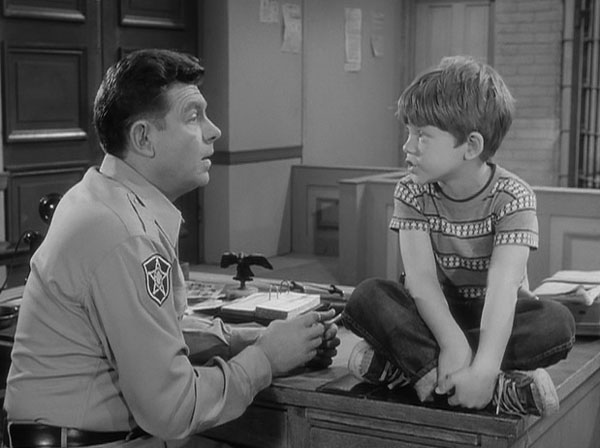
This is the kind of thing Sheriff Andy Taylor might have done for Opie in little Mayberry, but such abuse of power is neither cute nor funny outside of TV Land. I don’t care if he’s a single dad (like Andy); it doesn’t even matter if the kid had crucial, life saving prescription drugs in the lunch bag—insulin, maybe. Using official authority for a personal matter like this is the sign of an untrustworthy cop who doesn’t comprehend his job. It is small wonder that police labor under the public presumption that they don’t respect the law or the limitations of their authority.
___________________
Pointer: Mediaite
I guess it all began with Allen Funt.
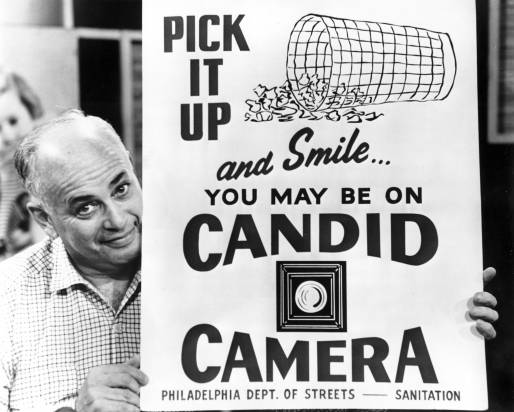
If Allen knew what he would be starting, he would have opened a deli.
Back in the Fifties, he came up with the idea of using a hidden camera to record the reactions of innocent bystanders “in the act of being themselves.” He staged situations, sometimes Twilight Zones set-ups like a door that opened for everyone but the target, and filmed the results, first for a guest segment on TV talk shows and finally on his own, long running hit, “Candid Camera.” Funt would never have dreamed of using actors and faking the reactions, because first, he didn’t need to; second, if he was caught, it would ruin him; and third, he was an honest professional. The idea, however, has thoroughly metastasized in all directions, to “practical joke shows,” reality shows, and such monstrosities as ABC’s “What Would You Do?” and James O’Keefe. Perversions were limited as long as the shows were restricted to television, but now YouTube makes everyone a potential producer, and among the thousands trying to create a viral video, there are many, perhaps most, who are not decent, ethical professionals like Allen Funt, but just greedy jerks who will gladly cheat, lie to and humiliate others to gain fame and fortune. Continue reading
Fair enough. Wait…what????
Why is Bill Cosby’s past avocation as a Hollywood power-abuser and serial sexual predator suddenly so upsetting to Hollywood that they are recoiling from him now?
I refuse to believe that everyone in the news media, the entertainment industry and the black community didn’t know all about it, and for many years. I wrote about it in 2007, and I am not an investigative reporter.
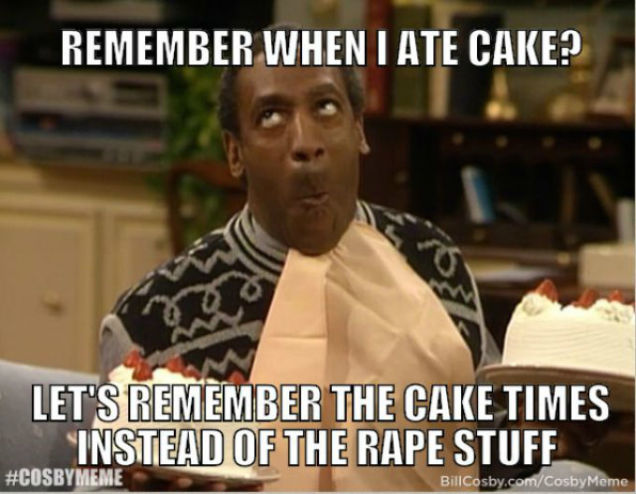
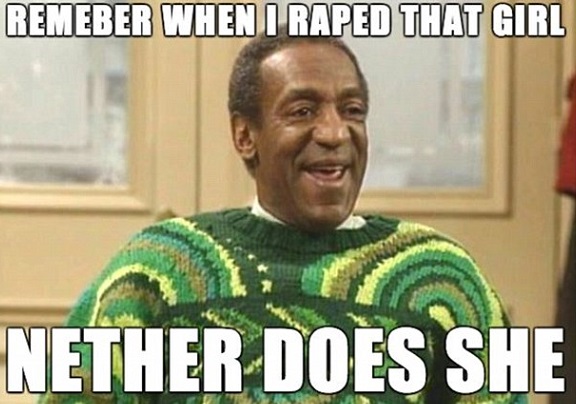
I have to conclude that this is all because of younger people learning about this for the first time and the effect of social media. When whoever runs Cosby’s Twitter account cluelessly challenged followers to “meme me!”, what resulted was a flood of derisive–but funny!—memes referencing the rape allegations (he reportedly used hypnotic drugs), like the one above, or this one:
I also have to conclude that… Continue reading
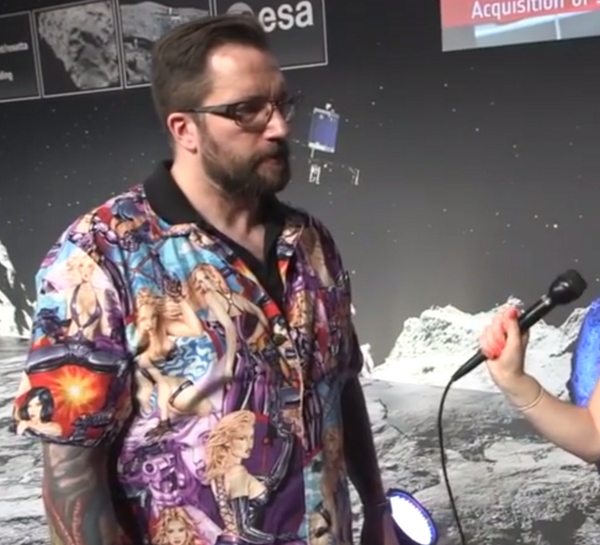
The European Space Agency’s probe managed to land on a hurtling comet millions of miles away to collect scientific data, and has begun sending images from the surface of the body, known as 67P/Churyumov-Gerasimenko. However, Dr. Matt Taylor, one of the scientists responsible for the Rosetta probe mission found himself at the center of a feminist uprising after he appeared on television earlier this week….because of his choice of shirts.
Here’s a good view:
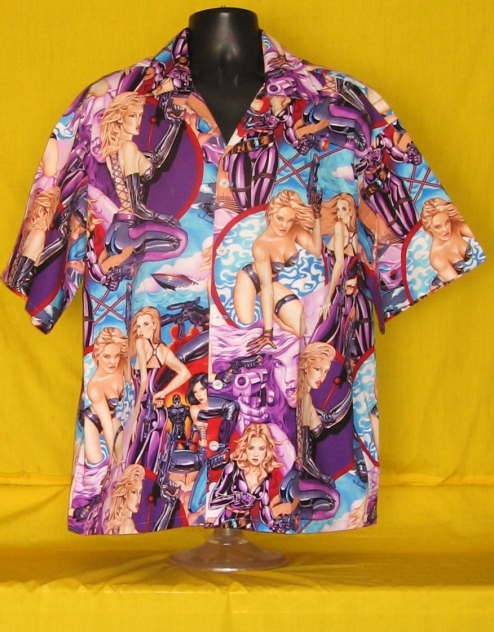
Taylor, who appears to superficially fit the template of clueless scientific geniuses presented in the hit comedy “Big Bang Theory,” appeared live wearing a garish Hawaiian-style shirt with a design made up of Heavy Metal comic book images of busty women in various states of undress, carrying guns and generally enacting the fantasies of 14-year-old boys. This somehow managed to overwhelm the astounding scientific achievement he has been part of, and angry feminists attacked:
“No no women are toooootally welcome in our community, just ask the dude in this shirt,” tweeted Atlantic journalist Rose Eveleth. Astrophysicist Katie Mack said, “I don’t care what scientists wear. But a shirt featuring women in lingerie isn’t appropriate for a broadcast if you care about women in science.”
So furious was the reaction of some feminists and others on social media and elsewhere that Taylor felt constrained to apologize, which he did during another televised update regarding the mission, saying, as he choked back tears, “I made a big mistake and I offended many people and I am very sorry about this.”
Then came the backlash from the men. Continue reading

