The Fifth Annual Ethics Alarms Awards: The Worst of Ethics 2013 (Part One)

This is the first installment of the Worst.  It says something, and not something happy, that this segment of the year-end awards are more than twice as voluminous, and far more competitive, than the “Best” of 2013 ethics. Well, nobody said it would be easy….

Ethics Train Wreck of the Year

trainwreck

Obamacare, a.k.a Affordable Care Act. This is quite an achievement, as there were at least two other three Ethics Train Wrecks rolling along in 2013 that would have been easy victors in a less horrible year. One of them, The Trayvon Martin- George Zimmerman Ethics Train Wreck, was last year’s winner, and still wreaked ethics carnage across the culture, thanks to Zimmerman’s trial (which never should hev been brought), the biased media coverage, the incompetent prosecution, the inept judge, and then afterward, the ignorant and/or racially motivated attacks on the jury for doing its job well and fairly against overwhelming odds. Yet as bad as this hangover from 2012 was, the Sandy Hook Ethics Train Wreck was arguably even worse. The news media decided to go Soviet and abandon all pretense of objectivity, essentially becoming an Obama Administration propaganda tool for gun control. Elected officials lied their heads off; so did the aroused NRA. Gun owners talked and behaved like they were about to be Gulaged. Legislators shamelessly used the grief of victims to stampede public opinion; children became props; fake statistics were everywhere; brain-damaged Gabby Gifford was programmed to read child-like messages as if they were the conclusions of research papers. The President’s total lack of political leadership skill again came front and center, then, when he had failed to do what he promised to do, the opposition was vilified by celebrities like Jim Carrey, who called them murderers and worse.

But the Affordable Care Act lapped both of these. It revealed itself to be a five-year long train wreck that just took a break after an earlier stretch where the bill was passed without due diligence by its supporters and using a cynical by-passing of due process. A Presidential lie intentionally devised to deceive the public was repeated for the five-year span, and then exposed when the law began to take affect….but not before the law inspired Republicans to force a reckless and irresponsible shut-down, a mini-train wreck within the train wreck.  The website debacle was initially spun by the news media (not working worth a damn isn’t a “glich”), then the evidence of near criminal ineptitude became impossible not to report. The indisputable evidence that the President of the United States had sold a program under false pretenses came to light, prompting dozens of politicians, bloggers, pundits and reporters to destroy their credibility forever (I hope) by desperately trying to either rationalize the lie ( “the ends justify the means”), call it something other than what it was (The New York Times’ disgraceful “incorrect promise” was one low point), or simply deny that it was a lie at all (Democratic Chair Debby Wasserman Schultz, setting a new low for personal dishonesty, itself an achievement in her case). Then, when the public pressure and political fall-out became unbearable. the President just began amending the provisions of his own law on the fly, except that it was the nation’s law, and it’s unconstitutional to do that—this, after the mantra from Democrats and the news media during the shut-down debate was that the ACA was “settled law.”  HHS Secretary Sibelius misled Congress, the White House denied that her stated goals were goals once it was obvious they wouldn’t be met; and nobody was held responsible for yet another Obama Administration debacle. And there’s a lot more, with the train wreck still moving at top speed.

Fraud of the Year

Iowa State University biomedical sciences assistant professor Dong-Pyou Han, who resigned after admitting he tainted blood samples to get desired outcomes in research animals, allowing him to claim a break-through in the effort to develop an AIDS vaccine. The National Institutes of Health had awarded Han’s research team $19 million in multi-year grants.

Incompetent Elected Officials of the Year

  • Elected Body (National): House Republicans, who staged a wholly useless, expensive and damaging government shut-down on “principle,” without ever articulating what that principle was sufficiently for anyone responsible to agree with them. Runner-Up: The California House Legislature, which passed a law allowing illegal aliens to practice law.
  • National Elected Official:  President Obama.  From being incapable of working with Congress, to refusing to fire incompetents, to not knowing what was going on in his own administration, to drawing red lines he wasn’t willing to defend (and then advocating killing people just to show he was willing to defend them), to undermining the trust and faith in both his office and himself by uttering unequivocal lies, President Obama had one of the worst years of self-inflicted miscalculations, errors, failures and reversals of any U.S. President in history. I’m sorry to have to say it, but it’s true.
  • Local Elected Official: Storey County (Nevada) Assemblyman Jim Wheeler (R). Wheeler told a group that if his constituents demanded it, he would vote (with a heavy heart)  to reinstate slavery, as he felt doing so would be his duty as a representative. Runner-up: Maryland House of Delegates Member Don Dwyer (R), who after a drunk driving and drunk boat piloting episode, the latter injuring several people, blamed his conduct in part of feeling betrayed over his colleagues approval of gay marriage in Maryland.

Sexual Harasser Of The Year Continue reading

Natasha Leggero’s Stand: Protecting The Jester’s Privilege


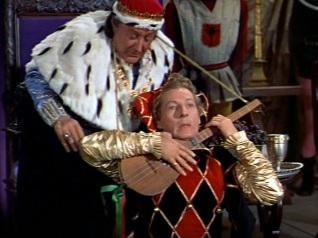
"Sing what you like, Fool. Just make sure I laugh."

“Sing what you like, Fool. Just make sure I laugh.”

In days of old when knights were bold, it is said, the King’s Fool was able to safely say outrageous, disrespectful things to the sovereign that might get anyone else drawn and quartered. This lucky exemption came to be known as the Jester’s Privilege, and it existed, and exists, for valid reasons. Humor, satire and all the other permutations of comedy are essential to societal sanity, and it makes sense to give the broadest discretion to practitioners of the craft in their efforts to provoke laughter—which is, as Reader’s Digest still reminds us monthly, “the best medicine.” That means that comics should not fear decapitation if their inspiration of the moment fails to provoke the desired mirth, or touches an audience member’s sensitive areas. In addition, the jester is sometimes able to expose a truth that will not be reached any other way.

It sounds like a good rule, and it is a good rule, but as with most ethics-related rules, applying it is difficult. Who gets the Jester’s Privilege…only professional comics, or does it apply to amateurs too? What about non-jesters just trying to be funny? “It was just a joke!” is a classic excuse invoked by insensitive and vicious people, including politicians, when they say something outrageous, as they try to use the privilege without a license, and in so doing, make it less effective for the humorists who really need its protection. Not everyone should assume that they have the full armor of the Jester’s Privilege. Mockery and ridicule are too often used as political weapons of targeted destruction.

Should some subjects be exempt from the Jester’s Privilege? The official position of comics, comedians, wags and wits has long been “No,” but even in Ye Olde Days, jesters sometimes went too far, and ended up with their heads on pikes. The problem any humorless king had after doing this, of course, was finding a jester willing to hazard a joke more edgy than “Why did the king cross the road?” For that reason, I think it’s vital that the Jester’s Privilege be strong and a near absolute. The sin that matters is not being funny, which means topics of unusual sensitivity take care of themselves.For centuries, for example, comics imitated and mocked those afflicted with speech impediments, especially stuttering, with big laughs guaranteed. Somewhere along the line, though, Porky Pig stopped being funny. The absence of laughs was enough to retire him; no heads had to roll.

On NBC’s New Year’s Eve show, the following exchange occurred between host Carson Daly, comic actress Jane Lynch and rising comedienne Natasha Leggero:

CARSON DALY: SpaghettiOs on Pearl Harbor Day, they sent out a tweet featuring their mascot holding an American flag asking people to quote “take a moment to remember #PearlHarbor with us.” It offended a lot of people, corporations glomming on to, you know, sentimental American historic traditions, seemingly looking for people in business. It wasn’t good. But you were offended for another reason.

JANE LYNCH: I’m offended because they were referring to SpaghettiOs as pasta.

NATASHA LEGGERO: I mean, it sucks that the only survivors of Pearl Harbor are being mocked by the only food they can still chew. It’s just sad.

Hilarity ensued, as the NBC gang laughed uproariously. Almost immediately, Leggero was getting flamed all over the social media and the wbs for denigrating the Greatest Generation. Steve Martin, I assume, would have humbled himself and apologized immediately, but not Leggero. Continue reading

Shia LaBeouf, Plagiarism Addict, With Much Worse To Come

Shia past and present, with apology...

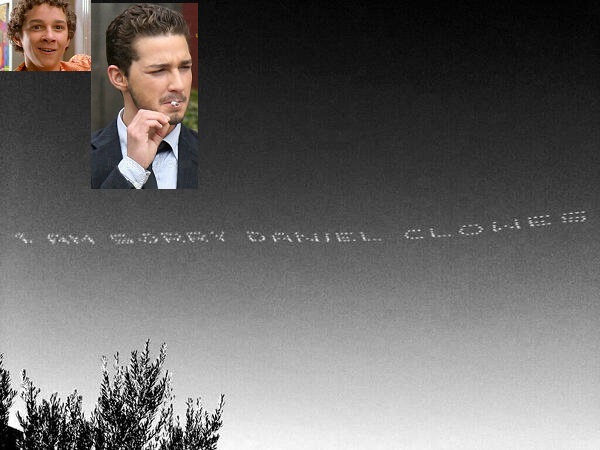
The child star past and present, with apology…

Actor Shia LaBeouf, known to Disney Channel aficionados as the annoying little brother on “Even Stevens” and to movie fans as Indiana Jones’ son and the Transformers Guy, is so much more, and not in a good way. His rapidly expanding list of reckless and socially-clueless episodes, including the obligatory misconduct behind the wheel of an expensive car, signals that he may be the new Lindsay Lohan, a talented former child-star raised to adulthood without basic life-skills, respect for others, and an appreciation of the difference between right and wrong. This is a tragic scenario that we are cursed to witness again and again—we saw it in 2013 in the increasingly obnoxious and desperate conduct of pop star Justin Bieber. Give a child wealth, power and adulation without first imbuing him or her with values, discipline and humility and what do you get? A menace.

As LaBeouf’s acting career has waned with his growing reputation as an untrustworthy (and sometimes violent) jerk, he has refashioned himself into an aspiring artist. Unfortunately, he lacks some basic traits of successful artists, like integrity and creativity. His inclination, being raised, like most child stars, in an unstable environment by self-absorbed and dysfunctional parents, is to cheat. In 2012, LaBeouf attached his name to three short graphic novels and a webcomic series. This year, we learned that at least two of the graphic novels contained text plagiarized from other writers. Then LaBeouf attached his name as writer to the short film (which he also directed) called “HowardCantour.com,” which was unveiled at the Cannes Film Festival and received some praise there. The  short, about an online film critic, included a strong resemblance to Daniel Clowes’ 2007 comic “Justin M. Damiano,” as well as large sections of dialogue directly lifted from it. No one picked up on the plagiarism until LaBeouf  released his film online.  Continue reading

The Fifth Annual Ethics Alarms Awards: The Best of Ethics 2013

Ethics Story 2013

I decided to start with the Best in Ethics this year, in contrast to other years, on the theory that it would get things off to a positive start in 2014. What it did, instead, was make me realize how negative Ethics Alarms was in 2013. Either there wasn’t much positive going on in ethics, or I wasn’t seeing it. My thanks to those of you who send me nominations for Ethics Heroes (and other stories); even when I don’t write about them, they are valuable. Please keep them coming. In the meantime, I pledge to try to keep the jaundice out of my eye in 2014. Things just can’t be as dire as they seemed last year.

Could they?

Here are the 2013 Ethics Alarms Awards for the Best in Ethics:

Most Important Ethical Act of the Year:

The U.S. Supreme Court declared the Defense of Marriage Act unconstitutional, paving the way for the universal legalization of gay marriage. Yes, it was a legal decision, but it was also based, as all such culturally important decisions are, on a societal recognition that what was once thought to be wrong and immoral was, in fact, not. This is ethics, an ongoing process of enlightenment and wisdom about what is right and wrong, and the U.S. Supreme Court did its part. Continue reading

KABOOM! My First Head Explosion Of 2014: “Management Experts” Just Realized That The President Is A Poor Manager

Happy New Year!

Happy New Year!

Appearances to the contrary, this is not a post about what a weak, inept and dangerously incompetent leader President Obama is. I wrote so many of those last year that I started waking up every morning praying that there wouldn’t be another story in the news like this one (I know I’ve linked to it before), showing that our great nation is being run by a collection of arrogant amateurs and fools with flat learning curves who would run a bed and breakfast into ruin. No, this is a post composed after picking up my brains following the head explosion fused by this passage (and those surrounding it) in a hot-off-the-presses feature in Politico, the left-leaning political news and commentary website:

“To what extent do Obamacare’s early problems reflect the limitations, in experience and intellectual interest, of its namesake? The heart of the issue, many of these people say, is that Obama and his inner circle had scant executive experience prior to arriving in the West Wing, and dim appreciation of the myriad ways the federal bureaucracy can frustrate an ambitious president. And above all, they had little apparent interest in the kind of organizational and motivational concepts that typically are the preoccupation of the most celebrated modern managers. ‘No one asked you to write code or be a technical expert, but the expectation is you can set up a process,’ said Kellogg School of Management professor Daniel Diermeier. ‘Companies do it every day.'”

Ugh. Now see what you made me do? I put that in large, bold type, and it caused an aftershock explosion, and now I’m picking pieces of skull and ick out of my keyboard. Continue reading

What Do You Do With The Drunken Judge? Media Distortion And Judge Gisele Pollack

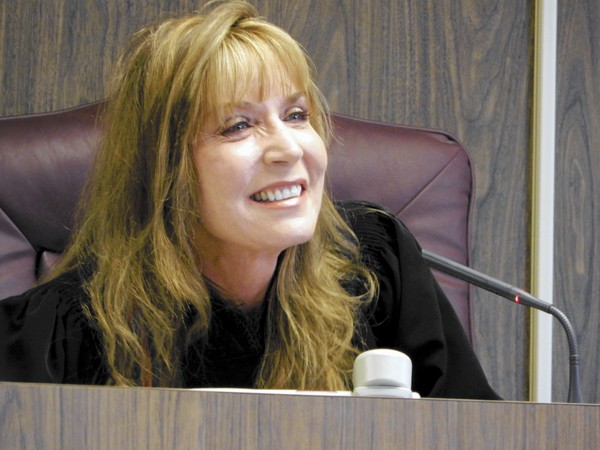
Broward County (Florida) Judge Gisele Pollack, a recovering alcoholic, showed all the signs of suffering a relapse during her session on the bench two weeks ago, when she abruptly ended the day’s proceedings after an hour and a half that featured the judge slurring her words and acting erratically. She presides over misdemeanor drug court, a program she established shortly after being elected as a county judge.  Her program offenders to have their charges dismissed and their drug records erased after six months of treatment.

After staying away from work for a day, Judge Pollack returned to the bench in the late afternoon, and presided over a courtroom packed with about a hundred drug offenders, along with  their friends and their families. The event marked the completion of rehab for dozens of offenders and the dismissal of their misdemeanor marijuana charges.“You’ve got to remain vigilant,” she told the graduates, emphasizing that they had to work hard to avoid relapses that would  place them back in front of her, and perhaps in jail.

After court, she acknowledged her own health crisis and announced that she was going into an outpatient rehab program. An attorney retained by the judge in the wake of her conduct attributed her relapse to personal issues, telling reporters that she has  “had some severe personal tragedy in her life. Her mother recently passed away, and they were very close. It’s been really devastating for her.” Apparently her son is also suffering from a serious illness. Broward Public Defender Howard Finkelstein, a longtime friend, told reporters, 

“If this causes the people to not have faith and not have trust in what goes on in that drug courtroom, then she will have to step aside,’ he said. ‘My hope is is people will wrap their ever-loving arms around Judge Pollack just as she has wrapped her arms around thousands of people.”

What’s going on here? I think it’s pretty obvious: a recovering alcoholic in a critical position of public trust suffered a relapse, as alcoholics are wont to do. If one is an alcoholic, this is a symptom of a very persistent, pernicious and incurable disease that kills many Americans every year, does horrific damage to families, businesses, governments and the economy, and that is incurable. Being an alcoholic is not an ethical violation for a judge or a lawyer, nor is having a relapse. Allowing that relapse to affect the competent performance of one’s duties, however, is an ethical violation that calls into question a legal professional’s ability to do her job. It could trigger professional sanctions; it certainly should trigger an official inquiry. A Florida judge appearing drunk on the bench, just once, is still a massive ethical breach. It arguably violates the first five Canons of Judicial Ethics a Florida judge is bound to follow… Continue reading

Curmie’s Back With Arrows Flying! But What Do His Targets Teach Us?

archery_target

Rick Jones, known to his web fans as Curmie (short for Curmudgeon), has had a busy year in his day job as a tender of young college-age minds, and his excellent blog was not as active as years past. Just in time for his annual awards for the worst transgressions in the field of education, however, he has returned with a vengeance, exploring at length and with his usual superb ethical instincts several incidents I have not had time to tackle here. Among them…

…and more, including his take, nicely complimenting mine, on Robert Reich’s complaints about how rich people and others choose their charities.

Rick, in one of his posts, makes the oft-heard point that the many awful incidents of miserable judgement and outright misconduct, if not criminal conduct, on the part of teachers and administrators should not be projected on the education profession as a whole, since these are relatively rare. I hear him, but I am not convinced. Continue reading

Ethics Hero: “Ludo,” Under-Employed Law Grad Blogger

True Grit - Reminds me of me

As Rooster Cogburn (John Wayne) says of plucky Maddy Ross (Kim Darby) in the original, and best, film version of “True Grit,” Ludo “reminds me of me.”

Naturally, I admire him.

Ludo is, in his own words, ” a recent law school graduate and aspiring writer from Southern California. He is currently overeducated and underemployed, working two jobs and keeping sane only by writing down the stories of the crazy stuff happening to him.  He is currently working on his first book, a collection of stories from his days driving a taxi in Orange County….” He is beginning to get some publicity thanks to his blog, Law Grad Working Retail, which provides sometimes hilarious accounts of his current existence as an over-educated, presumed automatic admittee to America’s powerful and elite presumably thrust into life the way most of America lives it.

Do not lump Ludo with “Nando” and the other bitter, unemployed or under-employed recent law grads who have had their ire aroused by my observations about them on Ethics Alarms   (also here). He is doing exactly what he should be doing, using his unique talents to open up new opportunities while presenting himself to the world of law and elsewhere as a likely asset. As he writes in a recent post rebutting criticism of his blog… Continue reading

Ethics Quote Of The Week: Glenn Greenwald

“Every journalist has an agenda. We’re on MSNBC now where close to 24 hours a day the agenda of President Obama and the Democratic Party are promoted, defended, glorified. The agenda of the Republican Party is undermined. That doesn’t mean that the people who appear on MSNBC aren’t journalists. They are.”

—-Libertarian blogger, pundit and activist Glenn Greenwald, defending himself in an MSNBC interview against allegations that he has become a “spokesman” for fugitive NSA leaker Edward Snowden.
Journalism!

Journalism!

Remember, this is an ethics quote, not necessarily one that expresses an ethical point of view. With that caveat, I find it fascinating in many respects:
  • Greenwald is technically correct: journalists who use  their position to distort the news, express their biases and serve as advocates rather than objective critics, as most of the journalists do on MSNBC (and the way many too many journalists do elsewhere) are still journalists. They are unethical and unprofessional journalists. Continue reading

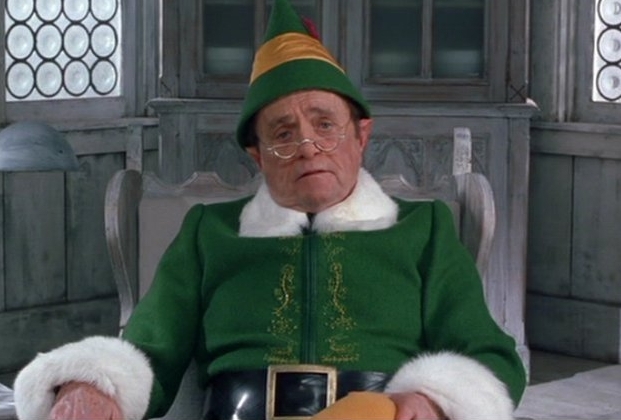
Bob Newhart, Legatus And GLAAD: “What’s Going On Here?” Is Tricky To Answer

"Hey, Bob---What's going on here?"

“Hey, Bob—What’s going on here?”

The news item about comedian Bob Newhart cancelling an appearance for the Catholic executives networking group Legatus under pressure from GLAAD is fascinating.

From the perspective of Ethics Alarms, it illustrates a peculiar phenomenon I experience often, where a prominent story seems to have been designed by the Ethics Gods specifically to combine and coalesce several issues that have been discussed here recently. For Bob’s travails neatly touch on the issues of pro-gay  advocacy groups attempting to restrict expression they disagree with( The Phil Robertson-A&E Affair, Dec. 19), a comedian being pressured to alter the course of his comedy (Steve Martin’s Tweet Retreat, Dec. 23) and an entertainment figure being criticized for the activities of his audience (Mariah’s Dirty Money, Dec. 23). You would think I could analyze the Newhart controversy by just sticking my conclusions from those recent posts, plus some of the more illuminating reader comments, into my Ethics-O-Tron, and it would spit out the verdict promptly.

It doesn’t work that way, at least in this instance, and that prompts the other observation. In most ethics problems, the starting point is the question, “What’s going on here?”, which forces us to determine the factual and ethical context of the choices made by the participants. Here, the question can be framed  several diverging ways, leading to different assessments of the ethics involved. Thus, asking “What’s going on here?” in the Bob Newhart Episode, we might get: Continue reading