Unethical Quote of the Week: Lauryn Hill

“I was put into a system I didn’t know the nature of…. I’m a child of former slaves. I got into an economic paradigm and had that imposed on me. I sold 50 million units…Someone did the math, and it came to around $600 million. And I sit here before you trying to figure out how to pay a tax debt? If that’s not like enough to slavery, I don’t know what is.”

Singer-songwriter, actress, rapper and hip-hop artist Lauryn Hill, complaining to the judge as she was sentenced to three months in prison and a $60,000 fine for failing to pay taxes on her earnings of approximately $1.8 million between 2005 and 2008.

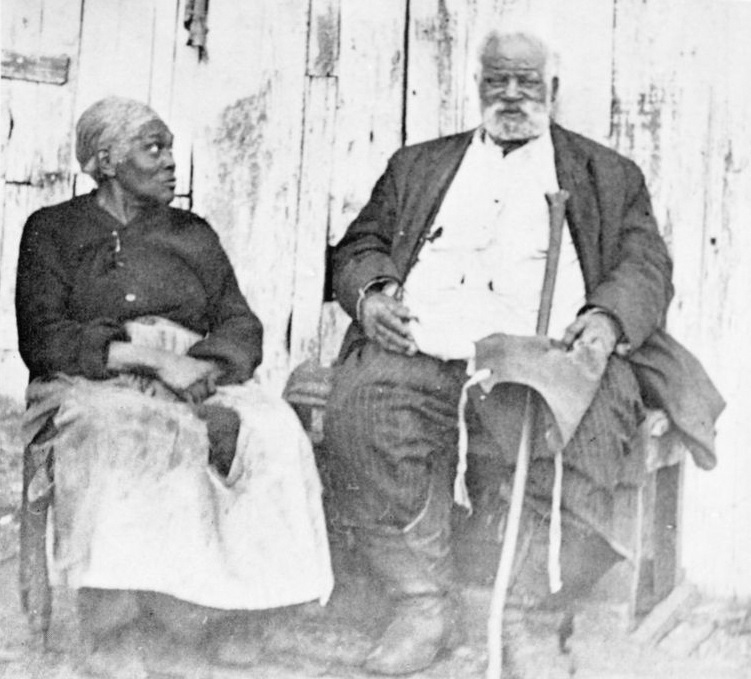
slave couple

Lauryn Hill’s parents. OK, not really. Metaphorically, perhaps. You better ask Lauryn.

Now let’s see…Hill’s statement is…

  • An abdication of responsibility. Hill has been in the entertainment business, and wonderfully successful at it, since she was 18 and landed a continuing role on the soap opera, “As the World Turns.” Few “know the nature of” the strange world of stardom, agents, performing contracts and the rest that goes with the highest levels of American show business when they enter it, but most manage to learn the basics, and most also manage to pay their taxes. Hill has had plenty of time to learn “the system,” whichever one she was referring to. She is also a native-born natural citizen, and I’m sure the reality of income taxes didn’t escape her notice for all these years. Continue reading

Howard Kurtz And The Critic’s Dilemma

David Niven would understand, Howard.

David Niven would understand, Howard.

The Daily Beast has canned Howard Kurtz, the only current official news media critic in captivity, and now CNN, long the home of Kurtz’s “Reliable Sources” panel show that reviews the media’s choice and manner of news coverage during the week, is “reviewing” his status with that show as well. The sudden downturn in Kurtz’s fortunes is, we are told, the result of an accumulation of mistaken stories, missed facts and sloppy reporting of his own. I’ll buy that explanation, but there is more here too.

Kurtz’s departure was overdue. I have followed him for years, and his coverage, as I have pointed out periodically, was unacceptably politically slanted for a quasi-journalism ethicist. A typical performance was when he recently criticized —correctly—Republicans who were (and are) trying to twist the Boston bombing tragedy into an argument against immigration reform. In a reply to a comment on the recent Ethics Alarms post on the same topic, I noted that media commentators who saw nothing wrong with the Democrats using a Newtown massacre that would not have been altered in any way by background checks to push for more gun controls were suddenly applying the correct standards to a similar conservative manipulation of the Boston Marathon attack: Continue reading

Concept Stealing Or Creative Evolution? “The Trip To Bountiful” Controversy And The Ownership Of Conceptual Innovation

"Pay up! Timothy Wilson owns that color!"

“Pay up! Timothy Wilson owns that color!”

The late playwright Horton Foote’s gentle drama (all of his dramas are gentle, come to think of it) “The Trip To Bountiful” is being revived on Broadway, and is stirring up the kind of nasty controversy he would have detested. (You probably know Foote better as the screenwriter who brilliantly adapted “To Kill A Mockingbird” into the classic movie it became.) The production has an all-black cast starring Cicely Tyson, and some are arguing that director Michael Wilson stole the idea of presenting Foote’s tale as the story of an African American family.They also claim that he owes Timothy Douglas, the professional director who first staged the play this way (in Cleveland, in 2011) public acknowledgment, and possibly compensation. Alisa Solomon lays out the theatrical ethics controversy here, and explores many related issues, including the murky distinction between colorblind casting and non-traditional casting.

As an ethicist and a professional stage director, I have a simple and direct answer for what Solomon seems to believe is a complex question: Baloney. Continue reading

Ethics Dunces: Bismarck, N.D. Supporters Of A.J. Clemente, The Obscene Ex-Newscaster

A.J. Clemente.

A.J. Clemente.

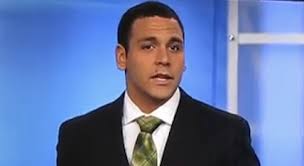
In an earlier post I referenced A.J. Clemente, a newscaster for KFYR-TV in Bismarck who debuted in his new role by saying “…fucking shit!” on the air, because he didn’t know his mic was on. Not surprisingly, he was fired. Now, apparently, many viewers have come to his defense and are admonishing the station for being too harsh.

The station is not being too harsh. The station is upholding correct professional standards, and removing an unprofessional employee whom they do not trust and have no reason to trust. The episode showed him to be careless, reckless and, obviously, subject to obscene outbursts, which only are appropriate if you are David Ortiz. Ah, but some of the good citizens of Bismarck, displaying the same entrenched ethics cluelessness that led to the nomination of the ridiculous Mark Sanford, ex-Romeo governor, to lose a GOP House seat in South Carolina, don’t comprehend accountability, trustworthiness or responsibility, because to them, the only values that matter are forgiveness and compassion. The technical terms for such people are “patsies” and “marks.” They would cripple society, business and government with their mindless, deadly niceness. Examples: Continue reading

Ethics Dunce + Incompetent Elected Official = Censorship In North Carolina

Thank-you. I see no reason to believe that your funding is in any jeopardy, by the way."

Thank-you. I see no reason to believe that your funding is in any jeopardy, by the way.”

Central Carolina Community College pulled the plug on a public affairs  talk show airing on its radio station after a legislative assistant for State Rep. Mike Stone complained about an online post by one of the show’s hosts, criticizing the  Sanford, N.C. Republican.  Susan Phillips, Stone’s legislative assistant, wrote the school’s president, T.E. “Bud” Marchant, with pointed questions about the program’s affiliation with the school, funding sources, and budget.  Central Carolina Community College is one 58 community colleges in North Carolina that depend on the  legislature for funding, and Stone’s message was received loud and clear. Marchant shut down the show, known as “The Rant,” two days later. He also denied that Stone’s interference had anything to do with it.

Sure.

There shouldn’t be any question over what happened here. An elected official in a supposedly democratic nation decided to abuse his position and power as well as violate his oath of office  by using veiled threats and intimidation to stifle Constitutionally protected criticism of his job performance, and a craven educator caved to his pressure, violating his duty of respecting academic freedom and standing against efforts by the state to stifle free speech and political dissent. Marchant, if he had even a rudimentary backbone, would have told Stone’s minion to back off and reported this clumsy attempt at extortion to the area’s news media. Stone, if he had any integrity or respect for the founding principles of the United States, would have taken “The Rant’s” host’s criticism like an adult and a believer in free speech, and responded with a defense or a rebuttal, not by leaning on the radio station’s management. As for Marchant’s incredible claim that Stone’s complaints and the show’s demise were unrelated, even if that were true, his creating the appearance of censoring campus speech in response to government disapproval would be nearly as offensive as censorship itself, because it would still have the effect of chilling First Amendment rights.

I’m certain, considering what appears to be the generally low quality of state legislators across the country (which figures, given the abysmal quality of national legislators), that this kind of thing occurs far more frequently than we know. Let’s see if Stone’s bedrock, conservative supporters are sufficiently offended by his efforts to use government power to muzzle adverse opinion, and send him on a new career path. My guess? This incident won’t make any difference to his election chances at all, if voters like Stone’s politics and believe the radio host is a nettlesome lefty. We are constantly told how much of the country is willing to dispense with the Second Amendment, as if that proves that amendment is archaic. Sincere public support for the First Amendment is similarly shaky.

All right, let us agree that both legislator and college president are unqualified for their positions by virtue of their abandonment of their ethical obligations in their respective roles—Stone’s duty to respect free speech and observe proper limits on government power, Marchant’s duty to protect academic freedom and oppose government efforts to stifle free expression. That still doesn’t justify the elitist coverage of this story by Jonathan Turley, whose blog post first alerted me to it. For some reason, the noted civil rights expert and law professor believes that it is Stone’s wan academic credentials and humble work experience that explain his bullying tactics. Why else would Turley feel it is germane to note that Stone lists his education as ‘“Attended, Accounting, Central Carolina Business” and lists his experience as “Business Owner, O’’Connell’s Grocery Store”’ ? Why is any of that relevant? The law school professor is evidently a bigot, and believes that one’s ethical instincts and character are directly proportional to one’s degrees and work experience.

Rep. Stone is a citizen of the United States, and like every citizen, should be presumed to know about the Four Freedoms whether he graduated from Harvard or the School of Hard Knocks. There are plenty of well-credentialed bullies, fools and ignoramuses in elected office. It is sufficient to judge Stone by what he did; Turley’s implied ridicule of his educational and work background is a cheap shot, and reflects badly on the commentator, not his target.

_____________________________

Pointer: Res Ipsa Loquitur

Facts: NC Policy Watch

Graphic: Pozniak

Ethics Dunce (Sandy Hook Ethics Train Wreck and U.S. Public School Incompetence Divisions): Logan Middle School in Logan, W.Va.

Sigh.

Send him to the re-education center...

Send him to the re-education center…

I’ll stop flagging the unethical conduct of anti-gun hysterics during the Sandy Hook Ethics Train Wreck when they stop abusing kids and law-abiding citizens in their deranged determination to turn America into a gun-free zone through fear-mongering and intimidation. I’m genuinely sick of writing about this stuff, but not as sick as I am of the idiocy that produces it. Has any sane, prominent, respectable voice from the gun-regulation side registered strong objections to incidents like what happened in Logan? If so, I must have missed it. That’s illuminating, don’t you think?

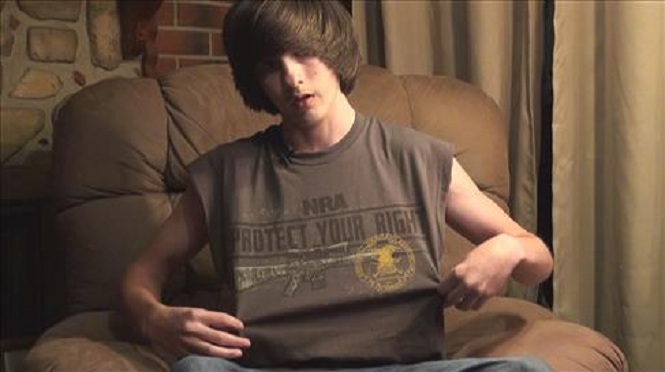
Jared Marcum, an eighth-grader boy at Logan Middle School in Logan, W.Va., was suspended and arrested by police for wearing a pro-NRA T-shirt that depicted a firearm and the phrase “Protect your right” to class. He was charged with “obstruction and disturbing the education process.” It appears that his teacher asked him to remove his shirt, and he refused, prompting the arrest. Marcum was on solid ground, and his teacher was not.  The school dress code reads in part: Continue reading

Ethics Quote of The Week: Umpire Marty Foster

“I saw the pitch and of course don’t have the chance to do it again. But had I had a chance to do it again, I wouldn’t call that pitch a strike.”

—– American League Umpire Marty Foster, in the wake of the controversy over his game-ending strike call in the Texas-Tampa Bay game last night.

In other words, “I missed it. I was wrong.”

Strike Three?

Strike Three?

Good for Foster. His wildly inaccurate call was strike three on Rays batter Ben Zobrist, who thought that he had worked a base on balls. This would have placed Rays runners on first and second with two outs, creating a reasonable opportunity for the Rays to tie or win the game.  Instead, the Rangers got a gift. Rays manager Joe Maddon, in interviews and in a tweet to his followers, said, “That can’t happen in a major league game,” meaning that the call was beneath major league umpiring standards.  Of Maddon, Foster said,  “He was frustrated and I understand .He acted probably the best he can under that situation.”

Obviously, there have been many, many worse calls, nearly as bad calls, and only a smidge better calls, and there will be this season. In the vast majority of those, umpires have and will remain mum, maintaining that they were in the best position to judge the pitch or the play, and that even video showing their gaffes are misleading. Foster, however, did the hardest thing for many of us: admitting a mistake. Admitting so, to himself as well as the world, doesn’t make him a worse umpire; it makes him a better one.

Note: I apologize for the sparse postings the last few days. I am involved in a night and day project that is preventing me from doing thinking and working on anything else…even baseball. Naturally, the only game update I happened to watch, at 2:20 AM, was an ethics story.

___________________________________

Sources: NBC Sports (and Graphic); Townhall

Different Symptoms, Same Ethics Illness: The Mike Rice-Rutgers Scandal And The Sandusky-Paterno-Penn State Tragedy

Missed out on your statue by thaaaat much, Mike.

Missed out on your statue by thaaaat much, Mike.

The question isn’t, as many news reports would have us believe, whether the Mike Rice affair mandates an administrative house-cleaning at Rutgers. Of course it does. The question is why, after the far uglier Penn State scandal, anyone possessing the gray matter of the Scarecrow from “The Wizard of Oz” thinks otherwise.

In case you are really smart and pay no attention to the dire ethics swamp known as college sports: Mike Rice was a very successful Rutgers basketball coach until ESPN got a hold of a video compilation of him abusing his players on multiple occasions. Though the Rutgers athletic director had seen the damning evidence in November, he let Wise off with a fine and suspension; then the recent national exposure forced him to fire Wise. This prompted Rutger’s president, Robert Barchi, to fire the athletic director (Tim Parnetti) for not taking appropriate action once he had discovered his coach was hitting, assaulting, and taunting players. And Barchi? Even though he knew, or should have known, that Rice’s methods were unacceptable, he never looked at the video (or so he says) that was available to him six months ago, until April. The New York Times reports that many Rutgers officials as well as the university’s outside attorneys knew that Rice was abusing his players,and that he had been doing so for years.

The net lessons learned from the Penn State disaster are zero. As the Times article says, “interviews and documents reveal a culture in which the university was far more concerned with protecting itself from legal action than with protecting its students from an abusive coach.” Yes, a coach attacking student is far short of child-molesting, but that’s  irrelevant: the corrupt cultural syndrome is exactly the same.  Rutgers, top to bottom, placed winning basketball games above sportsmanship, decency, fairness, and protecting their own students. The difference between Rutgers and Penn State is Joe Paterno and moral luck.

Let us be clear: if a teacher physically assaults a student, anywhere, at any level, ever, that teacher has to be fired, and probably prosecuted. A coach is no different. This isn’t open to debate. Yet I listened, as my gorge rose, to the glib and simple-minded conservative radio host Sean Hannity jabber with ex-Notre Dame football coach and facile “inspirational speaker” Lou Holtz about how Parnetti got a raw deal. Why? Parnetti built a great program! So he lets his coaches assault his players—anyone can make a mistake! Isn’t this hindsight? Second-guessing?

“Players are spoiled today; they just aren’t ready to be criticized,” said Holtz, who speaks in platitudes and nostrums that cover a Neanderthal sensibility (so you know he’s much in demand for corporate speaking gigs.)  These men are both ethics-challenged fools, but they have plenty of company.  Rutgers’ report on Rice’s abusive treatment assembled excuses and rationalizations by the authors and others. Rutgers athletic assistants said the video clips showing Rice kicking his players and throwing objects at them “were taken out of context.” What?? In what “context” is it appropriate for a college coach to do this? None! Many of Rice’s players said he prepared them well for tough competition. The report noted that under Rice’s abusive, tortious methods, the players’ grades rose to a B average. Oh! Well, that must mean assault and battery is okay, then, because it works!  This is the ethical standard Rutgers is teaching its students.

Parents everywhere: grab your student and run.

Elsewhere, Rutgers’s internal report called Rice “passionate, energetic and demanding” and concluded that his intense tactics were only aimed at improving his team and “were in no way motivated by animus.” Ah! So beating kids is okay, as long as it’s well-intentioned! This culture is sick, sick, sick and as with Penn State, it is part of a large sick culture that pervades university sports. Here’s one official from another sick school defending Parnetti:

“I think it was unfair for them to fire Pernetti. There were probably a lot of things that went into the decision not to fire Mike Rice in December. And as gruesome as that tape was, it was also a first offense for Mike Rice. I think Pernetti is taking the heat for everything and sometimes in leadership roles you take the glory probably more than you deserve and you take the heat more than you deserve. I think right now Pernetti is taking the heat more than he deserves.”

A first offense???? The video was compiled from dozens of incidents, and Rice’s penchant for violence and abuse were already known! Yeah, there were  “a lot of things that went into the decision not to fire”  Rice, none of which add up to a single good reason not to get rid of any coach who beats up kids in his charge.

The New York Post interviewed a college official who believes its all Facebook and Twitter’s fault:

“The whole situation, top to bottom is a shame. But my opinion is that there is no manual or rule book for how to handle these types of situations. To say (Pernetti) should have handled this situation a certain way, well unless you’ve been in his shoes, it’s hard to comment on it. Obviously there was a reason why Pernetti kept Mike Rice around. What was that reason? We don’t know. But one thing I saw was that his kids, his players backed him. So In my opinion do you know what got Mike Rice and Tim Pernetti fired? Social media got them fired. People make comments and form opinions without knowing all the facts sometimes. That’s the world we live in now.”

Yes, there is a rule book, and it’s called ethics, not that this guy, or whatever college he works for, would recognize it. “Unless you’ve been in his shoes”? The translation of this fatuous and offensive rationalization is simple: “Hey, there’s a lot of pressure on this guy to win, and he’s not going to let a couple of bruised sophomores jeopardize the won-lost record and alumni support. I bet you’d let the kids get beat up too.”

I wonder what schools those two anonymous officials work for? That’s the frightening part;  they could be working at almost any big time sports school, because that’s the predominant culture there.

__________________________

Sources: New York Times, Sean Hannity, New York Post
Incompetent Elected Official of the Month: Rep. Diana DeGette (D-Colorado)

"MMM! Guns bad! Congresswoman lazy!

“MMM! Guns bad! Congresswoman lazy!

Asked how a ban on magazines holding more than 15 rounds would be effective in reducing gun violence, Rep. Diana DeGette, the sponsor of Federal legislation to prohibit the sale or transfer of ammunition magazines holding more than 10 rounds, replied with ignorant semi-gibberish worthy of recent Miss Universe competitors. She said, and I’m not making this up:

“I will tell you these are ammunition, they’re bullets, so the people who have those now they’re going to shoot them, so if you ban them in the future, the number of these high capacity magazines is going to decrease dramatically over time because the bullets will have been shot and there won’t be any more available.”

Uh, no, Congresswoman, that’s not how it works, or the theoretical reason for your own legislation. Magazines can be refilled, like Pez dispensers. It’s not as if they have to be thrown away once they are empty. Your reason for the legislation—now read your talking points  from the anti-gun lobby!—is that shooters in the process of massacring school children will have to stop to reload after only ten bullets.

Is it too much to expect that elected officials actually understand the things they set out to regulate and prohibit? That they—OK, their staffs, then, assuming the elected representative involved can read—do a modicum of research before sponsoring legislation? That they actually know what they are talking about and answer the most basic of questions—-why will this legislation help?—-accurately and articulately?

Yes, in this case apparently it is. Like  gun control or oppose gun control, all Americans have an equal stake in competent legislators who pass laws based on knowledge, not ideological cant at the lizard-brain level of “Guns bad!!! Ban bad guns and you know, gun things!” Too much of gun regulation reform advocacy has been carried on at this level in the public and the media; for a U.S. Congresswoman to do likewise is a disgrace.

______________________________

Pointer: Tim Levier

Facts: Denver Post

U.S. Education: A Lost And Untrustworthy Profession

lostThe extent and sheer audacity of the 2009 Atlanta schools testing scandal, now resulting in teachers and administrators facing prison time, shows (or perhaps I should say “should show”) the complete folly of calling for more funding as the solution to the rotting U.S. education system. Indeed, I would argue that budgets should not be increased one penny anywhere until the educational establishment demonstrates that it is capable of policing itself, holding members of its profession to higher standards, which is to say, standards, of ethical conduct and professionalism, and can prove that it is more interested in the goal of teaching students than it is in pensions, job security, and cash. Continue reading