Ugh.
How disgraceful. Here is the headline: “Clarence Thomas must resign because he went on vacation or something.” Despicable.
Justice Thomas, the most extreme conservative jurist on the U.S. Supreme Court, already, in the assessment of Ethics Alarms, has been shown to have engaged in unethical judicial conduct by raising a flaming appearance of impropriety with his acceptance of lavish junkets from an activist conservative billionaire and his failure to report them. The verdict here in April was that Thomas is obligated to resign, and that is still the verdict. His inexcusable conduct not only undermines his own credibility but the credibility and legitimacy of the entire Supreme Court.
But now, there is evidence that Thomas’s conduct was even worse than what was reported last Spring. From Pro Publica:
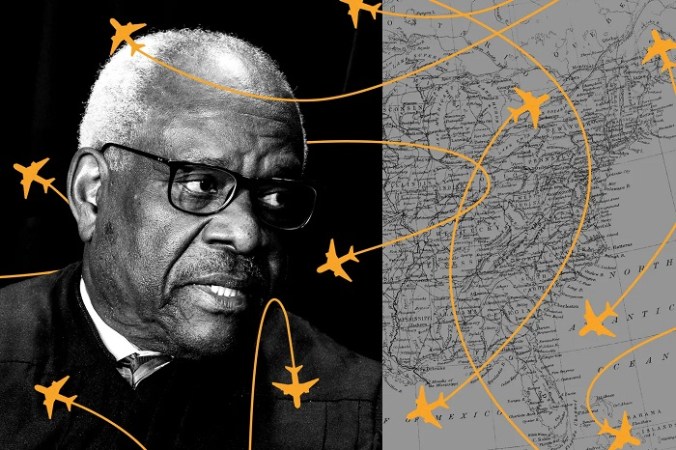
A cadre of industry titans and ultrawealthy executives have treated him to far-flung vacations aboard their yachts, ushered him into the premium suites at sporting events and sent their private jets to fetch him — including, on more than one occasion, an entire 737. It’s a stream of luxury that is both more extensive and from a wider circle than has been previously understood. Like clockwork, Thomas’ leisure activities have been underwritten by benefactors who share the ideology that drives his jurisprudence. Their gifts include: At least 38 destination vacations, including a previously unreported voyage on a yacht around the Bahamas; 26 private jet flights, plus an additional eight by helicopter; a dozen VIP passes to professional and college sporting events, typically perched in the skybox; two stays at luxury resorts in Florida and Jamaica; and one standing invitation to an uber-exclusive golf club overlooking the Atlantic coast. While some of the hospitality, such as stays in personal homes, may not have required disclosure, Thomas appears to have violated the law by failing to disclose flights, yacht cruises and expensive sports tickets, according to ethics experts. Perhaps even more significant, the pattern exposes consistent violations of judicial norms, experts, including seven current and former federal judges appointed by both parties, told ProPublica. “In my career I don’t remember ever seeing this degree of largesse given to anybody,” said Jeremy Fogel, a former federal judge who served for years on the judicial committee that reviews judges’ financial disclosures. “I think it’s unprecedented.”
Jeez, I hope it’s unprecedented! The degree of arrogance and dunder-headedness that led Thomas to do this is astounding. He’s known he’s had a target on his back since he was nominated for SCOTUS; he knows, or should know, that he is going to be scrutinized for missteps like no other Justice in the Court’s history. For Thomas to accept such trips and luxuries from parties who stand to benefit from the results of the Court’s deliberations is as irresponsible for a controversial Supreme Court Justice as it would have been for Jackie Robinson to secretly run a numbers game while he was playing for the Dodgers.