The Bad Judges And The Law Dog

The legal commentariat is much amused by a case out of Louisiana involving  the right to counsel. I don’t think it’s funny at all.

( Oh all right, it’s a little funny.)

Warren Demesme was being interviewed by detectives, not for the first time, about some alleged sexual misconduct with minors. He was read his rights, “Mirandized,” as they say, and said that he understood, and waived those rights. (He could, however, choose to invoke them at any time, per several Supreme Court rulings.)

At some point the interview got tense, and the suspect said,

“If y’all, this is how I feel, if y’all think I did it, I know that I didn’t do it so why don’t you just give me a lawyer dog cause this is not what’s up.”

He was not, however, given access to a lawyer, and when he appealed his subsequent conviction on the grounds that he requested legal assistance and was not accommodated, the lower court rejected his argument, saying that he had not made his desire for a lawyer clear and unambiguous. Incredibly, the Louisiana Supreme Court agreed, writing in part,

The defendant argues he invoked his right to counsel. And the basis for this comes from the second interview, where I believe the defendant ambiguously referenced a lawyer..As this Court has written, “[i]f a suspect makes a reference to an attorney that is ambiguous or equivocal in that a reasonable police officer in light of the circumstances would have understood only that the suspect might be invoking his right to counsel, the cessation of questioning is not required.” State v. Payne (La. 2002); see also Davis v. United States (1994) (agreeing with the lower courts’ conclusion that the statement “[m]aybe I should talk to a lawyer” is not an unambiguous request for a lawyer). In my view, the defendant’s ambiguous and equivocal reference to a “lawyer dog” does not constitute an invocation of counsel that warrants termination of the interview and does not violate Edwards v. Arizona (1981).

Right.

And the vote on the Supreme Court in favor of this indefensible ruling was 8 to 1. 8 to 1!

Forget it, Jack. It’s Louisianatown. Continue reading

Unethical Quote Of The Month: CNN Reporter April Ryan

“Sarah, is slavery wrong? Sarah, is slavery wrong? Does this administration think that slavery was wrong? Sarah, does this administration believe slavery was wrong?”

CNN’s April Ryan, yelling to White House spokesperson Sarah Huckabee Sanders as today’s press briefing ended. She really did.

President Andrew Jack…no, that’s wrong. It’s President …Johnson, right? Lyndon Johnson? No, no..Barry Lyndon? No…Barry Goldwater? Barry Bonds? U.S. Bonds? U.S. Grant? Boy, history is hard

I assume that this was intended as a rhetorical rebuttal to the position of President Trump and those non-totalitarian-minded citizens—I hope not just conservatives and Republicans— who regard toppling statues and memorials of important figures in America’s past as a form of Orwellian thought control and manipulation of the historical record. Maybe she attends Christ Church in Alexandria, Virginia.

Whatever it was, it wasn’t journalism, fair, or professional. Since Ryan knew the only answer that could or would be given, if Sander had been foolish enough to dignify the insult with a reply, it was really just partisan harassment and race-baiting, the equivalent of  a reporter shouting out at a Johnson era press conference, “How many did LBJ kill today?,” calling out after a Bush briefing, “Hey, any signs of those weapons of mass destruction?,” or calling out after an Obama White House briefing, “Does the President still promise that if we like our health plan, we can keep it?”

A news organization that doesn’t immediately discipline a reporter behaves like this at a White House press briefing—and Ryan should have been suspended, removed from the White House beat, or exiled to cute kitten stories on Headline News—it is announcing one of the following:

a) This new organization will  no longer apply minimal standards of respect, fairness and professionalism to coverage of this President.

b) This network no longer has any standards.

c) This network will allow gross demonstrations of bias and partisan animus by its reporters.

Under these conditions, the White House has no obligation to permit such an organization to attend press briefings, any more than it has an obligation to permit anti-Trump demonstrators to attend, or to tolerate reporters chanting slogans and carrying placards. And it should not. If CNN won’t uphold minimal standards of professional journalism, then the White House must. CNN should be told that until it receives a public apology for Ryan’s outburst, she is replaced by a trustworthy reporter, and the network pledges that it will not permit such conduct by its employees to occur again, CNN will no longer be invited to briefings. Its place will then be taken by Ethics Alarms, or Weekly Reader, or any entity with a concept of journalism ethics superior to CNN’s.

Meanwhile, while we are on the topic of professionalism, I have this to report: Continue reading

Further Ethics Observations On The Kevin Spacey Scandal [Part 1 of 2]

The comments regarding yesterday’s ethics quiz have been varied and vigorous. As to the quiz question itself,

Is [Anthony] Rapp’s public accusation [against actor Kevin Spacey alleging that Spacey sexually assaulted him 30 years ago when Rapp was only 14] fair, responsible, and ethical?

I have arrived at my answer, and am abashed that I didn’t see it immediately.

No, the accusation was not fair, and it was unethical. It fails all ethical systems. It is a Golden Rule breach: What Rapp did to Spacey is not how he, or anyone would want to be treated. The fair and decent thing would have been to confront Spacey privately.  Maybe Rapp has distorted the incident over time; maybe Spacey is as remorseful and embarrassed by the incident as Rapp has been traumatized by it. All of us would want at least a chance to explain or make amends before being exposed…in Buzzfeed(!?).

Other observations, as Spacey is being metaphorically disemboweled by an angry mob…

  • Rapp also stomped on Kantian ethics, which forbids using human beings as a means to an end. Rapp says his goal was “to try to shine another light on the decades of behavior that have been allowed to continue because many people, including myself, being silent.” Wait: is there a shred of evidence that Spacey engaged in such conduct over “decades”? Is there any indication that Rapp is protecting future teens from his assaults? No, he’s just jumping on a train, joining a virtue-signalling mob engaged on what appears to be a scalp-hunting expedition. His late hit on Spacey didn’t stop a predator (as with Weinstein), didn’t report a crime to authorities (the statute of limitations is long past), didn’t accomplish anything postive and productive involing Spacey at all. I was just symbolic, and Kant, correctly, holds that it is unethical to destroy real human beings to make a political, social or culotural point, in this case the point being, “Don’t stay silent for 30 years if you have been abused, harassed or molested!”

This also fails any Millsian or Benthamist test of utilitarianism. The ends accomplished by Rapp’s accusation consist almost entirely of destroying Kevin Spacey. What else? I suppose its a warning too: anything you did that society will regard as worthy of making you a pariah can be revealed by an angry, vindictive or politically motivated alleged victim at any time, and you will have no recourse. Call it the Anita Hill Principle. That’s not enough of a “benefit” to society to destroy someone’s life. We have the Weinstein example, and the Bill Cosby saga. They were–are?—both serial offenders. Taking out Kevin Spacey based on one very old incident is not a means justified by any end.

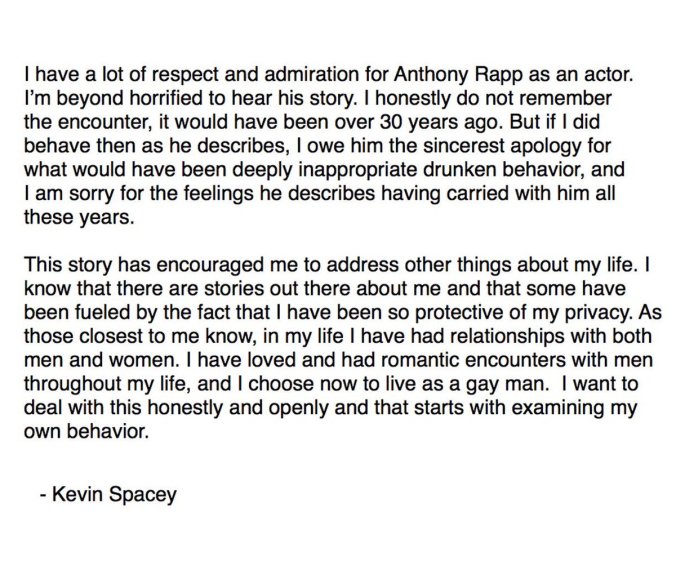
  • Upon examination, Spacey’s response was a mistake and an ethics botch on multiple levels. Here it is again:

First, here we have another example of why Twitter is dangerous. Spacey is a smart guy, yet he foolishly, in his rush to deal with this crisis, authored his own rapid response on social media. In the old days, as my late friend Bob McElwaine, Hollywood publicist for Danny Kaye, Dean Martin, Robert Mitchum and many other stars, told me, he job was to make sure nothing attributed to his Hollywood clients was authored by them. Continue reading

Morning Ethics Warm-Up, 10/31/2017: A Hate Outbreak, A Bigoted Judge, A Lost Post, And More Halloween Ethics

Good Morning!

1 On Facebook, many of my progressive friends literally expressed glee at yesterday’s indictments, especially at the charge that Paul Manafort had engaged in “conspiracy against the United States.” Lots of social media users were expressing similar sentiments, the thrust being that they were excited that two individuals who worked for the Trump campaign were facing criminal charges…simply because they worked for the Trump campaign. This cackling mob hadn’t read the indictment, or if they did, they didn’t understand it. They just were engaging in free-standing hate by association.

The reaction is not sort of like, but exactly like, what I called  the “Ugliest moment of election night”: Trump’s crowd chanting “Lock her up!” as the upset electoral victory approached. Criminalizing the political process is not the way of democracy, and rooting for people’s lives to be ruined because of their partisan alliances is disgusting. Who among the people so thrilled to see Manafort and former Trump campaign foreign policy advisor George Papadopoulos being prosecuted know anything about them other than the fact that they worked for the President’s campaign? What do they think justifies cheering their indictment? Papadopoulos pleaded guilty for lying to the FBI about when he tried to meet with Russians claiming to have damning Hillary Clinton e-mails—which, I hope you know (and I bet the Facebook mob doesn’t) isn’t a crime.

Last night, Stephen Colbert, the full-time attack jester of “the resistance,” said of the indictments, “I know it’s almost Halloween, but it really feels more like Christmas!” What an idiotic and hateful thing to say, as well as a statement that is misleading to his audience, who naturally would think that the action implicates the President and the White House in something. (It doesn’t.)

2. Colbert also engaged in gratuitous race-baiting, because dividing the country along racial lines and promoting racial distrust is apparently what progressives think is funny and cool. Noting that the charges against Paul Manafort were filed on Friday but that he didn’t have to turn himself in until Monday Colbert smirked,  “Wow, we white people really do get arrested differently.” The “joke” is untrue, and racist in its own implications, suggesting that only whites commit white collar crimes and are regarded as low flight risks, while blacks commit the violent crimes and robberies that lead to immediate arrests.

These are ugly, mean-spirited people, poisoned by ugly, mean-spirited thoughts.

You can quote me.

3. Judge W. Mitchell Nance, a Kentucky judge, resigned after judicial ethics charges were filed against him as a result of his refusing to preside over any same-sex couple adoption cases. Nance announced that he would not  participate in  gay adoption matters in April, when he issued an order saying he was recusing himself from such case, arguing that adoption by a gay couple would never be in the best interest of a child.

The judicial misconduct complaint filed last month argued that Nance’s order violated the judicial ethics canons requiring judges to promote confidence in the integrity and impartiality of the judiciary, to be faithful to the law, and to refrain from showing bias or prejudice.

It does. Good riddance. Continue reading

Ethics Quote Of The Week, And A Few Related Diversions

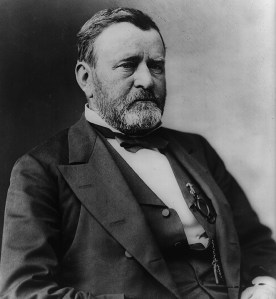
My son is named after this President, incidentally.

The quote itself is by Ron Chernow, the historian who authored the recent well-reviewed biography of out 18th President, “Grant,”  “Hamilton,” the biography that inspired, we are told, the mega-hit musical. and “Washington” (won’t somebody send a copy to the fools at Christ Church?) was given to an interviewer as his description of another book, the Philip Roth’s historical novel  “The Plot Against America”:

[A] democracy can be corrupted, not by big, blaring events, but by a slow, insidious, almost imperceptible process, like carbon monoxide seeping in under the door.

Some random thoughts on this statement, which I believe is exactly right, and a lot more interesting than the more frequently used analogy about boiling a frog slowly:

  • Grant, as Chernow’s book (among others of recent vintage) documents, was present at one of those points when democracy seemed to be in the process of being poisoned, and acted forcefully.

By 1868, when Grant was elected to succeed Andrew Johnson, who had done everything he could to allow the South to resist extending civil rights to the newly freed slaves, the KKK had evolved into a powerful terrorist organization that referred to itself as  “The Invisible Empire of the South.” Under the  Klan’s first  “Grand Wizard,” the brilliant former Confederate cavalry general  Nathan Bedford Forrest, whites from all classes of Southern society joined the Klan’s ranks. They attacked and punished newly freed blacks for crimes like  behaving in an “impudent manner” toward whites, brutalized the teachers of  schools for black children, and burned schoolhouses. It also terrorized and often murdered Republican party leaders those who voted for Reconstruction policies.  In Kansas over 2,000 murders were committed as the 1868 election approached; in Louisiana, a thousand blacks were killed in the same period.

Grant entered office knowing that the Civil War victory could come apart. He made some bad appointments–Grant was naive about politics and trusted too easily—but his choice as Attorney General, Amos T. Akerman, was masterful. With Grant’s support, and the with the help of the newly created Justice Department under Grant, he vigorously worked to enforce the Fifteenth Amendment, which gave the vote to black men in every state, and the First Reconstruction Act of 1867, which placed tough restrictions on the South and closely regulated the formation of their new state governments. Between 1870 and 1871, the Republican Congress passed and Grant signed into law the Enforcement Acts, which made it a crime to interfere with registration, voting, officeholding, or jury service by blacks. Congress also passed the Ku Klux Klan Act, which allowed the government to act against terrorist organizations.

  • When I was growing up and becoming interested in the Presidents, a life-long passion that led me to both law and ethics, Grant was routinely listed as one of the worst in the line. All one heard from historians was about the financial scandals that rocked his administration. Grant’s great success in subduing the Klan was literally never mentioned. The main Presidential historian then was Arthur Schlesinger Jr., a member of Jack Kennedy’s inner circle. His job as he saw it was to minimize the contributions of any Republican President, like Teddy Roosevelt (“near great” in his rankings), Eisenhower (“below average”) and Grant (“failure’). Meanwhile, Woodrow Wilson, who dragged the U.S, into the first World War, botched the Versailles Treaty and who actively revived the Klan, being a stone-cold racist, was “great.” Naturally, I believed all of his distortions, which were largely those of the historians at the time, then, as now, often partisans and propagandists. It took me a while to realize that this had been my first encounter with the Left attempting to alter present perception by controlling the past.

That is one of the major sources of Chernow’s carbon monoxide today, except that the disinformation now emanates from the schools, colleges, and the news media. Continue reading

Morning Ethics Warm-Up, 10/25/17: The Clinton Campaign’s Russian Dossier Connection, Her Lying Lawyer, And Jeff Flake

GOOD MORNING!

1 I have long been an admirer of Arizona Senator Jeff Flake, who is one of the few members of Congress, more’s the pity, who will stick to his principles even when they pit him against his own party. However, his freak-out and verbal attack on President Trump accomplish nothing positive (unless you consider making Democrats happy positive) and  at this point constitute pure self-indulgence and, yes, these words are coming up a lot lately, virtue-signalling and grandstanding. I have no sympathy for Flake, Senator Corker, or any other Republican leaders who stood by and allowed Donald Trump to hijack their party. The time for Flake to take a stand was last March, or even earlier. Ethics Alarms stated that the GOP shouldn’t have let Trump into the debates or on its ballot. I said that he should have been kicked out of the debates when he began trashing the party, and when he  became disgustingly boorish and uncivil. I explained that it could have and should have refused to nominate him by changing the rules. The party had a duty to the country to present a competent, trustworthy alternative to the corrupt, venal, dishonest candidate the Democrats were going to nominate: everyone knew who that would be. Instead, the GOP sold its soul. Jeff Flake now says that Trump is reckless, outrageous and undignified? Who didn’t know that? I assume the President’s  voters knew that. On Ethics Alarms, I wrote about those Trump character traits in 2011.

It is particularly galling for me to read Flake’s attack on Trump in the Washington Post today, which begins, “As I contemplate the Trump presidency, I cannot help but think of Joseph Welch.” In fact, it makes me want to scream helplessly at the sky. In this Ethics Alarms post, I invoked Welch’s famous televised slap-down of Joe McCarthy before the first Republican candidates debate, and concluded “If someone doesn’t at least try it, none of these 15 non-Trumps are smart enough to be President.” I wrote that on September 16, 2015. 

Senator Flake is like a Senator  going to Honolulu in December of 1942 and proclaiming that the Japanese can’t be trusted. He deserves no sympathy or support now.

He should have been reading Ethics Alarms.

UPDATE: My friend and frequent ProEthics collaborator Mike Messer called this “flake news.”

2. I haven’t had time to thoroughly unravel what yesterday’s revelation that Hillary Clinton’s campaign funded what became the infamous “Russian dossier” means. A couple of points, however, Continue reading

Dear Lisa Bloom, You Unethical Hack: Stop Making Me Defend Kathy Griffin!

I had to get this post up before the Morning Ethics Warm-Up, because it warmed ME up by almost exploding my head.

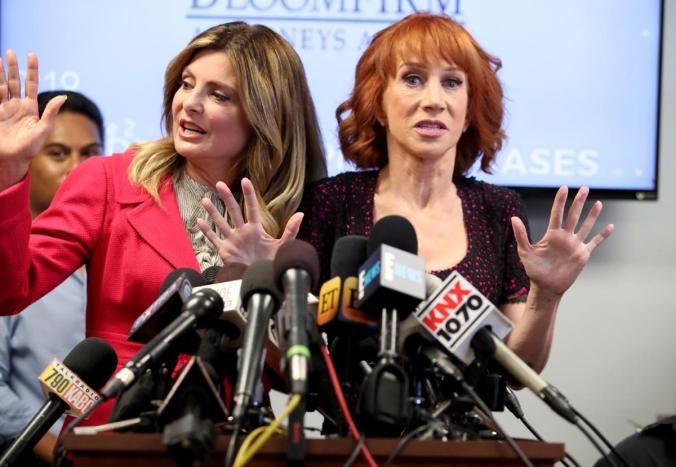
Lisa Bloom, the daughter of feminist muck-raking celebrity attorney Gloria Allred, has already shown the she has either no regard for legal ethics, or is spectacularly ignorant of them. She has publicly breached the duty of loyalty, attacking her former client, Harvey Weinstein; she took on Weinstein in the teeth of a blatant conflict of interest that she also publicized, as if it was something to be proud of. Yesterday, she showed that she is unfamiliar with, or perhaps just doesn’t give a damn about, the core legal ethics principle of confidentiality, perhaps the most important legal ethics duty of all.

Her latest ex-client to be the victim of Bloom’s unprofessional conduct and disloyalty is Kathy Griffin, she of the severed head. Griffin announced that she had fired Bloom, and wasn’t nice about it—but then when is Griffin ever nice?—saying, “Yes, I got Bloomed. Yes, I didn’t have a good experience with her. Yes, I feel that she and her husband exacerbated my personal situation.” Disaffected clients can say anything they choose about their lawyers. They can do it on Yelp, on the lawyer consumer site Avvo,  to the Hollywood Reporter or hire a skywriter. What a client says, mean or not, untrue or not, still  does not alter a lawyer’s continuing ethical obligations one whit. A lawyer cannot get into a public fight with a former client over what did or did not occur during the representation. Every lawyer knows this, or is supposed to.

Yet Bloom—I would say “incredibly” had we not seen other examples of her professional ethics cluelessness—released this statement on Twitter:

[My head told me in a statement that it would have exploded over this but determined that doing so over Kathy Griffin and Lisa  Bloom was demeaning to head-explosions. I concur.]

The fact that Bloom had prepared Griffin’s remarks for the press conference, the fact that they worked on them together, the fact that Griffin discarded them, the fact the performer “ad-libbed” and “extemporized” are all client confidences. For all we knew, Griffin’s claim during the press conference that she was ignoring her notes was part of a pre-planned strategy.  I assumed it was; Griffin is an actress. “It’s best if you show that you are talking from the heart, Kathy,” is advice I would expect Griffin’s lawyer to give. A lawyer cannot tell the public that a client ignored her advice. Only the lawyer and the client know that. Revealing it is to disclose information the lawyer learned during the course of the representation that will harm or embarrass the client, a serious ethics violation and betrayal of trust Continue reading

Oh, NO! ANOTHER Ethics Story That I Don’t Understand At All! EVERYTHING IS SEEMINGLY SPINNING OUT OF CONTROL!

Emory University Hospital in Georgia had scheduled kidney transplant surgery for a 2-year-old boy to take place on October 3. The organ donor, however, the boy’s father, Anthony Dickerson, violated his parole. Hospital administrators then postponed the surgery until Dickerson could comply with parole requirements for an additional three months.

The boy’s mother, Carmella Burgess, received a letter from the hospital that said Dickerson would be re-evaluated as a donor in January after it receives documentation of his success.

What warped reasoning is going into this decision? The boy’s health care needs are the same. The kidney being donated is the same. The father is still a willing donor. Why would the hospital care whether Dickerson had violated parole or not? Why would anything Dickerson did change the hospital’s medical duty to his son, or warrant postponing life and death surgery? So the father was discovered eating puppies. So he was found to be a convert to Isis. So he is caught saying nice things about Harvey Weinstein, Donald Trump or Satan. In fact, Dickerson violated parole in September and was charged with possession of a gun. So what?

“They’re making this about dad,” Burgess told the Atlanta Journal-Constitution. “It’s not about dad. It’s about our son.”

That seems to be an accurate analysis.

If anyone can explain how this can possibly be ethical conduct by the hospital, please do.

Morning Ethics Warm-Up, 10/18/2017: Welcome To My World! Special Legal Follies Edition

Good Morning!

1  Oh, let’s begin the day with Roy Moore, the former Alabama judge and present wacko whom Alabama Republicans voted to represent the GOP in the 2018 U.S. Senate election, thus proving that there are a lot of deplorables in the state. As was completely predictable given his record, Moore recently told his drooling followers (after being introduced by Abraham Hamilton, Alexander Lincoln being unavailable),

“Somebody should be talking to the Supreme Court of the United States and say, ‘What gives them a right to declare that two men can get married?. . . Tell the Congress: Impeach these justices that put themselves above the Constitution. They’re judicial supremists and they should be taken off the bench.”

Comments Jonathan Turley,

So Moore believes that he should not have been removed from the bench for putting his personal religious beliefs above the Constitution, but justices should be removed if they interpretation the Constitution in a way that contradicts his religious beliefs.  This, he insisted, would ‘solve the problem….such a view would violate not just fundamental principles of judicial review but it would violate the impeachment clause.  As the last lead counsel in a judicial impeachment case (in defense of Judge Thomas Porteous), Moore’s view is deeply troubling.  As I have previously written, the Good Behavior Clause of Article III was designed to protect the independence of the judiciary and insulate it from political pressures.  It was meant as a guarantee of life tenure against precisely the type of threat that Moore is endorsing. 

But it’s pointless to make genuine legal and historical arguments against someone like Moore. He’s a theocrat, a fanatic, a bigot and a demagogue. The Republican Party should endorse his opposition and campaign against Moore. This fiasco is their fault, and someone like Moore should be kept out Congress at all costs.

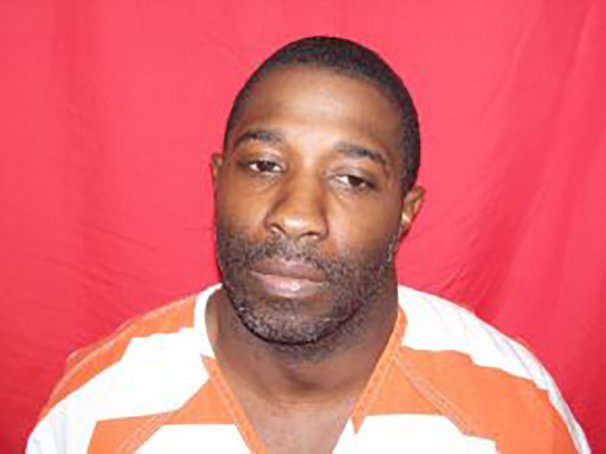
2. Now to someone who is, incredible as it seems, somewhat less ridiculous, this gentleman, Christopher Wilson…


No, that’s not a botched tattoo on his forehead: the blurry words are “fuck” and “sluts”, making the whole, eloquent message, “I’m a porn star. I fuck teen sluts.” This roughly translates into  “Look at me! I’m an idiot!”  The newspapers that refused to print the blurred words (the police had the mugshot altered) that are essential to the story, meanwhile, are telling us, “We don’t understand our profession.” The story is incomprehensible if the actual words aren’t clear, literally or figuratively.  Fox News and the NY Post, for example, say, “The Cincinnati man has the words “I’m a pornstar” tattooed on his forehead” and “another vulgar message” tattooed below.” Since the issue is whether the message on his FACE is going to prejudice the jury in his trial for sexual assault, this is juvenile coverage omitting key information to avoid “giving offense.”

Ethics Alarms to the news media: Grow up.

Turley (again…he loves the tattoo stories) writes,

“The court will be left with a question of whether the tattoo is too prejudicial or whether it is unavoidable as a personal choice of the defendant….Yet, these tattoos contain an admission to the crime at issue in the trial.  In the end, a judge could legitimately conclude that this falls into the category as bad choices bringing even worse consequences.”

What? First, the defendant is not charged with fucking teen sluts while acting as a porn star. That conduct could well be consensual and legal.  Turley is also wrong that the judge could “legitimately” allow the jury to see his message. In both cases involving a defendant’s prejudicial tattoos, the judges agreed that they had to be made invisible, in one case using make-up… Continue reading

Wait, WHAT? I Don’t Understand This Case At All: The Louisiana Lawyer’s Betrayal

Robert McCoy (above), facing trial for a triple murder in Louisiana, told his lawyer, Larry English, that he was innocent. Someone else had killed the victims, he insisted. English, however, knew better. He wasn’t buying any of it.

“I met with Robert at the courthouse and explained to him that I intended to concede that he had killed the three victims,” Mr. English stated in a sworn statement. “Robert was furious and it was a very intense meeting. He told me not to make that concession, but I told him that I was going to do so….I know that Robert was completely opposed to me telling the jury that he was guilty of killing the three victims,” Mr. English said. “But I believed that this was the only way to save his life.”

English’s theory was that in the state’s two-phase trail system, he would lose credibility with the jury if he insisted McCoy was wrongly charged in the face of overwhelming evidence He wanted to have the trust of the jurors in the second phase, when he would have to argue that they should spare Mr. McCoy’s life.

After the meeting, Mr. McCoy tried to fire his lawyer, saying he would rather represent himself—So would I— but Judge Jeff Cox refused to let English off the case. So, as promised, English told the jury during his opening statement that his client was a triple murderer. McCoy objected in court, protesting, “I did not murder my family, your honor ! I had alibis of me being out of state. Your honor, this is unconstitutional for you to keep an attorney on my case when this attorney is completely selling me out.”

The objection was over-ruled.  McCoy’s lawyer, the judge apparently believed, knew better than his client what his client’s best interests were.

He didn’t though. McCoy was convicted and sentenced to death despite all of that supposed good will, credibility and trust English had built up by throwing his own client under the criminal justice bus.  The victim of this Bizarro World representation appealed the conviction to the Louisiana Supreme Court, saying his lawyer had turned on him. The court ruled against him,  holding that

“Given the circumstances of this crime and the overwhelming evidence incriminating the defendant admitting guilt in an attempt to avoid the imposition of the death penalty appears to constitute reasonable trial strategy.”

Now the United States Supreme Court is going to consider the case, McCoy v. Louisiana, and the question of whether a lawyer who disregards a client’s explicit instruction to plead not guilty has breached the Constitutional right to counsel.

I am stunned.  What question? Apparently this is a thing in Louisiana. “Counsel’s strategic choices should not be impeded by a rigid blanket rule demanding the defendant’s consent,” Louisiana’s lawyers  wrote in a brief urging the court to pass on the case. Since 2000, the Louisiana Supreme Court has allowed defense lawyers to concede their clients’ guilt in four other capital cases over the clients’ express objections.

Good grief. Continue reading