Once Again, Stop Making Me Defend President Trump, And Tell Fox To Stop Making Me Defend The People Who Are MAKING Me Defend Him!


See? What does Comey have to complain about?

Fred, my topic scout, sent me this and suggested that it was the apotheosis of  Rationalization #22, Comparative Virtue or “It’s not the worst thing.”

Boy, was he right.

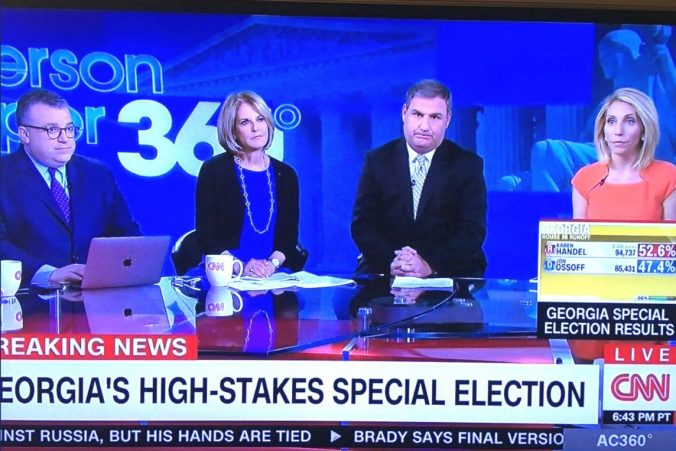
In last night’s episode of the Tucker Carlson show—right-wingers are actually impressed with Tucker’s skills at taking down lame liberal fanatics, which is sad in so many ways—featured the Fox News conservative dilettante agreeing with guest James Rosen, who was making the fatuous and ethically offensive point that people shouldn’t get so upset about what Trump does because the Civil War and the Cold War were worse.

This argument is the Mother of All Terrible Rationalizations, and especially bad because it spoils a good point, which is that absent historical perspective, it’s not easy to know what a real crisis is. Arguing that people shouldn’t object to something, however, because something else was worse is the mark of desperation as well as intellectual deficiency. Explain why the alleged crisis isn’t one (as in the Comey firing); explain why the assumed harm is exaggerated, or being hyped, or the product of bias and emotion. But to say, as Rosen, a “conservative historian,” which only means he isn’t an aggressive leftist like almost all of his colleagues, did,

“During Watergate, the term ‘crisis’ was thrown around as well and there were people at that time who were old enough to remember when there were legless Civil War veterans still in the streets of Washington.”

And I’m sure conservative historians were reminding those Civil War casualties while their legs were being sawed off without anesthesia that the Civil War wasn’t nearly as horrible as the Black Death. “Ah, I feel much better now,” they smiled. “Just call me ‘Stumpy!’

Here, for the sake of reference, is the description of #22 on the Ethics Alarms Rationalizations List: Continue reading

Ethics Quiz: The Bank Robber Professor

A few weeks ago the Washington Post published the unusual story of  Shon Hopwood, a member of the D.C. Bar and  a tenure-track faculty member at the Georgetown University Law Center. He spent 11 years in federal prison for robbing banks n Nebraska—that’s banks, plural—became a jailhouse “lawyer,” got  a scholarship to law school, was somehow approved as meeting the character provisions required for bar membership, and now amuses his Georgetown law students with tales about how when he played basketball in federal prison, he had to carry a shank in case his team started to lose.

You should read his story, which I’m sure will enrich Hopwood in  a movie deal, if it hasn’t already, but you shouldn’t have to read it before you answer today’s Ethics Alarms Ethics Quiz:

Should a convicted bank robber be teaching law students?

Continue reading

From The “A Nation Of Assholes” Files, An Ethics Dunce: Smithfield’s Chicken ‘N Bar-B-Q

Unless someone figures out how to blame this incident on President Trump, I am gradually coming to the conclusion that my conviction that electing him would cause the United States to become a nation of assholes was mistaken, because the culture was  on a water slide toward that result already.

A member of the Raleigh Police Protective Association (RPPA) reported on the group’s Facebook page that the staff, including the manager, of Raleigh’s Smithfield’s Chicken & Barbeque on Jones Sausage Rd.  sang “Fuck Tha Police” a while a number of officers of the Raleigh Police Department were dining at the restaurant.  The hip-hop classic…yes, a song called “Fuck the Police” is considered a classic, which explains why I have no interest in hip-hop, except as a corrosive force in our culture, and especially the black culture—includes the trenchant and moving  chorus, evocative of Sondheim at his lyrical peak,

Fuck Tha Police
Fuck Tha Police
Fuck Tha Police
Fuck Tha Police

And I thought regular singing waiters were annoying… Continue reading

The Psychiatrists Board The 2016 Post Election Ethics Train Wreck

It’s pretty simple. Professionals must be trusted, and when it becomes clear that members of a profession are allowing themselves to be influenced by emotion and partisan political bias, they cannot be. One of the most troubling results of the mass abandonment of fairness, prudence, proportion, fairness and common sense in the wake of the 2016 Presidential election has been the public meltdown of reserve and restraint by so many professionals, which will have long-term effects on their ability to serve the public in the future.

Journalists, as we have seen and continue to see, have completely abandoned their profession’s duties of competence, objectivity and independence to join the efforts on the Left to undermine President Trump and his administration. Educators and school administrators, whose roles in society should have no political component whatsoever, have done the same. Historians, whose profession requires careful and dispassionate analysis of past events with perspective and objectivity, chose this moment to try to influence history as it was being made, and to push it into directions they prefer as partisans, not professionals. Law professors and lawyers have debased themselves arguing for crackpot theories to justify undoing the election. Judges have embraced the opposite of a judicial process to halt a Presidential order their political allies find offensive: rather than evaluating the limited travel halt based on what it is, they have delayed it based on a presumed motive calculated from past comments made on the campaign trail.

Legal ethicists, as I discussed here,  abandoned legal ethics to make bogus, politically motivated charges against a Trump aide who is not practicing law, and whose conduct in question wouldn’t have breached professional standards if she had been. Last week, scientists demonstrated on the National Mall to argue for policies they say their research demands, though a preference for specific policy applications biases research and makes it untrustworthy. Great: climate scientists want draconian climate change policies? Good to know; now we also know that we can’t be sure their research results aren’t tainted by their bias….though coming up with a predictive climate change model that actually works would be nice. Even the linguists have succumbed to the epidemic.

Now a significant number of psychiatrists have joined their colleagues in other professions by behaving like partisan hacks. Continue reading

“Hey, Look! Professor Chung Has A Painting In The Exhib—-WHAT THE HELL?????”

While we’re on the topic of  “hate speech”…how about “hate paintings”? At public universities? Painted by faculty members?

An art gallery at the University of Alaska-Anchorage this month displayed the painting above, depicting actor Chris Evans as Captain America and holding  the severed head of President Trump while Hillary Clinton grasps Cap’s  legs like she is a slave girl and he is Conan the Barabarian.  The artist is UAA Painting Professor Thomas Chung, who  created the masterpiece as part of a faculty art program. Naturally it was accepted, just as it would have been if he had painted Thor holding up President Obama’s severed head. Of course it would have been accepted. After all, art is art. Academic freedom. Right?

Chung explains the artwork as something he chose to paint because he was upset at the results of the 2016 election. “I spent days just weeping,” he has said. Campus Reform quotes him  explaining his decision:

“I was really torn about putting this piece up at a faculty show, because I would never talk about my own political beliefs to my students. But I realized that I feel very strongly about this, and I think even students that might be pro-Trump supporters could benefit from having a conversation with me about why I feel this way—why I painted this.”

(By the way, the actual painting shows Evans/Captain America’s sex organs. None of the versions on the web do, though. Sorry!)

Random ethics observations, since I fear that painting may have caused some brain damage and I can’t seem to organize a coherent paragraph: Continue reading

Comment Of The Day: “Ethics Dunce, Judicial Division: Arkansas Circuit Judge Wendell Griffen”

The post about the absurd Arkansas judge who saw nothing wrong with taking part in some anti-death penalty protest theater shortly after halting some scheduled executions. Can we say “objectivity”? Sure we can!

The impetus for Steve-O-in NJ’s Comment of the Day was what could be called dicta in the original post about the dubious role models for judicial conduct currently sitting on the U.S. Supreme Court.

Here is Steve-O-in-NJ’s Comment of the Day on the post, Ethics Dunce, Judicial Division: Arkansas Circuit Judge Wendell Griffen:

I agree that SCOTUS needs an ethics code, but, in all fairness, did Eisenhower, Kennedy, Johnson, or Nixon ever attack the SCOTUS or a decision in a speech or an address? FDR was far more politically powerful than Obama ever could hope to be, but even he knew when to back off the SCOTUS. That said, I wonder if he knew from the get-go he was going to break the 2-term tradition and just wait the court out, as justices either died or retired and he replaced them with like-minded judges.

What do you think of an age limit for Federal judges, setting either 70 or 75 as a mandatory retirement age? Although Article III judges serve for the term of their good behavior, arguably that Article didn’t conceive of Federal Judges living well past 70 regularly and living and serving into their 80s and 90s uncommon but now certainly not unheard of. If we can revisit Presidential terms of office, which we already have, if we can revisit the Electoral College, which we already have once and some are asking us to again, and if many vocally want us to revisit both the First and especially the Second Amendments, all of these due to changing circumstances (breach of the 2-term custom, the emergence of political parties, alleged hate speech, and the evolution of firearms beyond single shot muskets) then arguably we can revisit Article III as well.

Continue reading

Ethics Dunce, Judicial Division: Arkansas Circuit Judge Wendell Griffen


That’s the judge lying down. At least he wasn’t wearing his robe…

Arkansas circuit judge Wendell Griffen granted a temporary restraining order last week halting the Arkansas Department of Corrections from executing seven condemned prisoners within eleven days as it had planned, as Griffen barred the use of one of the ingredients in the lethal drug “cocktail.” A federal judge followed up quickly with anothee order likewise barring Arkansas from proceeding to execute anyone with a lethal injection. Mission accomplished,  Judge Griffen decided to reward himself by attending an anti-death penalty rally in which he participated with elan, playing a condemned prisoner lying prone on a lawn chair as if it was a gurney.

What fun! And what an idiot! No ethics alarms went off, despite the fact that he was flagrantly displaying his bias against the death penalty immediately after interfering with the state’s law enforcement based on a fair and objective interpretation of the law.

State officials were outraged, and argued that Griffen’s conduct proved that he was not capable of impartiality in capital cases. Ya think?

Yesterday the Arkansas Supreme Court pulled Griffen from all pending death penalty and lethal injection protocol cases. It also referred him to the state’s Judicial Discipline and Disability Commission to determine whether he violated the Code of Judicial Conduct.

Good. Continue reading

Ethics Hero: Northern Arizona University President Rita Cheng

During a campus forum at Northern Arizona University, President Rita Cheng was asked by a student,  “How can you promote safe spaces, if you don’t take action in situations of injustice, such as, last week, when we had the preacher on campus and he was promoting hate speech against marginalized students?  As well as, not speaking out against racist incidents like blackface two months ago by student workers followed by no reform and no repercussions?”

Cheng replied,

“As a university professor, I’m not sure I have any support at all for safe space.  I think that you as a student have to develop the skills to be successful in this world and that we need to provide you with the opportunity for discourse and debate and dialogue and academic inquiry, and I’m not sure that that is correlated with the notion of safe space as I’ve seen that.”

Students, mainly members of the NAU Student Action Coalition, staged a walk-out after Cheng’s response. As Jack Nicholson said, they can’t handle the truth, as indeed an alarming number of college students, indoctrinated into progressive groupthink, cannot.

NAU SAC issued the following statement :

The NAU Student Action Coalition is composed of many student groups and various individuals who are being directly impacted by a range of issues highlighted at the forum on Wednesday. The NAU community invests a lot of time, money, and energy in this experience and, because of failed leadership, we are not getting a return on our investment. President Cheng’s answers at the forum were insufficient and if she’s not ready or willing to engage in these serious conversations and more importantly work towards solutions, then we do feel her resignation is necessary and would want a university President who works to provide the purpose of higher education, which is to enrich the lives of many people, students, faculty, staff and the larger Flagstaff community. We were guaranteed access, quality and excellence in our higher education student experiences and far too many students are experiencing the exact opposite. 

In response, Cheng’s spokeperson said,

“NAU is safe. Creating segregated spaces for different groups on our campus only [leads] to misunderstanding, distrust and [reduces] the opportunity for discussion and engagement and education around diversity. Our classrooms and our campus is a place for engagement and respect – a place to learn from each other.  NAU is committed to an atmosphere that is conducive to teaching and learning.”

Continue reading

O’Reilly, Fox News, And Sexual Harassment…AGAIN

Bill O’Reilly’s five accusers…so far.

I saw an online article that called Bill O’Reilly the “Bill Cosby of Fox News.” That’s not entirely fair: O’Reilly is likely just a serial sexual harasser, whereas Cosby is a rapist. Then again, they are both named “Bill,” and there are other similarities. Both have paid hush money to accusers, both have had a series of accusations made against them by women, the watermark of the sexual harasser (though Bill Cosby, so far, is way ahead in that category), both angrily deny the charges against them, and both have indignant defenders.

Both also are probably sociopaths.

Is it possible that Cosby has been wrongly maligned? Let me think…NO. Of course not. Over 50 women (what is the current count now?) do not accuse the same innocent man of sexual assault. Is it possible that the other Bill is a victim, not a predator? My “no” here isn’t quite as emphatic, perhaps, but…no. The New York Times piece yesterday thoroughly covers the evidence, and the odds against  all this being meaningless boggles the mind: Continue reading

THREE Comments Of The Day (Really Useful Ones): “Tech Dirt’s Mike Masnick On The Internet Privacy Bill”

There were not one but three excellent, informative, detailed comments, one after the other,  in response to the post about the GOP’s elimination of the recent Obama FCC regulations of Big Data gathering by broadband providers. Technology competence is, I believe, the greatest looming ethics issue for the professions, and it is important for the general public as well. All three of these Comments of the Day are educational. If only the news media and elected officials were as well-informed as Alex, John Billingsley, and Slick Willy.

I am very proud of the level of the discourse on Ethics Alarms, and these three Comments of the Day on the post Ethics Quote Of The Month: Tech Dirt’s Mike Masnick On The Internet Privacy Bill are prime examples.

First, here’s slickwilly:

How to be safe with electronic data

First rule: anything online is vulnerable, no matter who secures it. It follows that any computer/device connected online is also vulnerable.

Second rule: Public WiFi is hack-able, and doing so is not that difficult. Someone just has to want to. Using it for playing games could make you vulnerable, and using it to access your financial information (banks, brokers, etc.) is stoopid

Third rule: Anything you do electronically is forever. Any tweet, snap chat, Facebook post, cell phone text or conversation, email, web post, browsing activity, and anything else may be saved by someone. Some of those are harder to get than others: browsing activity takes a snooper on the data line, or a court order to set a snooper up at your ISP. For instance, all cell phones activity is now all saved by the NSA, including where the phone was when. No, no one looks at it, not until they have a reason to research a person, perhaps years later. ‘Smart’ TVs can record you in your own home, without your knowledge, unless you take steps to stop it (electrical tape over cameras/microphones is a start, but still not enough)

Fourth rule: Any public activity can be recorded today. Besides CCD cameras everywhere and license plate readers on many roads, facial metrics can track you in most urban and many rural areas. Even going into the desert or mountains could be spotted via satellite, should the motivation be enough to look your way.

So don’t leave your computer connected to the Internet 24/7 (a power strip that stops electricity from reaching the computer helps cut connectivity when ‘off’), do nullify the ability of other devices to spy on you in your home, and never say anything electronically you do not want going public. Use complex passwords, and never the same for multiple sites. Password safes are better than written notes (and Apple Notes are silly to use for this.) How much you protect yourself depends on your level of paranoia.

Do you have something to hide? A secret you would rather not be made public? Do not document it electronically! Or use the method below.

Now, how to be safe with electronic information: Place it exclusively on an air-gapped (no network connection at all) computer. Place that computer in a heavy steel safe. Encase that safe in concrete, take it out to a deep ocean trench, and drop it overboard. Forget the coordinates where you dropped it.

The point is, nothing is fool-proof

You can take steps to lower the probability that your information gets out, but even using paper and quill pen was only so good as the physical security the document was placed under. Learn some simple steps and you will remove yourself from the radar of most predators. People are careless, apathetic, and just plain dumb, so anything you do helps keep you safer.

I keep such information in a secure, encrypted flash drive that is not stored in a computer USB slot. Could someone break the encryption, should they find the drive and wish to spend the effort? Sure. But if they want me that badly they will get me, one way or another. Why would they? I do not have any deep dark secrets or hidden crimes in my past. Even so, why should my business be available to anyone just to browse through?

Your mileage may vary, but doing nothing is unethical in my responsibilities to my family.

Now John Billingley’s contribution:

Continue reading