Idiot Ethics: A Brief Note

I used the term “idiot” three times in the recent post about Alex Jones. Periodically I get reprimands from commenters who chide Ethics Alarms for engaging in “ad hominem” attacks when it refers to a public figure as “an idiot.” IMy response is always the same: diagnosing someone as an idiot who behaves idiotically is not an “ad hominem attack.” Ad hominem means that one attacks a legitimate argument by attacking the arguer instead: “That must be wrong, because he’s an idiot!”  In the case of Jones, my point was very different: believing that John Podesta, in the middle of a Presidential campaign, would be running a sex ring out of a pizza place is per se idiotic, and it requires an idiot, like Alex Jones, to take such a story seriously. I’ll stand by that assessment.

Still you don’t read many pundits, and certainly no ethicists, who use that term, or related ones like dolt, dummy, moron and cretin. Is it unprofessional? It certainly isn’t common practice for professionals, though there are exceptions: the late Justice Scalia was not above calling out idiocy by name. I will even use the term occasionally in my ethics seminars, for example, to describe the lawyer who produced a hand grenade during his closing argument, and pulled the pin. Is this unfair? I don’t think so. Nor is it unfair to call the lawyer an idiot who recently had his pants burst into flame mid-argument to bolster his defense that his client didn’t deliberately set his car won fire, but that it spontaneously combusted.

Non-idiots don’t do things like that. If he doesn’t know he’s an idiot, someone needs to tell him.

Calling someone an idiot is an insult, obviously, and is a breach of civility. Civility, however, does not and should not interfere with the truth. Choosing to properly designate a prominent idiot as one is a public service, and to the more self-aware idiots, a kindness as well. Great damage can be prevented by making it absolutely unambiguously clear that someone is an idiot, as in “not smart, responsible, wise or educated enough to be trusted in his opinions or competence.”

Once upon a time, it was very rare for true idiots to rise to prominence and influence in the United States.  It was just too hard, and nobody was that lucky. This provided a great advantage over cultures where power and influence were conferred by birth.  Idiot kings and emperors were never in short supply. John Adams made the point that in America, the aristocracy, whose role in other nations was to stand as role models and typify the best of society, was uniquely created by ability, achievement, talent and intelligence. (John, a lawyer, naturally thought that lawyers fit the bill.) The bold concept behind American democracy was 1) that public education and civic duty would compel the citizenry to accept the responsibility of being capable of self-government, and that the “wisdom of crowds” would do the rest. Idiots literally could not rise to high office. They so obviously contrasted with the typical public servants that their careers fizzled out before the White House was within view. Stupid journalists, scholars, professionals and authors were also rare; indeed, it was once hard to find an idiot with a high school diploma, much less with an advanced degree. Continue reading →
Silence U Part 2: Indoctrination At Yale, and Beyond

A new, intensely short documentary about the cultural rot underway at Yale (but not only at Yale) is worth viewing, if you have a firm grip on your skull. Yale, is, of course, the source of many U.S. leaders and opinion-makers, including Supreme Court justices and recent Presidents. As one can see from the video, it is either indoctrinating the young minds in its charge in oppressive, anti-speech and liberty ideology, or, to give a large benefit of the doubt, failing to disabuse students of toxic and anti-democratic ideas that the educational system has also seeded.

Needless to say, but I’ll say it anyway, Yale is an elite institution, a role model for others, and supposed to represent the best of higher education. Its students will take their place among the intellectual and economic elite. Nobody who has been paying attention to the logical and legal contortions being used by the supporters of “the resistance” should be surprised that our most promising students are being trained to reason like this. The question is: does it make sense for a nation to actively support an educational system that appears to have become dedicated to undermining the basic values its founding was based upon?

The former-Provost of Stanford University, John Etchemendy, recently gave a speech he called “The Threat From Within” in which he said in part.

Over the years, I have watched a growing intolerance at universities in this country – not intolerance along racial or ethnic or gender lines – there, we have made laudable progress. Rather, a kind of intellectual intolerance, a political one-sidedness, that is the antithesis of what universities should stand for. . . . We need to encourage real diversity of thought in the professoriate, and that will be even harder to achieve. It is hard for anyone to acknowledge high-quality work when that work is at odds, perhaps opposed, to one’s own deeply held beliefs. But we all need worthy opponents to challenge us in our search for truth. It is absolutely essential to the quality of our enterprise.

The problem bites when a particular ideological sect gains power, and meticulously and systematically sets out to make diversity of thought inaccessible. Professors and scholars inhospitable to progressive cant are becoming extinct on college campuses, by design, just as they are an endangered species in newsrooms and Hollywood. Over at the increasingly had-left legal website “Above the Law”—you know, the one that kept erasing my e-mail alert requests every time Ethics Alarms criticized the site; the one that employs Ellie Mystal, a black lawyer who has advocated that black jurors refuse to convict black defendants—writer Joe Patrice  mocked the concept of advocacy for “viewpoint diversity” as argued in this letter from a group of law professors: Continue reading →

Ethics Hero: Notre Dame Political Science Professor Vincent Phillip Muñoz

Vincent Phillip Muñoz is the Tocqueville Associate Professor of Political Science and Concurrent Associate Professor of Law at The University of Notre Dame. Following the violent protest that prevented his announced lecture at Middlebury College earlier this month, Prof. Muñoz invited Murray to speak at the University of Notre Dame next week. This occasioned some protests and objections from students and faculty at his own college, and he responded with an essay at RealClearPolitics, writing in part…

Charles Murray is speaking at Notre Dame because I and another Political Science professor assigned his book “Coming Apart” in our classes. His visit is one of several outside lectures that are part of this semester’s Constitutional Studies offerings. My class, “Constitutional Government & Public Policy,” addresses some of the most important and divisive issues in American politics: abortion, gay marriage, religious freedom, inequality, freedom of speech, death penalty, race and the meaning of constitutional equality, immigration, euthanasia, and pornography.

 The class is designed to prompt students to think more deeply and thoughtfully about contemporary moral and political issues. I don’t assign a textbook or “neutral” readings that summarize the issues; I require students to read principled thinkers who advocate vigorously for their respective position. I want my conservative students to read smart, persuasive liberal thinkers, and I want my liberal students to read thoughtful conservatives. Educated citizens can give reasons for their beliefs and can defend intellectually the positions they hold. That requires that we understand and articulate the positions with which we disagree.

…“But Murray is controversial and will make students feel uncomfortable,” my faculty colleagues say. Don’t I know that he has been accused of being racist, anti-gay, and a white nationalist? I’m told that bringing him to campus is not fair to Notre Dame’s marginalized students.

I have no desire to inflict unwanted stress or anxiety on any member of the Notre Dame community, especially our minority students. I appreciate the concern for student well being that motivates some of the opposition to Murray’s visit. But I believe what is most harmful to students—and, to speak candidly, most patronizing—is to “protect” our students from hearing arguments and ideas they supposedly cannot handle.To study politics today requires handling controversial, difficult, and divisive topics…

The price of a real education is hearing powerful arguments that make us realize our opinions are based on untested assumptions. Only then, when we realize that we do not know as much as we think we know, can genuine learning occur.

I invited Dr. Murray to Notre Dame months ago…Given what happened at Middlebury, it would be cowardly to disinvite Murray now. Rescinding his invitation would communicate that violence works; that if you want to influence academia, sharpen your elbows, not your mind. It would tell those who engaged in violence—and those who might engage in or threaten violence—that universities will cower if you just appear intimidating. Rescinding Murray’s invitation would teach exactly the wrong lesson…

Notre Dame faculty critical of Murray have implored me to think about the larger context of what his visit means. I am. That is why I will not rescind his invitation. As a professor and program director, my job is to do what we are supposed to do at universities: pursue the truth through reasoned dialogue and discussion. Whether you find Charles Murray’s scholarship persuasive or objectionable, his visit offers an opportunity to learn. That is why I invited him to speak at Notre Dame. After Middlebury, it’s all the more important that he do so.

It is almost an insult to academia to call Prof. Muñoz ‘s statement heroic. It should be obvious. Dissenters from the position he articulates should be instantly recognizable as regrettable outliers, the opponents of academic freedom and freedom of thought, the advocates of censorship and ideological indoctrination. Yet increasingly it is this traditional view of higher education that Muñoz advocates that is under attack. Continue reading →

Ethics Dunce: The Maryland State Bar Association

Do you know what legal ethics opinions are? Many lawyers don’t know, or barely pay attention to them, but the opinions are important. They are written when bar associations have to decide how to handle the gray areas of professional ethics, and believe me, there are more gray areas in legal ethics than the profession likes to admit. Some jurisdictions churn out lots of important and useful legal ethics opinions all year long; others barely bother with them. (Idaho simply stopped issuing such opinions decades ago.) Still, the LEOs, as they are called, are essential when one of the many legal ethics issues crop up that a jurisdiction’s rules themselves don’t cover.

Although bar associations do a terrible job making their legal ethics opinions’ availability known to the general public, LEOs have invaluable information to convey about how lawyers are ethically obligated to serve their clients. They are also essential if people like me are going to be able to remind Maryland’s lawyers about their ethical duties as part of continuing legal education seminars and expert opinions.

So why is it that Maryland, alone among the 51 U.S. jurisdictions, refuses to allow the public access to their legal ethics opinions? All right, neither does Arkansas, but nobody can read in ArkansasKIDDING!!! I’M KIDDING!

In order to find out what the Bar Association has decided regarding specific legal ethics conundrums, or whether the state has any position at all, one has to be a dues-paying member of the Maryland Bar. Never mind that Maryland lawyers, who, like most lawyers, often are subject to the ethics rules of other jurisdictions, can access neighboring bar association LEO’s with a couple of clicks on their computers. Never mind fairness or reciprocity.

Here’s how the question “Why do we hide our ethics opinions?” was answered by one Maryland lawyer online:

“Ethics opinions are MSBA work product: a benefit to members who pay their dues…An ethics opinion is a legal opinion about what it or is not permissible under the rules. If you want legal advice, pay for it. The “rules”, by the way, are published and are available to the public. As are the elements of negligence. Do you tell your clients for free how to prove their negligence cases?”

How’s that for a venal, snotty answer? In fact, there are no “hidden” laws or principles related to negligence, nor are the standards for what constitutes negligence and how it is proven in court only available for a fee. The legal ethics opinions, on the other hand, may be crucial to allowing non-lawyers  know when they are being victimized by unethical members of the Maryland bar. How convenient that the Bar hides these from the view of the group of citizens that have the most urgent need to know about them.

Continue reading →

Ethics Dunce: Ex-US Attorney Preet Bharara

And a good thing, too…

Preet Bharara, until recently the United States Attorney’ for the Southern District of New York, was known as an aggressive, fearless, skilled prosecutor. He was also  increasingly a partisan one, as his  felony prosecution of Dinesh D’Souza, a vocal conservative critic of President Obama, showed. Despite the ridiculous and dishonest criticism of President Trump for firing Baharara, if there has ever been a President with good cause not to trust holdovers from the previous administration, it is Donald Trump.

The last Holder/Lynch Justice Department employee he trusted was Sally Yates, and she breached her ethical and professional duties by going rogue, and not just rogue, but partisan rogue. Baharara,who referred to himself as a “completely independent” prosecutor, was such a good bet to go rogue that it would have been negligent for Trump not to fire him. Democrats in and out of government are suddenly dedicated to defying and bringing down our governmental institutions, notable the Presidency. They can’t be trusted. Even if it wasn’t  the usual course to sack the previous administration’s US Attorneys—though it is—  there was every reason for this President to sack these prosecutors.

And, nicely enough, Bharara proved that Trump was right by grandstanding on his way out the door.

Asked to resign along with his colleagues, Bharara refused, and Trump fired him  Glenn Reynolds calls the refusal to resign childish, but it was more that. It was a breach of professional ethics, and akin to Yates’ stunt.  Bharara is a government lawyer, meaning that he represents the government’s interests as his supervisors define them. If he doesn’t like their priorities, his option is to resign—not defy them until he is fired, but resign.  United States Attorneys “serve at the pleasure of the President” and that’s a term of art.  The prosecution of crimes, including the decision regarding which crimes to prosecute and which crimes not to prosecute, is made at the discretion of the Executive Branch, which is headed by the President. If, for example, Bharara felt that Obama’s executive order declaring  that illegal immigrants who hadn’t committed serious crimes were henceforth to be treated as if they were legal immigrants rather than illegal ones was unconstitutional, which it is, his option would have been to resign, not give a press conference, a la Yates, declaring his opposition to the new policy. Continue reading →

Comment Of The Day: “Catching Up On “Instersectionality,” And Finally Paying Attention”

These do not exist.

My heart sank when the I saw that the extremely lively debate following yesterday’s post about “intersectionality” had sparked a posting of “White Privilege: Unpacking the Invisible Knapsack” by Paula McIntosh, who either was time traveling  from 1947 or who was awakened from a coma in 1988 and set it to paper.  The list was out of date then, and it is 29 years old now: one of my favorite aspects of perpetual victim-mongers is that they always pretend that no progress has been made in ethics and human relations, because progress puts them out of business. 

I had to debunk this thing, but there were other priorities hanging over me. Fortunately, reader Isaac took up the challenge. This is often the case in Ethics Alarms, where the remarkable reader base either assists me in doing my job, or, as in this case, does it for me, often better than I could. Isaac chose humor to do the job here, and looking over the material, that might have been the kindest course.

Here is Isaac’s epic Comment of the Day on the post, “Catching Up On “Instersectionality And Finally Paying Attention.” (I’ll have a few comments at the end.)

I wish to thank Deery for sharing about the “Invisible Knapsack” of 26 White Privileges invented by someone named McIntosh. I had never heard of it and am eager to unpack all of unseen ways that the White-spiracy has gifted me with an implicit advantage over my colored people friends. By knowing what my white privilege affords me, I can now exploit it and achieve my highest potential! Let’s dive in.

—-“1. I can if I wish arrange to be in the company of people of my race most of the time.”—-

That can’t be right, and I don’t just mean the sentence structure. My neighborhood in Riverside County, California is about 65% Latino and 15% Black. And I can’t afford to move. I like it here. But if I did want to move to Orange County or Malibu or whatever and hang around fellow Whites all day, I can’t afford it. Maybe McIntosh can connect me to the secret White Privilege Office that will hook me up with a McMansion in Irvine.

—-“2. If I should need to move, I can be pretty sure of renting or purchasing housing in an area, which I can afford and in which I would want to live.”—–

Seriously, McIntosh? I just went over this. If it costs more than a one-bedroom apartment in Perris, I CAN’T afford it. Who is McIntosh and why does she believe that being White gets you real-estate discounts?

—-“3. I can be pretty sure that my neighbors in such a location will be neutral or pleasant to me.”—-

My neighbors have been pretty cool except for the three or four people who have robbed me or smashed some of my property. Is this the realization of my White privilege or do I still have untapped benefits?

—-“4. I can go shopping alone most of the time, pretty well assured that I will not be followed or harassed.”—-

I got kicked out of a gift store once as a teenager, but to be fair, I WAS shoplifting at the time.

I’ve only been unfairly followed or harassed while shopping a few times. But I checked with some of my Brown and Black friends, and they ALSO had only been followed or harassed while shopping a few times. That number should be WAY higher for them than for me. What kind of white privilege is this? Why are my benefits not notable?

—-5. “I can turn on the television or open to the front page of the paper and see people of my race widely represented.”—-

To check my privilege in this area I turned on the television and looked at a newspaper, and was surprised to find that yes, there were quite a few white people there. Sweet, privilege! But it gets better! I checked Wikipedia and found out that White people make up almost two thirds of the population of America! Wow! How can a group of people that make up 63% of a country’s population also be seen on the television and newspapers constantly? It’s gotta be a conspiracy, baby! A sweet, sweet, white conspiracy.

—-“6. When I am told about our national heritage or about “civilization,” I am shown that people of my color made it what it is.”—- Continue reading →

Chicago Justice, Rights, And Pop Culture Malpractice

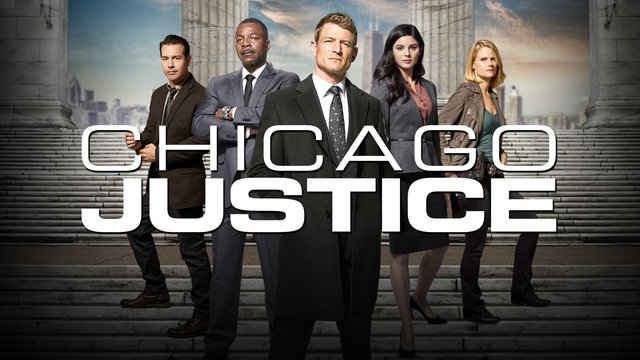
Dick Wolf, the “Law and Order” creator, is in the process of taking over NBC prime time. He now has four linked dramas dominating the schedule—“Chicago Med,” “Chicago P.D.,” “Chicago Fire,” and the latest, “Chicago Justice.” (Soon to come, at this rate: “Chicago Sanitation,” “Chicago Pizza,” and “Chicago Cubs.”)

Yesterday was Episode #2 of “Chicago Justice.” The story in involved a “ripped from the headlines” riff on the Brock Turner case, where a woman was raped while unconscious and the rapist received a ridiculously lenient sentence. In Wolf’s alternate universe, however, the judge was murdered, and the rape victim and her ex-husband were suspects. There was another wrinkle too: one of the prosecutors had a close relationship with the dead judge, and was with him right before he was killed. She was going to have to be a witness, and her colleague and supervisor, prosecuting the case, asked her if she had been sleeping with the victim. Such a relationship would have been an ethical violation for the judge, and at least a pre-unethical condition for the prosecutor, requiring her to relocate to a Steven Bochco drama, where lawyers have sex with judges all the time.

The female prosecutor indignantly refused to answer the question. After the case was resolved—I won’t spoil it, but the name “Perry Mason” comes to mind—the two prosecutors made up over a drink. She said that she would have never slept  with “Ray” (the dead judge–when he was alive, that is), but that she remembered reading “in some old document” that we all had “unalienable rights,” she believed one of them was “the right to be respected by your fellow man.”

There is no “right to be respected.” The Declaration of Independence, the “old document” she referenced, lists three rights only, though they are broad ones: life, liberty and the pursuit of happiness. None of those encompass a right to be respected. The speaker, Anna Valdez (played by Monica Barbaro, a Latina dead ringer for Jill Hennessey, who played the equivalent “Law and Order” role for many years), is a lawyer, and should understand what a right is. It is a legally enforceable guarantee of an entitlement to have something, seek or obtain it,  or to act in a certain ways. As a lawyer, she must understand that this is different from what is right, just or honorable. Her statement, coming from the mouth of a character with presumed expertise and authority, misleads much of the public, which is constantly getting confused over  the difference between Jefferson’s use of “rights” and what is right. So do journalists and, sadly, too many elected officials. Continue reading →

A Very Bad Month For Price Waterhouse Coopers

Earlier this month, Big Four accounting firm Price Waterhouse Coopers sustained a high-profile hit to its reputation when  the senior accountants the firm sent to ensure the integrity of the Oscars broadcast, a job the firm has had for more than half a century,  couldn’t manage to hand out the correct envelope at the televised ceremony’s surrounding.  Now it looks like the chaos that this botch created was a prelude to far, far worse.  For years, federal investigators have been scrutinizing Catapillar’s overseas tax affairs, examining the complex maneuvers involving billions of dollars and one of the company’s Swiss subsidiaries.

Now, a report commissioned by the government accuses the equipment manufacturing giant of carrying out a massive tax and accounting fraud involving billions of dollars. And the accounting firm Caterpillar employed to perform its audits?

The envelope please?

You guessed it.

The report, part of a wide investigation being undertaken by the United States attorney’s office for the Central District of Illinois, the IRS and the Inspector General of the F.D.I.C., thus far is neither public nor made available to Caterpillar for review.  It  describes an illegal company strategy to bring in billions of dollars from offshore affiliates while avoiding federal income taxes.  Leslie A. Robinson, an accounting professor at the Tuck School of Business at Dartmouth College and the author of the report, concluded that…

“Caterpillar did not comply with either U.S. tax law or U.S. financial reporting rules. I believe that the company’s noncompliance with these rules was deliberate and primarily with the intention of maintaining a higher share price. These actions were fraudulent rather than negligent.”

Dr. Robinson’s 85-page analysis, based on publicly available and internal financial data from Caterpillar as well as bank data tracking wire transfers from Switzerland into the United States, found that Caterpillar brought back $7.9 billion into the U.S. structured as loans, over and beyond the income that had already been taxed overseas. The company failed to report those loans for tax or accounting purposes, though under U.S. law those profits would be subject to federal taxes.

For example, the professor  found  correspondence between the company and the Securities and Exchange Commission in which Caterpillar said it had $2.5 billion  in income eligible to be brought to the United States tax-free. The company, she wrote, did not have “anywhere near” that much money still available to be brought in tax-free.

No charges have been filed yet. Last week, federal agents raided three Caterpillar buildings near its headquarters in Peoria, Ill., as part of the investigation. Caterpillar said it was cooperating with law enforcement, but denied wrongdoing. The Internal Revenue Service is currently seeking more than $2 billion in income taxes and penalties on profits earned by the Swiss unit.

Continue reading →

Ethics Train Wreck Update: Now The Dictionary People Have Boarded The Post-2016 Election Freakout

It’s really depressing. I did not expect to see so many professions and professionals debase themselves and their ethical principles because they couldn’t deal with the results of a presidential election. . Historians. Judges. Scientists. Professors. College presidents and administrators. Performing artists. Intelligence community professionals. Judges. Journ–well, no, that one wasn’t a surprise.

My own profession, legal ethicists, booked a seat on the ethics train wreck, a development that was profoundly disappointing. Wrote one member of the profession who has remained clear -eyed while keeping his integrity, Steve Lubet in Slate,  “As a liberal Democrat, I have no sympathy for Conway’s habitual disregard for truth. As a professor of legal ethics, however, I think this complaint is dangerously misguided and has the potential to set a terrible precedent…The professors no doubt have faith in the professionalism of the District of Columbia Office of Disciplinary Counsel, but the bar authorities in other states may not always be reliably even-handed or apolitical. It is hardly inconceivable that lawyer discipline might somewhere be used as a weapon against disfavored or minority candidates, or as a means to squelch protest movements and insurgent campaigns. In the 1940s and 1950s, suspected Communists and alleged “fellow travelers” found their law licenses in jeopardy in many states. In the 1960s and 1970s, civil rights lawyers were hauled before the bar authorities in the South. The complaint against Conway is an unfortunate step back in the direction of using lawyer discipline against political enemies….”

Bingo.

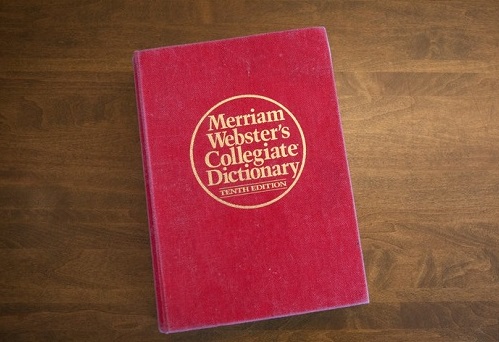
Now “America’s dictionary,” Merriam-Webster, has decided that it is within its mission and purview to attack and mock the President of the United States..

Almost immediately after his election, the dictionary’s editors began trolling Trump and his administration, defined, by Merriam-Webster, as “to antagonize (others) online by deliberately posting inflammatory, irrelevant or offensive comments or other disruptive content.”

The website Acculturated has observed that on social media and its website Merriam-Webster has ridiculed the President  “for his every spelling mistake, grammatical error, and verbal gaffe. In honor of the election, they changed their header photo to a picture of a German word defined as the “collapse of a society or regime marked by catastrophic violence and disorder.” Then they highlighted what they claimed was the word most frequently looked-up, “fascism.” On Inauguration Day, they tweeted “Welp,” a word that conveys dismay or disappointment. The company also derided Betsy DeVos, Sean Spicer, Steve Bannon, and, of course, Kellyanne Conway.

This, needless to say, is not their job, their mission, or responsible professional conduct. It is, as it is for the other derailed professionals, smug virtue signalling and tribalism. Acculturated again:

[T]he dictionary’s editors are clearly partisan. They didn’t harass Hillary Clinton, and they don’t needle sports stars, celebrities, or, well . . . anyone else like they needle the President and his people.Theoretically, even that could be okay—a good, playful, occasional joke from the dictionary could have the whole country laughing. But if you mock one person too often, you start to reveal a pattern. If that pattern persists, the fun and games lose their light-hearted feel, and begin to betray bias instead.

Ya think???

Continue reading →

Coincidence, Ethics Violation, Or A Playground Rhyme Come True: The Lawyer’s Burning Pants

I love this story!

 Miami defense lawyer’ Stephen Gutierrez shocked onlookers when his pants burst into flames mid-trial as he was addressing the  jury. Gutierrez was defending a client  accused of intentionally setting his car on fire in South Miami. Yes, it was an arson case. He had just begun his closing argument when smoke started billowing from his pants pocket.

By sheer coincidence I’m sure, the lawyer was arguing that the defendant’s car spontaneously combusted—just like the lawyer’s trousers!— and was not intentionally set on fire. Observers told police that Gutierrez had been fiddling in his pocket right before his pants ignited. He ran out of the courtroom, and the jurors were ushered out as well. After  Gutierrez returned unharmed, he told the judge that  it wasn’t a staged  demonstration gone horribly wrong, but just a coincidence. A faulty battery in his e-cigarette had caused the fire.

In an arson trial.

During closing argument.

Where the defense was “spontaneous combustion.”

Okay!

Jurors convicted Gutierrez’s client of second-degree arson anyway. Miami-Dade police and prosecutors are now investigating the episode, and Miami-Dade Circuit Judge Michael Hanzman is deciding whether to hold him in contempt of court.

Comments: Continue reading →