The Freddie Gray Ethics Train Wreck: If Protesters Really Want Justice, Then They Have To Stop Making Justice Impossible

Maybe it's all the same train wreck after all....

Maybe it’s all the same train wreck after all….

Yes, the mysterious death of Freddie Gray from injuries he sustained while in the custody of the Baltimore police has now become a certified Ethics Alarms Ethics Train Wreck. That honor was guaranteed once Baltimore’s mayor started stumbling over her words and meaning and then blaming others; when looters and rioters began burning down stores and a seniors home; when the finger-pointing began and when shameless Republicans started politicizing the riots, notably Texas Congressman Bill Flores (R-TX) who somehow reasoned that the Baltimore riots prove the dangers of gay marriage.

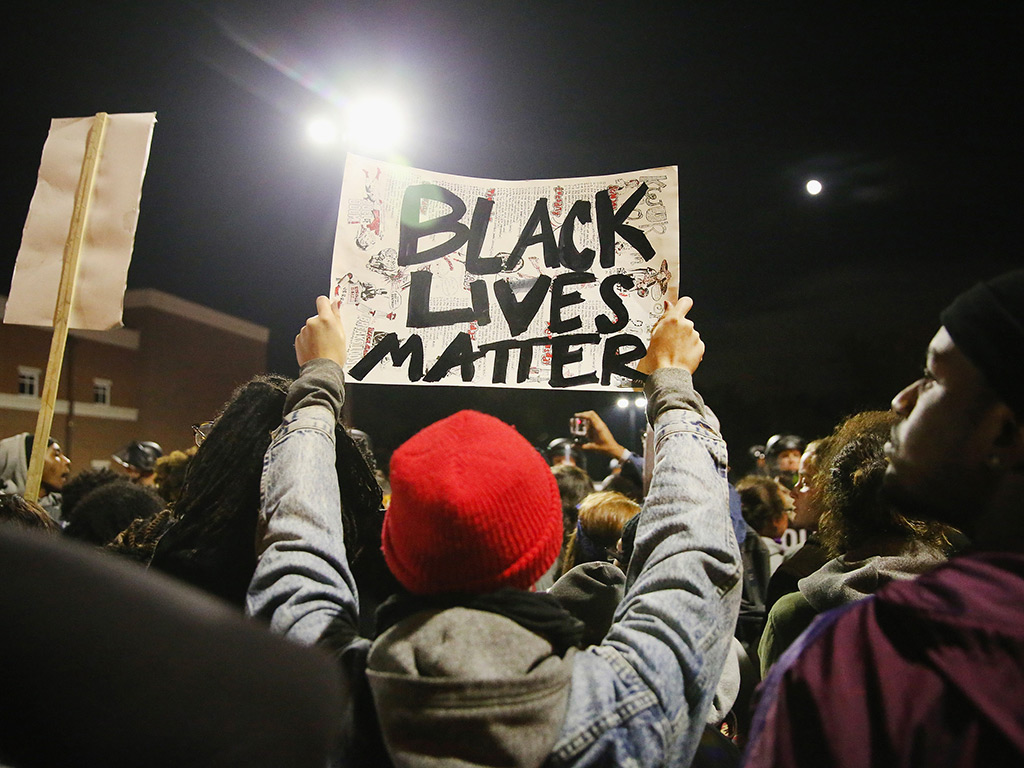
Most of all, a train wreck rating was guaranteed once the African-American activist response to Gray’s murder, inflamed by incompetent handling of the incident by the Baltimore police department, exactly followed the script of the Ferguson Ethics Train Wreck. Gray’s death was pronounced a murder and the police response a racist cover-up before all the facts were known or even knowable. Never mind: “Black Lives Matter” signs were paraded on the streets, and columnists and news reporters began telling the story as if Gray was—not might have been, not probably was, but was—just another in the long line of young black men murdered by the police. After all, we had the recent Walter Scott shooting, captured on video, to justify a presumption of racism and murder.

But a presumption of racism and murder, absent proof, is never justified. It isn’t allowed in court, and it isn’t ethical out of court. Never mind: that’s where we now are with Freddie Gray and Baltimore. Maybe this isn’t a new Ethics Train Wreck. Maybe it’s just the Ferguson Ethics Train Wreck, just rolling on.

As with Mike Brown (and Trayvon Martin’s death) , the underlying narrative of the protests over Freddie Gray’s death appears to be less certain than it originally appeared. The Washington Post reports that a prisoner who was in the police van with Freddie Gray says he could hear Gray “banging against the walls” of the vehicle, suggesting that Gray  “was intentionally trying to injure himself.” The prisoner’s statement is contained in an affidavit that’s part of an application by the police for search warrant seeking the seizure of the uniform worn by one of the officers involved in Gray’s arrest. If that account has any credibility at all, it could result in a prosecutor’s legitimate refusal to indict any officers. Continue reading

The AWOL Walter Fauntroy, Flawed Black Martyrs And The Duty Of Outrage

Walter Fauntroy, D.C. icon, civil rights hero, fugitive, coward, crook...but still a hero. Somehow.

Walter Fauntroy, D.C. icon, civil rights hero, fugitive, coward, crook…but still a hero. Somehow.

As I was composing this post in my head, I stumbled upon—and I mean that, because I normally avoid her columns like cheap Chinese food—Kathleen Parker’s latest column. Parker is the sort-of conservative, sort-of op-ed pundit who has mastered the art of compassionate equivocation, meaning that her opinions on public affairs usually consist of one long sigh. She was at it again here, except that the topic she was sighing about confounds me, he who does not shrink from assigning blame, almost as much as it does she who usually spreads blame so evenly that its ethical impact is nil.

Parker wrote…

At the same time that people avoid too-sensitive subjects, they seem to fear stating the obvious lest their thoughts be interpreted as an act of betrayal to “the group.” Politicians are the most risk-averse of all. Few are the Democratic women who will find (or express) fault with Clinton. It is the rare African American who finds fault with Obama. When Rawlings-Blake also said that she “gave those who wished to destroy space to do that,” her Democratic colleagues spoke only of her “poor choice of words.” Not poor thinking? Not lousy leadership? Republicans don’t get a pass. Heaven forbid they should call out someone who wants to inject biblical end-times into political debate.”

Ah, how it makes my chest fill with pride that I have flagged all three of the ethical breaches Parker mentions within the few daysHillary Clinton’s brazenly suspicious conduct and the disgraceful refusal of her cheering section to either acknowledge or question it…Rawlings-Blake’s “lousy leadership”… and Republicans who use religiosity as a prop. Parker being Parker, she had earlier used an example of missing outrage that sets my teeth on edge because, while correct, it calls to mind another area of missing outrage and societally-damaging martyrdom that I can’t quite figure out how to talk about.

Where is the outrage beyond the African American community about police brutality and the deaths of young black males? Where are members of Congress other than those belonging to the black caucus? My God, the list of those killed is staggering,” she writes, “yet this is not a new phenomenon. Baltimore’s Freddie Gray, the 25-year-old who suffered spinal injuries while in police custody and died, is but the most recent. Yet you see only the usual black activists speaking up.”

True. The missing paragraph, however,  is this: “Where are the African-American activists asking why so many young black men are constantly in positions that place them in conflict with the police? When protesters chant the names and carry photos of police victims like Freddie Gray, Walter Scott, yes, and Mike Brown, they are presenting in honored terms African-Americans who weren’t credits to their communities or examples for the next generation to emulate. Indeed this ritual sanctifies lives and backgrounds that are part of the same urban pathology as the police attitudes that killed them.”

Freddie Gray was only 25-years-old, and yet he already had a staggering 18 previous arrests since he turned 18-years-old. His mother was a heroin addict; he had no father in his life. Why was someone like this even out of jail, in a position to become yet another victim of police anger and contempt against the endless wave of young, irresponsible, law-defying young men who undermine the vitality of their own communities and the nation?

The fact that Gray’s death was undeniably the greater outrage shouldn’t allow the outrage of lives like his to be ignored. Black crime and police dysfunction are part of the same pathology. If only the Bill O’Reillys are going to ask the hard questions about black communities policing their young and changing their deadly culture—and are they really hard for O’Reilly, whose audience is inclined to look for ways to side with the police even when they commit murder?—then those questions and their equally hard answers, involving, among other things, avoidance of responsibility and accountability, can be and will be largely ignored.

This is part of the loyalty to “the group” phenomenon that cripples the African-American community and warps its values. It is especially powerful when prominent leaders, those African-Americans who should be leading the way away from self-destructive conduct and who have the power, visibility, and credibility to do so, demonstrate an atrocious lack of ethics themselves. Where are the black voices—those not belonging to black women he sexually assaulted, that is—condemning Bill Cosby? Or Al Sharpton? Charles Rangel?

Washington, D.C.’s overwhelmingly black population was conditioned to accept black leadership outrages by the late Marion Barry. I was not quite aware of the extent of this cultural purging of the ability to hold prominent African-Americans to ethical standards until I read a jaw-dropping Washington Post feature about the wife of local civil rights legend Walter E. Fauntroy, who helped Martin Luther King plan the 1963 March on Washington, and who served as the District’s congressional delegate for two decades. The tone of the article is enough to make a reader think he or she is going mad. The loving 80-year-old wife, Dorothy Fauntroy, speaks about her husband in glowing terms that nothing in the article suggests is inappropriate. Continue reading

Incompetent Elected Official Of The Month: Baltimore Mayor Stephanie Rawlings-Blake

Baltimore riots

Being the mayor of any city in the throes of a race riot is a losing proposition; being an African-American mayor when the rioters are all black and the riot was sparked by the mysterious death of a black man in police custody is a hopeless proposition. Last night’s riot in Baltimore actually justified the kind of para-military response that got Ferguson, Missouri condemned by Eric Holder’s Justice Department, but that approach was politically impossible. I don’t know what I would have done in Baltimore Mayor Stephanie Rawlings-Blake’s hot seat, except hope against hope that President Obama didn’t come out with a statement that Freddie Gray could have been his son. So this is not the time to second-guess the mayor’s actions.

For the record, my assessment is that the volatile combination of acculturated black community contempt for policy authority and long-incubating and neglected racist inclinations in police departments was activated nationwide by seven years of cynical exploitation of racial divisions and distrust by President Obama, Eric Holder and the Democratic Party for electoral gain. Race riots were the predictable  consequence, and I say that with confidence because I predicted it in 2012, when Trayvon Martin’s death was elevated to a national issue just in time for the President Obama’s re-election push. Rawlings-Blake may have been part of that effort; I haven’t investigated that. She certainly inherited its results.

My verdict of incompetence in her case focuses less on her failure to prevent or contain the riots than on her inept communications skills. Leaders have to communicate clearly. If they can’t, they have a duty to learn: the skill can be taught. (I’m looking at you, W.) If they can’t communicate, their leadership ability is intrinsically crippled. Leaders who have to constantly “clarify” what they said, or “walk back” comments, or claim that they were “quoted out of context” when they were just quoted lose the public’s trust, and deserve to.  Public officials have to be careful  what they say, and how they say it, and this is a crucial, indispensable skill in their chosen field.

Rawlings-Blake held a press conference as the riots in her city were unfolding, and said this:

“And I’ve made it very clear that I worked with the police and instructed them to do everything that they could to make sure that the protesters were able to exercise their right to free speech. It’s a very delicate balancing act because while we try to make sure that they were protected from the cars, and the other things that were going on, we also gave those who wish to destroy, space to do that as well. And we work very hard to keep that balance, and to put ourselves in the best position to de-escalate and that’s what you saw.”

Continue reading

Acting Ethics: Why We Don’t Want Actors Being Too Picky About Their Roles

FergusonX

In the strange ethics category of “Conduct That Isn’t Exactly Wrong But That Will Have Nothing But Bad Consequences To Society If There Is A  Lot Of It” (CTIEWBTWHNBBCTSITIALOI for short) is actors rejecting roles because they have philosophical or political disagreements with the script.

We’ve had two high profile examples of this occur lately. All we can do is hope that it’s a coincidence. The first was when about a dozen Native American actors, including an adviser on Native American culture, left the set of Adam Sandler’s first original movie with Netflix, “The Ridiculous Six,”a western send-up of “The Magnificent Seven,” claiming some of the film’s content was offensive.

Really? An Adam Sandler movie offensive?

The second and more troubling was in LA,  where five actors quit the cast of the new play “Ferguson,” which consists entirely of dramatizations of the Michael Brown murder grand jury testimony, because the actors apparently felt that it did not appropriately support the “Hands Up! Don’t Shoot!” narrative.

That’s really stupid, but I’m not getting into that again.

We don’t see many examples of professional actors doing this for several reasons. One is that they can’t afford to. Acting, except for the top fraction of a per cent, is anything but lucrative; it’s a subsistence level job, redeemable because it is, or can be, art, and tolerable as long as the actor doesn’t have a family to support, or has a trust fund.

The main reason this is unusual, however, is that an actor isn’t responsible for the content of the play, movie or TV show he or she acts in, but only the skill with he or she helps present that content to an audience. Actors—and technical artists like costume and light designers—are the conduits through which a writer’s work of performance art gets to live. They don’t have to like a show, agree with it or understand it, which is a good thing, since many excellent actors don’t have the  education, experience or intellect to understand complex and profound works. As one realistic actor friend once told me, “If we were that smart, we’d be smart enough to be in another profession.” Continue reading

The Protesters, The Veteran And The Flag—An Instant Ethics Train Wreck In Georgia

Mission accomplished... But what exactly was the mission?

Mission accomplished… But what exactly was the mission?

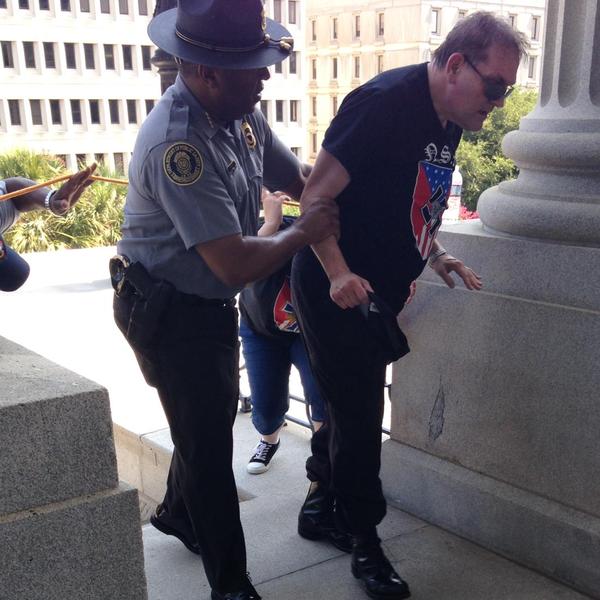
This the kind of story that makes Americans cynical. I’m more cynical from just reading it. Air Force veteran Michelle Manhart saw protesters  stomping on a flag in a demonstration at Valdosta State University in southern Georgia, and took action. She briefly snatched the flag away, but police officers intervened, arrested her, handcuffed Manhart, returned the flag to the protesters so they could continue abusing it, and escorted the comely counter-protester away. The protestors, all African-Americans, proceeded to say some silly and offensive things (Can we stipulate that “You killed off our people. You enslaved our people…You put us in this white supremacist place” is silly and offensive? I think that’s fair… and a lot fairer than accusing Manhart of “killing off” African-Americans.) Neither the demonstrators nor the police pressed charges against Manhart, but she did receive a campus trespass warning that bars her from campus activities. Let us pause for a brief ethics audit, shall we?

1. The flag desecrating protest, as the Supreme Court has clearly ruled, was legal and protected, except to the extent that it incites others to violence, like a burning cross. In some settings, it might be so judged. Not on a college campus, unless the college is West Point.

2. Legal or not, it’s a disrespectful and irresponsible protest, not to mention dumber than a Justin Bieber Fan Club.

3. I think many veterans would react as Manhart did. My father would have. I might have on his behalf. A lot of non-veterans would as well, and I salute them. Remember Rick Monday?

4. The police were correct to intervene and arrest Manhart.

5. The protesters were correct not to press charges.

6. The university correctly ordered her to stay away.

Unfortunately, the story began to rot soon after it was first reported. Continue reading

The Irony Of Wikileaks: Yes, It Is Despicable…But It’s Still Useful To Know That PBS, Ben Affleck And Prof. Henry Lewis Gates Are Despicable Too.

Batman is ashamed of you, Ben...

Batman is ashamed of you, Ben…

Once a secret is out, it isn’t a secret any more. Once privacy is shattered, it’s gone: that egg can’t be put back together again. I wish Sony’s e-mails hadn’t been hacked: everyone who isn’t operating under a policy that mandates that their communications must be archived and available for media and public examination, like, oh, say, Hillary Clinton, has a right to have private business and personal communication.

Julian Assange is a fick, and an uncommonly arrogant one. He encourages, aids and abets the theft of proprietary information in the interests of world anarchy, which is in the interests of nobody. So let’s see now…North Korea hacks Sony to chill our First Amendment rights, and Wikileaks helps magnify the damage by spreading private e-mails and documents far and wide.

Yechhh.

But it’s all out there now, and there is no virtue in averting our eyes and plugging our ears. There is a lot of unethical conduct exposed in those 30,000 documents and 170,000 emails hacked from Sony, and while the means by which it was exposed was illegal and wrong, we should still learn from what is now public information.

The fact that PBS and Harvard prof Henry Louis Gates Jr. can’t be trusted, for example, is good to know. Continue reading

Ethics Quiz: Once Again, Bystander Ethics, The Duty To Rescue, And The Imperiled Child

clarkkentThe free-range kids debate already raised this issue, and now my colleague and friend Michael Messer, the talented and versatile musician/singer/ actor who teams with me in the ProEthics musical legal ethics programs Ethics Rock, Ethics Rock Extreme, and Ethics Jamboree, just posted about his traumatic experience on Facebook, writing,

“I’m standing in Central Park and witnessed a tourist father grab his (approx 5 year old) child by the arm and shake him… The. open palm smack his child in the head. Hard. Twice. I screamed to him, from about 50 feet, where I witnessed it: “HEY!!! YOU DON’T HIT HIM” he looked up, startled to be called out, and waved me off to mind my business. “YOU DO NOT HIT A CHILD IN THE HEAD”, I repeated, at the top of my lungs, hoping to attract attention. The kid cried and then got himself together and went off to play. No one else in Sheeps Meadow saw or took notice. For about 5 minutes after I kept my eyes on him so he knew he was now being watched. What is the role of a bystander in this situation?”

Your Ethics Alarms Ethics Quiz for the day is…

What is the role of a bystander in this situation?

The answer is simple, really—its that oft-repeated Ethics Alarms mantra, “FIX THE PROBLEM,” at least as much as you can. Do something. Mike did the right thing, from a distance: show the abuser he’s being observed, protest, shame him. If one can, if one has the ability, the skill and the timely reaction and the child looks to be in genuine danger, intervene physically.

The latter course, however, carries risks, and also may be precluded by the natural reflex most humans have when they observe something unexpected and shocking. I discussed this issue when Penn State assistant coach Mike McQueary was being pilloried in some publications for not immediately charging into the Penn State showers and stopping sexual predator Jerry Sandusky from sexually abusing a boy: Continue reading

Maybe The Best Reason To Remember April 15…Number 42

jackie-robinson

A lot has happened on April 15.

Leonardo De Vinci was born…Abraham Lincoln died…Apollo 13 had the accident that almost destroyed it, but that triggered one of the great triumphs of the space program…Lee surrendered, ending the Civil WarThe Beatles disbanded…I didn’t get my taxes in on time….

I would argue however, and will, that as culturally important as any of these events was that sixty-eight years ago, in 1947, Jackie Robinson became the first black man to play major league baseball in the modern era. This represented a cultural change that allowed the United States to take a giant step forward toward healing the self-inflicted and almost fatal wound of slavery, and it took a man of surpassing courage and character to do it. (Two men, really: the other was Dodgers GM Branch Rickey.)

Today all MLB players will wear Robinson’s number 42 to honor him. If you haven’t seen the movie “42, or if your children haven’t seen it, this is a good day to get a sense of what Jackie went through as he broke the color line.  You can check out Robinson’s baseball stats here,  and learn about the civil rights work he did after his playing career, in the too-short life that was left to him here. He’s in the Ethics Alarms Heroes Hall of Honor, of course, and his entry there has more about his life as well as some good links.

The main thing is, remember him.

Many years ago, I had a conversation with a close friend—smart, accomplished, engaged, educated, about 26 years old at the time. She had no idea who Jackie Robinson was. Nobody, then, now or ever, should reach adulthood in the United States without knowing and understanding what Robinson did, and our nation’s debt to him. There is an ethical  duty to remember, and to respect.

Thank you, Mr. Robinson.

Thank you.


Comment of the Day: “Rationalization #30 (“It’s a bad law/stupid rule”) Chronicles: Vijay Chokalingam’s Affirmative Action Fraud”

On the bright side, Dr. Nick improves the diversity of the medical profession...

On the bright side, Dr. Nick improves the diversity of the medical profession…

Joed68 comes through with his second Comment of the Day, this one in reaction to the post here on Mindy Kaling’s brother and his proud confession that he gamed an affirmative action program to gain admission to medical school years ago.

Allowing skin color to enable a less deserving applicant to vault over a more deserving one in college is one thing—still ethically dubious, but defensible in the abstract—and letting low-lights into elite training for professions with life and death responsibilities is another. The only explanations I can mount for those who indignantly defend affirmative action in the latter (such as CNN’s Jeff Young, quoted in the post) is that they are in thrall of the ends justifies the means mentality currently infecting much of Progressive World, or they don’t know how difficult it is to become a doctor. The first malady is beyond remedy; joed68’s submission addresses the second.

Here is his Comment of the Day on the post “Rationalization #30 (“It’s a bad law/stupid rule”) Chronicles: Vijay Chokalingam’s Affirmative Action Fraud”:

Continue reading

Comment of the Day: “Unethical Website Of The Month: Michael T. Slager Support Fund”

Now, let's not jump to conclusions...

Now, let’s not jump to conclusions…

UPDATE (MAY 3): I have been convinced that the original post that generated this Comment of the Day went too far. Asking for support for Slager’s defense cannot be unethical: Slager has a right to a defense, and the best one available. My thoughts on that issue, in relation to the Freddie Gray cops, are here. I still think it is obvious that the individual who posted the appeal is doing so for unethical reasons, and is likely a racist, an apologist for a bad cop, and an idiot. But the appeal itself is not unethical, hence the website was not unethical to post it.

________________________________________________

How can a website dedicated to paying for the defense of fired police officer Michael T. Slager be unethical, when every citizen is guaranteed the right to a defense before a jury of his peers? I thought I made my ethical objections to the site clear when I wrote:

Slager deserves a fair trial and will get one, but anyone whose immediate reaction to seeing the horrific video is sympathy for this killer cop needs psychiatric treatment, and quickly.

I also made it clear—I thought–that the text of the appeal betrayed a strange and ugly urge to shield Slager from the consequences of his conduct, which was per se, on its face, undeniably illegal under the laws of every state in the land, including South Carolina. He shot a fleeing man in the back; he cannot claim self-defense. Deadly force is forbidden in such situations. Unless Slager noticed that victim Walter Scott had death-ray shooting eyes in the back of his head, Scott’s death is a homicide, and it’s an open and shut case. The only remaining question is what level of homicide.

The appeal said that the poster supported Slager. Wrong. We should not support police officers who shoot citizens in the back. It attempted to minimize Slager’s offense by calling it a “mis-step.” Intentionally shooting someone illegally is not a mis-step. It’s murder. Then the appeal reminded us that Slager has a family, and didn’t do anything bad before he shot a man to death. Well, “first offense” is not a big mitigating factor when it comes to executing people.

However, I appreciate Ethics Alarms newcomer Gustav Bjornstrand‘s comment, though I don’t think this is the best context for it. Here is his Comment of the Day on the post “Unethical Website Of The Month: Michael T. Slager Support Fund.” I’ll be back at the end.

I venture to say that to offer support to Slager is certainly ethical, in and of itself. That is, if one believed that he or anyone deserves monetary support in order to raise a defence. It is conceivable that even someone who was certain he had committed a crime would choose still to aid him in getting good representation. It is unethical, I suggest, for anyone to assume that Slager is guilty of murder before a court decides the issue. It is possible, even if improbable, that there were circumstances prior to Slager firing that may shed light on his decision to fire. Additionally, there are a few other factors that need to be taken into consideration: Continue reading