Written Statement of Prof. Jonathan Turley: “The Impeachment Inquiry Into President Donald J. Trump: The Constitutional Basis For Presidential Impeachment” [PART II]

( Part I is here.)

Professor Turley’s testimony continues…

B.  The Nixon Inquiry

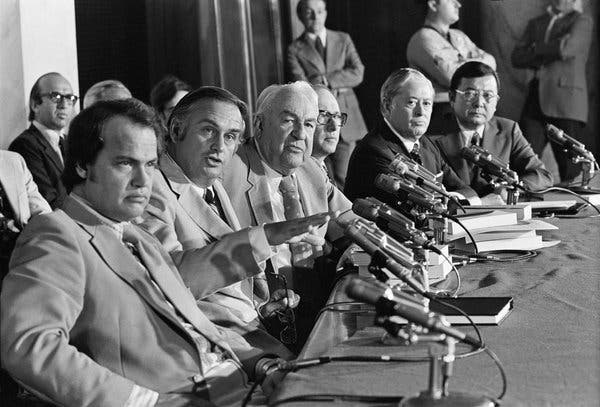
The Nixon “impeachment” is often referenced as the “gold standard” for impeachments even though it was not an actual impeachment. President Richard Nixon resigned before the House voted on the final articles of impeachment. Nevertheless, the Nixon inquiry was everything that the Johnson impeachment was not. It was based on an array of clearly defined criminal acts with a broad evidentiary foundation. That record was supported by a number of key judicial decisions on executive privilege claims. It is a worthy model for any presidential impeachment. However, the claim by Chairman Schiff that the Ukrainian controversy is “beyond anything Nixon did” is wildly at odds with the historical record. The allegations in Nixon began with a felony crime of burglary and swept to encompass an array of other crimes involving political slush funds, payments of hush money, maintenance of an enemies list, directing tax audits of critics, witness intimidation, multiple instances of perjury, and even an alleged  kidnapping. Ultimately, there were nearly 70 officials charged and four dozen of them found guilty. Nixon was also named as an unindicted conspirator by a grand jury. The convicted officials include former Attorney General John N. Mitchell (perjury); former Attorney General Richard Kleindienst (contempt of court); former Deputy Director of the Committee to Re-elect The President Jeb Stuart Magruder (conspiracy to the burglary); former Chief of Staff H.R. Haldeman (conspiracy to the burglary, obstruction of justice, and perjury); former counsel and Assistant to the President for Domestic Affairs to Nixon John Ehlichman (conspiracy to the burglary, obstruction of justice, and perjury); former White House Counsel John W. Dean II (obstruction of justice); and former special counsel to the President Charles Colson (obstruction of justice). Many of the Watergate defendants went to jail, with some of the defendants sentenced to as long as 35 years. The claim that the Ukrainian controversy eclipses Watergate is unhinged from history.

While the Ukrainian controversy could still establish impeachable conduct, it undermines that effort to distort the historical record to elevate the current record. Indeed, the comparison to the Nixon inquiry only highlights the glaring differences in the underlying investigations, scope of impeachable conduct, and evidentiary records with the current inquiry. It is a difference between the comprehensive and the cursory; the proven and the presumed. In other words, it is not a comparison the House should invite if it is serious about moving forward in a few weeks on an impeachment based primarily on the Ukrainian controversy. The Nixon inquiry was based on the broadest and most developed evidentiary in any impeachment. There were roughly 14 months of hearings – not 10 weeks. There were scandalous tape recordings of Nixon and a host of criminal pleas and prosecutions. That record included investigations in both the House and the Senate as well as investigations by two special prosecutors, Archibald Cox and Leon Jaworski, including grand jury material. While the inquiry proceeded along sharply partisan lines, the vote on the proposed articles of impeachment ultimately included the support of some Republican members who, again, showed that principle could transcend politics in such historic moments.

Three articles were approved in the Nixon inquiry alleging obstruction of justice, abuse of power, and defiance of committee subpoenas. Two articles of impeachment based on usurping Congress, lying about the bombing of Cambodia, and tax fraud, were rejected on a bipartisan basis. While the Nixon impeachment had the most developed record and comprehensive investigation, I am not a fan of the structure used for the articles. The Committee evaded the need for specificity in alleging crimes like obstruction of justice while listing a variety of specific felonies after a catchall line declaring that “the means used to implement this course of conduct or plan included one or more of the following.” Given its gravity, impeachment should offer concrete and specific allegations in the actual articles. This is the case in most judicial impeachments.

The impeachment began with a felony when “agents of the Committee for the Re- election of the President committed unlawful entry of the headquarters of the Democratic National Committee in Washington, District of Columbia, for the purpose of securing political intelligence.” The first article of impeachment reflected the depth of the record and scope of the alleged crimes in citing Nixon’s personal involvement in the obstruction of federal and congressional investigations. The article included a host of specific criminal acts including lying to federal investigators, suborning perjury, and witness tampering. The second article of impeachment also alleged an array of criminal acts that were placed under the auspices of abuse of power. The article addressed Nixon’s rampant misuse of the IRS, CIA, and FBI to carry out his effort to conceal the evidence and crimes following the break-in. They included Nixon’s use of federal agencies to carry out “covert and unlawful activities” and how he used his office to block the investigation of federal agencies. The third article concerned defiance of Congress stemming from his refusal to turn over material to Congress.

These articles were never subjected to a vote of the full House. In my view, they were flawed in their language and structure. As noted earlier, there was a lack of specificity on the alleged acts due to the use of catch-all lists of alleged offenses. Continue reading
Written Statement of Prof. Jonathan Turley: “The Impeachment Inquiry Into President Donald J. Trump: The Constitutional Basis For Presidential Impeachment” [PART I]

Today, at the impeachment hearings, Prof. Jonathan Turley performed a great public and national service by eviscerating the Democratic theory of impeachment legally, logically and historically. I cannot wait to see if his decisive testimony is given half the prominence by the New York Times as the various headlines shouting about how an official would have done things differently if he or she were President. Unlike almost all of the testimony so far, Turley’s was based on facts and law, and addressed the issue at hand: is there any justification for impeachment proceedings?

It’s a wonderful and clear piece of scholarship that addresses several approaches to the matter that I had wanted to address, notably how the three previous impeachment efforts compare with this one.

Every citizen should read it all; of course, almost none will. The testimony is long, because it is thorough; I have edited it for ease of reading, eliminating footnotes. If you want to read the original document, it is here. Ethics Alarms is going to present this in several parts. Send that link to your smug impeachment-cheering friends, relatives and social media contacts. Tell them that unless they read it, you really don’t want to hear any more on the subject from them, because they want to remain ignorant.

I am proud—relieved?—to find that this serious and admirable scholar embraces many of the positions I have discussed here, though in far more detail and with considerably more authority.

INTRODUCTION

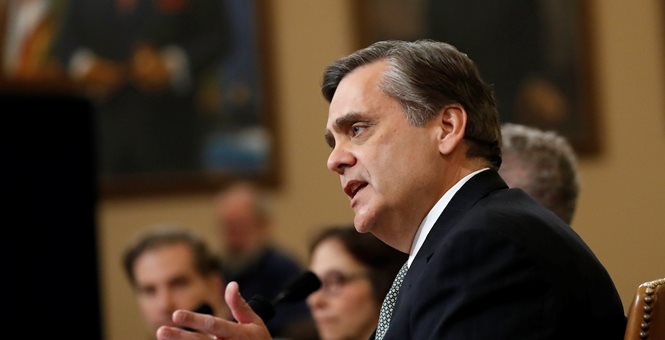
Chairman Nadler, ranking member Collins, members of the Judiciary Committee, my name is Jonathan Turley, and I am a law professor at George Washington University where I hold the J.B. and Maurice C. Shapiro Chair of Public Interest Law. It is an honor to appear before you today to discuss one of the most solemn and important constitutional functions bestowed on this House by the Framers of our Constitution: the impeachment of the President of the United States.

Twenty-one years ago, I sat here before you, Chairman Nadler, and other members of the Judiciary Committee to testify on the history and meaning of the constitutional impeachment standard as part of the impeachment of President William Jefferson Clinton. I never thought that I would have to appear a second time to address the same question with regard to another sitting president. Yet, here we are. Some elements are strikingly similar. The intense rancor and rage of the public debate is the same. It was an atmosphere that the Framers anticipated. Alexander Hamilton warned that charges of impeachable conduct “will seldom fail to agitate the passions of the whole community, and to divide it into parties more or less friendly or inimical to the accused.”2 As with the Clinton impeachment, the Trump impeachment has again proven Hamilton’s words to be prophetic. The stifling intolerance for opposing views is the same. As was the case two decades ago, it is a perilous environment for a legal scholar.

I appear today in my academic capacity to present views founded in prior academic work on impeachment and the separation of powers. My testimony does not reflect the views or approval of CBS News, the BBC, or the newspapers for which I write as a columnist. My testimony was written exclusively by myself with editing assistance from Nicholas Contarino, Andrew Hile, Thomas Huff, and Seth Tate explores the technical and arcane issues normally involved in an academic examination of a legal standard ratified 234 years ago. In truth, the Clinton impeachment hearing proved to be an exception to the tenor of the overall public debate. The testimony from witnesses, ranging from Arthur Schlesinger Jr. to Laurence Tribe to Cass Sunstein, contained divergent views and disciplines. Yet the hearing remained respectful and substantive as we all grappled with this difficult matter. I appear today in the hope that we can achieve that same objective of civil and meaningful discourse despite our good- faith differences on the impeachment standard and its application to the conduct of President Donald J. Trump.

I have spent decades writing about impeachment and presidential powers as an academic and as a legal commentator. My academic work reflects the bias of a Madisonian scholar. I tend to favor Congress in disputes with the Executive Branch and I have been critical of the sweeping claims of presidential power and privileges made by modern Administrations. My prior testimony mirrors my criticism of the expansion of executive powers and privileges. In truth, I have not held much fondness for any president in my lifetime. Indeed, the last president whose executive philosophy I consistently admired was James Madison.

In addition to my academic work, I am a practicing criminal defense lawyer. Among my past cases, I represented the United States House of Representatives as lead counsel challenging payments made under the Affordable Care Act without congressional authorization. I also served as the last lead defense counsel in an impeachment trial in the Senate. With my co-lead counsel Daniel Schwartz, I argued the case on behalf of federal judge Thomas Porteous. (My opposing lead counsel for the House managers was Adam Schiff). In addition to my testimony with other constitutional scholars at the Clinton impeachment hearings, I also represented former Attorneys General during the Clinton impeachment litigation over privilege disputes triggered by the investigation of Independent Counsel Ken Starr. I also served as lead counsel in a bill of attainder case, the sister of impeachment that will be discussed below.

I would like to start, perhaps incongruously, with a statement of three irrelevant facts. First, I am not a supporter of President Trump. I voted against him in 2016 and I have previously voted for Presidents Clinton and Obama. Second, I have been highly critical of President Trump, his policies, and his rhetoric, in dozens of columns. Third, I have repeatedly criticized his raising of the investigation of the Hunter Biden matter with the Ukrainian president. These points are not meant to curry favor or approval. Rather they are meant to drive home a simple point: one can oppose President Trump’s policies or actions but still conclude that the current legal case for impeachment is not just woefully inadequate, but in some respects, dangerous, as the basis for the impeachment of an American president. To put it simply, I hold no brief for President Trump. My personal and political views of President Trump, however, are irrelevant to my impeachment testimony, as they should be to your impeachment vote. Today, my only concern is the integrity and coherence of the constitutional standard and process of impeachment. President Trump will not be our last president and what we leave in the wake of this scandal will shape our democracy for generations to come. I am concerned about lowering impeachment standards to fit a paucity of evidence and an abundance of anger. If the House proceeds solely on the Ukrainian allegations, this impeachment would stand out among modern impeachments as the shortest proceeding, with the thinnest evidentiary record, and the narrowest grounds ever used to impeach a president. That does not bode well for future presidents who are working in a country often sharply and, at times, bitterly divided.

Although I am citing a wide body of my relevant academic work on these questions, I will not repeat that work in this testimony. Instead, I will focus on the history and cases that bear most directly on the questions facing this Committee. My testimony will first address relevant elements of the history and meaning of the impeachment standard. Second, I will discuss the past presidential impeachments and inquiries in the context of this controversy. Finally, I will address some of the specific alleged impeachable offenses raised in this process. In the end, I believe that this process has raised serious and legitimate issues for investigation. Indeed, I have previously stated that a quid pro quo to force the investigation of a political rival in exchange for military aid can be impeachable, if proven. Yet moving forward primarily or exclusively with the Ukraine controversy on this record would be as precarious as it would premature. It comes down to a type of constitutional architecture. Such a slender foundation is a red flag for architects who operate on the accepted 1:10 ratio between the width and height of a structure. The physics are simple. The higher the building, the wider the foundation. There is no higher constitutional structure than the impeachment of a sitting president and, for that reason, an impeachment must have a wide foundation in order to be successful. The Ukraine controversy has not offered such a foundation and would easily collapse in a Senate trial.

Before I address these questions, I would like to make one last cautionary observation regarding the current political atmosphere. In his poem “The Happy Warrior,” William Wordsworth paid homage to Lord Horatio Nelson, a famous admiral and hero of the Napoleonic Wars. Wordsworth began by asking “Who is the happy Warrior? Who is he what every man in arms should wish to be?” The poem captured the deep public sentiment felt by Nelson’s passing and one reader sent Wordsworth a gushing letter proclaiming his love for the poem. Surprisingly, Wordsworth sent back an admonishing response. He told the reader “you are mistaken; your judgment is affected by your moral approval of the lines.” Wordsworth’s point was that it was not his poem that the reader loved, but its subject. My point is only this: it is easy to fall in love with lines that appeal to one’s moral approval. In impeachments, one’s feeling about the subject can distort one’s judgment on the true meaning or quality of an argument. We have too many happy warriors in this impeachment on both sides. What we need are more objective noncombatants, members willing to set aside political passion in favor of constitutional circumspection. Despite our differences of opinion, I believe that this esteemed panel can offer a foundation for such reasoned and civil discourse. If we are to impeach a president for only the third time in our history, we will need to rise above this age of rage and genuinely engage in a civil and substantive discussion. It is to that end that my testimony is offered today. Continue reading

The Betrayal And Ultimate Triumph Of Dorothy Seymour Wills

There was an upsetting ethics story in the obituaries last week. It told the tale of the rank injustice perpetrated by a famous and much-honored researcher, historian and author on his collaborator, from whom he withheld  credit and recognition—because she was his wife.

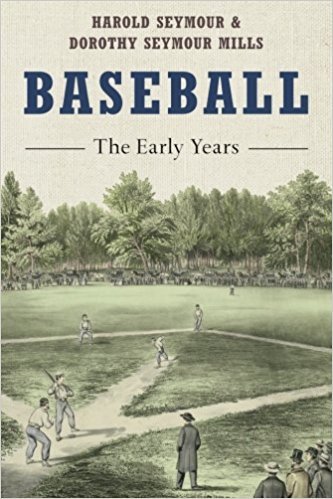
Dorothy Seymour Mills collaborated for more than 30 years on a landmark three-volume history of baseball with her first husband, Harold Seymour. Their work, originally attributed only to him,  is regarded as the first significant scholarly account of baseball’s past.  (“No one may call himself a student of baseball history without having read these indispensable works.” John Thorn in 2010, then Major League Baseball’s official historian.)

“Baseball: The Early Years” (1960), “Baseball: The Golden Age” (1971) and “Baseball: The People’s Game” (1990) all were completed with substantial and indispensable contributions by Dorothy, who, unlike her husband, was not a baseball fan. (“You write a lot more objectively about a subject you’re not in love with,” she once observed.) She was the primary researcher, organized the projects, typed the manuscripts, prepared the indexes (ugh) and edited each book before it went to the publisher. Because of her husband’s failing health, she wrote a substantial portion of “Baseball: The People’s Game.” Yet her husband adamantly refused to give her an author’s credit. Each book bore only Harold Seymour’s name, and hers was relegated to the acknowledgments.  The first book in the trilogy, “Baseball: The Early Years,” received rave reviews.  Sports Illustrated compared Seymour to Edward Gibbon, the iconic historian who wrote “The History of the Decline and Fall of the Roman Empire.” Dorothy was invisible, and her husband wanted it that way. Continue reading

Ethics Warm-Up, 11/5/2019: A Whistleblower’s Biases, A Technology’s Risks, And A Thinking Actor’s Values

Hi!

1. So now we know…The mysterious “whistleblower” is almost certainly Eric Ciaramella,  a CIA analyst, former National Security Council staffer,  and  a career intelligence officer.who has served in both the Obama and Trump administrations. It would have been nice and reassuring if he were not so strongly tied to the Dark Side, meaning the Democrats and various “resistance” figures, but he is. That doesn’t mean he had an agenda, but somehow all of the leakers and rebels who have been instrumental in keeping the Left’s coup fires burning have aspects of their backgrounds that justify skepticism.

From the generally useful and fair article about in Heavy:

Ciaramella has worked for the Central Intelligence Agency for several years and was assigned to the White House during the end of the Obama administration. He worked closely with Biden in his role as an expert on Ukraine. Ciaramella also has ties to Sean Misko, a former NSC co-worker who now works for Representative Adam Schiff and the Intelligence Committee. According to The New York Times, the whistleblower first went to a CIA lawyer and then to an unnamed Schiff aide before filing the whistleblower complaint. The aide told the whistleblower to follow the formal process, but conveyed some of the information he learned from him to Schiff, without revealing his name, The Times reported.

“Like other whistle-blowers have done before and since under Republican and Democratic-controlled committees, the whistle-blower contacted the committee for guidance on how to report possible wrongdoing within the jurisdiction of the intelligence community,” said Patrick Boland, a spokesman for Schiff, told The Times.

The whistleblower’s ties to Democrats, including Biden, Schiff, former CIA Director John Brennan, former Director of Intelligence James Clapper and former National Security Adviser Susan Rice, have created controversy, with Trump and Republicans using his past work with them in an attempt to discredit him.

I did say generally fair. The fact that this guy who created the path to the latest impeachment excuse just happens to be a Democrat with connections to a veritable nest of anti-Trump zealots does and should discredit his objectivity to some extent. An “attempt” shouldn’t be necessary.

2.  Geewhatasurprise…. From the MIT Technology Review:

A study published today in JAMA Pediatrics warns that kids’ literacy and language skills suffer with screen use, and MRI scans of their brains appear to back up the findings…. Forty-seven 3- to 5-year-olds took a test to measure their cognitive abilities, and their parents were asked to answer a detailed survey about screen time habits. …The scans revealed that kids who spent more time in front of screens had what the authors call lower “white matter integrity.” White matter can be roughly thought of as the brain’s internal communications network—its long nerve fibers are sheathed in fatty insulation that allows electrical signals to move from one area of the brain to another without interruption. The integrity of that structure—how well organized the nerve fibers are, and how well developed the myelin sheath is—is associated with cognitive function, and it develops as kids learn language. …Lead author John Hutton of Cincinnati Children’s Hospital told MIT Technology Review there’s a clear link between higher screen use and lower white matter integrity in the children his team studied. That structural change appears to be reflected in the results of the cognitive test the kids took as well, which showed high screen time associated with lower levels of language and literacy skills. “The effect size is substantial, as these findings also rigorously controlled for multiple comparisons across the brain,” Hutton says.

One easy and ethical remedy would be for parents to make sure their kids don’t see them constantly staring at their phone.

3.  A terrific, ethical, extemporaneous speech from Richard Dreyfus. No, Richard Dreyfus is not, and has never been, a typical Hollywood knee-jerk leftist. Glenn Beck’s conservative website “The Blaze” was “astonished” when actor/educator Richard Dreyfus recently told Fox News host Tucker Carlson,

“You were talking about the speakers on university campuses. And I am totally, incontrovertibly on your side about this. I think any intrusion into freedom of speech is an intrusion into freedom of speech. And when one of the presidents of one of the colleges said, ‘this is a school, not a battlefield,’ I said, no, it is a battlefield of ideas and we must have dissonant, dissenting opinions on campuses and I think it’s political correctness taken to a nightmarish point of view

I have withdrawn from partisan politics. I am a constitutionalist who believes that the Constitution and the Bill of Rights must be central and the parties must be peripheral. What’s most important for me is what you just mentioned haphazardly, we are over 30. Civics has not been taught in the American public school system since 1970. And that means everyone in Congress never studied the constitution and the bill of rights as you and I might have. And that is a critical flaw because it’s why we were admired and respected for so long, it gives us our national identity, it tells the world who we are and why we are who we are, and without a frame that gives us values that stand behind the bill of rights, we’re just floating in the air and our sectors of society are not connected.

What’s really important is that the assumptions of the left and the right are all skewed wrong. We have to find areas of agreement and areas that we share. And we do share the notion that education accomplishes certain things. One, it turns students into citizens. And, two, it teaches students how to run the country before it’s their turn to run the country. And, three, it teaches the values of this nation.

People come from all over the world or are born into this nation without the values that we have here. That’s why they came here, to get them. And what are they? You can put them in opportunity, rise by merit, mobility, and freedom. That’s what we sell. And if you don’t want that, you’ve chosen the wrong place. And you don’t get a pass by being born here, you have to learn it. Even the Ten Commandments are not known at birth. You must learn them. And we must learn our values and if we don’t, we are fatally, fatally wounding ourselves. We will not have any way to really combat the ideas behind ISIS because we won’t know our own. And we have to.

Exactly.

Fox News should give Dreyfus a show.

Hispanic, Latino, Latinx…A Correction of Disinformation Perpetrated On Ethics Alarms!

I’m sure it wasn’t intentional,  but on October 25, in a thread in response to this post, the estimable and usually reliable commenter Still Spartan stated as fact, in no uncertain terms,

My point is simply that speech about race has changed dramatically over the last 20 years. When is the last time you’ve heard the word Oriental? Heck, we don’t even say Hispanic anymore. But we did 20 years ago….Most people now use the term Latina or Latino, and even that is being replaced with Latinx. 

Your host responded,

If [ “most people”], do,then they are mistaken. Latino is a subset of Hispanic (meaning those from Spanish-speaking nations or regions) , which is why most political organizations use Hispanic in their title. Actually, the various groups don’t particularly like being lumped together at all. Mexican-Americans, Cuban-Americans, Puerto Rican-Americans and others resent the generalizations. Just because one’s “crowd” does something doesn’t make it correct or virtuous, but it’s true that a shocking number of people reason that way.

I don’t mean to pick on Still Spartan, but as there is so much angst these days about misinformation being spread on social media and the web, I certainly don’t want Ethics Alarms to be part of the problem. And, I confess that it annoys me when someone curtly declares here something to be true here that I am fairly certain is not.

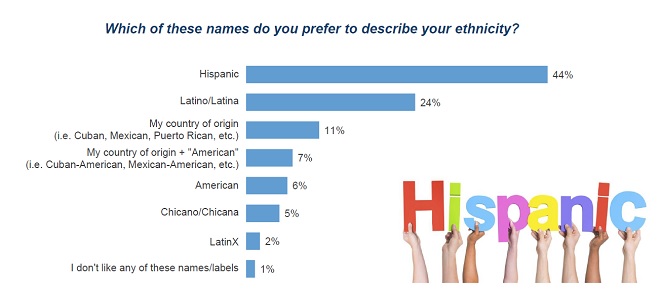
SS also suggested in the comment above that “Latinx” was replacing :Hispanic.” I was dubious about this too. By happenstance, a recent poll on the topic, the results of which you see in the graphic, was introduced thusly on Medium:

Continue reading

The Misleading Nature Of Media-Hyped Research

Aaron Carroll is an American pediatrician and professor of pediatrics at Indiana University School of Medicine, as well as the Vice Chair for Health Policy and Outcomes Research and the Director of the Center for Health Policy and Professionalism Research. He favored the New York Times with an unusually clear and unbiased explanation of why so much “consensus” research used to panic the public is dubious, and mirabile dictu, they published it. For some reason, however, it ended up inside the Times Business section, despite Times having a perfect forum for it, its weekly Science insert.

I’m going to apply Hanlon’s Razor and attribute this to lunk-headedness rather than sinister instincts, even though Carroll’s observations clarify much of what’s wrong with “climate science.” Professor Carroll’s specific complaint involves the myths, as he calls them, declaring that diet soda is deadly, but his points apply to other scientific research and public opinion manipulation as well. Among them:

The public’s fear of “chemicals”

“Everything is a chemical,” Carroll writes, “including dihydrogen monoxide (that’s another way of saying water). These are just words we use to describe ingredients. Some ingredients occur naturally, and some are coaxed into existence. That doesn’t inherently make one better than another.”

[As an aside, the same kind of intentional confusion occurs regarding the term “drugs.” I saw a TV ad last might for melatonin tablets that repeated over and over that the pills were “100% drug free.” Melatonin is a hormone, and hormones are drugs, defined as any substance “that causes a change in an organism’s physiology or psychology when consumed.” Ah, but chemicals and drugs are scary.] Continue reading

Morning Ethics Warm-Up, 10/1/2019: “30 Days Hath September” Appreciation Edition

Welcome October!

 I knew the date without having to check..for once.

Time to express my gratitude to the anonymous composer of the days of the month mnemonic, which I still literally have to sing in my head several times a year.

The earliest English version of the  verse has been traced to approximately 1425. It seems that the initial rhyme began with “Thirty days hath November,” not September, but by the time the little verse was first published in English, in  1562, September had taken over the top spot, and there it has remained. Wikipedia’s entry notes that “it is probably the only sixteenth-century poem most ordinary citizens know by heart.”

1. But by all means, it’s irresponsible to have Rudy Giuliani as a guest on a news program…CNN’s fake media ethics watchdog thought it was appropriate to have Robert De Niro as a guest on his CNN show over the weekend. Why is an uneducated, loud mouth, vulgar actor an appropriate guest? It is because he is guaranteed to delight the Trump Deranged with sophisticated commentary like he treated America with when he appeared at the 2018 Tony Awards, shouting, “I’m just going to say one thing. Fuck Trump! It’s no longer ‘Down with Trump.’ It’s ‘fuck Trump!’”

De Niro never graduated from high school, and has fewer credentials to expound on public policy matters than the average American you could identify by throwing a rock into a crowd blindfolded,. He has repeatedly shattered basic standards of public decorum by going into angry, vulgar, non-substantive rants against the President when invited to stand behind a podium or in front of a microphone. So, naturally, he was a perfect guest for Stelter’s show, and, also naturally, he said, in the course of opining that the President and his supporters were “gangsters” and “crazy” and that “This guy should not be president, period, ““F​uck ‘em. Fuck ‘em!”

A voice from off-set could be heard yelling “Woahhhh!”After all, who could have possibly predicted that the actor would behave on CNN when discussing the President exactly as he has been behaving for years? “This is cable, so it’s not an FCC violation, but it still is a Sunday morning,”  Stelter commented, weasel-like as usual.

Yes, it’s Sunday morning, and you invited a guest who habitually shouts versions of “Fuck Trump!’ in public places while being televised, because you know your audience wants to hear someone say “Fuck Trump.” Continue reading

Principled Or Betrayer: Pete Buttigieg’s Brother-In-Law, Pastor Rhyan Glezman [Corrected]


Pastor, brother, candidate..

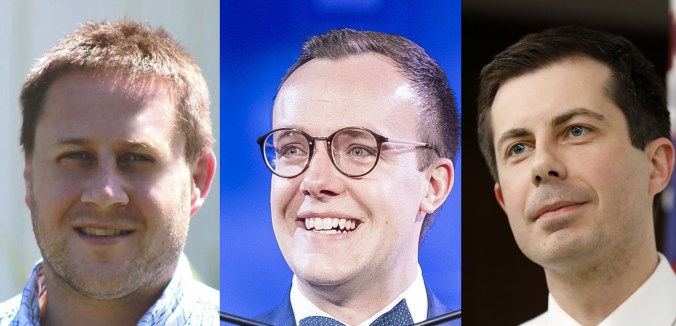
In what appears to be a case of the Popeyes (“It’s all I can stand, ’cause I canst stands no more!”), the evangelist minister brother-in-law of cult candidate for the Democratic Party nomination Pete Buttigieg found it necessary  to publicly rebuke the young mayor of South Bend.

Buttigieg, who has hardly been an unqualified success in his only elected executive office so far, has also distinguished himself, if that’s the right word, by embracing Ocasio-Corte- level climate change fear-mongering, has suggested that the nation should not honor Thomas Jefferson, and is all-in on with his party’s determination to remake our system to make it easier to dictate progressive policies to the public, as he has endorsed abolishing the Electoral College, packing the Supreme Court, and eliminating the Senate filibuster. He has called for a National Service, forcing or enticing teens to participate in government-dictated social programs.

Most significantly, Buttigieg has been at his most arrogant and obnoxious when he uses Christianity and God as crude weapons against conservatives.

For example, he has accused Christians who don’t support the $15 an hour minimum wage of being poor Christians and hypocrites. Paul Miragoff nicely explains the intellectual bankruptcy in that claim, writing, ” Why isn’t Buttigieg a hypocrite for not supporting a $20 an hour minimum wage? For the same reason that other Christians aren’t hypocrites for opposing $15 an hour. The Bible doesn’t address the minimum wage rate and there are public policy arguments against raising it.”

Ah, but God is on this candidate’s side, you see.

Now he is arguing that the Bible can be read to favor late-term abortions, meaning that if one opposes killing the unborn, one is a bad Christian. In an interview this morning on “The Breakfast Club” radio show, Pete Buttigieg said, Continue reading

Comment Of The Day: “Comment Of The Day, From The Epic Commenter Donnybrook In This Week’s Open Forum”

The other primary combatant in the comment donnybrook referred to in the title (Humble Talent was the one noted in the previous COTD post) was Steve Witherspoon. In his Comment of the Day he references the crux of the dispute without actually referencing the dispute itself. His ever-green topic: the misuse of statistics:

Here is another reason that I dislike the use, or better yet the misuse/abuse, of statistics.

As we all likely know banks are routinely audited by outside sources to check for accuracy. Yesterday I got a piece of mail from a company that I’ve never done business with and I’ve never heard of. The mail was sent from a non local city that I wouldn’t be expecting mail from because I don’t know anyone who lives there and I don’t do business with any company from there. I opened it and found a single piece (3½” X 8½”) of paper with the printed logos from our local bank and the following statement on the top…

“Our Auditors have selected the following account for verification. Please review the information shown below and furnish details of any discrepancy to: [company name and address]. If information is correct, no action is needed.”

Then the paper included our home mortgage account number, interest rate, maturity date, and current balance as of a specific date that was mid month between payments. I read it a couple of times to confirm what I read, then I looked at my wife and said “These people are idiots.” Continue reading

Three Reasons Why We Can’t Have An Honest And informative Debate About Immigration Policy


You already know Reason 1: both sides of the issue have resorted to the lowest level of debate, appealing to fear, name-calling and emotion as a substitute for general principles of law, ethics and common sense. The pro-illegal immigration forces engage in cynical sentimentality, romanticizing of law-breakers, and false characterizations in order to demonize principled opponents of open-boarders (Hate! Racists! Xenophobes! Children in cages!) Those who believe immigration laws must be enforced resort to fear-mongering, stereotyping illegal immigrants as disproportionately populated by dangerous gang members, felons, killers and rapists.

Reason 2: Nobody reads all the data, and few are interested in the factsA 2016 report by the National Academies of Science (NAS), a generally progressive-biased but fair and non-political organization, since this is the tilt of academics generally,estimated that the cost to American workers. For example, on page 171 of its September 2016 report, the researchers  suggested that immigration, legal and illegal, imposes a 5.2 percent income tax on Americans:

Immigrant labor accounts for 16.5 percent of the total number of hours worked in the United States, which . . . implies that the current stock of immigrants lowered [Americans’] wages by 5.2 percent.

NAS panel member George Borjas, a Harvard economist, calculated the value of the tax at $500 billion a year. The NAS also found that immigrants (legal and illegal) currently create a net fiscal deficit (taxes paid minus services used) that is as large as or larger than the economic benefit to the nation. The immigrants themselves do benefit by coming here. Steven Camarota, director of research for the Center for Immigration Studies, said at the time the study was released, Continue reading