Hiroshima Ethics And The Washington Post’s Misleading “Five Myths” Feature

Atom bomb cloud

The Washington Post’s Sunday “Five Myths About…” feature is a weekly irritation, as it begins with a misleading definition, and proceeds to a series of dubious and sometimes dishonest conclusions. In spirit it is like the fact-checking columns,  (though, ironically, the Post’s less than most) in that it claims to “disprove” opinions. This week’s installment, however, was too much.

Gregg Herken was this week’s guest bloviator, and the Post gave the emeritus professor of U.S. diplomatic history at the University of California a chance to plug his books on the atomic bomb, so I don’t blame him for taking it. I do blame him for allowing the column’s format and the editors to turn what could have been informative and edifying into lazy scholarship, sophistry, and nit-picking. Now I don’t want to read his books.

His entry was called “Five myths about the atomic bomb.” As is typically the case, no myths were debunked. Myths, in the parlance the Post is evoking, are a “traditional stories of ostensibly historical events that serve to unfold part of the world view of a people or explain a practice, belief, or natural phenomenon.” They are, by definition, false. Herken, however, neither identifies nor disproves any true myths. What he does is offer contrary opinions to those of others that are as provable as true as the opinions he claims to be debunking, which is to say, not provable at all. That means that the headline/title states an unprovable assertion as fact: “These statements are untrue.” Herken cannot ethically say that, but he does anyway.

Bad historian. Bad.

Herken starts off well:

“On Aug. 6, 1945, the United States dropped an atomic bomb on the Japanese city of Hiroshima. Another bomb fell Aug. 9 on Nagasaki. Decades later, controversy and misinformation still surround the decision to use nuclear weapons during World War II. The 70th anniversary of the event presents an opportunity to set the record straight on five widely held myths about the bomb.”

His first myth is that “The (Hiroshima) bomb ended the war.” Continue reading

Incompetent Political Correctness vs. Amy Schumer

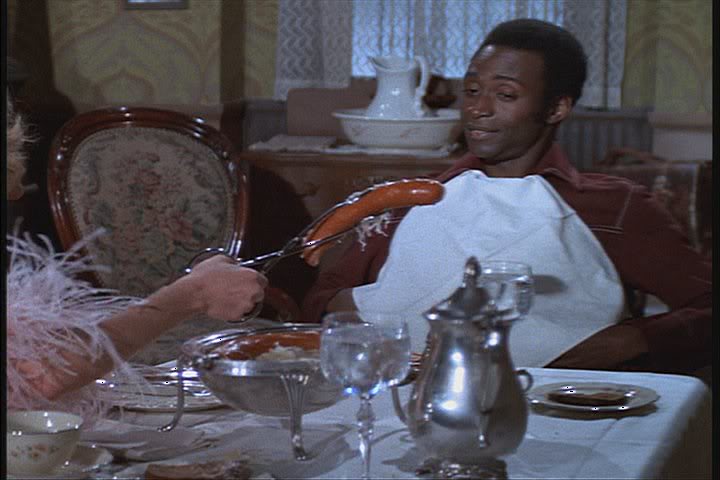
That Mel Brooks...what a racist!

That Mel Brooks…what a racist!

If you want a template for the argument that comedy and jokes should not tread outside the thick, forbidding red lines of political correctness, you cannot do better than the Washington Post op-ed titled “Don’t believe her defenders. Amy Schumer’s jokes are racist.” Two professors, Stacey Patton and David J. Leonard, made the argument that Schumer’s humor is racist, and did so in as forceful terms possible. For example, they write:

 Racial jokes allow white America to claim that race no longer matters, even as there’s talk whizzing in every direction about how blacks and Latinos are outbreeding whites, are criminals and welfare queens, are “stealing jobs” and victimizing whites through affirmative action policies and denying them the right to use the n-word. Comedy allows these comforting ideas to be shared with a built-in defense mechanism that protects white innocence. 

America’s soil of racism is fed by jokes and incendiary speeches, by stereotypical images and symbols like the Confederate flag. Just as Rush Limbaugh,  Donald Trump and other members of the Republican Party regularly disparage people of color and claim they are simply telling the truth, Schumer can use comedy as a protective shroud to deny the harm and hurt caused by her jokes. A joke is considered benign especially when told by a supposed white liberal feminist. We can distance ourselves from the anger, from the harm, from the ideology, and from the hatred of the “extreme,” but also find comfort in the same anger, ideology  and hatred that is “just a joke.”

The abuse heaped on Schumer, a young, clever, rising comedian that I only recently became aware of because of her hilarious—filthy, but hilarious—parody of “Twelve Angry Men,” is breathtaking. She is called the equivalent of Donald Trump (who himself is misrepresented as a racist who believes all Mexicans—he said some illegal Mexican migrants—were criminals and rapists); she is declared complicit in the Charleston shootings and the creation of Dylann Roof, encouraging gun purchases generally, and “a worldview that justifies a broken immigration system, mass incarceration, divestment from inner city communities, that rationalizes inequality and buttresses persistent segregation and violence.”

This is why Mel Brooks says that “Blazing Saddles” couldn’t be made today.  His brilliant seventies Western spoof, which many, including Brooks, believe is the funniest film ever made (I’d pick “Animal House,” but he’s not far from wrong) was immediately recognized as a devastating attack on racism, despite its frequent use of the word “nigger” and its employment of almost every black stereotype for maximum comedy effect. Schumer is no Mel Brooks, but her audiences aren’t stupid either. They understand that she, like Brooks, is spoofing both the stereotypes and the people who believe them, as well as properly zinging the individuals who craete the stereotypes by their own conduct. There is nothing racist about that at all, unless one has embraced the current, floating, broad and infinitely flexible definition of “racist,” which is whatever a progressive or African American critic thinks will be most harmful to his or her target at the time.

The reason “Blazing Saddles” was understood to be satiric and beneficial to the cause of racial understanding forty years ago, and Schumer’s far less harsh humor is being attacked now is simple: race relations are worse today, thanks to people like Drs. Patton and Leonard, who I would have banned at the box office if they ever tried to buy a ticket to a comedy I was directing, and civil rights establishment that has decided that hyping eternal victimhood is the way to power and wealth.  People like this are incapable of humor, because they have to analyze whether they should laugh before they do laugh. To them, Popeye and the Road Runner encourage violence, Eddie Murphy’s Gumby impression furthers racial stereotypes, and Woody Allen’s movies are anti-Semitic. I’m sure they find Mel’s “Hitler on Ice” completely bewildering.

The Post apparently invited the two clueless political-correctness obsessed academics to write this drivel. Asking them to write about comedy is like inviting  Mike Huckabee to analyze the rhetoric of Dan Savage (and vice-versa). In other words, it was a set-up.

Debra Kessler explored the origins of this strange essay on the comedy website The Interobang.

I spoke with The Washington Post‘s Outlook Deputy Editor Mike Madden …. “This is not the opinion of The Washington Post,” Madden told me, “this is the opinion of a couple of contributors to The Washington Post.”  Of course both articles are editorials and newspapers print conflicting editorials all the time.  But even op-ed pieces are edited and selected and subject to internal guidelines and even op-ed pieces enjoy the weight of The Washington Post banner– one which has a history of protecting journalistic expression feverishly.

Kessler also talked to Stacey Patton, who told her that the Post solicited the piece, and had to persuade her to write it. Apparently they couldn’t persuade her to write it fairly, responsibly, or competently, however:

Dr. Patton said a few things that surprised me. For starters, she said she’s not a specialist on comedy or humor. While she does enjoy comedy (she likes George Carlin, Richard Pryor, Martin Lawrence, the Queens of Comedy, and Bill Maher among others), she told me that watching comedy isn’t something she gets to do often. In fact, before the ‘Schumer issue’ came up, she had never seen Amy Schumer perform stand up, and she had never seen Schumer’s Comedy Central television show. Even more surprising, she said she didn’t watch any of Amy’s performances or shows while writing the article, not even as background for the piece. Her judgement was based on what she read, presumably in The Guardian, which had just published an article accusing Schumer of “having a blind spot for race.”

The Interrobang: Have you ever watched Amy’s television show… in preparation for the article?
Stacey Patton: Nope. Not at all.
The Interrobang: Her stand up set[s]? have you ever watched any of them?
Stacey Patton: Nope. None of them.

Wow. Continue reading

Professor Schwitzgebel Concludes That Ethicists Aren’t Very Ethical—Luckily, According To Him I’m Not An Ethicist, So I Don’t Take It Personally

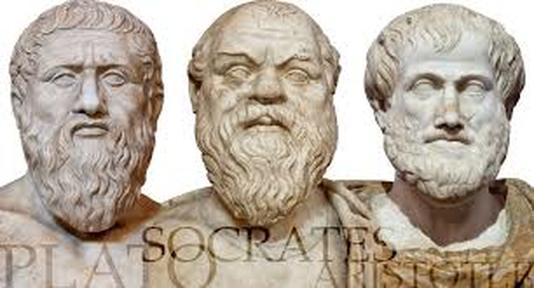
Greek phil

Eric Schwitzgebel is professor of philosophy at University of California, Riverside, as well as an author and a blogger. His essay “Cheeseburger Ethics” immediately caught my attention, as his thesis is one that I have embraced myself, occasionally here: ethicists are not especially ethical.

The essay is thought-provoking. He’s a philosophy professor and an academic, so naturally he views his own, isolated, rarified species of ethicist as the only kind. In announcing the results of his “series of empirical  studies” on the ethics of ethicists, Professor Schwitzgebel announces, “…by ‘ethicist’, I mean a professor of philosophy who specialises in teaching and researching ethics.” Got it, prof. I, in contrast, am the kind of ethicist typically denounced on other blogs as a “self-proclaimed” I don’t regard myself as an academic, my degrees are in American government and law, and my specialty is leadership and the role of character in developing it. My job isn’t to teach half-interested students about the abstract thoughts of dead Greeks and Germans; my job is to make professionals, elected officials and others understand what being ethical in their jobs and life means, how to distinguish wrong from right, and how to use proven tools  to solve difficult ethical problems they will face in the real world. I get paid for it too.

My audiences hate ethics, usually because of the people who Prof. Schwitzgebel has decided are the “real” ethicists. They have made ethics obscure, abstract and gnaw-off-your-oot boring for centuries, with the result that the mere word “ethics” sends the average American into a snooze. I have had corporate clients ask me to teach ethics without using the word “ethics.” The most common evaluation I read are from participants who write that they dreaded my seminar and were shocked that they were engaged, interested, entertained, amused…and learned something useful and occasionally inspiring.

Is it ethical to reduce the public’s interest in and respect for the very subject—a vital one– you have chosen to specialize in and teach, often because you have lousy speaking and teaching skills? Why yes, I’d call that very unethical. So I agree with Schwitzgebel’s assessment of his colleagues. Continue reading

Pro-Abortion Ethics: Amanda Marcotte’s Defense Of The Planned Parenthood Fetal Organ-Harvesting Video Is Even Uglier Than The Video Itself

Planned Parenthood is hustling to deal with the public relations embarrassment of a sting video (above) by an anti-abortion group, catching a PP executive enthusiastically discussing the harvesting of tiny livers and other fetal organs.

Over lunch at a Los Angeles restaurant, two of the group’s activists, posing as employees from a biotech firm, met with Deborah Nucatola, Planned Parenthood’s senior director of medical research. They made a surreptitious video capturing Nucatola over a three-hour span as she chatted about Planned Parenthood’s work providing fetal tissue to researchers. The hit job—these stings are per se unethical, no matter what they reveal, no matter who they target, and no matter how virtuous their motives—emerged as a shortened, edited version of the session featuring the most disturbing  of Nucatera’s comments. The group responsible, the Center for Medical Progress, is accusing Planned Parenthood of illegally trafficking in aborted fetal organs.What is more significant from an ethical perspective, however, is the stunning callousness of this executive’s attitude toward unborn human beings.

She casually describes “crushing” fetuses so that their internal organs remain usable for research. “I’d say a lot of people want liver,” she as she munches on a salad. ( I wonder if she a vegan, since it’s, you know, unethical to kill animals for food, and we’re so cruel to cattle and chickens. ) “And for that reason, most providers will do this case under ultrasound guidance so they’ll know where they’re putting their forceps.”

Nucatera later boasts, “We’ve been very good at getting heart, lung, liver, because we know that, so I’m not gonna crush that part, I’m gonna basically crush below, I’m gonna crush above, and I’m gonna see if I can get it all intact.”

I continue to believe that a tipping point may lie ahead for the abortion controversy. When a cultural equivalent of “Uncle Tom’s Cabin” cuts through the deceit and fantasy, forcing the public to confront the ethical and moral depravity of the most extreme pro-abortion position, civilization may come to view the current period with shame akin to how we now look at the slavery era.

Maybe not, however. I don’t understand how the ghoulish rhetoric of abortion advocates hasn’t already had this effect. Perhaps the ethical corruption of the culture on the topic of destroying innocent human life in the womb has already proceeded too far. Perhaps groups like Planned Parenthood have succeeded in imbedding the factually untenable concept that the welfare and life of only one individual is at stake in an abortion choice, rather than two. Continue reading

Ethics Observations On The Impending “Little Ice Age” And Climate Change

snowpiercer

From Alphr:

Between the years 1645 and 1715, there was a period of bitterly cold winters in the northern hemisphere. The winters were so cold that the Thames completely froze.This was caused by low solar activity, known as the Maunder Minimum, and when it will happen again has been a source of debate among scientists. Well, according to a new model that promises 97% accuracy, we’re due another “little ice age” in 15 to 25 years time. The prediction is the work of mathematics professor Valentina Zharkova from Northumbria University, examining the sun’s so-called “11-year heartbeat”. This is the period at which the sun’s activity remains steady before fluctuating every 10-12 years. Zharkova’s new model forecasts solar cycles based on two layers of moving fluid within the sun, one near the surface and another in the convection zone. By using this model, Zharkova’s team found their predictions “showed an accuracy of 97%”.

At this moment, I’m not concerned about whether the prediction is right or wrong; there’s plenty of time for me to buy ear muffs. I do think it is fascinating, however, and I offer these observations:

1. Question: Why has this story been virtually ignored by the mainstream news media?  Answer: Because progressive journalists haven’t figured out how to reconcile their climate change, environmentalist, pro-EPA dictatorship, “all climate change skeptics are idiots and the equivalent of Holocaust deniers” narrative with its implications, that’s why. This is news, don’t you think? “Fit to print,” correct? Any time some semi-respectable scientist predicts that we have 20 years left to knee-cap American industry or the seas will boil, that’s headlines at MSNBC and the Times, isn’t it? I can’t think of a more blatant example of unprofessional and biased news manipulation for purely ideological reasons than the fact that this story has thus far been isolated to European and Australian news sources.

2. The theme of environmentalists and the progressive establishment, as well as elected officials who are just as certain about climate change despite not remotely understanding the science, is that the science is settled, that disastrous, man-caused global warming is certain, and that no argument to the contrary will be accepted or respected. Yet scientists just figured out, using a new model, that a massive global cooling will occur just 15 years from now.  Quite simply, according to the angry, insulting rhetoric from the Gores, Pelosis, Obamas and their pundit cheerinbg section, this is impossible. Science has settled, and cannot be wrong, what the temperature will be a hundred years or more from now, and that’s that—no skepticism allowed. The models are undeniable! And yet, a new model, just developed, shows that a decidedly non-warming trend  not predicted by those perfect models is now certain. Continue reading

The Washington Post’s “Post Hoc Ergo Propter Hoc” Gun Control Deceit

This is Johns Hopkins, who already had to deal with his parents putting an s after his first name, and now the Bloomberg School of Public Health attaches a bogus study to his name. Poor guy.

This is Johns Hopkins, who already had to deal with his parents putting an s after his first name, and now the Bloomberg School of Public Health attaches a bogus study to his name. Poor guy.

If you want a graphic example of why climate change skeptics distrust—and are right to distrust— the studies and computer models on the subject indicating that we are doomed unless we adopt Draconian measures, look no further than the Washington Posts’ embarrassing story on a study released this week in  the American Journal of Public Health.

It is deceptive, biased, misleading and incompetent from the headline: “Gun killings fell by 40 percent after Connecticut passed this law.” The headline is designed to fool anyone so ignorant and unschooled, not to mention devoid of critical thought, to fall for the classic fallacy of “post hoc ergo propter hoc,” which means “after this, thus because of this.” The thesis of the study in question, swallowed whole by the gun-control shills on the Washington Post staff, is that because gun deaths in Connecticut fell after a mid-summer 1994 state law was passed requiring a purchasing license before a citizen could buy a handgun, the law was the reason. Of course, the rates also fell after the baseball players strike that same summer: one could make an equally valid argument that stopping baseball limits deaths by gunfire.

The story, and the study, epitomize biased journalism hyping bad research. You see, since rates of deaths by gunfire also fell after the Connecticut law in 39 states where no such laws existed, the claim that Connecticut’s limits caused that state’s drop is impossible to prove, and irresponsible to assert. Especially since… Continue reading

Death Throes Of The Death Penalty: Dumb Expert, Dumb Advocates, Dumb Debate

“Next!”

As I recently concluded, the death penalty is beyond saving, not because it can’t be defended ethically and morally, but because the issues are tangled beyond repair.

The controversy over the legality of the so-called drug cocktails that somehow became our execution method of choice is a perfect example. The battles over capital punishment trapped policy-makers into this kinder, gentler, ridiculously complicated method of execution that has suffered snafus ranging from unavailable drugs to ugly extended deaths. The problem is the floating definition of “cruel and unusual punishment,” prohibited by the Constitution, but almost entirely subjective. Many judges think killing a killer is itself cruel by definition, and the more reluctant Western Europe becomes to execute the worst of the worst, the easier it is to make the argument that the death penalty is also unusual.

I don’t get it. I never have. India once executed condemned criminals by having the subject place his head on a stump under the raised foot of  trained elephant, which on a command would smash the head like a grape. Quick, painless–messy!—but virtually fool-proof. A pile-driver would be an acceptable equivalent.  Ah, but ick! In this stupid, stupid, intellectually dishonest debate, ick always equals “cruel and unusual,” because to opponents of the death penalty, killing people, even horrible, dangerous people, is inherently icky.

(Oddly, ripping unborn babies out of the womb is not, but I digress.)

I’ve admitted it, and I will again. (This lost Ethics Alarms Luke G., one of its best commenters the last time.*) It is obviously wrong to intentionally prolong an execution or deliberately cause pain, but if the occasional execution is botched and the condemned suffers, that should be cause for great rending of garments, nor should it be used to discredit capital punishment. As I wrote here about Clayton Lockett’s execution in Oklahoma

“There was no question of Lockett’s guilt, and his crime was inhuman. Such wanton cruelty and disregard for innocent life warrants society’s most emphatic rebuke, and the most emphatic rebuke is death. It is essential that any healthy society make it clear to all that some crimes forfeit the continued right to not just liberty, but also life. Anyone who weeps because this sadistic murderer experienced a few extra minutes of agony in the process of being sent to his just rewards has seriously misaligned values. No method of execution will work every time, and to make perfection the standard is a dishonest way to rig the debate. If the death penalty is justified, and it is, then we should expect and accept the rare “botch.” Meanwhile, if the concern really is efficiency, reliability, speed of death and minimal pain, there are literally dozens, maybe hundreds of methods of swift execution that would accomplish this. They just won’t pass the standards of death penalty opponents, because no method will.”

Today the Supreme Court heard oral arguments on the question of whether Oklahoma’s use of the common surgical sedative midazolam did not reliably make prisoners unconscious during lethal injections, thus violating the Eighth Amendment’s protection against “cruel and unusual punishment.” It’s a ridiculous case, which arises out of the botched April 2014 execution of Lockett that sparked the post I just quoted. It is a ridiculous case because the method of execution isn’t worth arguing over. Elephant. Head. Problem solved. Why is Oklahoma fighting about which cocktail to use? This is the anti-capital punishment team’s game, and sooner or later, the result is preordained.  Continue reading

KABOOM! ABC’s George Stephanopoulos’ Mind-Blowing Hypocrisy

Why this didn't happen to George this morning, I'll never know....

Why this didn’t happen to George this morning, I’ll never know….

I honestly don’t know why this one didn’t make  GEORGE’S head explode. For most people, there is only so much hypocrisy one can engage in without breaking down and screaming, “All right! ALL RIGHT! I admit it! I’m accusing someone of doing exactly what I’m doing THE VERY SECOND I’M ACCUSING HIM!!”

I will be discussing some of the more blatant efforts by the Hillary Clinton Shameless Rationalizers Brigade to spin away the fact of her unethical creation of a serious conflict of interests and appearance of impropriety once I have put my brains back into my skull. Meanwhile, I must briefly point out one of the most shocking examples of hypocrisy I have ever witnessed from a journalist, or anyone, for that matter.

On This Week With George Stephanopoulos this morning (that was Sunday, 4/27) the opening interview was with Peter Schweizer, a conservative reporter and author of the soon to be published book, “Clinton Cash: The Untold Story Of How And Why Foreign Governments And Businesses Helped Make Bill And Hillary Rich.”  He is in the news because the New York Times and the Washington Post will be using his book, notes and sources to bolster their own investigative reporting, and one of its revelations regarding donations to the Clinton Foundation from foreign interests is already making waves for the Hillary Clinton campaign.

Stephanopoulos executed what I would call an adversarial interview, fair, but skeptical and hostile. It was also misleading, though not necessarily intentionally. George, like most journalists, isn’t too conversant in government ethics, or ethics generally. He kept hammering at the fact that no evidence of a crime had surfaced, as if that made everything fine and the story trivial. This is a classic Compliance Dodge: sneaky, dishonest, corrupt people are often expert at doing bad things without breaking the law. In fact, I just described the Clintons, and, sadly, a lot of lawyers. The fact that they didn’t break laws, or covered their tracks sufficiently not to leave evidence of law-breaking, does not mean that what they did wasn’t unethical, and seriously so. This is the case with the foreign contributions that just happen to have arrived in conjunction with matters where Clinton’ State Department had a decisive say that could benefit the donors. Accepting undisclosed contributions from such interests, in violation of a signed agreement that was a condition precedent to her confirmation as Secretary of State, is seriously unethical whether it was illegal or not. Because of this, it creates the appearance of impropriety, which officials in the Executive Branch, like Clinton, are prohibited by law from creating. This is a fact. Nothing more needs to be proved.

Stephanopoulos may not understand this, and I’ll give him the benefit of the doubt and assume he does not. If so, however, he is incompetent to perform the interview with Schweizer, who does understand it, because George should be trying to enlighten his audience, not confuse them. Harping on whether a law was broken does confuse his audience, and also abets the Clintons’ denial and confound efforts.

Schweizer was prepared; he anticipated all of the questions and the attempts to undermine his findings. He was patient and clear. Then Stephanopoulos suggested that his research was unreliable because he had worked for the Bush Administration and had ties to Republicans in the past.

Kaboom!

George Stephanopoulos was a long-time, close political aide and confidante of Bill and Hillary Clinton! Continue reading

“Negative Polarization,” Bigotry, And Hillary

destroying America

Today in the Times, last week, and over the weekend, there were numerous essays (like this onethis and this) about a recent study that examined the growing phenomenon I have previously written about here and here. The paper’s authors, Alan Abramowitz and Steven Webster, use the term “negative polarization,” but what they are describing is really a kind of bigotry, citizens making important democratic decisions purely on the basis of conditioned hatred and dislike based on gross generalizations about political parties and their supporters rather than dispassionate analysis and independent consideration.

Their conclusion isn’t original; it’s not even surprising. It closely follows last year’s study out of Stanford reaching the same conclusion. Americans increasingly demonize one party or the other and all their representatives and members, thus automatically rejecting policy initiatives, arguments and positions not because of their content, but based on their origins and the identity of their supporters—pure, blind cognitive dissonance. As a result, they will choose candidates and policies irrespective of any rational analysis, based solely on the assumption that the opposing candidate and policy come from a vile and intolerable source.

These studies indicate that Americans now discriminate more on the basis of party than on race, gender or any of the other great divides— and that discrimination extends beyond politics into personal relationships and non-political associations. Americans increasingly live in neighborhoods with like-minded partisans, date and marry fellow partisans and disapprove of their children partying with members of the other party. They are, the data says, more likely to choose partners based on partisanship than physical beauty or personality.

The Stanford study concludes (the Emory study concludes similarly),

“Unlike race, gender and other social divides where group-related attitudes and behaviors are constrained by social norms, there are no corresponding pressures to temper disapproval of political opponents. If anything, the rhetoric and actions of political leaders demonstrate that hostility directed at the opposition is acceptable, even appropriate. Partisans therefore feel free to express animus and engage in discriminatory behavior toward opposing partisans.”

Naturally, this has set off the usual round of finger-pointing by pundits and the media, which itself shares much of the blame. I know who and what have seeded these dragon’s teeth, and the list is long, beginning with Rush Limbaugh, Mark Levine, Bill Press, the Clintons, Lanny Davis, Matt Lauer, Newt Gingrich, Tom Delay, the idiots who made out Florida’s 2000 ballot, Al Gore, George W. Bush, Dick Cheney, Karl Rove, Paul Begala, Jerry Falwell, Mary Matalin, James Carville, David Axelrod, Chris Matthews, Ted Cruz, the Congressional Black Caucus, Fox News, Donald Trump, Truthers, Birthers, Barack Obama, Joe Biden, MSNBC, Roger Ailes, Rupert Murdoch, Eric Holder, the New York Times editorial board, Charles Blow, the Daily Kos, David Brock and Media Matters, Move-On, Breitbart, Michael Moore, Al Sharpton, Pat Robertson, Harry Reid, Tom DeLay, Nancy Pelosi, the Tea Party, Michael Savage, Salon, Sean Hannity, Sarah Palin, Ann Coulter, Stephen Colbert, Jon Stewart, and many others, a majority of whom made a conscious decision to exacerbate the divisions in our nation for their own gains in power, influence and wealth. Continue reading

Comment of the Day: “Ethics Whistle On The Post’s Dana Milbank…So Blood Won’t Shoot Out My Nose”

neurons

On a Saturday morning when my mind is foggy and my reflexes are slow after a harrowing  ordeal of prepping for and MC-ing a legal ethics game show for the D.C. bar the day before, the sighting on a worthy Comment of the Day is a cause for relief and joy. Rich (in CT) offers yet another superb post, illuminating the complex issues behind a statement in my essay about the estate tax. Rich has an impressive record for COTDs in his relatively short time commenting on Ethics Alarms, but none of his masterpieces were more welcome than this, which allows me to go back to bed. You would not believe how long it took me to type this brief paragraph. (Thanks, Rich!)

Here is his Comment of the Day on the post, Ethics Whistle On The Post’s Dana Milbank…So Blood Won’t Shoot Out My Nose.

Continue reading