Are Employers Ethically Obligated Not To Take Advantage of Women’s Negotiation Choices?


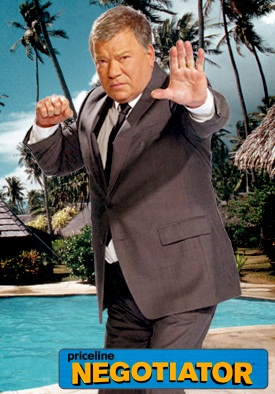
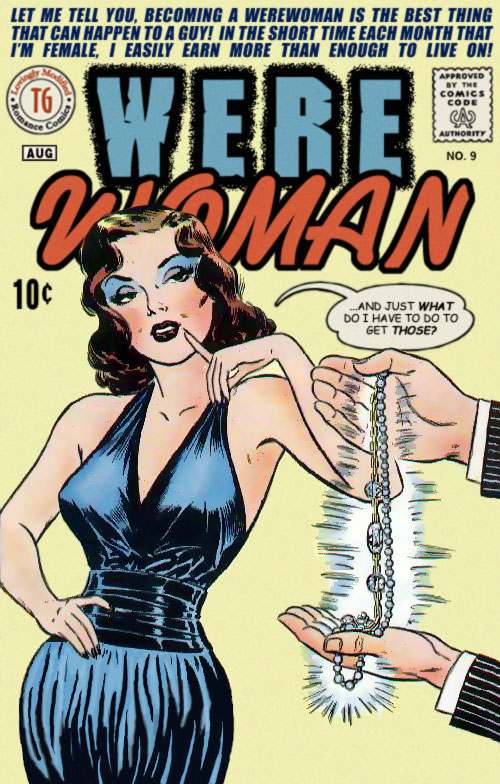
Yet another career for Shatner—coaching female job-seekers.

A recent study of 2500 job seekers indicated that men are far more likely to negotiate salary and benefits in job situations where it has no been stated that the salary is negotiable.

I am not surprised. Running non-profit organizations with limited resources, I always ended up with primarily female staffs because women would accept a lower offer than men with similar qualifications. This meant that the women got the jobs for salaries their male competition turned down. This, in turn, may have effected their salaries for a long time to come, in subsequent jobs. Is this bias?

Clearly not. The negotiations between an employer and potential employee are ethical and the conditions are known. A skilled negotiator (I am personally incompetent at negotiating my own fee; in ProEthics, my partner handles all of that) will get a better deal; a poor or reluctant negotiator will get terms more advantageous to the employer. It is not bias if the most aggressive and effective negotiators happen to be men.  Continue reading

The AP’s Biased and Incompetent Racial Attitudes Poll

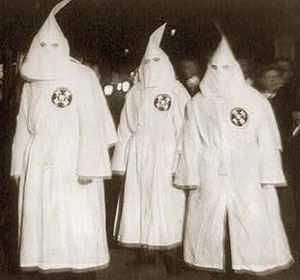
“There those whites go again, increasing racial tensions!”

All over the internet, the results of the AP’s just released “Racial Attitudes Poll” are being headlined as “proof” that racism is alive and well in America, and that racial bias has increased in the last four years. Either the poll is being released now to attempt to make Americans feel guilty about not wanting to vote for Barack Obama, or it is setting up the excuse for Obama’s defeat, should it occur, that only racism can account for such a successful, brilliant, eloquent leader being defeated. I apologize for the cynicism. With all the talk about “firewalls,” however, it seems self-evident that white guilt, which has been the target of pro-Obama racial politics from the beginning, is one of the most obvious, odious, and desperate.

The poll, in my analysis, is garbage, and unethical garbage as well. It is an accumulation of confirmation bias, locked in with horrible methodology. Continue reading

Lance Armstrong As The Status Quo: An Unethical Essay From An Ethics Expert

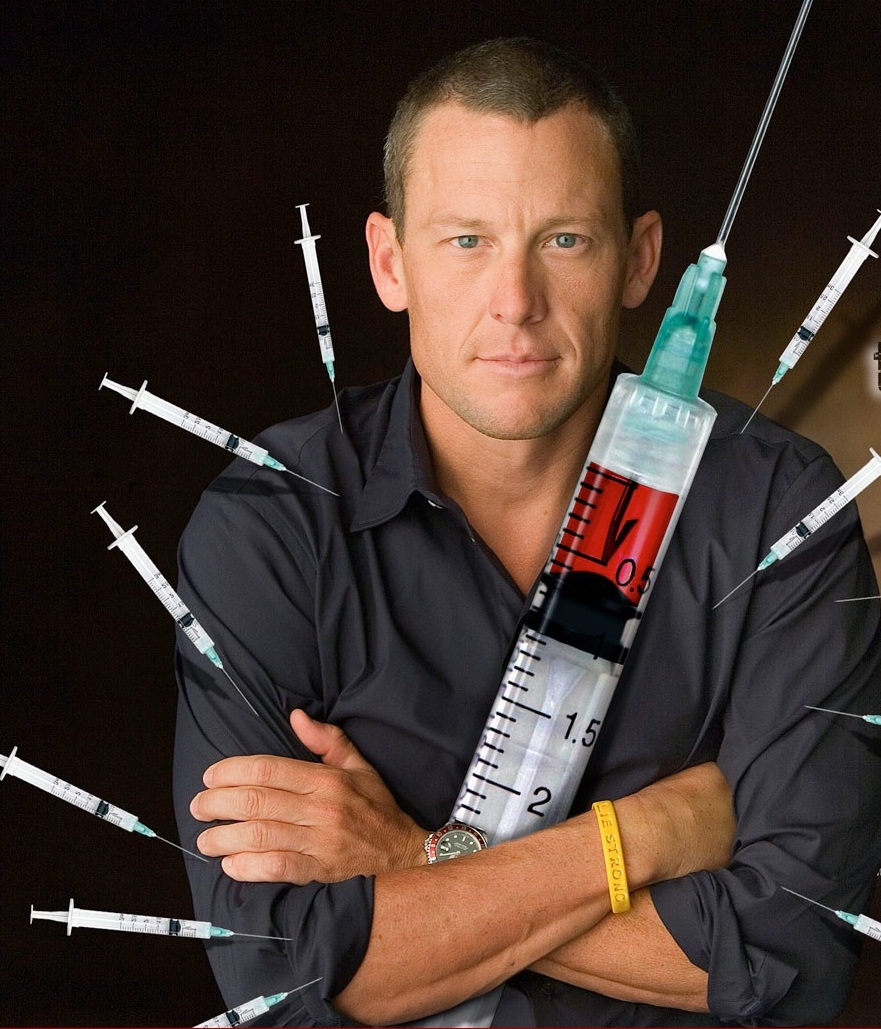
Don’t worry, Lance. Braden Allenby understands you. You were just ahead of your time, that’s all.

There are many things to learn from Prof. Braden Allenby’s Washington Post essay, “Lance Armstrong’s fall: A case for allowing performance enhancement,” none of which have anything to do with Lance Armstrong. Among the lessons:

  • “Everybody does it “really is the most seductive and sinister rationalization for unethical conduct.
  • Someone really shouldn’t write about sports ethics when they know nothing about sports.
  • If you only understand an author’s bias after reading the short biographical sketch at the end of the article, then he wasn’t responsibly correcting for his bias in his article.
  • When someone uses the worst of all rationalizations, the deplorable, “It’s not the worst thing,” neither their judgment nor their argument can be trusted.
  • Some ethics experts have appalling judgment in regarding ethics.

Allenby’s essay takes the position that all sports should allow athletes to take whatever performance enhancing drugs that become available, beginning with the tragedy of Lance Armstrong’s final disgrace as a cheater and corrupter of his sport. Seldom do you see an argument clothesline itself so quickly: here is Allenby’s opening sally:

“In the past month, cyclist Lance Armstrong has been stripped of his seven Tour de France titles. His commercial sponsors, including Nike, have fled. He has resigned as chairman of Livestrong, the anti-cancer charity he founded. Why? Because the U.S. Anti-Doping Agency and the International Cycling Union say he artificially enhanced his performance in ways not approved by his sport and helped others on his team do the same. This may seem like justice, but that’s an illusion. Whether Armstrong cheated is not the core consideration. Rather, his case shows that enhancement is here to stay. If everyone’s enhancing, it’s a reality that we should embrace.” Continue reading

Ethics Dunce: Redstate Blogger Moe Lane

The other Moe, the one who probably COULD use a search engine…

Redstate blogger Moe Lane is offended that I think emulating Harry Reid to get even with Harry Reid is as despicable as Harry Reid, and since Lane hasn’t the wit or diligence to make a coherent argument against the position articulated in my recent post, which has flushed out a covey of mouth-foaming right-wingers, he plays the hypocrisy card, and like most players, doesn’t really know what hypocrisy is. Unlike many players, however, he doesn’t even bother to get his facts right, apparently because the Ethics Alarms search engine is too tricky for him. As I opined that the Right was attempting to “santorum” Reid by associating his name with something unsavory (in his case, pederasty), Lane fulminates that I didn’t express similar objections when Santorum himself was santorumed. He writes:

“…Hence the aforementioned shocked, shocked response from this Ethics Alarms site, which is very disapproving of the whole thing, and goes so far as to call it ‘santoruming.’ For those unfamiliar with the concept, Ethics Alarms provides a footnote: “Thanks to blogger Dan Savage, the former GOP Senator’s name is now a synonym for a disgusting bodily discharge.” And that, of course, is just as bad when it happens to Harry Reid as it was when it happened to Rick Santorum.”…which, given that (as near as I can tell) this seems to be the first time that Ethics Alarms has bothered to mention to the world that, hey, attacking Rick Santorum like that was bad, just indicates to me that the “Reid is a Pederast” meme is having the desired effect. It’s getting self-absorbed, pretentious websites that hate hardcore social conservatives** to stand up for those self-same social conservatives! Without prompting, even! Lo, indeed, truly we live in an Age of Wonders.”

Well, no, Moe, in fact this was not the first time that I expressed disapproval of Dan Savage’s successful effort to slime Rick Santorum, and if you could search the web or my site with the deftness of the typical Special Ed teen, you would have seen that over a year ago I wrote a post entitled, Dan Savage’s Curse on Rick Santorum: Funny! But Wrong. Note that the title was specifically evoked by the heading for the recent Reid post, which would have been a big fat clue for anyone who cared about being fair and accurate rather than being snide and obnoxious, like Moe Lane. Continue reading

Comment of the Day: “Is a Transgendered Woman Ethically Obligated To Tell Her Boyfriend That She Used To be Male?”

You never know. My post about the ethics of withholding the fact of one’s past and altered gender from a potential spouse sparked the most passionate, erudite and instructive debate among readers that Ethics Alarms has seen in a long time, involving an all-star squad of some of this blog’s best minds. The prize goes to Zoebrain, though, who scores the Comment of the Day with this three part contribution. It’s long; don’t let that discourage you. It, and the whole thread, which you can find here, is well worth your time, because you will learn something. I did.

“May I give an extended set of replies here please? You see, this isn’t a hypothetical for me, it’s an actual. Continue reading

The Difference Between Unemployed Scientists and Unemployed Lawyers

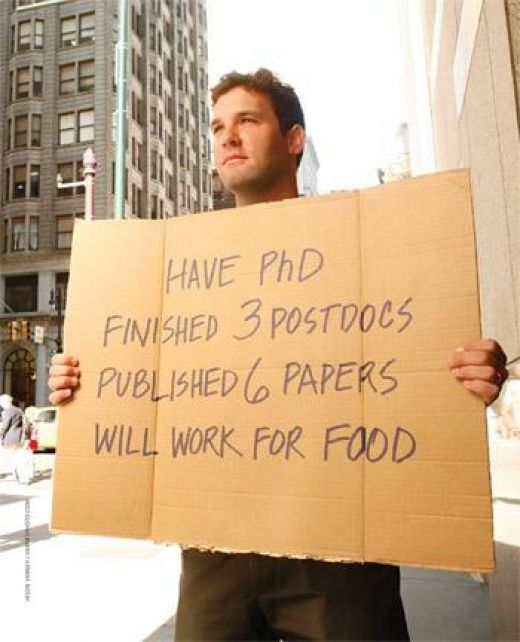
A front page story in today’s Washington Post casts interesting perspective on an Ethics Alarms rumble that broke out here a couple of weeks ago. One of the many websites where underemployed, over-indebted law grads hang out to commiserate—sites with pathetic names like “butidideverythingrightorsoithought”—discovered a post from the days when people were taking Occupy Wall Street seriously, in which I chided a protester whose sign blamed his law school  for his failure to  find a job, without giving due weight to the fact that sitting in a park whining about his plight wasn’t doing him any good either. Suddenly Ethics Alarms experienced an avalanche of indignant and often personally insulting comments introducing me to the strange world of the JD conspiracy theorists, who maintain that law schools engaged in an intentional conspiracy or “scam” to gull naive college grads into believing that a law degree was a sure-thing ticket to Easy Street and six-figure starting salaries.

In the Post’s report, we learn that other advanced degree-holders, namely PhDs in scientific fields, are also unable to find work or toiling in fields unrelated to their degrees. The Post says:

“Traditional academic jobs are scarcer than ever. Once a primary career path, only 14 percent of those with a PhD in biology and the life sciences now land a coveted academic position within five years, according to a 2009 NSF survey. That figure has been steadily declining since the 1970s, said Paula Stephan, an economist at Georgia State University who studies the scientific workforce. The reason: The supply of scientists has grown far faster than the number of academic positions.”

Sounds a lot like the legal market to me! Continue reading

Rushed Ethics

Feeling pressured?

The Economist points its readers’ attentions to two studies showing the ethical benefits of delay to decision-makers. It is an important topic, with profound ethical implications. Deadlines and the perception of urgency are both what I call pre-unethical conditions, situations that so frequently lead to unethical conduct that our ethics alarms should start ringing the second we start feeling the dread of time-pressure. The Economist article notes that…

“…[ in ] an obscure article in the Academy of Management Journal by Brian Gunia of Johns Hopkins University… Mr Gunia and his three co-authors demonstrated, in a series of experiments, that slowing down makes us more ethical. When confronted with a clear choice between right and wrong, people are five times more likely to do the right thing if they have time to think about it than if they are forced to make a snap decision. Organisations with a “fast pulse” (such as banks) are more likely to suffer from ethical problems than those that move more slowly….The authors suggest that companies should make greater use of “cooling-off periods” or introduce several levels of approval for important decisions.” Continue reading

Dan Ariely: Without Ethics, We Are Governed By Psychological Enablers of Cheating and Worse

And it’s nothing to be proud of.

Duke behavioral scientist (or, as he likes to call himself, “behavioral economist”) Dan Ariely, has a new book out. This is a boon for my ethics classes, since I’m sure they are getting a little sick of me quoting the last one, “Predictably Irrational.” His new best seller is “The Honest Truth About Dishonesty,” and Ariely has been making the rounds of NPR and various publications promoting it. Like Malcolm Gladwell (“The Tipping Point”), Ariely writes provocative and easily digested books that seemed to be designed to make you skip the movie on airplane flights; they are not deep, but they are helpful, at promoting self-understanding if nothing else.

I’ve been saving my copy of “The Honest Truth About Dishonesty” for my next trip, but the most valuable thing about it from my perspective is that it validates the importance of developing the skills of ethical analysis. As the author explained in a recent interview, when most human beings ( Ariely pegs the percentage at a depressing 98%—and one of the two missing percentage points are people who cheat no matter what! ) human beings let their gut determine whether they are going to cheat or not, they will make their choice according to a potpourri of rationalizions and quirky psychological factors that have little to do with right and wrong.

Among the useful observations he made in his recent interview with journalist Gary Belsky: Continue reading

Comment of the Day: “Nomination For Enshrinement in the Hall Of Bad Ethics Ideas: A Hippocratic Oath For Scientists”

Zoebrain, the Aussie researcher who has enlightened many Ethics Alarms debates, provides delicious perspective to the post regarding scientific ethics, specifically regarding the question of whether scientists can or should pledge, like doctors, to “do no harm.”

Here is her Comment of the Day to Nomination For Enshrinement in the Hall Of Bad Ethics Ideas: A Hippocratic Oath For Scientists:

“Tell the truth, the whole truth – but possibly not nothing but the truth, as long as any opinion is unmistakably marked as such. Correct your past mistakes as you find them. Also be prepared to accept responsibility for the moral consequences of the power you provide to others being misused. Unless you feel it right to give them the power, you must accept personal responsibility and so withhold it. That’s not a Scientific sin, it’s a personal one.

“Providing the sharpest possible scalpel to a surgeon is one thing. Providing it to a vivisectionist of “untermenschen” another. Providing it as a toy for a 6-month-old baby yet another.

“The only scientific sins are knowing falsification of results, and omitting contradictory evidence. But scientists have responsibilities as humans too.

“Please have a listen to this song [ by musical satirist/scholar Tom Lehrer’s “Werner Von Braun,” about the amoral Nazi-turned-U.S. rocket-scientist.]:

Continue reading

Nomination For Enshrinement in the Hall Of Bad Ethics Ideas: A Hippocratic Oath For Scientists

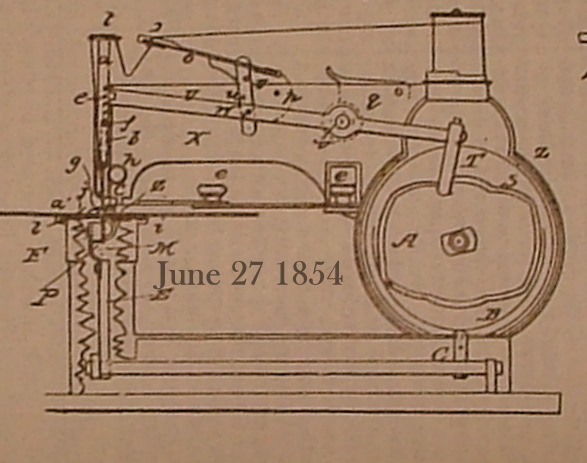
Nope. No sewing machine. It will cause too much “harm.”

A blogger for the Lindau Nobel community asks, as a follow-up to a discussion raised in one of the august group’s recent meetings, whether scientists should have to take an oath similar to that traditionally (but not universally, by the way) taken by physicians, a pledge to “do no harm.”

No. Next question!

This is not merely a bad idea, but an arrogant and ignorant one. The medical profession is dedicated to healing, without regard to who is being healed. “First, do no harm” is a rational and excellent absolute principle, one that relieves the profession of the burden of many (but not all) complex utilitarian dilemmas that doctors and other health professionals may not be equipped to solve. Medicine is much narrower than science, and its limitations more clear. Most people would agree with doctors on what constitutes “harm” in 99% of the situations where the issue would be raised. Not so science, where one man’s monstrosity is another’s giant step for mankind. Continue reading