Ethics Hero: Journalist Harris Meyer

Harris Meyer is an Ethics Hero because he won’t let a bad lesson go unchallenged.
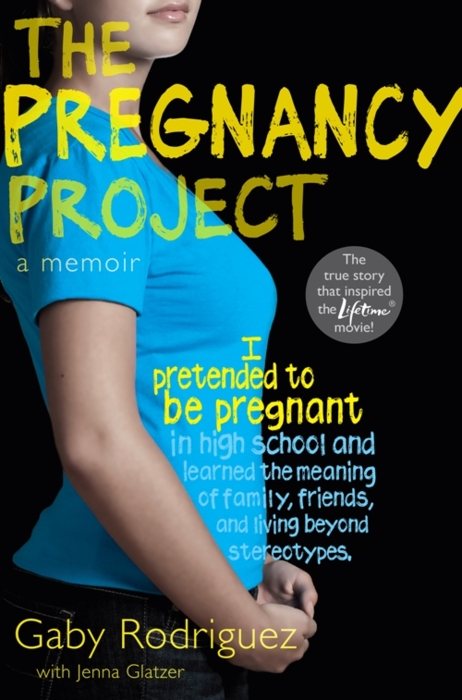
Meyer is an award-winning  freelance journalist and a former editor at the Yakima (Wash.) Herald Republic. That was the paper that first broke the story of Gaby Rodriguez last year, which I wrote about here. With the encouragement of her high school principal, Rodriguez, a senior, embarked on some amateur social science research that involved deceiving everyone in her life except her mother, one (of seven) siblings, her boyfriend, and the principal. She pretended that she was pregnant, suing padding. She faked the pregnancy for months, finally announcing the sham in a student assembly. This extended hoax was supposedly designed to expose how pregnant teenagers are treated by their peers and others. It was, by any rational standard, a despicable thing to do—a betrayal and exploitation of her friends,  her boyfriend’s family, her siblings and teachers. Deception on such a scale must be justified, if at all, by both need and necessity. Were there other, less destructive ways to investigate the treatment of pregnant teens? Sure there were; interviews come to mind. Collecting published journals and other accounts. But Gaby’s unethical stunt was in spiritual synchronicity with a reality show-obsessed culture, where fake is entertaining and collateral damage is of no concern.  I wrote: Continue reading
Social Science, Group Research and Bigotry: The Most Slippery Slope

Typical...

Decades ago, Arthur Jensen became a target of critics and a pariah in his field by publishing a controversial study that indicated that differences in racial performance on intelligence tests probably had a genetic component. He was, and is, called a racist, though Jensen has continued to produce respected research. Since the publication of the 1969 Harvard Educational Review article that made him infamous, Jensen has won the prestigious Kistler Prize in 2003 for original contributions to the understanding of the connection between the human genome and human society.

The problem with Jensen’s research results, whatever the legitimacy of the data and his methods, was this: What do you do with it? Like other studies that show women, as a group, with less aptitude for the sciences, or those that show superior traits in other races and ethnic groups, this information just serves as a catalyst for bigotry. Whatever the trends within a large group may be, they tells us nothing about any individual in that group. Yet the existence of a study creates a natural tendency to apply the claimed group characteristics to every group member. Most people think like that, always have and always will. This is similar to the problem with stereotypes. Many, perhaps most, stereotypes have some truth in them. I was raised in a Greek family, and Greeks are reputed to be clannish, cheap, bigoted, and gifted in the kitchen. Well, that would describe a large proportion of my relatives, too, but not all of them. My Aunt Bea is fanatically liberal. My Mom couldn’t cook a lick.  All right, they all were cheap, but the point is that it would be foolish and unfair to assume what any of them would be like without knowing them.

Knowledge is an absolute good, but perversely, some knowledge also guarantees abuse, and thus results in more bad than good. Jensen’s study, as far as I can see, has no good use in a democracy where every individual has the right to be assessed according to his or her conduct and character. Nor do any studies that “prove” character or ability differences in broadly defined groups.

This is all a prelude to my conclusion that the now widely publicized National Academy of Science study that has this conclusion-“Higher social class predicts increased unethical behavior”—is just throwing gasoline on a fire, and has no useful or benign purpose at all. Continue reading

Weekend Ethics Catch-Up

If you took an ethics break this last weekend of February, here’s your Ethics Alarms make-up assignment:


Robot Ethics: Let’s Not Get Silly About It

Today seems to be “Ethics Questions That We Shouldn’t Have To Ask Day,” and Andrew Sullivan, over at the Daily Beast, phrases his entry this way:

“Is Sex With A Robot Adultery?”

Sherry Jackson as a robot on the original "Star Trek." Lovely, convincing, but still basically a toaster.

Gee, I don’t know, Andrew: is sex with a toaster adultery? What has Sullivan asking such nonsense is a new book called Robot Ethics, which has some legitimate issues to explore, and then some other phony controversies included to get publicity and interviews. The field of robot ethics still includes little that hasn’t been thoroughly explored by Robert Heinlein, Isaac Asimov and on “Star Trek: The Next Generation,” but as a few of these dilemmas are likely to enter reality from science fiction in the foreseeable future, it is reasonable to dust off the issues again as long as we don’t get silly about it. Getting overly excited for the Boston Globe, however, Josh Rothman writes: Continue reading

Climate Wars Ethics: Gleick’s Lie, and the Death of Trust

You cannot fight for the truth with lies. Why is this so hard to learn?

This is a big ethics story, with general ethics lessons and serious public policy repercussions in an area already muddled with ethical misconduct on all sides. I’m going to restrict Ethics Alarms to the purely ethical analysis. and, at the end, point out some of the excellent articles that the incident has inspired regarding the policy implications of it all.

Last week, leaked documents prepared for a board meeting of the libertarian think tank, the Heartland Institute, were published on various blogs and websites. The Institute is a major player in the effort to disprove, debunk or discredit scientific studies showing man-made climate change, and block the adoption of anti-climate change policies while undermining public support for them.  One of the most provocative documents was a “Climate Strategy” memorandum laying out Heartland’s secret efforts in sinister terms. The source of the documents, and the one who made them available to global-warming promoting bloggers, was a mysterious individual calling himself “Heartland Insider.”

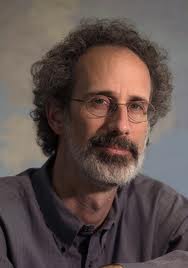
Now the source has revealed himself, and it is a prominent climatologist on the front lines of the climate change battle, scientist Peter Gleick of the Pacific Institute. Gleick explained what occurred in a column at the Huffington Post: Continue reading

Wikipedia Ethics

An article in the Chronicle Of Higher Education serves as a stark lesson in how policies, procedures and bureaucracy can warp an organization’s purpose and lead to self-destructive conduct that injures stakeholders and destroys trust. The entity at issue: Wikipedia. And now we know why, despite the immense growth and improvement in the web’s community encyclopedia, it still can’t be trusted….and may never be trustworthy.

Historian and researcher Timothy Messer-Kruse tells of his decade-long effort to correct misinformation in Wikipedia relating to the Haymarket riot and subsequent trial in 1886, a landmark episode in the social, political and labor history of America. Messer-Kruse discovered that the entry included an outright error that had become standard in the historical accounts, but that he had personally proven was false through meticulous research. But Wikipedia wasn’t interested in accuracy: Continue reading

Comment of the Day: “‘Who Ya Gonna Call?'” Paranormal Ethics, and the Irony of Same”

"I'm sure there's a perfectly rational explanation for this. Let's go figure it out in a motel."

The Comment of the Day is an interesting one from Melissa Leath, a psychic who is published on the topic of psychic ethics. She is responding to the recent post here about proposed standards for paranormal investigators.

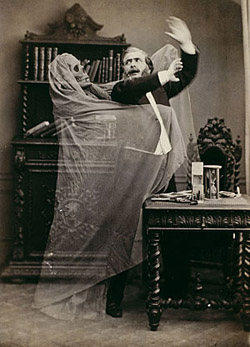
Her measured response forces me to confront my own ambivalence on this issue. I am, as she says, a skeptic; more than a skeptic, really, as I intellectually am committed to the position that all paranormal, psychic and spiritual phenomenon, including those in the realm of religious believe, are imaginary at best and fraudulent at worst. I would have said “unshakably committed, ” but emotionally, I have to confess am not as sure as I would like to be, or should be. Perhaps I watch too many horror movies. I don’t like Ouija boards, and won’t have the damn things in the house. If my kitchen furniture suddenly rearranged itself like it does in “Poltergeist,” or if my ultra-rational son started telling me that an old man in 1940s clothes kept appearing in his room at night and saying that he was going to hurt him, or if I saw dark, inky shadows crawling up the wall like in “The Grudge,” I can say with conviction that I would not be the one insisting that there must be a rational explanation and hanging around waiting for the bed to start raising off the floor. I would be the one out the door and checking into a motel, and from the safety of which  insisting that there was a rational explanation, but also secretly fearing that my house had been built over a Native American burial ground.

I realize that this is inconsistent and silly.  But I have a good friend who is as normal and sincere as someone can be who is a serious astrologer. And when I see the late Telly Savalas finally tell his personal ghost story in a YouTube clip, after personally watching him refuse to repeat it on TV talk shows for decades because “it was too scary,” I do wonder, even as I rebuke myself for wondering. Knowing that I wonder, however, it is only fair to give Melissa her say.

Here is her “Comment of the Day” on “‘Who Ya Gonna Call?'” Paranormal Ethics, and the Irony of Same.” Continue reading

“Who Ya Gonna Call?” Paranormal Ethics, and the Irony of Same

Here we see a common ethics violation: the paranormal researcher has allowed himself to become emotionally involved with his subject...

Any profession, no matter how strange, that thinks seriously about ethics is to be encouraged, and thus it is that Ethics Alarms gives a hearty shout-out to paranormal investigator L.S. Watts, 8 years a ghost-hunter and the co-founder of Grigori Research Institute of Paraspsychology. She has published a set of ethical standards for paranormal investigators that appear to be serious, thorough and well-thought out, addressing issues of professionalism, candor, honesty, conflicts of interest and fairness. Since her profession is by definition likely to be involved with a lot of people who are, shall we say, easy to deceive, and that must also attract more than its share of con artists, humbugs and frauds, there is an obvious need for a clear and sensible ethics code, for which her work would be an excellent starting point. Back in May of 2010, I noted that there was a planned “Town Meeting” on ethics in the field of paranormal investigation, and it’s nice to see progress has been made.

Ms. Watts seems sincere, so I can’t fairly apply the principle I am itching to state, which is that there are activities and fields like astrology, paranormal research, psychics, spiritualism, faith healing, creation science, loan-sharking and hacking for which the only truly valid Code of Conduct would be an extremely brief one that says, “Don’t Do This.” As long as these professions are with us, however, they might as well try to be as ethical as possible.

Economists Start Getting Serious About Ethics

Charles Fergusen’s documentary about the 2008 financial collapse, “Inside Job”, chronicled the maze of deceit, conflicts of interest, greed, recklessness and self-serving maneuvers across multiple professions and sectors of the economy that led to the meltdown. Among the professions that were implicated in the account was that of economists, who in many cases advised Congress and others regarding economic policies without disclosing their own ties to special interests and various players in the drama. The debacle was a severe blow to the credibility of economists as a group and economics as a discipline. Many have since called for the profession to put in place conflicts of interest rules to guide practitioners and to build public trust.

For my part, I was surprised to learn that there was not such a code already in place. As a lawyer, I am  spoiled—the legal profession, as with judges, doctors, researchers, psychiatrists, accountants, legislators and government workers, has recognized the need for formal ethics guidelines for a very long time. The number of fields without ethics codes continues to amaze me, although one of those professions is…ethics.

Economics, however, is making strides. At its annual meeting in Chicago last week, the American Economic Association  issued  principles for disclosure of potential conflicts of interest and conflicts related to published academic papers. Here they are: Continue reading

Comment of the Day: “Distracted Driving, Pot, and “The Great Debate””

The drug legalization advocates attacked en masse regarding my post about the faulty opposition of the Right to measures prohibiting cell phone use while driving and the Left to anti-marijuana legislation. The passionate pot advocates shattered the previous Ethics Alarms record for comment volume; to read the threads, one would think I am the last remaining citizen who supports drug laws. I more than fulfilled my obligation to respond to as many of the comments as possible, and there were many articulate and well-informed advocates.  I was waiting for a worthy Comment of the Day from the debate, one that didn’t rely on one of the four fallacious arguments that will drive me to drugs if I have to read them much more. Neill Franklin, a first time commenter, came through.

Here is his Comment of the Day, on Distracted Driving, Pot, and “The Great Debate”:

“Well, we can discuss all of the philosophies, intent of the law and compare oranges to apples all day and night, but here’s the bottom line from a practical, what’s happening in the streets, our neighborhoods, cities, neighboring countries and to our kids, point of view. No speculation here…all facts. Continue reading