Ethics Heroes: The Orleans Public Defenders

foldersWhen is it your ethical duty to refuse to do your job? Here is one example.

The Orleans Public Defenders office finally decided to force the issue of under-funding for the defense of indigent criminals in the city, announcing last week that, as Chief Defender Derwyn Bunton warned nearly two months ago without any official response, it will begin refusing to handle serious felony cases in which defendants face lengthy or life sentences. Such cases include murder, attempted murder, forcible rape and armed robbery.

The office either needs more funding or reduced caseloads. The city must provide a lawyer for those charged who cannot afford counsel (The 6th Amendment and the Supreme Court insist) , but like almost every city in the nation, the funding for the New Orleans public defenders service is pitiful. With an inadequate staff of lawyers who must handle more cases than it is possible to defend competently, this creates both a Constitutional crisis and an ethical one.

Defense lawyers, like all lawyers, must do a competent job. The professional ethics rules require attorneys to control their workloads: Comment 2 to ABA Rule 1.3, which corresponds to the Louisiana rule, states that a lawyer’s workload “must be controlled so that each matter may be handled competently.” Most public defenders offices know that their clients’ right to representation is being compromised by under-funding, but choose to soldier on, doing the best they can. Several years ago, one office even argued that their clients had “consented” to less than competent representation, because the alternative was no representation at all.  (The court did not agree.)

The American Bar Association addressed this problem in a formal opinion, and wrote, Continue reading

Ethical Quote Of The Week: Washington Post Columnist Ruth Marcus

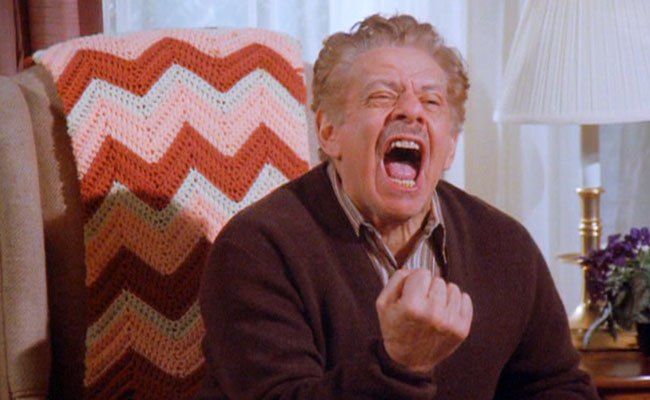
Frank Costanza

“So when you hear arguments over whether Cruz can be president, don’t worry about the senator from Texas. Think instead about the little girl adopted from China, learning about civics in her second-grade classroom and being told that she can never become president of the only country she has known.”

—-Washington Post editor and op-ed pundit Ruth Marcus, concluding a column titled, “Abolish the ‘natural born citizen’ test”

I love this quote, in no small part because it provides a neat exception to the general rule that an advocate using “Think of the Children!” as an argument is usually as sign that the advocate doesn’t want us to think at all. In this case, however, it is appropriate to think of that Chinese orphan, or my Russia-born son (rather than, say, George Costanza’s Italian born father on “Seinfeld,” who ignored politics on the grounds that he felt unfairly prohibited from running for President, shouting, “They don’t want me, I don’t want them!”), as well as figures like Arnold Schwarzenegger. The requirement for Presidents to be not just citizens in good standing, but “natural born” citizens, is the epitome of a Constitutional provision that once made sense but now does not. Marcus: Continue reading

Observations On A Nauseating Development

Ah, those were the good old days.

Ah, those were the good old days. Now we’re REALLY desperate.

Observation One: If you don’t see what’s nauseating about it, you are part of the problem. Here:

Top Obama administration  officials, including Denis McDonough, Obama’s chief of staff, Attorney General Loretta Lynch, FBI Director James Comey, Director of National Intelligence James Clapper, National Security Agency Director Michael Rogers, and White House Chief Technology Officer Megan Smith met in San Jose, California, with representatives of Twitter Inc., Apple Inc., Facebook Inc., and other Silicon Valley companies to seek ideas on how extremist content online can be identified and removed, as well as help creating alternative messages to counter terrorist recruitment methods using social media. You can be thoroughly nauseated by reading about the whole embarrassing fiasco here.

Other observations:

2. The incompetence this displays is staggering, and the apparent unawareness of the optics of incompetence is staggering:

“The gathering took place as Obama announced a new counterterrorism task force to thwart extremists and their use of social media after recent deadly attacks in Paris and San Bernardino, California. The task force will organize federal efforts into several areas, including research and analysis, technical assistance, communications, and programs to help prevent radicalization, according to the Homeland Security Department.”

Translation: “We haven’t been taking this seriously at all and were caught with our pants down, big-time. Now we have to look like we’re doing something.” Continue reading

Comment of the Day: “Observations On Obama’s Executive Orders On Guns And The Golden Dancer Presidency”

Are smart guns...smart?

Are smart guns…smart?

 J. E. Houghton illuminates one of President Obama’s wish list items for gun safety—fascinating. Here is his Comment of the Day on the post, “Observations On Obama’s Executive Orders On Guns And The Golden Dancer Presidency” :

I would like to offer an observation concerning one of President Obama’s executive order policies: To direct federal agencies to promote “smart gun” technology through the procurement power of the Federal government. The President compares guns to smart phones and asks why we can’t use the same modern technology to limit access and use of guns like we do with smart phones. (Vice President Biden’s post-Sandy Hook commission came up with a similar recommendation.)

This may sound like a good idea to some, mostly people who have no knowledge of guns and do not depend on guns for their own personal safety, national defense or homeland security.

Continue reading

Observations On Obama’s Executive Orders On Guns And The Golden Dancer Presidency

Rocking Horse

Before I begin, here are the orders, which almost none of the news media are explaining or in most cases, even mentioning. The list is from Forbes:

Gun Violence Reduction Executive Actions:

1. Issue a Presidential Memorandum to require federal agencies to make relevant data available to the federal background check system.

2. Address unnecessary legal barriers, particularly relating to the Health Insurance Portability and Accountability Act, that may prevent states from making information available to the background check system.

3. Improve incentives for states to share information with the background check system.

4. Direct the Attorney General to review categories of individuals prohibited from having a gun to make sure dangerous people are not slipping through the cracks.

5. Propose rulemaking to give law enforcement the ability to run a full background check on an individual before returning a seized gun.

6. Publish a letter from ATF to federally licensed gun dealers providing guidance on how to run background checks for private sellers.

7. Launch a national safe and responsible gun ownership campaign.

8. Review safety standards for gun locks and gun safes (Consumer Product Safety Commission).

9. Issue a Presidential Memorandum to require federal law enforcement to trace guns recovered in criminal investigations.

10. Release a DOJ report analyzing information on lost and stolen guns and make it widely available to law enforcement.

11. Nominate an ATF director.

12. Provide law enforcement, first responders, and school officials with proper training for active shooter situations.

13. Maximize enforcement efforts to prevent gun violence and prosecute gun crime.

14. Issue a Presidential Memorandum directing the Centers for Disease Control to research the causes and prevention of gun violence.

15. Direct the Attorney General to issue a report on the availability and most effective use of new gun safety technologies and challenge the private sector to developinnovative technologies.

16. Clarify that the Affordable Care Act does not prohibit doctors asking their patients about guns in their homes.

17. Release a letter to health care providers clarifying that no federal law prohibits them from reporting threats of violence to law enforcement authorities.

18. Provide incentives for schools to hire school resource officers.

19. Develop model emergency response plans for schools, houses of worship and institutions of higher education.

20. Release a letter to state health officials clarifying the scope of mental health services that Medicaid plans must cover.

21. Finalize regulations clarifying essential health benefits and parity requirements within ACA exchanges.

22. Commit to finalizing mental health parity regulations.

23. Launch a national dialogue led by Secretaries Sebelius and Duncan on mental health.

Observations:

1. I want to get this out of the way first, because it annoys me even more than other things connected with the announcement and its coverage. Jeb Bush was ready for the Obama orders with a signed op-ed titled, “Barack Obama’s executive orders trample on the Second Amendment.” Trample? They barely nick it. Maybe the orders infringe on the Amendment’s personal space. Bush wrote (or, more likely, had someone write for him) the essay before Obama’s measures were known. It’s obvious: Bush never mentions any of them. This is exactly the sort of idiocy from gun rights supporters that Obama, Democrats and anti-gun zealots are counting on, so they can say—with justification!—“See? Republicans don’t want to do anything to make us safer! They oppose measures before they even know what they are! How can anyone expect the President to work with these people?”

Jeb is an embarrassment, especially to himself. He should do everyone a favor and get out of the race.

2. Nicely timed to the orders is an excellent article in Reason called  “You Know Less Than You Think About Guns: The misleading uses, flagrant abuses, and shoddy statistics of social science about gun violence.” It would be nice, even responsible, if those clapping their hands like trained seals to Obama’s cynical grandstanding here actually read it.  A brief highlight: Continue reading

The Seventh Annual Ethics Alarms Awards: The Best of Ethics 2015, Part I

Sweet Briar montage

Welcome to the Seventh Annual Ethics Alarms Awards, our blog’s retrospective of the best and worst in ethics over the past year, 2015.

It was a rotten year in ethics again, it’s fair to say, and Ethics Alarms, which by its nature and mission must concentrate on episodes that have lessons to convey and cautionary tales to consider probably made it seem even more rotten that it was. Even with that admission, I didn’t come close to covering the field. My scouts, who I will honor anon, sent me many more wonderfully disturbing news stories than I could post on, and there were many more beyond them. I did not write about the drug company CEO, for example, who suddenly raised the price of an anti-AIDS drug to obscene levels, in part, it seems, to keep an investment fraud scheme afloat. (He’ll get his prize anyway.)

What was really best about 2o15 on Ethics Alarms was the commentary. I always envisioned the site as a cyber-symposium where interested, articulate and analytical readers could discuss current events and issues in an ethics context. Every year since the blog was launched has brought us closer to that goal. Commenters come and go, unfortunately (I take it personally when they go, which is silly), but the quality of commentary continues to be outstanding. It is also gratifying to check posts from 2010 and see such stalwarts who check in still, like Tim Levier, Neil Dorr, Julian Hung, Michael R, and King Kool.  There are a few blogs that have as consistently substantive, passionate and informative commenters as Ethics Alarms, but not many. Very frequently the comments materially enhance and expand on the original post. That was my hope and objective. Thank you.

The Best of Ethics 2015 is going to be a bit more self-congratulatory this year, beginning with the very first category. Among other virtues, this approach has the advantage of closing the gap in volume between the Best and the Worst, which last year was depressing. I’m also going to post the awards in more installments, to help me get them out faster. With that said….

Here are the 2015 Ethics Alarms Awards

For the Best in Ethics:

Most Encouraging Sign That Enough People Pay Attention For Ethics Alarms To Occasionally Have Some Impact…

The Sweet Briar College Rescue. In March, I read the shocking story of how Sweet Briar College, a remarkable and storied all-women’s college in Virginia, had been closed by a craven and duplicitous board that never informed alums or students that such action was imminent. I responded with a tough post titled “The Sweet Briar Betrayal,” and some passionate alumnae determined to fight for the school’s survival used it to inform others about the issues involved and to build support. Through the ensuing months before the school’s ultimate reversal of the closing and the triumph of its supporters, I was honored to exchange many e-mails with Sweet Briar grads, and gratified by their insistence that Ethics Alarms played a significant role in turning the tide. You can follow the saga in my posts, here.

Ethics Heroes Of The Year

Dog Train

Eugene and Corky Bostick, Dog Train Proprietors. OK, maybe this is just my favorite Ethics Hero story of the year, about two retired seniors who decided to adopt old  dogs abandoned on their property to die, and came up with the wacky idea of giving them regular rides on a ‘dog train” of their own design.

Ethical Mayor Of The Year

Thomas F. Williams. When the Ferguson-driven attacks on police as racist killers was at its peak (though it’s not far from that peak now) the mayor of Norwood, Ohio, Thomas F. Williams, did exactly the opposite of New York Mayor Bill de Blasio in response to activist attacks on the integrity of his police department. He released a letter supporting his police department without qualification. At the time, I criticized him for his simultaneously attacking activists as “race-baiters.” In the perspective of the year past, I hereby withdraw that criticism.

Most Ethical Celebrity

Actor Tom Selleck. In a terrible year for this category, Selleck wins for bravely pushing his TV show “Blue Bloods” into politically incorrect territory, examining issues like racial profiling and police shootings with surprising even-handedness. The show also has maintained its openly Catholic, pro-religion perspective. Yes, this is a redundant award, as “Blue Bloods” is also a winner, but the alternative in this horrific year when an unethical celebrity is threatening to be a major party’s nominee for the presidency is not to give the award at all.

Most Ethical Talk Show Host

Stephen Colbert, who, while maintaining most of his progressive bias from his previous Comedy Central show as the successor to David Letterman, set a high standard of fairness and civility, notably when he admonished his knee-jerk liberal audience for booing  Senator Ted Cruz

Sportsman of the Year

CC Sabathia

New York Yankee pitcher C.C. Sabathia, who courageously checked himself into rehab for alcohol abuse just as baseball’s play-offs were beginning, saying in part,

“Being an adult means being accountable. Being a baseball player means that others look up to you. I want my kids — and others who may have become fans of mine over the years — to know that I am not too big of a man to ask for help. I want to hold my head up high, have a full heart and be the type of person again that I can be proud of. And that’s exactly what I am going to do.”

Runner-up: MLB Commissioner Rob Manfred, who dismissed the ethically-addled arguments of Pete Rose fans to reject his appeal to be have his lifetime ban for gambling lifted.  For those who wonder why football never seems to figure in this category: You’ve got to be kidding.

Ethics Movie of the Year

SpotlightTIFF2015

“Spotlight”

Runner-up: “Concussion”

Most Ethical Corporation

Tesla Motors, the anti-GM, which recalled all of its models with a particular seatbelt because one belt had failed and they couldn’t determine why. Continue reading

Vote For Popehat’s Censorious Asshat Of The Year!

Popehat-header

One of the best and most provocative blogs is Popehat, which has had a momentous year. Besides being its usual passionate and quirky self, the libertarian/free speech/legal/nerd website has also added Marc Randazza to its ranks. Marc (Full disclosure: he is a law school classmate, though if I ever met him face to face, I don’t remember) who shares Popehat Master of the House Ken White’s love of justice and creative invective and is also a superb lawyer, will alter the tone there a bit as well as be his opinionated,thoughtful, often hilarious self.

Popehat is offering a reader poll to determine the Censorious Asshat of the Year. I know that an ethics blog with the proclivities of Ethics Alarms is a little like a Macy’s Santa sending shoppers to Gimbels, but it’s Christmastime, and besides, there’s no competition in ethics, just futility. As it happens, only three of the 12 nominees made it into Ethics Alarms last year. I was aware of all of them, but my purview is a bit broader than Popehat’s; for whatever reason, they were in my range  but I decided to use my bullets elsewhere.

Go here, and help a worthy blog crown a worthy free speech-hating jerk and or jerks.

I bet you’ll be able to guess my vote.

Believe It Or Not, There Is Good News On The Campus Speech Front

greenlighThe Foundation for Individual Rights in Education (FIRE) reports that  less than half of America’s colleges maintain policies that severely restrict students’ right to free speech, an all time low since the campus speech defending non-profit started tracking the problem.

Spotlight on Speech Codes 2016: The State of Free Speech on Our Nation’s Campuses reports on policies at 440 of America’s largest and most prestigious colleges and universities.

The report tells us that…

  • The percentage of red light schools has declined from a high of 75 percent in 2007, while in the same time period the number of green light institutions has grown from just eight institutions (2 percent) to 22 this year (5 percent).

This welcome news is especially surprising given the explosion of administration capitulations to student demands for restrictions on campus expression deemed “offensive” or “hostile” to minorities. In fact, I wonder how much of the report was complete before Mizzou Madness. Continue reading

A Merry Christmas For The Washington Redskins, “The Slants,” And The First Amendment

Yes, The Slants were apparently, disparaging. themselves.

Yes, The Slants were apparently disparaging. themselves.

The political-correctness obsessed Democratic component of our government has decided that forcing Dan Snyder to change the name of his football team due to its alleged offensiveness to people who don’t care about football is a legitimate government function, or so they would have us believe. Actually, they believe it is a legitimate political function to lick the moccasins of progressive activist groups who thrive on opportunities to tell others what they can safely say.

After Senate Democrats signed an unethical  missive threatening the Washington Redskins if the team wasn’t renamed something that an enterprising race-baiter wouldn’t find offensive—not as easy as it may seem— the Patent and Trademark Office canceled the registration of “Redskins” using the excuse that Federal trademark law excludes the registration of “scandalous, immoral, or disparaging marks” as well as trademarks that a “substantial composite of the referenced group” perceives as disparaging to a religion, nation, ethnic group, or  belief system. [ You can read my opinion on this ruling here. I’d quote from it, but it’s Christmas Eve.]

The ruling was upheld in the Fourth Circuit, despite the fact that it seem to be fairly blatant viewpoint-based restriction of speech, or in other words, unconstitutional. To his credit, Snyder is not allowing the Democrats to bully him or illegally try to control his speech either, and has the resources to fight. The betting is that the Supreme Court will tell the Trademark Office to stop playing politics.

The Patent and Trademark Office also barred the registration of “The Slants,” the trademarked name of Simon Tam’s Asian-American band. Now the U.S. Court of Appeals for the Federal Circuit just held, in the case of In re Tam, by a 9-to-3 vote, that this exclusion of “disparaging” trademarks, and, by extension, the Redskins ban as well, violates the First Amendment.  This means that the Redskins case is likely to go to the Supreme Court if the government doesn’t agree to let people trademark whatever the want to, regardless of who or what it might “disparage.” Continue reading

Sign Language Interpreter Ethics Epilogue: “A Christmas Carol”

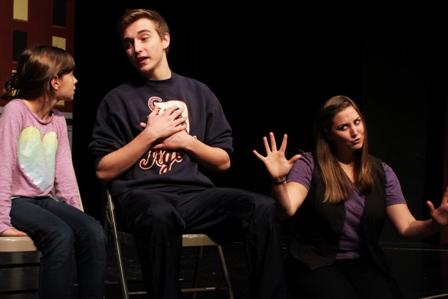
Gavin Alvedy rehearses a scene from the Downriver Youth Performing Arts Center's "Miracle on 34th Street" as DYPAC alum Emily Zaleski signs alongside him. Zaleski, who grew up performing on DYPAC’s stage, now is a certified American Sign Language interpreter with Synergy on Stage and will interpret during the Dec. 8 performance.

Sign language interpreters and their advocates descended on Ethics Alarms in indignation aftert  my March post about “showboating sign language interpreters for deaf audience members.” It took until December for my commentary to reach this passionate interest group, but when it did, I was called many names, including “ablist,” and had to put up with comments like this one from the ironically named “Danny Who Knows About Stuff”:

I would take this “ethics” person seriously if he/she seemed to know anything about the ethics that guide sign language interpreting. And, I suppose it would be helpful if the person understood anything about linguistics, sign language, Deaf culture, or audience response theory. This article is more about the individual than than the issue. In short, this person is no more an ethicist that is Donald Trump.

How I love the quote around “ethics.”

Danny was pretty typical. See, I don’t need to know about any of Danny’s “stuff” as a director of a play or musical. All I need to know is whether a feature of the performance detracts from it by foiling the focus that the staging was designed to facilitate. Every competent director knows that. The needs of the signer and the signer’s much, much smaller audience cannot be permitted to wag the dog, or make the dog trip on its tongue.  or perish of neglect.

“Danny Who Knows About Stuff” became “Danny Who Is Banned From Ethics Alarms,” in case you didn’t guess.

If I had already experienced what I experienced yesterday with a “professional” signer, that March post would have been much tougher. I directed an staged reading of “A Christmas Carol” with a cast of 30 terrific actors for a single free performance for D.C.’s Martin Luther King Library, and was told that the library would be sending a signer. Now, a signer for your usual staged reading is like having a signer for an oil painting. It makes no sense. In readings, the actors mostly read. Presumably the deaf can read “A Christmas Carol” themselves. You could say they would want to see the performers, but  in readings the performers’ acting mostly consists of vocal expression, which the deaf audience can’t hear, and facial expressions, which they won’t see if they are watching the signer. As it happens, I don’t do staged readings like that; there is a lot of movement and staging, so a signer makes some sense.

But they didn’t know how I would stage it.

By the time we got to the final rehearsal, I had forgotten about the alleged signer, who was supposed to at least attend one rehearsal so I could fit her onto the stage where she would be seen and not get in the way. She arrived, for the first time, 15 minutes before the performance, and immediately announced that she didn’t know whether she would be signing or not.  That’s helpful. She also complained that the script was very well adapted for signing (Why, thank-you!) and that the show, at 90 minutes, was impossibly long for a single signer to do: she was waiting to see if a second signer was coming, as she had assumed. Now, nobody warned me that I had to make room for two signers in the small performing space, neither of whom would deign to attend a rehearsal. ( Her complaint about length was also nonsense. I have had single signers for many shows longer than 90 minutes, and they didn’t collapse from exhaustion or finger cramps.) Continue reading