The Sixth Annual Ethics Alarms Awards: The Worst of Ethics 2014 (Part 1)

Cosby3

2014 was the year of the Ethics Train Wreck. They were coming so fast that they were getting tangled up with each other, and old wrecks from past years started rolling again, or the damage that was triggered a year ago or more started kicking in. I don’t know if every year really is more ethics free than the year before, or that it just feels that way because I’m getting better at sniffing it out. By any standards, it was a wretched year, with epic ethical misconduct across the culture. But I can’t stall any more: let’s wade into it. There will be more installments this year, so the misery is coming in smaller bites. You’re welcome.

Ethics Train Wreck of the Year

trainwreck

It’s a tie!

The Ferguson Ethics Train Wreck and The Obama Administration Ethics Train Wreck

The obvious winner is the Ferguson Ethics Train Wreck, which has managed to hook up with the 2012 winner, The Trayvon Martin- George Zimmerman Ethics Train Wreck, as well as a the sub-EthicsTrain Wreck attached to the death of Eric Garner, to further degrade U.S. race relations, undermine the stability of numerous cities, get several people, including the recently assassinated NYC police officers killed, revive race riots, give vile demagogue Al Sharpton unprecedented power and influence, and pick up such distinguished riders as President Obama,  Missouri Governor Jay Nixon, New York Mayor de Blasio. It is also still barreling along at top speed after many months, and is a good bet to continue its carnage well into 2015. 

Yet, it became clear to me this summer with this post that the entire Obama Administration has become an Ethics Train Wreck, and one that is neck-and-neck with the one spawned in Ferguson in threatening short and long-term damage. Incompetence, dishonestly, lack of transparency and arrogance have hardened cynicism in the public, corrupted the ethical values of defenders, let journalists to disgrace themselves, and fertilized festering potential disasters internationally and domestically. This is also, I now see, a wreck of long duration that started in 2009, and had gathered momentum with every year. It also has sparked other wrecks, including the one that now keeps it from being the sole 2014 winner. How much damage will The Obama Administration Ethics Train Wreck do in 2015? Which agency or department will prove itself to be corrupt, incompetent and mismanaged, which official will continue in a post after proving himself unfit to serve, which inept pronouncement or abuse of power will further degrade American trust and freedom?

I’m not looking forward to learning the answers.

Fraud of the Year

The U.S. Justice Department, which allegedly participated in a plot to force  Sierra Pacific Industries and other defendants  to pay $55 million to the United States over a period of five years and transfer 22,500 acres of land as settlement of charges brought against the company by DOJ for causing a 2007 wildfire that destroyed 65,000 acres of land in California. Naturally, the national news media has barely covered this scandal, which is still in litigation. Runner Up: The Victoria Wilcher scam, which made KFC pay for plastic surgery for a little girl when there was no evidence that the company was in any way involved with her injuries. After the fraud was discovered, it didn’t dare ask for its money back. Well played, fraudsters! Continue reading


Abortion, “The Fly” and the Ethics Incompleteness Theorem

"AWWW! He looks just like his father!"

“AWWW! He looks just like his father!”

The most interesting aspect of ethics is at the margins, those situations where absolutists are challenged to hold to their principles because of unforseen variations that no general analysis could anticipate. The absolute ban on torture as unethical becomes shaky under the “hidden nuclear bomb” scenario.  Capital punishment opponents find that their compassion evaporates when asked whether Hitler or bin Laden deserved execution.

This is the Ethics Incompleteness problem, which I last wrote about at length in March of 2014:

“The human language is not sufficiently precise to define a rule that will achieve its desired effects, that is work, in every instance. There are always anomalies around the periphery of every normative system, no matter how sound or well articulated. If one responds to an anomaly by trying to amend the rule or system to accommodate it, the integrity of the rule or system is disturbed, and perhaps ruined. Yet if one stubbornly applies the rule or system without amendment to the anomaly anyway, one may reach an absurd conclusion or an unjust result. The Ethics Incompleteness Principle suggests that when a system or rule doesn’t seem to work well when applied to an unexpected or unusual situation, the wise response is to temporarily abandon the system or rule and return to basic principles to find the solution. No system or rule is going to work equally well with every possible scenario, which is why committing to a single system is folly, and why it is important to keep basic ethical values in mind in case a pre-determined formula for determining what is right breaks down.”

I was watching the Jeff Goldblum remake of “The Fly” (written and directed by David Cronenberg) last night, and rather than being properly horrified by Geena Davis’s nightmare of giving birth to a yard long fly larva, I found myself wondering how anti-abortion absolutists would handle her unusual dilemma. The film follows the tragedy of scientist Seth Brundle (Goldblum ) who has developed a means of teleportation. The process involves a computer breaking down a body, then transmitting the atoms electronically to a receiving “pod,” and reassembling them there. Unfortunately, when Seth tests the device on himself, an unnoticed fly gets into the sending pod, and the result is a version of Brundle that has fly DNA mixed in. (In the memorably campy Vincent Price original, what arrived in the receiving pod was a man with a giant fly head and a fly with a tiny human head.) Gradually Brundle mutates in form and mind into a monstrous hybrid, but before he knows what has happened to him, he impregnates girl friend Davis. Soon she realizes that something with insect DNA is gestating inside of her, though all tests show a healthy human embryo. Not surprisingly, she wants an abortion.

Would those who argue that abortion is murder maintain that she shouldn’t be able to have one, or that aborting the fetus is wrong? Let’s make the problem harder: let’s say she only learns that she has a fly-baby in the third trimester, when our laws wil not permit abortions unless the mother’s life is in peril. Some questions: Continue reading

KABOOM!* The Most Unethical Anti-Gun PSA Yet

[ If you are new to Ethics Alarms and don’t understand the significance of a Kaboom, go here.]

Should you need any further proof that anti-gun mania turns some people into clinical phobics, melting their ethics alarms and leaving all rationality behind, I give you this, a recent public service video out of San Francisco’s Sleeper 13 Productions:

Could such an ad be more irresponsible? It urges children to

  • Go looking for their parents guns (and why did is the gun in the video where a kid can have access to it?);
  • Pick them  up and handle them (Is the gun loaded?);
  • Steal the guns ( Any gun? Shotguns? Rifles? Semi-automatic weapons?)
  • Take the guns to school, breaking the law in the process;
  • Turn them over to their teachers, who also may have no business handling one.

In the process of this well-intentioned, hysterical brain rot, the PSA also encourages children to be terrified if their parents own a gun, though there is no context at all in the video. Is a parent a cop? An FBA agent? A gun collector? A hunter? A trained marksman? Clint Eastwood? James Bond? Never mind: steal the gun. This attitude is the tell-tale symptom of an anti-gun zealot: it’s the gun itself that is dangerous, and who owns or wields it is irrelevant. Continue reading

I’m Dreaming Of A Zombie Christmas

Zombie Nativity

I didn’t say it was a pleasant dream.

Hmmm, how should I describe this? I would say that a law is being used to violate the First Amendment rights of an unethical jerk who is intent on abusing them.

Or, in the alternative, Jasen Dixon may just be an idiot.

Sycamore Township, which is just outside Cincinnati, has responded to complaints by neighbors by applying various ordinances against Dixon’s unusual Nativity scene that he constructed in his front yard. It features life-size figures portraying Joseph and Mary as the walking dead, and a zombie baby Jesus, who has pale skin and pure white eyes. Here, here’s a close-up of Zombie Baby Jesus:

Zombie-nativity-scene

Awwwww!

Dixon suspects that the township laws, which prohibit structures in the front or the side yard of a residence that occupy more than 35 percent of its total area, and require that the primary structure must be 3 feet from the street and 6 feet from the dwelling, are really being selectively enforced against him because his holiday display offends some people….well, almost everyone. I suspect this as well.

Poor Jason says he doesn’t mean any harm: he’s just doing the best he can to celebrate the birth of baby Jesus. “I wanted a Nativity and I worked with what I had,”  says Dixon, who manages a nearby haunted house called “The 13 Rooms of Doom.” He says his First Amendment rights are being infringed.

“I’ve lived here for 15 years and I’ve never had a violation of any kind,” Dixon said. “It’s a holiday decoration. I know if it was a real pretty Nativity scene they wouldn’t be saying anything.”

I’ll agree with that too. Continue reading

Unethical Quote of the Week; Chris Rock

Shut up, Chris.

Shut up, Chris.

“You say the wrong thing — you see what happened to [Donald Sterling],” Rock said. “I’m not defending what Sterling said at all, but if that’s not the First Amendment then what the [bleep] is? And what did he say, ‘I don’t want my girlfriend hanging out with black basketball players’? Me neither!”

—Black comic and “truth-teller” Chris Rock, discussing the fear in Hollywood as a result of the Sony hacks.

Gee, Chris, that’s courageous, fair, perceptive and true.

What a shame you didn’t have the integrity or guts to condemn what happened to Sterling while every other black pundit, columnist, athlete, and celebrity was comparing him to Satan. You just allowed everyone to pile on the old, rich white guy, take away his team and make him the face of racism for telling his slutty black  girlfriend—in his own bedroom!—not to flaunt the fact she was only hanging with him for the money by showing up at his teams’ games with her real boyfriends. You Hollywood types are hilarious–as in disgusting— in your selective belief in rights, privacy and fair play. First Aaron Sorkin, who didn’t object to the media feeding frenzy over Sterling’s private remarks, suddenly argues that his friends and business associates’ equally damning comments shouldn’t be reported because they aren’t about crime and corruption, and thus aren’t news. Then you suddenly decide to defend Donald Sterling’s rights of privacy and free speech now, when there is no cost to you at all, and the damage is done and irreparable.

Here’s what’s unethical about your statement, Chris: it’s too damn late.


Ethics Alarms Mail Bag: The Cologne Allergy

Perfume allergyEvery now and then readers think I’m Ann Landers. Today I got a “Dear Ethics Alarms: What’s right?” e-mail from a friend, and I thought I’d answer it on the blog because it raises a classic ethics conundrum.

The inquirer belongs to a social group that meets weekly. It is a weekly joy, I am told; the writer has been attending for years. Everyone convenes, on the given day, right after work. Attendance varies, and membership is informal, though individuals have been told, on rare occasions, to come no more.

Of late an infrequent attendee, but a member of long standing, has begun to attend meetings with some regularity. My friend says this is not the happiest of developments, because the two do not get along. It is a breach of long-standing, I am told and is not going to be healed. “She is an asshole,” is how the letter delicately puts it.

Last week, shortly before the end of the 90 minute gathering, the recent interloper stood up and declared that she had developed a serious allergy to colognes, perfumes, aftershave, and all chemical scents. Looking right at my friend, she declared that this allergy made exposure to any sort of commercial scent unbearable, and she asked that in the future no members should wear perfume of any kind.

“I have worn a favorite brand of cologne every day for over thirty years,” the from my acquaintance letter says. “I always get complimented on it; the scent is subtle and nobody would notice it unless they were right next to me. The asshole and I have been separated by the length of the room since she started coming. Personally, I think she made the demand just to make me miserable. She knows, from our previous relationship [NOTE: I think it was more than just a friendship], that I wear the cologne.”

The question: Is she ethically obligated to stop wearing cologne on the day of the meeting (she goes right from work) to accommodate this member’s special problem?

Add to this the broader ethics question that comes up often: Does a group member with special sensitivity have the ethical upper hand allowing such a member to demand that all other members avoid conduct that only bothers that member? Continue reading

Comment of the Day on “Comment of the Day on ‘The Perils Of Over-Regulating The Police: A Case Study'”

Robocop

Stephen Mark Pilling contributes the second consecutive Comment of the Day providing perspective on the issue of police militarization, in response to the first. Here is his Comment of the Day to the post (by dragin_dragon, which you should read first if you haven’t yet), Comment of the Day on “The Perils Of Over-Regulating The Police: A Case Study”

When critics speak of the “militarization” of the police, not all are looking at it from the same viewpoint. Some are, of course, sociopathic or are conspiracy theorists. Some have swallowed the loudly flaunted concept that policemen are evil racists, corrupt ward healers in uniform or just about anything heinous, as they represent law as an absolute, not a relative.

There is a rational based distrust, however. Many of us grew up in a time where the police still walked a beat or patrolled his neighborhood in a squad car, armed with nothing more than a revolver. We’re also the product of an old tradition of law enforcement that stems from the British mold. Unlike the continental European system of paramilitary gendarmes, we adapted a system of localized lawmen, run by an elected county sheriff. The metropolitan police department is still a relatively new phenomenon, started in late 19th Century London.

To many citizens, police who are unaccountable to a directly elected chief and who sport automatic weapons strike a sour note. But recently, people have been seeing them acquiring armored vehicles, military assault training and a tendency to wearing black uniforms. They’ve also noted an increased likelihood of these tactics and weapons being utilized and the increased incidence of “no knock entries”. Likewise, citizens have been imaging police making arrogant idiots out of themselves and caused other cops to become ever more touchy about cell phones, whether they’re right or wrong.

These and other factors have been serving to create a gap between the citizens and the police. That’s never a good thing, of course, because that trust is vital in a free society. Citizen distrust only deepens when they perceive policemen in whom this sense of civil mastery is full blown. As a former military cop, as a private citizen and as a friend or relative of a lot of civilian cops, I’ve seen all this from different angles. I’ve also seen the divide deepen in recent days.

One small note. The funding of police units on all levels directly from federal sources coincides with the worry by many that state and local police units may be more or less within the pocket of federal departments. The actual militarization of once innocuous federal police units and the memory of Obama’s projected National Civilian Defense Force has resulted in fear that this is an intentional part of a program to create an instrument of oppression. For myself, I highly doubt that any street cops would lend themselves to some “martial law” based takeover of the homeland of America. What I’m not sure of, though, is how many in higher authority have not conceived of the notion and would execute it if they could.

Again; it’s vital that the bonds of trust be strengthened between the police departments and those law abiding citizens whom they “serve and protect”. They must never- ever- be heard to make disparaging remarks about “civilians”, as that only deepens the gulf. In the Army Military Police Corps, the official motto is “Of the troops and for the troops”. It’s a good motto. It should also carry over to every local police or sheriff’s department in America. “Of the citizens and for the citizens”. Policemen who embrace that attitude will seldom go wrong. Both they and the communities they serve will benefit.

Continue reading

Transparency, Causation, Eggshells, Trust : Seven More Ethics Issues In The Eric Garner Case

jigsaw-puzzle-record

1. There is near unanimity in the response to the non-indictment by the Staten Island jury in the Eric Garner case. In light of the graphic video, it is hard to see how there wasn’t probable cause to indict. The coroner verdict of “homicide” would see to provide sufficient evidence all by itself. However, in the absence of the complete record of what the grand jury heard and saw, nobody can be certain that this was a miscarriage of justice. However, given the context of the case and its deleterious impact on faith in the justice system, that is no solace and scant mitigation. As in Ferguson, it is prudent and essential that the public see what the decision was based upon. It is true that those who are determined to see injustice, bias and racism will do so regardless of what the evidence shows–again, as in Ferguson—but the only evidence that has been made public, the various videos and the officer’s testimony–only makes the non-prosecution more suspicious.

2. Can the non-prosecution be justified? If so, the only reason I can see would be lack of proof of causation. Causation is tricky, and  juries get confused about how to analyze it. Since it is fair to assume Daniel Pantaleo did not intend to kill Eric Garner, the issues are a) whether his actions during the arrest were negligent, and b) whether they were the proximate cause of Garner’s death. That his conduct was negligent is not enough to sustain and indictment—that negligence had to be the reason Garner died. Remember, he was not choked to death. The medical examiner ruled that Garner died from a collection of factors: compression on his chest and throat, the position he was forced into, his obesity, weak heart, and asthma, all causing asphyxia.

  • If Pantaleo’s actions alone would not have caused Garner’s death, then it could be legitimately argued that he was not guilty of a crime. The other officers were given immunity for their testimony, which seems like either a bad decision by the district attorney, or intentional sabotage of the case against Pantaleo’s. If it was the collective action of the police that caused Garner’s death, it would be unjust to make Pantaleo the sole officer punished. If some of the testimony from the unchargeable cops made the case that it was another officer, or several, who really caused Garner’s death, that would explain the no indictment result.

In the widely seen video of the arrest, Pantaleo can be seen with his arm around Garner’s neck as Garner is taken to the ground and for some time thereafter, but in watching the video it’s difficult to determine whether Garner was in fact choked. And if he was, it did not appear it was long enough even to render him unconscious, much less kill him…I saw nothing excessive in the manner in which the officers subdued Garner. He was neither beaten with batons nor even punched. To me, it appeared to be a fairly typical scuffle with a large man who had clearly demonstrated his unwillingness to be arrested peacefully.

He misses the point. The question is whether the take-down was excessive for Garner, not some theoretical average arrestee. It is true that with a normal, healthy subject, what the officers did would not typically cause death….but Garner was obviously not normal, nor healthy. He was morbidly obese, and 350 pound middle-aged people tend to have the kinds of heath issues Garner in fact had. Nobody would argue that an elderly woman or a ten-year old girl or someone in a wheelchair should be manhandled like that. Such treatment was negligent for Eric Garner, and the deadly result could and should have been anticipated.

It is true that the officers couldn’t know that Garner had a weak heart and suffered from asthma, but it doesn’t matter: the rule in negligence is that “you take your victim as you find him.” If your negligence is the proximate cause of someone’s death, the fact that it wouldn’t have caused anyone else’s death is no defense. This is the so-called “Egg-shell Skull” rule.

Garner was an egg-shell perp. Continue reading

The Perils Of Over-Regulating The Police: A Case Study

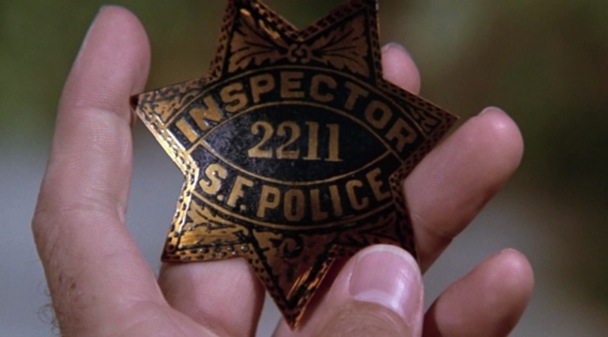
This is Dirt Harry's badge. Seconds later, he throws it into a river. Lots of other police will be doing the same.

This is Harry “Dirty Harry” Callahan’s badge. Seconds later, he throws it into a river. Lots of other police officers will soon be doing the same.

Yesterday, for the third time in my life, I was the first one on the scene after a fellow human being’s death. This time, it was a very close friend and, though it has little to do with this post, a wonderful man. I had headed out to his home because I was worried: an unusually reliable and conscientious individual, he had missed several appointments the last few days and hadn’t been answering e-mails and phone calls. When I was told about this, I immediately suspected the worst, and sadly, I was right.

His car was outside his house, and though it was mid-day and he was supposed to be somewhere else, I could see that the TV was on. In front of his door, getting soaked in the rain,  was a package: it had been delivered there on December 2. I got no response to my bangs on the door. It was time to call 911.

The police responded quickly. I’m not going to name the department, which has an excellent reputation here, and I do not fault the officers, who were diligent and polite, and who set about investigating the scene professionally and quickly. Nonetheless, after a full 90 minutes, after which they could not discern any more than I had before they came, they would not enter the house.

They told me that they could not risk being sued, and that there were elaborate policies and procedures that had to be checked off first. The officers had to track down their supervisor (it was a Saturday), and, they said, more than one official would have to sign off, to protect the department

“He could be drunk; he could be shacked up; he could just want to be alone,” they told me. “The law says his privacy can’t be breached, even by us.”

“But he’s not any of those things,” I said. “He doesn’t do any of those things, and if he were OK, there wouldn’t be a four-day-old package outside.”

“Maybe he took a trip on a whim.”

“He would have called and cancelled those commitments,” I said. “Look, you and I both know that he could be inside, on the brink of death, with every second bringing him closer. The only alternative is that he’s died already. If you won’t do it, let me break in, chase me, and you’ll find him legally as you pursue me. How’s that?”

The police weren’t sold. Finally, after a full 90 minutes, they requisitioned a ladder from a neighbor and were able to see into a second floor window. My friend was visible on the floor, and then they moved quickly, breaking down the door. They were too late by days. They might have been too late by minutes though. All those procedures and policies that forced the police to avoid taking action that in this case, under these circumstances, were prudent and that might have saved a life imperiled.

The lesson is only this: if we cannot trust police to make decisions like this, we obviously are not going to trust them to decide when to fire their weapons. Laws, rules and procedures are rigid, and have to be examined slowly; real life operates in the shadows of uncertainty, among the loopholes, gray areas and ambiguities, and it moves fast. The protests and demands in the wake of the recent police controversies will undoubtedly result in more regulations, policies and laws, but there is good reason to believe that they will also make us less safe rather than more safe, and make it difficult to find reasonable, dedicated, ethical men and women willing to serve as police, a job which, we seem to be deciding, should be subjected to strict liability whether the officer acts too quickly, or not quickly enough—judged, of course, after the results are in. Continue reading

The Rams’ “Hands Up!” Gesture: Of Course The Players Deserved be Disciplined

rams protest 1201

The five St. Louis Rams who entered their NFL game last week with their hands up aren’t going to be disciplined by the league, for reasons that have nothing to do with the appropriateness of their conduct. The NFL is up to its faceguards in bad public relations already, and understandably wants to avoid wading into the Ferguson quagmire and being perceived to be taking sides, a move with no up-sides at all. Sportswriter Sally Jenkins also took issue with the St. Louis police demanding that the players be punished, in an emotional statement that seemed to threaten vague consequences if they were not. She was right to point out that government entities may not use threats of non-performance of their duties to members of the public in order to control their speech, like, say, the Federal government is doing now to try to force Dan Snyder to change the name of his Washington, D.C. NFL team.

Jenkins’ conclusion, however, was an ethics mess:

“Five members of the St. Louis Rams made an edgy gesture on Sunday, and you may not agree with them. But they merely joined a long tradition of athletes using their celebrity for symbolic public protest, and the NFL was right to reject the call to punish them. Punish them for what, after all? For showing an alertness and sensitivity to current events in their community, and holding an opinion on them?”

1. The “long tradition” argument is “everybody does it,” and nothing better. Professional athletes are paid to play games and entertain. Few of them have any qualifications or expertise that elevate the value of their opinions on public policy and politics above that of the regulate citizens watching them, and it is an abuse of their position and an exploitation of the venue for any athlete to exploit both to make a personal statement. Earlier, Jenkins says that to punish the Rams players “would also smack of 1968, when Tommie Smith and John Carlos were expelled from the Olympic Games for their black-gloved salutes,” as if that’s an argument. Smith and Carlos should have been expelled. The Olympics wasn’t theirs to co-opt for national political statements, no matter how valid or worthy. The Rmas players can hold opinions, and nobody is saying otherwise. Once they are in uniform and on the field, however, their opinions are not for display. They don’t own the forum. Continue reading