When Ethics Alarms Don’t Ring, Schools Don’t Teach And Brain Cells Die From Under-Use: The San Antonio City Council

The city of San Antonio has passed a resolution outlawing words associated with the coronavirus that it deems to be racist or xenophobic.

The resolution states: “The City of San Antonio denounces antisemitism, anti-Asian bigotry, and all hateful speech, violent action and the spread of misinformation related to COVID-19 that casts blame, promotes racism or discrimination or harms the City of San Antonio Asian and Pacific Islander, Jewish, immigrant or other communities.”

According to reporter Jaie Avila, Councilman Jack Finger was speaking against the resolution when his mic was cut off. Well, that figures, right? One form of censorship is as good as another. Continue reading

Prelude To “The Pandemic Creates A Classic And Difficult Ethics Conflict, But The Resolution Is Clear, Part II”

No, I am not satisfied with the current draft of Part II, but I trust it’s obvious what the resolution referred to is. The lock-down has to end, and before vaccines, cures, or adequate medicine are available. One of the components of my research has been reading as many of the pro and con articles as I can stand. It is quite striking: the arguments for continuing the lockdown indefinitely are almost entirely authored by progressives, and are without exception characterized by bad logic, emotionalism, manipulated facts, biased analysis, fearmongering, and suspect motives. The majority of the arguments for opening up the economy soon are markedly more logical, unemotional, and based on sound statistics and analysis. Certainly one cannot choose between two options based on the quality of the advocates for each. Nonetheless, the divide is striking.

Ann Althouse chose such an essay today to critique, “Whose Freedom Counts?/Anti-lockdown protesters are twisting the idea of liberty” by Dahlia Lithwick, who has periodically been discussed here, the first time in 2010. It is e fair to say that her mind and mine run in different metaphorical riverbeds, not that there’s anything wrong with that. Lithwick’s article endorses yet another one of the  same ilk, Ibram X. Kendi’s  current piece in The Atlantic called “We’re Still Living and Dying in the Slaveholders’ Republic/The pandemic has brought the latest battle in the long American war over communal well-being.”

Ann makes short work of both, writing,

Aha! We see what you’re doing! What a distraction! But I suppose that because slavery was invoked, I’m expected to listen without protest while Kendi’s solemn, censorious lecture is promoted by an over-excited Lithwick. I resist. Sorry. I do hear what you’re saying, and I see how well it works to justify depriving us of all freedom. There’s never enough freedom from all the things in the world that might hurt us if we’re not kept in eternal lockdown.

Excellent. Althouse is a liberal, much as she tries to hide it, but she is not an aspiring totalitarian, like such a large swath of the current mutated progressives and Democrats. Her last sentence echoes two of my favorite quotes, “In order to have enough liberty, it is necessary to have too much,”  (Clarence Darrow), and “Those who would give up essential Liberty, to purchase a little temporary Safety, deserve neither Liberty nor Safety,” (Benjamin Franklin).

I have another screed to deconstruct: a New York Times editorial  by Charlie Warzel titled “Open States, Lots of Guns. America Is Paying a Heavy Price for Freedom,” or in my print edition, “Will We Get Used To The Dying?” I’ll let you read it first without my comments, here. That’s only fair.

***

Done? Maybe you don’t even need this: eviscerating Warzel ‘s analysis shouldn’t be too hard. Rebutting most of these essays isn’t hard.

Away we go…

The coronavirus scenario I can’t stop thinking about is the one where we simply get used to all the dying. I first saw it on Twitter. “Someone poke holes in this scenario,” a tweet from Eric Nelson, the editorial director of Broadside Books, read. “We keep losing 1,000 to 2,000 a day to coronavirus. People get used to it. We get less vigilant as it very slowly spreads. By December we’re close to normal, but still losing 1,500 a day, and as we tick past 300,000 dead, most people aren’t concerned.”

How old is Warzel, 15? We accept the mortality of modern life, just as our ancestors accepted the mortality of their own periods. That tweet is simply making sinister the adjustments that human beings have to make to get on with civilization. To that, it adds scaremongering, and Warzel joins in the virtue-signalling. Anyone who isn’t willing to keep the lockdown in force indefinitely isn’t concerned.

That’s crap. I’m concerned: both my wife and I are in the high-risk category; so is my sister; so are most of our extended family. I do not advocate the destruction of American society for my own self interest, that’s all. That’s how members of a community and democracy are supposed to feel.

This hit me like a ton of bricks because of just how plausible it seemed. The day I read Mr. Nelson’s tweet, 1,723 Americans were reported to have died from the virus. And yet their collective passing was hardly mourned. After all, how to distinguish those souls from the 2,097 who perished the day before or the 1,558 who died the day after?

People die every day, and from predictable causes, many of them a direct result of our way of life and societal choices. The Times has been running a feature showing selected photographs of recently succumbed victims of the Wuhan virus with a biographical sketch. I have wondered each time I see it: why are these people more worthy of ostentatious memorials in the Times than anyone who has died in the same period? The answer is, they aren’t. This is part of the news media’s effort to build anxiety and hysteria, which will be weaponized for political purposes. Hardly mourned? Every American is supposed to mourn everyone who dies every day? We mourn our loved ones. I am still mourning Dennis Nollette, a former law school roommate who was among the best human beings I have ever had the honor of knowing.  He was carried off by the epidemic within a few days. That’s plenty for me right now. I’m not becoming callous because the deaths of strangers don’t hit me as hard as the death of a cherished friend.

Furthermore, it is not “plausible” that the pandemic will continue forever; pandemics don’t. And indeed, if they did, it would be an irrefutable reason to open up now.

Such loss of life is hard to comprehend when it’s not happening in front of your own two eyes. Add to it that humans are adaptable creatures, no matter how nightmarish the scenario, and it seems understandable that our outrage would dull over time. Unsure how — or perhaps unable — to process tragedy at scale, we get used to it.

Talk about complaining about an unchangeable feature of human life, sanity,  and reality! But that kind of lament is irresponsible progressiveness in a nutshell.

There’s also a national precedent for Mr. Nelson’s hypothetical: America’s response to gun violence and school shootings.

Here we go, down the rabbit hole.

We often talk here about incompetent analogies. This is a lulu. It is embarrassing that the New York Times would consider such a contrived and illogical argument to be published as an editorial—embarrassing, and signature significance.

You should skim the next part; I know my eyes glazed over. It’s standard CNN/Don Lemon/ David Hogg propaganda and emotionalism.

As a country, we seem resigned to preventable firearm deaths. Each year, 36,000 Americans are killed by guns — roughly 100 per day, most from suicide, according to data from the Giffords Law Center. Similarly, the Everytown for Gun Safety Support Fund calculates that there have been 583 “incidents of gunfire” on school grounds since 2013. In the first eight months of 2019, there were at least 38 mass shootings, The Times reported. Last August, 53 Americans died in mass shootings — at work, at bars, while shopping with their children. Some of these tragedies make national headlines; many don’t. The bigger school shootings and hate-crime massacres can ignite genuine moral outrage and revive familiar debates: over safe storage practices, gun show loopholes, red flag laws, bump stocks, comprehensive background checks, stringent licensing systems and, of course, the accessibility of endlessly customizable semiautomatic weapons like AR-15s. In every case, the death tolls climb but we fail to act. There are occasional marches and protests but mostly we continue on with our lives.

Yes, we are monsters for understanding the importance of the rights of self-defense and bearing arms to a functioning democracy. In reality, while there are usually, in hindsight, ways that any single abuse of firearms could have been prevented, gun deaths are not preventable as long as there are guns, law abiding citizens have access to them, and a police state doesn’t abuse its power to make us “safe.”

Notice that Warzel’s gun-virus analogy breaks down immediately. There is no societal value to pandemics. There is no right to get fatally ill. There are no Constitutional amendments preventing the government from eliminating a disease. Continue reading

Comment Of The Day: “The Pandemic Creates A Classic And Difficult Ethics Conflict, But The Resolution Is Clear, Part I: Stipulations”

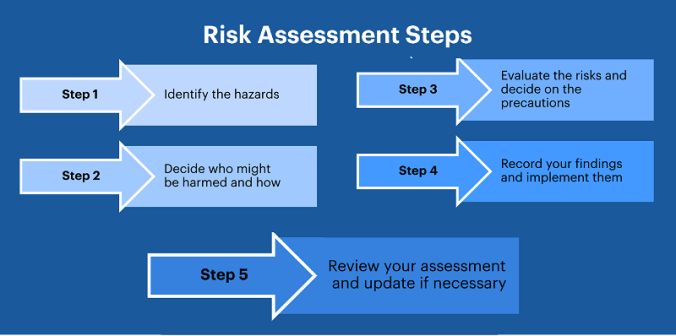
Matthew B fulfilled my fervent wish (as did Michael R, whose comment will be going up later today) by dealing with the risk assessment issue authoritatively and clearly so I wouldn’t have to.

Here is his Comment of the Day on the post, “The Pandemic Creates A Classic And Difficult Ethics Conflict, But The Resolution Is Clear, Part I: Stipulations”:

We’re seeing the problem with the vast majority of people’s inability to grasp statistics, and in particular the statistics of risk. That’s the problem here – with the Wuhan flu, we’re talking about something that – at most – could kill 1 in 100 people. We’re seeing higher numbers for death rates in many places, but they’re talking about case fatality rate. 1% in the US means 3 million people die, and we’re at 70K dead as of this morning in the US, 3.2 million short in 1% of American’s dying. Yes, I get many haven’t been infected and many more will die, but we’re absolutely on a trajectory far short of a 1% fatality rate.

As soon as you’re talking about numbers that low, far too many people’s brains stop being logical and emotion takes over. The tell for this is the saying “if it just saves one life.” People say that, but they’re turn a blind eye to so many things that kill people an no one addresses. Because there is no critical thought being applied, they remain illogical and darn near impossible to considering any position other than those formed by emotion.

We take risks every day that we don’t think about and we ignore things that people die from because of normalization of that risk. If you’re under 45, your odds of suicide, homicide and accidents killing you outweighs your risk of dying of health complications. If you’re under 25, that risk is three to one that it’s something other than a health condition that kills you. Even amongst the health conditions, there are many that are swayed by our own conduct and we ignore that.

Through most of the existence of the automobile, it’s ranked as the number one cause of premature death in the United States. Only in the last decade has the rise of the opioid epidemic managed to surpass the death rate of automobile fatalities. The opioid epidemic is a harder one to discuss, so I’ll start with the automobile. Automobile deaths are ignored, few people are afraid to get into a car because it might kill them. There are marginal improvements in automobile safety, but many of the key contributors have had little improvement. Mass use of air travel has had about 1/2 the time of the mass use of the automobile, but air travel has had massive improvements. At first there were many crashes because airplanes broke and directly or indirectly through the distractions they caused resulted in mass fatalities. That got fixed first. Then aviation regulators figured out that a growing fraction of accidents were pilots flying perfectly good airplanes into the ground or each other. They borrowed ideas from the nuclear industry, and instituted many policies that have resulted in a remarkable fall in airline fatalities. Do you realize the last time an passenger aircraft went down in the United States was November, 2001? 19 years. The only other crash was a 777 in San Francisco that stalled on approach, and most of the passengers came out with no or minor injuries. That’s truly remarkable. Continue reading

The Knight-Gallup Freedom Of Speech Survey

A survey just released by the Knight Foundation and Gallup shows that More than 75% of the college students surveyed want “safe spaces” on  campuses that are free of “threatening actions, ideas, or conversations.” However, a majority of the same students support President Trump’s threat to withhold taxpayer dollars from universities that restrict speech.

Though 97% of college students believe that free speech is “an essential pillar of American democracy”, a  majority of students support policies to restrict of speech on campus. 78% of students support “safe spaces” where threatening ideas and conversations would be barred. 80%  favor the establishment of a “free-speech zone” where pre-approved protests and the distribution of literature are permitted. Continue reading

Saturday Ethics Warm-Up, May 2, 2020: Paid Liars, Paid Corrupters…

Beautiful day!

Outside.

1. Feel the restraints on free expression that inconveniences ideological agendas tightening? I do A couple of friends and commenters confirm that Zscaler, a service many companies use to monitor and block employee traffic on the web, blocks my ethics blog as containing “Pornography, Adult Content, Nudity, Hacking, Illegal, Racism, Hate or Violence, Phishing.”  Nice. So good for my reputation and business too.

2. It’s past time to conclude that no polls are trustworthy, and no one who cites polls as evidence regarding public opinion is trustworthy. All week long I’ve been reading progressive blogs  and sites telling us that the President’s support as measured by the polls is “collapsing.” Then today I see the latest Gallup survey claims that 49% of adults approve of the President’s performance, up from 43% two weeks ago. That would be the highest yet according to Gallup, if you trust any of these things now. I don’t, and you shouldn’t. Continue reading

Comment(s) Of The Day: “Ethics Quiz And Poll: The Nurse Practitioner’s Dilemma”

We have a rare two-headed Comment of the Day on “Ethics Quiz And Poll: The Nurse Practitioner’s Dilemma,”about the nurse practitioner’s dilemma when she was asked by a poor, unmarried, 16-year-old , unemployed high school drop-out to help her get pregnant. Taking a minority position among commenters (the post’s poll results overwhelmingly favored counseling the girl against pregnancy), commenter valkygrrl wrote,

“Assuming the local age of consent laws make the pairing lawful, I think we have our answer in regard to professional ethics:

(f) Not discriminate against patients who have difficult-to-treat conditions, whose infertility has multiple causes, or on the basis of race, socioeconomic status, or sexual orientation or gender identity.

Assuming the local age of consent laws make the pairing lawful, I think we have our answer in regard to professional ethics.”

Commenter Tony, a physician, added in his Comment of the Day #1, Continue reading

Evening Ethics Cool-Down, 4/28/2020: Ethics Clouds In My Coffee

Good evening.

1. Here’s an ethics quote I need to use more often…I was watching the 1941 film “The Devil and Daniel Webster,” about a jury trial to determine whether the Devil will get a farmer’s soul as contracted.  It reminded me of a quote by Kurt Vonnegut: “A soul is the part of you that let’s you know when your brain isn’t working properly.”

A better definition of an ethics alarm you could not devise.

2. So where were the souls of the judges who voted for this? Thousands of prisoners have been released from incarceration to protect them from the outbreak of the Wuhan virus inside jails and prisons.  The theory is that subjecting prisoners to this special peril is cruel and unusual punishment. The theory’s not wrong, but it’s a bit unbalanced. Their peril is not entirely  society’s fault, after all.

There are activists at the extreme end of the progressive spectrum —a division getting larger all the time, it seems—who seem to want to eliminate penal punishment completely.  Not letting a crisis go to waste, a group of them , Columbia Legal Services, began pushing for inmates over 50 years old in Washington state to be released as a compassionate act to save them from the virus.

Among the intended beneficiaries: Gary Ridgeway, the Green River Killer, and Isaac Zamora,  serving a life sentence for going on  a shooting rampage and killing six  people. Ridgeway is one of the nation’s most frightening serial killers, eventually confessing to 71 murders. Over the three decades of the 1970s, ’80s and ’90s, Ridgeway captured women and girls, raped them, and  strangled them. He loved watching the life go out of their eyes as they died by his hand, though sometimes he used a  rope. Then he  would pose with the corpses. If he really liked his victim,  he’d have post mortem sex with her body. His first victims were found in the Green River, giving him a catchy name.

Ridgeway was sentenced to 500 years in prison with no possibility of parole. The victim’s families were promised that he would never be released. Ah, but poor Gary is 71 now, and thus at risk of succumbing to the pandemic, and presumed to be too feeble to be a threat. That, at least, is what Columbia Legal Services argued. (You know, I’m not much younger than Ridgeway, and I’m pretty certain I could murder someone. In fact, I’m getting ideas…)

Q13 News reported  that prosecutors protested that “the Petitioners [Columbia Legal Services] demand that 2/3 of the prison population be released into the community, a number which includes serial killers and capital murderers.” You would think that their argument would be a slam dunk. You would be wrong. Continue reading

Monday Morning Ethics Warm-Up, 4/27/2020: It’s Come To This…

…I have to rely on cute Jack Russell Terrier videos to keep me from heading to the bridge…

1.  No, guys, it’s not unethical to retract a bad law. SCOTUS Justices Samuel A. Alito Jr, Thomas and Gorsuch were annoyed that the Supreme Court refused to consider the Constitutionality of a New York anti-gun law after the state not only repealed the law, but passed a law preventing a similar law from being passed again. The Supreme Court today dismissed a major gun rights case that Second Amendment activists had hoped would clarify the right to bear arms. The decision dismissing the case was unsigned, but the dissent was signed, so we also know who made up the majority.   “By incorrectly dismissing this case as moot, the court permits our docket to be manipulated in a way that should not be countenanced,” Alito et al. hurrumphed. The law’s removal rendered the case moot and denied the Court an opportunity to explore whether there is a right to carry a gun outside the home.

I’d say that when the prospect of being slammed by the Court makes a state back down from an overreaching law, that’s a win. Stop complaining. Continue reading

“Nah, Academia, Mainstream Media And Social Media Aren’t An Increasing Threat To Free Speech!”

The Atlantic, the increasingly progressive culture and politics magazine, has offered its readers an article by Harvard law professor Jack Goldsmith and Arizona U. law professor Andrew Keane Woods called “Internet Speech Will Never Go Back to Normal: In the debate over freedom versus control of the global network, China was largely correct, and the U.S. was wrong.”

Yes, you read that correctly. Two distinguished law professors are celebrating Communist China’s censorship of the web in contrast to the U.S.’s silly approach, that crazy First Amendment thingy.  Here are some quotes to chill you to the marrow of your bones:

Covid-19 has emboldened American tech platforms to emerge from their defensive crouch. Before the pandemic, they were targets of public outrage over life under their dominion. Today, the platforms are proudly collaborating with one another, and following government guidance, to censor harmful information related to the coronavirus. And they are using their prodigious data-collection capacities, in coordination with federal and state governments, to improve contact tracing, quarantine enforcement, and other health measures. As Facebook’s Mark Zuckerberg recently boasted, “The world has faced pandemics before, but this time we have a new superpower: the ability to gather and share data for good.”

Proudly working with each other and the government to censor the web!

“But the “extraordinary” measures we are seeing are not all that extraordinary. Powerful forces were pushing toward greater censorship and surveillance of digital networks long before the coronavirus jumped out of the wet markets in Wuhan, China, and they will continue to do so once the crisis passes. The practices that American tech platforms have undertaken during the pandemic represent not a break from prior developments, but an acceleration of them.”

You might think that the two authors are sounding an alarm over this development. Uh, no. They write, Continue reading

Saturday Ethics Warm-Up, 4/25/2020: The Quiet Before The Storm

Something’s coming.

(I’d have the West Side Story song up, but for some reason WordPress hasn’t been letting me embed videos lately.) Do you feel it? I sure do…

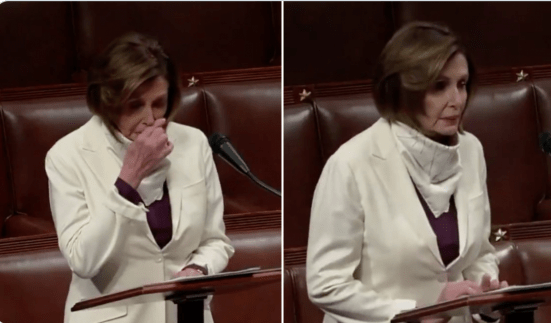
1. Our incompetent leaders, Part 645, 991. The proper anti-virus conduct as modeled by Nancy Pelosi on TV last week: take off your mask, wipe your nose with your hand,

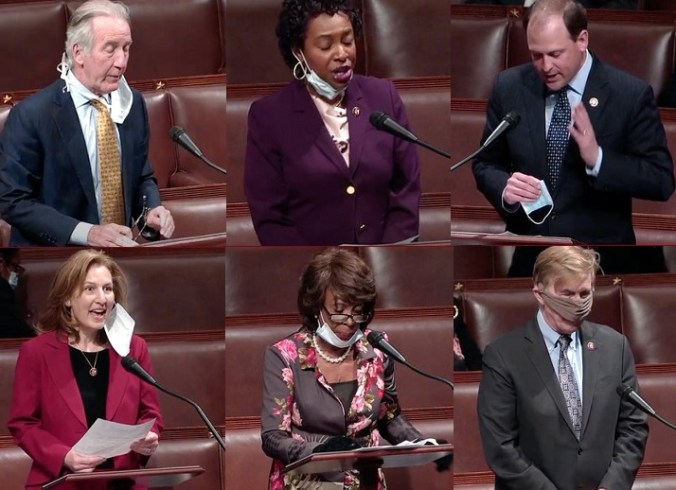
…and touch the podium. Members of both parties demonstrated similar Wuhan virus safety awareness:

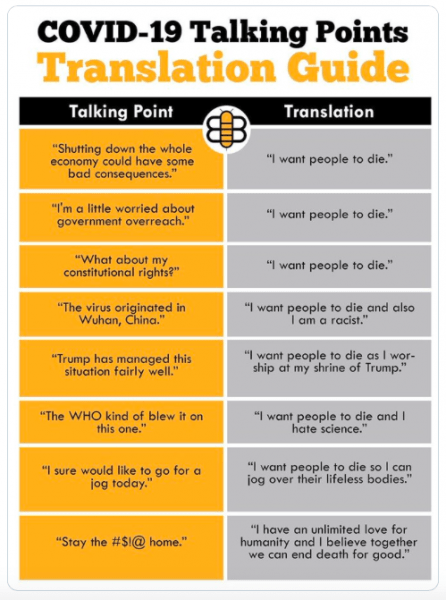
2.  Meme Wars…

[Pointer: Steve Witherspoon (not Other Bill, as I erroneously stated originally. Sorry, Steve)]

…and this (from the Babylon Bee):

3. You know, I really don’t care what someone like this thinks about illegal immigration. In a review of a pro-illegal immigration book by illegal immigrant (OK, she’s a “Dreamer”)

Quick diversion: Education Secretary Betsy DeVos announced that “Dreamers”—people brought to the U.S. illegally as children—cannot access emergency funding set aside for college students who are enduring disruptions in their education because of the pandemic, because grants may only be given to students who are eligible for federal aid under Title IV of the Higher Education Act,  meaning U.S. citizens. Naturally, she is being attacked as cruel and racist.

It is the correct, responsible, legal and ethical decision.

So she is laboring under emotional difficulties, a law-breaker herself, and a liar. That’s some expert you got there. She’s also not very bright, based on this statement from her book: Continue reading