Morning Ethics Warm-Up, 10/12/2021: Thanks, Columbus!

Columbus 2

This is the real Columbus Day: After sailing across the Atlantic Ocean, Italian explorer Christopher Columbus saw a Bahamian island on October 12, 1492. He believed he had reached East Asia: Chris was right about the world being round, but it was bigger than he thought. His expedition went ashore and claimed the land for Isabella and Ferdinand of Spain, the sponsors of his attempt to find a western ocean route to to the far East. Columbus changed the route of history, science and culture, with incalculable effects long and short term, good and bad. He also was directly responsible for brutal treatment of Native Americans, because he was a product of the 15th Century. We honor historical figures for their positive achievements, and if they are positive and important enough, the personal and public evils such figures might have also had on their ledgers are secondary. That is as it should be: the alternative is to honor no one at all, and to make history a parade of villains….

…although I would be hard pressed to find anything negative to say about the amazing Desmond Doss, who became the first Conscientious Objector to be awarded the Medal of Honor on this date in 1945. Ethics Alarms told his astounding story here, in 2017; so did the film “Hacksaw Ridge.” I still have a hard time believing it.

1. Nah, there’s no mainstream media bias! (#1): Here is the Washington Post, deliberately promoting statue toppling with a handy-dandy guide. This is the kind of thing that made me stop subscribing to my hometown paper. It does not explain why I subscribe to the Times, which just raised its rates to 90 bucks a month.

wapo_list_of_columbus_statues_10-11-2021

2. Nah, there’s no mainstream media bias! (#2): From Sunday’s “Reliable Sources” on CNN (That’s the hangout of absurdly unreliable Brian Stelter, who pretends to opine on journalism ethics while having none of his own):

Once respectable liberal journalist James Fallows, now employed by the extreme left-wing “Atlantic”: “The struggle for us all in the media is if we keep pointing out that one side of the political divide is actually instigating these things, defying subpoenas, trying to renege on the debt, holding up State Department appointments, et cetera, we are conscious of seeming shrill, we’re conscious of seeming unbalanced, we’re conscious of seeming to take a side. And so it’s something about our culture, we need to figure out how we can give out a narrative of the actual realities recognizing how this is at odds with our conventions.”

Oh, no! Seeming to take a side when they are taking sides? Seeming to be shrill when they are shrill? “Actual realities,” meaning “our biased views, represented as irrefutable truth to accomplish our agendas”? Whatever shall good journalists do? Wow. [Pointer: Steve-O-in NJ]

Continue reading

A Déjà Vu Ethics Dunce: Pete Rose

Pete Rose

I confess that at this time of year, with the Boston Red Sox in the play-offs (and doing splendidly so far), my thoughts keep defaulting to baseball and baseball ethics. However, I couldn’t have resisted this inspiration in the dead of winter.

I was already considering writing about how Major League Baseball has now abandoned its former principled stand against gambling on the game to the point where its gambling industry partners are encouraging suckers to bet on game details like extra-base hits and runs-batted-in, and during games, using special bonus pay-offs—you know, like the casinos that give out free chips to get tourists hooked? How MLB is going to square this sudden embrace of professional gambling with the sport’s so-called “third rail” rule that demands a lifetime ban of any player, coach or manager who is caught betting on baseball games is anybody’s guess.

Pete Rose, the all-time career hits leader, is the most famous victim of the third rail, and he was also my very first Ethics Dunce. In January of 2004, Pete’s sleaziness helped launched The Ethics Scoreboard when I wrote,

Pete Rose now admits he bet on baseball (after ten years of lying about it) but says that his bets (always in favor of his team, never against it, he says) as manager of the Cincinnati Reds never effected his management decisions, and thus he did not harm the integrity of the game. He feels he should be let back into the game as a manager.

A couple of things, Pete:

1) Even if this were true, fans of the game cannot put their faith in the outcome of games when they know that those who help determine the outcome might be motivated by their wagers. This is the reason that we call “the appearance of impropriety” an ethical problem.

2) Presumably you did not bet on the Reds when a key player was sitting out, or when your starting pitcher wasn’t feeling good. Right? Or are we supposed to believe that you bet large amounts of money while already in debt to bookies in circumstances when you thought you would lose? So every time you didn’t bet on the Reds, you were sending information to the bookies, and it affected their odds on the game. Got it?

3) You say you never bet against the Reds. You used to say you never bet on baseball. You’re a liar. Why should anyone believe you now?

Pete continued to embarrass himself and baseball, leading to several posts on Ethics Alarms. My favorite Pete Post is this one, in which I wrote in part,

All of the above could be more concisely summarized by six words: Pete Rose is a stupid man. As comedian Ron White says, “You can’t fix stupid.” Manfred, in his letter telling Pete that he can forget about any future employment in baseball, noted more than once that Rose does not appear to understand the import and purpose of the rule he violated, which exists  to protect the integrity of the game. Indeed,  Pete Rose wouldn’t know what integrity was if it sat on his face.

“This final chapter (I hope) in the sad Rose gambling saga drives home a fact that is under-appreciated in the ethics world. Ethics is hard, and requires attention, critical thinking, and a modicum of intelligence. Ethics involves choosing among competing options in difficult situations, often under pressure; it involves recognizing when non-ethical considerations are threatening to overwhelm ethical principles; it involves being able to understand why an ethical society is preferable to a corrupt one, and the difference between rationalizations and ethical values.

When tying your shoes is a challenge, most of this is out of the question. Or to put it in Pete Rose terms, if you are seeking forgiveness for  placing bets on baseball when you knew that baseball bans anyone who does that, and can’t figure out that continuing to gamble on baseball isn’t going to help your case, the chances that you are going to be able to figure out whether a particular situation requires an application of the Rule of Universality or not are those of Frosty the Snowman bumpety-bump-bumping safely through Hell...”

As you have probably guessed by now, that was not “the final chapter.” A new chapter came out today. Pete, who is always playing some angle to make money off of his baseball exploits because he is perpetually broke, has launched a sports gambling podcast.

Continue reading

The ACLU Believes Certain Sports Are Racist Now…

The logic and legal reasoning underlying the American Civil Liberty Union’s current bit of woke grandstanding is profoundly depressing. These people are lawyers. This is the caliber of legal minds we are supposed to trust to protect the Bill of Rights?

Central Michigan University eliminated its men’s track and field team. It shouldn’t matter why, but in its announcement of the move in May of 2020, the school cited budget concerns in the midst of the pandemic lockdown. This seems reasonable; when funds are tight, colleges should be spending money on education rather than sports. The controversy was launched when CMU decided this year to add a men’s golf program.

The decision, the ACLU of Michigan decided, was racist in light of the fate of track and field. In one letter, the organization protested that track and field was crucial to the Black community because it has “offered many a way out of oppressive poverty.”

I’d like to see the data on that.

Then the ACLU wrote the university president on September 16 that golf, in contrast, was a “white sport.” “Country clubs that have been the training grounds for elite golfers have historically been racially exclusive,” the letter states. “Add to that the expense of the sport and the socio-economic circumstances of many African Americans, and the reasons for the whiteness of golf are quite evident.”

Continue reading

Friday Ethics Potpourri, 9/24/2021: On PBS, Boeing, A Political Hack Law Dean, And Caring

Lawn sign

Many thanks to reader and commenter Jeff for bringing that lawn sign to my attention. It’s available here. I wish I had thought of it; one of these days I’ll get around to making a “Bias Makes You Stupid” T-shirt as an Ethics Alarms accessory. I would never post such a sign on my lawn for the same reason I object to the virtue-signaling signs in my neighborhood: I didn’t ask to my neighbors’ political views thrust in my face, and I don’t inflict mine of them. However, if a someone living in a house on my cul-de-sac inflicted a “No human being is illegal” missive on their lawn where I had to look at it every day, the sign above would be going up as a response faster than you can say “Jack Robinson,” though I don’t know why anyone would say “Jack Robinson.”

1. Roger Angell on caring…It’s September, and the Boston Red Sox and New York Yankees start a three game series tonight with nine games left to the season. It could well determined which of the two teams will go on to the post-season, with a shot at the World Series. The encounter brings back a flood of memories, wonderful and horrible, about previous Sox-Yankee battles of note, including one from 1949, before I was born. I worked with a veteran lawyer at a D.C. association who was perpetually bitter about all things, and all because the Red Sox blew a pennant to New York that year by choking away the final two games of the season. For me, moments like this are reassuring and keep me feeling forever young: as I watch such games, I realize that I am doing and and feeling exactly what I was doing and feeling from the age of 12 on. Nothing has changed. Roger Angell, one of my favorite writers, eloquently described why this is important in his essay “Agincourt and After,” from his collection,”Five Seasons”:

“It is foolish and childish, on the face of it, to affiliate ourselves with anything so insignificant and patently contrived and commercially exploitive as a professional sports team, and the amused superiority and icy scorn that the non-fan directs at the sports nut (I know this look — I know it by heart) is understandable and almost unanswerable. Almost. What is left out of this calculation, it seems to me, is the business of caring — caring deeply and passionately, really caring — which is a capacity or an emotion that has almost gone out of our lives. And so it seems possible that we have come to a time when it no longer matters so much what the caring is about, how frail or foolish is the object of that concern, as long as the feeling itself can be saved. Naivete — the infantile and ignoble joy that sends a grown man or woman to dancing and shouting with joy in the middle of the night over the haphazardous flight of a distant ball — seems a small price to pay for such a gift.”

A small price indeed.

2. PBS may be a progressive propaganda organ, but the facts will out. A streaming service offers the channel’s documentaries for a pittance, and they are a reliable source of perspective and enlightenment. One that my wife and I watched this past week was about the development of the FDA and other federal agencies that protected the public and workers. When workers at manufacturing plants making leaded gasoline started dying of lead poisoning, the government scientists’ solution was to just ban the product. General Motors and Standard Oil fought back and overturned the ban, assuring Congress that they could make leaded gas safe to produce, and they did. This was a classic example of why we must not let scientists dictate public policy: leaded gasoline transformed transportation and benefited the public. The scientists’ approach was just to eliminate risk; they didn’t care about progress, the economy, jobs or anything else. Science needs to be one of many considerations, and when scientists have been co-opted by partisan bias, as they are now, this is more true than ever.

Continue reading

A Baseball Ethics Meets Legal Ethics Spectacular!

John_Henry_Wigmore_cph.3b34499

You can imagine how happy this ethics mash-up makes me.

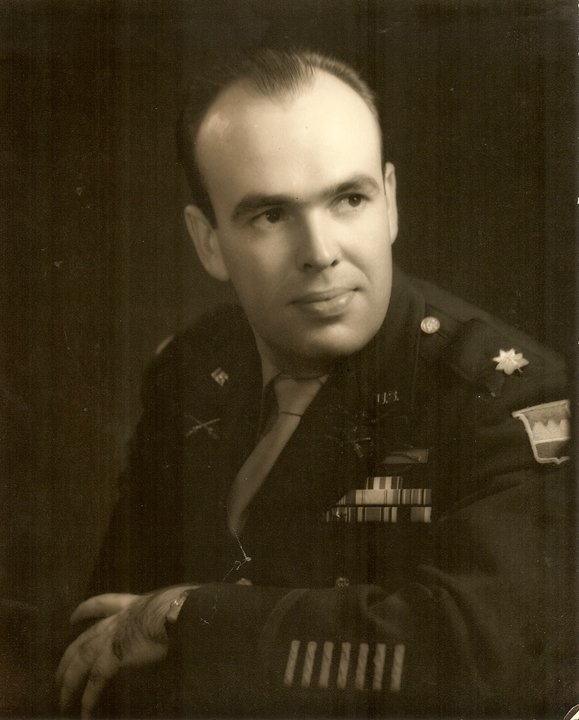
In legal ethics, a perpetual controversy involved what a law yer should do when another lawyer inadvertently sends him or her confidential information intended for the adversary lawyer’s client, and the information is a smoking gun that could win the receiving lawyer’s case. In the old days, when this involved some clerk in a law firm sending a load of documents to the opposition by mistake, the rule was simple. It was called “the Wigmore Rule,” after the famous law professor, John Henry Wigmore (above) who coined the phrase, “You snooze, you lose.”

In brief, the convention was that if a lawyer was careless enough to let this happen, he or she was at fault, and the lawyer getting the confidential documents could use them to benefit his or her client. The advent of faxes, and later the internet, and after that metadata, however, through what was largely settled law and ethics into a tangle that has yet to be settled. Technology made such errors much more common and also easier to make, and the American Bar Association’s opinions on the matter bounced back and forth like ping-pong balls, first saying that a Golden Rule approach should apply, with lawyers sending the material back to the technologically-challenged lawyer without looking it over, then concluding that lawyers should know how to use essential technology (back to the Wigmore Rule!), until the newest technological developments made them sympathetic again to lawyers who don’t get confidential metadata out of their emails. Last I checked, the state bars still don’t agree, but many are drifting back to the Wigmore Rule once again…as they should.

Now, you might well ask, how does this relate to baseball ethics?

Continue reading

Evening Ethics Cool-Down, 9/16/2021: On Idiots, The Donner Party, Statistical Reparations And The Evil NFL

Frozen Statue

I had to get out of bed to write this; I’ve been exhausted all day. I better not be getting old. That will really tick me off…

***

I’m working on a post called “Cannibal Ethics,” and this obviously led me to the Donner Party, the group of doomed pioneers who had to eat each other to survive when they were caught in a storm in the Sierra Nevadas in 1846. If I knew that they had come to their fate because of a negligent author, I had forgotten it: a fake expert named Lansford Hastings had written “The Emigrant’s Guide to Oregon and California” recommending a short-cut (which actually increased the trip’s mileage) to the Promised Land (this was before the two areas were ruined by reality-free politics)He had never actually traveled the new trail when he published the book. He did finally do it shortly before the Donner party set out, and helped sealed its fate by leaving paper notes along the way that further misled them. One told the already desperate wagon train they could cross Utah’s Great Salt Lake desert in a faction of the time it actually took. The group ran out of water in the middle of the salt plain about half-way across.

If I compiled a list of U.S. Ethics Villains throughout history—I’ve considered it—Hastings would be on it. After he left the U.S. for Brazil following the Civil War, he wrote a sequel of sorts to the book that killed so many of the Donner Party: “The Emigrant’s Guide to Brazil.” (1867).

1. Tales of The Great Stupid, Headline Division. From the Boston Globe: “How did Boston miss its moment to elect a Black leader?” The reporter, Stephanie Ebert just can’t imagine why he three Black candidates in the mayoral primary were eliminated in favor of Michelle Wu, the daughter of Taiwanese immigrants and Annissa Essaibi George, whose father was a Tunisian Arab Muslim. But, Ebert complains, there won’t be “any candidate who knows the weight of being Black in a city with deep racial scars.”

Maybe the three black candidates were not seen as skilled, experienced, or qualified as the primary’s winners. Or is Ebert saying that being black should be enough to qualify someone to be mayor?

Continue reading

Trevor Bauer Is Guilty Until Proven Innocent, And His Punishment Will Be Complete Before Such Proof Can Occur

Bauer

This is what #MeToo has wrought.

Dodgers pitcher Trevor Bauer, last year’s Cy Young winner as the best pitcher in the National League and currently the game’s highest paid player, hasn’t been able to pitch for his team since late June. The reason: he has been accused of domestic abuse. Accused.

Ethics Alarms first reported on his story here, writing,

“A restraining order was taken out against Dodgers pitcher Trevor Bauer, last year’s National League Cy Young winner. Bauer is a sportswriter favorite for his outspoken social media presence and progressive politics, so this will be a blow to the sportswriting woke. The woman making the allegations had what started as a consensual relationship with the pitcher, but in a 67-page document, alleges that Bauer assaulted her on two different occasions, punching her in the face, vagina, and buttocks, sticking his fingers down her throat, and strangling her to the point where she lost consciousness twice, an experience she said she did not consent to. After the second choking episode, the woman awoke to find Bauer punching her in the head and face, inflicting serious injuries. She contacted police, and there is now an active investigation of Bauer by the Pasadena, California police department. If any of her account is true, Bauer faces serious discipline from baseball, which has been (finally) cracking down on domestic abuse by players in recent years.”

I seriously miswrote, and should have known better. Baseball has a well-established tradition of taking action against players regardless of whether accusations have been proven. Indeed, the eight Chicago Black Sox who were accused of throwing the World Series in 1919 had been acquitted by a jury (They were guilty as sin, but then so was O.J.) were banned from baseball for life anyway. Pete Rose was banned for betting on baseball games before the evidence was definitive (Pete eventually confessed years later).

The next time I wrote about Bauer‘s case was a month later:

“Dodgers pitcher and reigning Cy Young winner Trevor Bauer, remains in limbo and under administrative, paid leave while baseball investigates the horrific allegations of abuse against him. Meanwhile, the Dodgers players have told reporters that they don’t want him back, though whether this is because he is an infamous pain in the neck or because he beats up women is unclear. Since the MLB policy appears to be based on “believe all women” and a “preponderance of the evidence” standard rather than “beyond a reasonable doubt,” I find it ethically troubling. (It resembles the way the Obama and Biden administrations want campus sexual abuse matters to be handled.) If, and I think this is doubtful, Bauer escapes charges and is still suspended, he is an excellent bet to challenge MLB’s “guilty until proven innocent” approach in the courts. Pains-in-the-necks have their uses.”

Last week, Major League Baseball and the MLB Players Association agreed to extend the Bauer’s administrative leave (he’s still being paid) through the end of the World Series, which the Dodgers still have a fighting chance to be part of should they make the play-offs. There has been no new evidence since June; the accusations against Bauer remain just that. He denies them, saying that the rough sex he had with his accuser was entirely consensual, and that he is the victim of a shakedown.

Continue reading

A Baseball Ethics Quiz: Moral Luck And The Deflected Ball

BARTMAN-jumbo

I was surprised to find how often I have written about the Steve Bartman incident (shown above) here. For those of you who missed it (and if you are not a baseball fan, couldn’t care less) the episode is rife with ethics lessons.

Bartman was the hapless young Chicago Cubs fan in 2003 who unintentionally interfered with a foul ball that might have been catchable by Cubs outfielder Moises Alou in the decisive game of 2003 National League Championship Series. Bartman’s mistake (it didn’t help that he was wearing earphones and watching the ball rather than the action on the field) began a chain of random events that ended in a complete collapse by Chicago in that very same half-inning, sending the Miami Marlins and not the Cubs, who had seemed comfortably ahead, to the World Series.

Bartman issued a sincere and pitiful apology but it didn’t help. He was widely vilified by Chicago fans, who at that point had not seen a pennant-winning team in their lifetimes. Sportswriters joined in, and he was literally run out of town. Bartman’s name then became part of Cubs and baseball lore, one more chapter in the sad saga had been called “the Billy Goat Curse,” the uncanny inability of the Chicago National League team to win it all. The Cubs finally broke the imaginary curse in 2016, and in a show of kindness and remorse, privately awarded Bartman  an official Chicago Cubs 2016 World Series Championship ring.

That was nice, but Bartman’s life had already been, if not ruined, seriously degraded by the incident. I thought about poor Steve last night, when a foul ball nearing Fenway Park’s “Green Monster” left field wall wafted its way down the foul line. As Sox outfielder Danny Santana tracked it, so did several fans in the seats that look over the grandstand onto the field. Their eyes were on the ball, and as it moved way from foul territory into fair–maybe: in Fenway Park at that point, it is only a matter of a few feet’s difference—one fan lunged for the ball, deflecting it away from Santana’s glove.

Continue reading

Post-Labor Day Ethics Laments, 9/7/21

weeping

You could yesterday, September 6, “Moral Luck Day.” On that date in 1901, President William McKinley was shaking hands at the Pan-American Exhibition in Buffalo when a 28-year-old anarchist named Leon Czolgosz approached him with a pistol in his hand wrapped in a handkerchief, and fired two bullets into the President’s chest. Touchingly, McKinley’s immediate thoughts were of his wife, Ida, who was in poor physical and emotional health. “Be careful how you tell her!” he whispered to an aide. Eight days later, McKinley was dead. But what Czolgosz intended as a strike to the heart of America’s government had the opposite effect, making Teddy Roosevelt, a Republican considered too independent, radical and uncontrollable (unlike McKinley) by his own party to be in the White House, exactly what GOP leaders never wanted him to be. Teddy made the United States a world power, greatly expanded the power of his office and the government itself, and was, in short, an anarchist’s nightmare.

1. Baseball ethics: The Boston Red Sox recently completed a disastrous collapse that dropped them from first place in the American League East to third. As they went into battle with the two teams now ahead of them, their hottest hitter, Alex Verdugo, vanished on a four game paternity leave. Shortly thereafter, another hot hitter, Hunter Renfroe, was lost for five days on bereavement leave after his father died of cancer. T’was not always thus: in the days before the Players’ Union bargained to add such mid-season leave as a new benefit, if a player’s wife was in labor or a loved on died, it was at the team’s discretion whether he would be permitted to leave the team. OK, I can appreciate the need for the benefit, but both players abused the right. These guys both earn millions of dollars a year. They both routinely talk about the team’s quest to win the World Series, yet when their team really needed them, they absented themselves for many days because they could. That’s a betrayal of the team, team mates, and fans. I’ve been there. My grandmother, a major influence in my life, died while I was in tech week for a major production I was directing. I flew to Boston for the wake, and flew back early the next morning. I couldn’t do anything for my grandmother. My family didn’t need me as much as the show did.And I wasn’t being paid a cent for directing that show, never mind millions of dollars.

2. Curtis Flowers is suing. Good! Curtis Flowers, whom I wrote about here, filed a lawsuit last week against Montgomery County District Attorney Doug Evans, who prosecuted him six times for the killings of four people at a small-town Mississippi furniture store. He was finally released in December 2019, about six months after the U.S. Supreme Court tossed out the conviction and death sentence from his sixth trial, which took place in 2010. Justices said prosecutors showed an unconstitutional pattern of excluding African American jurors in the Flowers’ six trials, which kept him in prison for 26 years despite never being found guilty in a fair trial. This wasn’t a prosecution, it was a vendetta. I would like to see a bar prosecution of Evans, who abused the ethical duties of a prosecutor.

Continue reading

There Are More Important Ethics Stories On The Runway, But This One Gets Priority Because It’s Soooo Stupid…

Resolute-Athletic-Complex-Columbus-OH-Sports-Club-exterior

ESPN, which we can now safely conclude is incompetent as well as being unethical in that very special way the Great Stupid demands, released this statement:

“We regret that this happened and have discussed it with Paragon, which secured the matchup and handles the majority of our high school event scheduling. They have ensured us that they will take steps to prevent this kind of situation from happening moving forward.”

What was “this kind of situation”? Oh, just a national sports network televising a high school football game between one of the the top teams in the nation and a fake team fielded by a fake high school. That’s all.

On Sunday, ESPN broadcast a high school football game between featuring Florida’s IMG Academy, one of the top rated teams in the country, and Ohio’s Bishop Sycamore, an obscure high school with a team nobody has written about or paid much attention to. ESPN had been assured by Bishop Sycamore—schools get compensated when their teams’ games are televised– that its football squad was stacked with top players. Uh, no. This was a primetime match-up on ESPN, but nobody there did any due diligence to check on the juggernaut IMG Academy’s competition. IMG won by the heart-pounding score of 58-0. The broadcasters were reduced to telling funny stories and expressing concern that the Bishop Sycamore players were at risk of serious injury.

But wait! There’s more!

Continue reading