The NFL Has No Problem With A Player On The Field Pronouncing the Entire Nation Racist, But Won’t Tolerate A Player Pretending To Shoot A Bow And Arrow. Please Explain.

nfl-bowarrow

The explanation is simple. The National Football League has no values, just assorted and unrelated reactions dictated by money, expediency, fear of activist groups, and stupidity.

This was the most recent example:

Washington Redskins cornerback Josh Norman was flagged after his  fourth-quarter interception Sunday  in a win over the Browns. He pretended to shoot an arrow from a mimed bow–veteran MLB relief pitcher Fernando Rodney has done this after every save his entire career–and was penalized for the unsportsmanlike foul of ” shooting a bow and arrow,” as announced by the ref. Fox analyst Mike Pereira explained to the TV audience that “Shooting a bow and arrow is just like simulating shooting guns. It’s a foul and it’s not allowed.”

The NFL refused to allow the Dallas Cowboys to commemorate the Dallas officers shot in a Black Lives Matter fueled massacre of police. Then it announced its support of the ridiculous Colin Kaepernick’s grandstanding protest of the National Anthem because, he says, “the United States systematically oppresses African-Americans.”  Next, it submits the name of Darren Sharper—one of those oppressed African Americans, by the way— as a nominee for the Pro Football Hall of Fame. He is serving 20 years in prison for drugging and raping women. Now it deems a bow-and-arrow gesture as so offensive to the sport that it requires a major game penalty.

Meanwhile, the league still officially denies that the concussions it routinely inflicts on its players are the cause of their brain damage when they cease to be able to function and slide into depression and dementia in middle age.

Those who continue to support the NFL knowing all of this (you put money in the league’s coffers by just watching the games) are allowing their own values and their children’s to be compromised and corrupted in exchange for a few visceral thrills.


Ethics Quiz Of The Day: Backing Into A Batting Championship

Milwaukee Brewers v Colorado Rockies

On the final day of the 2016 regular season yesterday, Rockies second baseman D.J. LeMahieu had a one point lead on Washington Nationals second baseman Daniel Murphy for the National League batting championship, .348 to.347. Murphy was nursing a pulled muscle, and hadn’t played for several games as the NL East winning Nationals rested him so he could be healthy for the play-offs. Murphy wasn’t going to be in the final game either, which meant that the only way LeMahieu could lose his lead was by making outs. Thus, with the consent of his manager, Walt Weiss, the player sat out the last game to protect his average. Realizing that the Rocky player was attempting to “back in” to the batting title, regarded in baseball ethics as dishonorable, or, in technical terms, “the conduct of a weenie,”  Nats  manager Dusty Baker sent Murphy limping up to the plate to pinch-hit for Jose Lobaton in the fifth inning. A hit by Murphy would have given him the lead, and required LeMahieu to bat in the Rockies game to pass him. Murphy, however, flied out.

Your End of Baseball’s Regular Season Ethics Alarms Ethics Quiz of the Day:

Was it fair, sportsmanlike and ethical for LeMahieu to win the batting title by not playing?

Continue reading

The Wrenching Problem Of David Ortiz, The Human Slippery Slope

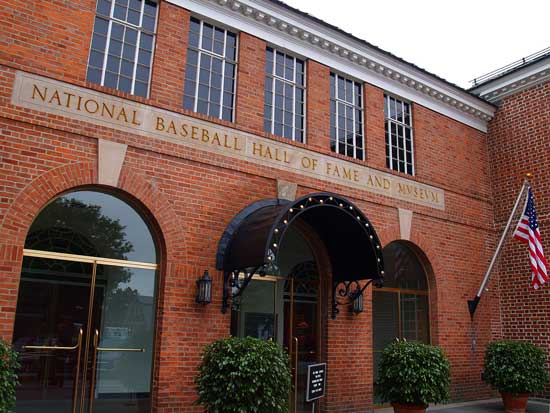
papi_fame

Ethics conflicts force us to choose when multiple ethical principles and values point to diametrically opposed resolutions.  Often, a solution can be found where the unethical aspects of the resolution can be mitigated, but not this one. It is a tale of an ethics conflict without a satisfactory resolution.

I didn’t want to write this post. I considered waiting five years to write it, when the issue will be unavoidable and a decision mandatory. Today, however, is the day on which all of Boston, New England, and most of baseball will be honoring Red Sox designated hitter David Ortiz, who will be playing his finale regular season game after a 20 years career.  His 2016 season is quite possibly the best year any professional baseball player has had as his final one; it is definitely the best season any batter has had at the age of 40 or more. Ortiz is an icon and a hero in Boston, for good reason. Ortiz was instrumental in breaking his team’s infamous 86-year long “curse” that saw it come close to winning the World Series again and again, only to fail in various dramatic or humiliating ways. He was a leader and an offensive centerpiece of three World Champion teams in 2004, 2007, and 2013. Most notably, his record as a clutch hitter, both in the regular season and the post season is unmatched. You can bring yourself up to speed on Ortiz’s career and his importance to the Red Sox, which means his importance to the city and its culture, for nowhere in America takes baseball as seriously as Beantown, here.

That’s only half the story for Ortiz. Much of his impact on the team, the town and the game has come from his remarkable personality, a unique mixture of intensity, charm, intelligence, generosity, pride and charisma. After the 2013 terrorist bombing of the Boston Marathon, which shook the city as much as any event since the Boston Massacre, Ortiz made himself the symbol of Boston’s anger and defiance with an emotional speech at Fenway Park. Then he put an exclamation point on his defiance by leading the Red Sox, a last place team the year before, to another World Series title.

Performance-based arguments against electing Ortiz to baseball’s Hall of Fame are, at this point, untenable. Entering his final game, Ortiz had 541 home runs, (17th all-time), 1,768 RBI, (22nd), and 632 doubles, (10th).  He is only the third player in history to have more than 500 home runs and 600 doubles.  He ranks among the greatest post season hitters in baseball history with 17 home runs, 60 RBI and 21 doubles. His postseason average is .295 with an on base percentage of .409, a slugging percentage of .553 and a .962 OPS (the sum of the two.) Most great players did worse in the post season than during the regular season, for the obvious reason: the competition was better. Ortiz was better, which informs regarding his character and dedication.

The one lingering argument against admitting Ortiz to the ranks of Ruth, Williams, Aaron, Mays, Cobb, Hornsby, Griffey and the rest is that he has spent most of his career as a designated hitter, the American League’s 1973 invention, much reviled by National League fans and baseball traditionalists, designed to allow real batters relive fans from watching pitchers make fools of themselves at the plate. This makes him “half a player,” the argument goes. No designated hitter has ever been elected to the Hall, so that argument has prevailed so far. It was always a weak one—how did being lousy fielders like so many Hall of Fame sluggers make them greater players than one who never hurt his team at all with his glove? Now that a designated hitter has shown himself to be in the elite ranks of all the greatest batters, the argument sounds more like hysterical anti-DH bias than ever.

I should also note, before getting to the main point of this post, that I love Ortiz. I am a lifetime Red Sox fan, Boston born, bred and marinated, and Big Papi is special. He is one of the most interesting and admirable sports figures of my lifetime, and what he has meant to my city and my favorite sport is beyond quantifying. Few great athletes demonstrate persuasively that they are also great and admirable human beings. Ortiz is one of them.

Nonetheless, it is crucial that David Ortiz not be elected to the Hall of Fame when he becomes eligible five years from now, and that he never be admitted. On the matter of assessing the fitness for baseball honors of those who defiled the game by inflating their statistics, changing the outcome of games and harming players who abided by the rules, David Ortiz is a human slippery slope. Ortiz deserves to be in the Hall based on all admission criteria, including character and sportsmanship, but his admission will open the doors wide for players who are unfit, polluting the Hall of Fame and baseball’s values forever.

It’s not worth the trade off. This is the ethics conflict: one cannot be fair and just to “Big Papi” without doing widespread harm to the sport, and I would argue, the entire culture. Continue reading

Ethics Quiz: The Boxer Who Bet Against Himself, And Lost His Bet

donnellyboxingv2

Three Olympic boxers received “severe reprimands” from an International Olympic Committee last week for betting on fights during last month’s Rio de Janeiro Games in violation of Olympic  anti-betting rules.

The interesting one is Ireland’s welterweight Steve Donnelly, shown above. Donnelly bet against himself in a first-round bout but still won the fight.

The IOC said the three boxers received only reprimands rather than retroactive disqualifications or bans because a disciplinary panel determined “there was no intent to manipulate any event” and the athletes have apologized.

Donnelly, an evident idiot, said that he was in fact not aware of the prohibition against betting, though he had signed the documents agreeing to the restrictions. He hadn’t read them, he said.  He claimed that he bet against himself without intending lose his match to win those bets. He reasoned that if he lost the match, winning the bets ( he made two on his opponent) would be some compensation for his defeat.

Good thinking there, Steve.

Your Ethics Alarms Ethics Quiz of the Day

Is a reprimand just and sufficient punishment for an Olympic competitor who bets on himself to lose, as long as he loses the bet and not his competition?

Continue reading

Random Ethics Thoughts On The Death Of Jose Fernandez

marlins-tribute

Miami Marlins pitcher Jose Fernandez, at 24 one of the rising stars in baseball and a remarkable, charismatic young man as well, died when his boat hit a jetty at high speeds in the early morning hours last Sunday. He had escaped to the U.S. from Cuba at 15 after failing twice and being imprisoned by the Castro regime as punishment. How good a pitcher was he? At this point in his career, as good as any pitcher in the history of the game. What might he have accomplished? The possibilities were limitless.

Two of his friends were also killed in the accident, and he left a pregnant girlfriend behind. Baseball stars have died tragically mid-career before—Roberto Clemente, Thurman Munson, Harry Agganis, Ken Hubbs, Lymon Bostock…Lou Gehrig, of course…but seldom has a death in the sport caused such an widespread outpouring of grief.

Some random thoughts:

  • I have a gut reaction to such deaths, when a young man or women of infinite promise and special talent dies due to his or her own recklessness and foolishness. This was the case with Fernandez; there is no denying it. His boat was speeding, going much too fast for the conditions. It was dark, and he may have been drinking: he had just left a bar. My reaction is anger. I can’t help it; I know he’s dead, and that he didn’t want that. Still, part of ethics is the belief that all human beings have an obligation to do what they can to be a productive part of society and join in the effort to make existence better for everyone. To those who have special abilities and talents, more should be expected, and they have a duty to recognize that their life is more than just their own, but part of the collective wealth that everyone shares as long as they live. Amazing people who throw their young lives away, and with it all they might have given to the rest of us–joy, thrills, inspiration, memories—make me especially furious. (I am merely routinely furious with ordinary people who throw their lives away.)

Continue reading

Next Up At Bat On “Controversial Tweet Friday,” The Reserve Catcher’s Tweets!

cropped_clevenger

Like Prof. Reynolds, Seattle Mariners second-string catcher  Steve Clevenger decided to express his unhappiness with the riots in Charlotte using his Twitter account, and also like the “Instapundit,” found himself in trouble as a result. Before posting the above tweet, Clevenger wrote this as his introduction:

cropped_steve_clevenger1Twitter didn’t suspend Clevenger’s account, but his employer, a baseball team located in a very liberal city and also a team that is embroiled in a desperate fight to make the play-offs, reacted initially with this, also on Twitter…

mariners-tweet

Clevenger apparently didn’t expect that his tweets would suddenly result in his being labelled as a racist blight on humanity  by the many, many, people on social media who live for such incidents, and he quickly released a long and emotional apology:

First and foremost I would like to apologize to the Seattle Mariners, my teammates, my family and the fans of our great game for the distraction my tweets on my personal twitter page caused when they went public earlier today. I am sickened by the idea that anyone would think of me in racist terms. My tweets were reactionary to the events I saw on the news and were worded beyond poorly at best and I can see how and why someone could read into my tweets far more deeply than how I actually feel.

“I grew up on the streets of Baltimore, a city I love to this very day. I grew up in a very culturally diverse area of America and I am very proud to come from there. I am also proud that my inner circle of friends has never been defined by race but by the content of their character. Any former teammate or anyone who has met me can attest to this and I pride myself on not being a judgemental person. I just ask that the public not judge me because of an ill worded tweet.

“I do believe that supporting our First Amendment rights and supporting local law enforcement are not mutually exclusive. With everything going on in the world I really just want what is best for everyone regardless of who they are. I like many Americans are frustrated by a lot of things in the world and I would like to be a part of the dialogue moving forward to make this a better world for everyone.

” I once again apologize to anyone who was offended today and I just ask you not judge me off of a social media posting. Thank you and God bless everyone.”

Steve Clevenger

Continue reading

Jacoby Ellsbury, Catcher’s Interference, And The Perplexing Ethics Problem Of “Using A Shield As A Sword”

interference

I led two legal ethics seminars for the Oregon State Bar yesterday. For some reason the issue of “using a shield as a sword ” kept coming up.

“Using a shield as a sword” is when lawyers game the ethics rules. Many local bar associations include a pledge within their creeds promising not to intentionally use the ethics rules as a tactical weapon; still, it’s not an enforceable promise. Examples are limited only by a lawyer’s devious ingenuity, but they usual involve one side creating a conflict of interest for the opposing firm or lawyer that will force the lawyer to withdraw from the case. One ploy: a lawyer recruits a key expert witness specifically because she was once a client of the the lawyer on the other side, making it impossible for her to be impeached on the witness stand by that lawyer because he would have confidential information about her that he would be bound to keep secret, even while being required to represent his current client by ripping her credibility to shreds.

What does this have to do with Yankee centerfielder Jacoby Ellsbury? Well, Ellsbury is in the process of shattering an obscure baseball record: number of times reached base on catcher’s interference during a season. Catcher’s interference refers to instances in which a catcher makes any contact with a batter or his bat during a pitch. Usually, this involves the batter’s bat hitting the catcher’s glove, as in the photo above. When that happens, a player is awarded first base. The rule is based on fairness and  designed to protect the batter, but apparently Ellsbury has perfected the weird practice of using it as an offensive weapon.

Jacoby Ellsbury became the single-season record holder in catcher’s interference calls  in July with his ninth instance  getting rewarded for it. The record was formerly held by Roberto Kelly, who did this eight times in 1992.  Since breaking the record, Ellsbury has gotten catcher’s interference called three more times, for a current total of 11 with almost a month  left to the season. He is also second all-time in catcher’s interference with 23. The career record belongs to Pete Rose with 29; since Rose is baseball’s all-time leader in games played and career at bats, we would expect him to hold this record. No one else in baseball history has more than 18. Ellsbury is only five catcher’s interferences shy of Rose’s mark, and has done it in less than a third of the at bats. Continue reading

Pundit Malpractice: NBC Sports Defends Colin Kaepernick By Misrepresenting Jackie Robinson

What does Jackie Robinson's autobiography have to do with Colin Kaepernick, you ask? Well...nothing at all, really.

What does Jackie Robinson’s autobiography have to do with Colin Kaepernick, you ask? Well…nothing at all, really.

It also represents a rationalization for unethical conduct that is not currently represented on the Ethics Alarms Rationalization List.

Someone sent Craig this quote, from Jackie Robinson’s  autobiography,  as baseball’s color-line breaker thought back to the first game of the 1947 World Series:

“There I was, the black grandson of a slave, the son of a black sharecropper, part of a historic occasion, a symbolic hero to my people. The air was sparkling. The sunlight was warm. The band struck up the national anthem. The flag billowed in the wind. It should have been a glorious moment for me as the stirring words of the national anthem poured from the stands. Perhaps, it was, but then again, perhaps, the anthem could be called the theme song for a drama called The Noble Experiment. Today, as I look back on that opening game of my first world series, I must tell you that it was Mr. Rickey’s drama and that I was only a principal actor. As I write this twenty years later, I cannot stand and sing the anthem. I cannot salute the flag; I know that I am a black man in a white world. In 1972, in 1947, at my birth in 1919, I know that I never had it made.”

This naturally made Craig, whose mind sometimes cannot help itself from shifting into progressive cant autopilot, think about Colin Kaepernick’s incoherent grandsitting as he refuses to stand on the field with his team for the National Anthem. He wrote,

“Colin Kaepernick is not Jackie Robinson and America in 2016 is not the same as America in 1919, 1947 or 1972. But it does not take one of Jackie Robinson’s stature or experience to see and take issue with injustice and inequality which manifestly still exists…the First Amendment gives us just as much right to criticize Kaepernick as it gives him a right to protest in the manner in which he chooses. But if and when we do, we should not consider his case in a vacuum or criticize him as some singular or radical actor. Because some other people — people who have been elevated to a level which has largely immunized them from criticism — felt and feel the same way he does. It’s worth asking yourself, if you take issue, whether you take issue with the message or the messenger and why. Such inquiries might complicate one’s feelings on the matter, but they’re quite illuminative as well.”

Let’s begin with the fact that there is nothing similar about Jackie Robinson and the 49ers quarterback, except their race and the broad occupation of “sports” that they shared. Continue reading

Observations On S.F. 49ers Quarterback Colin Kaepernick’s Anti-America Protest

Colin-Kaepernick-24

San Francisco 49ers quarterback Colin Kaepernick refused to stand for the playing of the national anthem before Friday night’s 49ers-Green Packers exhibition game as a protest against the United States. He has apparently been doing all NFL preseason, but it wasn’t noticed until the most recent game.

Questioned about his certain to be controversial gesture, the mixed race athlete—he had one white parent, and was raised by a white adoptive parent—explained thusly:

“I am not going to stand up to show pride in a flag for a country that oppresses black people and people of color.To me, this is bigger than football and it would be selfish on my part to look the other way. There are bodies in the street and people getting paid leave and getting away with murder.”

Observations:

1. Give him credit for one thing: he isn’t trying to take advantage of the King’s Pass. His star immunity is at low ebb, since Kaepernick’s status with his team is shaky and his job as a first string quarterback is in doubt, not because of his political views, but because he has been injured too much and not all that great when healthy. What he did was not in his own best interests. It took guts.

So does leaping naked into a zoo’s tiger exhibit.

2. His action wasn’t a protest. It was grandstanding. It generated publicity for a message that was incoherent. All his gesture said was “Colin Kaepernick is upset and has an irrationally inflated concept of how much anyone cares, or should care.”

3. Kaepernick could have salvaged his act by being ready with a well-reasoned, well-stated, articulate and persuasive explanation. Based on what he said, which was ignorant, counter-factual and foolish, we must assume that he actually gave thought to his response, and that this pathetic statement was the best he could come up with. That shows him to be incompetent, ill-informed, and not very bright. Continue reading

Good: Hope Solo Finally Loses The Protection Of The Star Syndrome; Bad: U.S. Soccer Still Doesn’t Get It; Good: Hope Provides Rationalization #59

Solo loses

The Star Syndrome, a.k.a “The King’s Pass,” #11 on the Ethics Alarms Rationalization List, is the ethics bane of organizations generally and sports especially. It is one of the major catalysts of cultural corruption, whether the “star” is Bill Clinton, Lance Armstrong, Manny Ramirez, O.J. Simpson, Roget Ailes,  Brian Williams, George S. Patton, or Werner Von Braun. To refresh your memory…

11. The King’s Pass, The Star Syndrome, or “What Will We Do Without Him?”

One will often hear unethical behavior excused because the person involved is so important, so accomplished, and has done such great things for so many people that we should look the other way, just this once. This is a terribly dangerous mindset, because celebrities and powerful public figures come to depend on it. Their achievements, in their own minds and those of their supporters and fans, have earned them a more lenient ethical standard. This pass for bad behavior is as insidious as it is pervasive, and should be recognized and rejected whenever it raises its slimy head.  In fact, the more respectable and accomplished an individual is, the more damage he or she can do through unethical conduct, because such individuals engender great trust.

Thus the corrupting influence on the individual of The King’s Pass leads to the corruption of others, through…

11. (a) “I deserve this!” or “Just this once!”

Especially common to the hero, the leader, the founder, the admired and the justly acclaimed is the variation on the Kings Pass that causes individuals who know better to convince themselves that their years of public service, virtue and sacrifice for the good of others entitle them to just a little unethical indulgence that would be impermissible if engaged in by a lesser accomplished individual. When caught and threatened with consequences, the practitioner of this rationalization will be indignant and wounded, saying, “With everything I’ve done, and all the good I’ve accomplished for others, you would hold this against me?” The correct answer to this is “We are very grateful for your past service, but yes.

There are few more striking examples of this phenomenon than women’s soccer star Hope Solo. The New York Times neatly summarizes her last decade of dubious conduct (I’m being diplomatic): Continue reading