The Seventh Annual Ethics Alarms Awards: The Best of Ethics 2015, Part I

Sweet Briar montage

Welcome to the Seventh Annual Ethics Alarms Awards, our blog’s retrospective of the best and worst in ethics over the past year, 2015.

It was a rotten year in ethics again, it’s fair to say, and Ethics Alarms, which by its nature and mission must concentrate on episodes that have lessons to convey and cautionary tales to consider probably made it seem even more rotten that it was. Even with that admission, I didn’t come close to covering the field. My scouts, who I will honor anon, sent me many more wonderfully disturbing news stories than I could post on, and there were many more beyond them. I did not write about the drug company CEO, for example, who suddenly raised the price of an anti-AIDS drug to obscene levels, in part, it seems, to keep an investment fraud scheme afloat. (He’ll get his prize anyway.)

What was really best about 2o15 on Ethics Alarms was the commentary. I always envisioned the site as a cyber-symposium where interested, articulate and analytical readers could discuss current events and issues in an ethics context. Every year since the blog was launched has brought us closer to that goal. Commenters come and go, unfortunately (I take it personally when they go, which is silly), but the quality of commentary continues to be outstanding. It is also gratifying to check posts from 2010 and see such stalwarts who check in still, like Tim Levier, Neil Dorr, Julian Hung, Michael R, and King Kool.  There are a few blogs that have as consistently substantive, passionate and informative commenters as Ethics Alarms, but not many. Very frequently the comments materially enhance and expand on the original post. That was my hope and objective. Thank you.

The Best of Ethics 2015 is going to be a bit more self-congratulatory this year, beginning with the very first category. Among other virtues, this approach has the advantage of closing the gap in volume between the Best and the Worst, which last year was depressing. I’m also going to post the awards in more installments, to help me get them out faster. With that said….

Here are the 2015 Ethics Alarms Awards

For the Best in Ethics:

Most Encouraging Sign That Enough People Pay Attention For Ethics Alarms To Occasionally Have Some Impact…

The Sweet Briar College Rescue. In March, I read the shocking story of how Sweet Briar College, a remarkable and storied all-women’s college in Virginia, had been closed by a craven and duplicitous board that never informed alums or students that such action was imminent. I responded with a tough post titled “The Sweet Briar Betrayal,” and some passionate alumnae determined to fight for the school’s survival used it to inform others about the issues involved and to build support. Through the ensuing months before the school’s ultimate reversal of the closing and the triumph of its supporters, I was honored to exchange many e-mails with Sweet Briar grads, and gratified by their insistence that Ethics Alarms played a significant role in turning the tide. You can follow the saga in my posts, here.

Ethics Heroes Of The Year

Dog Train

Eugene and Corky Bostick, Dog Train Proprietors. OK, maybe this is just my favorite Ethics Hero story of the year, about two retired seniors who decided to adopt old  dogs abandoned on their property to die, and came up with the wacky idea of giving them regular rides on a ‘dog train” of their own design.

Ethical Mayor Of The Year

Thomas F. Williams. When the Ferguson-driven attacks on police as racist killers was at its peak (though it’s not far from that peak now) the mayor of Norwood, Ohio, Thomas F. Williams, did exactly the opposite of New York Mayor Bill de Blasio in response to activist attacks on the integrity of his police department. He released a letter supporting his police department without qualification. At the time, I criticized him for his simultaneously attacking activists as “race-baiters.” In the perspective of the year past, I hereby withdraw that criticism.

Most Ethical Celebrity

Actor Tom Selleck. In a terrible year for this category, Selleck wins for bravely pushing his TV show “Blue Bloods” into politically incorrect territory, examining issues like racial profiling and police shootings with surprising even-handedness. The show also has maintained its openly Catholic, pro-religion perspective. Yes, this is a redundant award, as “Blue Bloods” is also a winner, but the alternative in this horrific year when an unethical celebrity is threatening to be a major party’s nominee for the presidency is not to give the award at all.

Most Ethical Talk Show Host

Stephen Colbert, who, while maintaining most of his progressive bias from his previous Comedy Central show as the successor to David Letterman, set a high standard of fairness and civility, notably when he admonished his knee-jerk liberal audience for booing  Senator Ted Cruz

Sportsman of the Year

CC Sabathia

New York Yankee pitcher C.C. Sabathia, who courageously checked himself into rehab for alcohol abuse just as baseball’s play-offs were beginning, saying in part,

“Being an adult means being accountable. Being a baseball player means that others look up to you. I want my kids — and others who may have become fans of mine over the years — to know that I am not too big of a man to ask for help. I want to hold my head up high, have a full heart and be the type of person again that I can be proud of. And that’s exactly what I am going to do.”

Runner-up: MLB Commissioner Rob Manfred, who dismissed the ethically-addled arguments of Pete Rose fans to reject his appeal to be have his lifetime ban for gambling lifted.  For those who wonder why football never seems to figure in this category: You’ve got to be kidding.

Ethics Movie of the Year

SpotlightTIFF2015

“Spotlight”

Runner-up: “Concussion”

Most Ethical Corporation

Tesla Motors, the anti-GM, which recalled all of its models with a particular seatbelt because one belt had failed and they couldn’t determine why. Continue reading

Unethical Tweet Of The Month: Carly Fiorina

carly tweetThe above New Year’s Day tweet was issued by Republican Presidential hopeful Carly Fiorina, now campaigning in Iowa for February’s caucuses, as Stanford and Iowa prepared to do battle in the Rose Bowl. (It was a rout: Iowa got clobbered.)

Fiorina is a  Stanford alum, and the tweet backfired, it seemed, with many on Twitter finding the tweet revealing, and not at all in a good way.

Are there any plausible translations of the tweet that reflect well on Carly’s character? Let’s see: Continue reading

A Merry Christmas For The Washington Redskins, “The Slants,” And The First Amendment

Yes, The Slants were apparently, disparaging. themselves.

Yes, The Slants were apparently disparaging. themselves.

The political-correctness obsessed Democratic component of our government has decided that forcing Dan Snyder to change the name of his football team due to its alleged offensiveness to people who don’t care about football is a legitimate government function, or so they would have us believe. Actually, they believe it is a legitimate political function to lick the moccasins of progressive activist groups who thrive on opportunities to tell others what they can safely say.

After Senate Democrats signed an unethical  missive threatening the Washington Redskins if the team wasn’t renamed something that an enterprising race-baiter wouldn’t find offensive—not as easy as it may seem— the Patent and Trademark Office canceled the registration of “Redskins” using the excuse that Federal trademark law excludes the registration of “scandalous, immoral, or disparaging marks” as well as trademarks that a “substantial composite of the referenced group” perceives as disparaging to a religion, nation, ethnic group, or  belief system. [ You can read my opinion on this ruling here. I’d quote from it, but it’s Christmas Eve.]

The ruling was upheld in the Fourth Circuit, despite the fact that it seem to be fairly blatant viewpoint-based restriction of speech, or in other words, unconstitutional. To his credit, Snyder is not allowing the Democrats to bully him or illegally try to control his speech either, and has the resources to fight. The betting is that the Supreme Court will tell the Trademark Office to stop playing politics.

The Patent and Trademark Office also barred the registration of “The Slants,” the trademarked name of Simon Tam’s Asian-American band. Now the U.S. Court of Appeals for the Federal Circuit just held, in the case of In re Tam, by a 9-to-3 vote, that this exclusion of “disparaging” trademarks, and, by extension, the Redskins ban as well, violates the First Amendment.  This means that the Redskins case is likely to go to the Supreme Court if the government doesn’t agree to let people trademark whatever the want to, regardless of who or what it might “disparage.” Continue reading

The Lesson Of The Pete Rose Saga: It’s Hard Being Ethical When You’re Stupid

Rose rejected

Pete Rose’s final appeal to have his ban from Major League Baseball lifted was rejected, as Commissioner Rob Manfred delivered a stinging rebuke. (You can read his letter here.) The very first ethics post I ever wrote was about Pete, and I have posted about his character and plight several times since. Rose, the all-time leader in hits and undeniably a great player, was banned from the game in 1989. An investigation concluded that he had bet on baseball games while a manager of the Cincinnati Reds, a violation of MLB’s famous “third rail” no-gambling rule, which makes it an automatic expulsion from the profession to place bets on baseball games as a manager, coach or player. This is regarded as an existential rule for baseball, which was nearly ruined when gamblers fixed the 1919 World Series.

Rose maintained his innocence of the allegations for decades, then admitted(to sell a book) that he had been lying, and did gamble. Just a few months ago, evidence surfaced that he had also bet on baseball while a player, which Rose has always denied.

In his letter rejecting Rose’s appeal, Commissioner Manfred noted that one of the conditions that had long been set for Rose to have any chance of reinstatement—though Rule 21 has no exceptions, MLB was willing to do almost anything not to have the holder of the record for lifetime hits on its blacklist—Rose would have to earn a pardon by showing he had turned his life around, meaning that Pete was no longer a sleazeball.

Manfred wrote that Rose, who had, among other black marks, served time in prison for tax evasion, asserted in his latest appeal that he indeed was a new and better man. Nevertheless, Rose…

1. Refused to admit that he had bet on baseball as a player, when the evidence was incontrovertible, and

2. Revealed that he still gambles on horse racing and professional sports, including baseball.

Manfred came to the obvious conclusion that “Charlie Hustle,” who pretty clearly has a gambling addiction, has taken no positive steps toward addressing it, is still a risk to gamble on baseball games or get himself in debt to gamblers if he returned to the sport, and  can’t be trusted.

All of the above could be more concisely summarized by six words: Pete Rose is a stupid man. As comedian Ron White says, “You can’t fix stupid.” Manfred, in his letter telling Pete that he can forget about any future employment in baseball, noted more than once that Rose does not appear to understand the import and purpose of the rule he violated, which exists  to protect the integrity of the game. Indeed,  Pete Rose wouldn’t know what integrity was if it sat on his face. Continue reading

Ethics Musings Sparked By The Passing Of Ken Beatrice, D.C. Sports Talk Legend

kbeatrice2

If you did not live in the D.C. area in the Eighties, you probably never heard of Ken Beatrice, who just died in a hospice at the age of 72. There was a time when Beatrice was the radio sports authority in pro football crazy Washington D.C., and star of the most popular and talked about call-in show of any kind on the local radio. He deserved his popularity, for Beatrice was smart, hard-working, knowledgeable, professional, and nice. His career, its rise and fall, was also a hard ethics lesson, for anyone paying attention, on why it is that good people do unethical things that hurt themselves more than anyone else.

Beatrice’s acclaim arose out of his astounding knowledge of football at all levels, from the pros to high school. I’ve never cared about football, but I listened to Ken’s show just because he was amazing. From his Washington Post obituary:

“His knowledge of pro football players, current and potential, was nonpareil. Call in to ask about the third-string quarterback at a second-tier college, and Mr. Beatrice could tell you the player’s height, weight and 40-yard dash time.He was so attentive to the game, a sportscaster once told The Washington Post, that he was able to recite a team’s depth chart off the top of his head, naming both the starters and the second- and third-stringers who would eventually replace them.”

This doesn’t even do Beatrice justice: you had to hear him. It was like a Las Vegas magic act. A caller would say, “I graduated from Madison High in Rexburg, Idaho, and I hear they have a running back on the football team that may have pro potential…I can’t think of his name..” Continue reading

Ethics Hero: The World Anti-Doping Agency (WADA)

Meet the Press sisters.

Meet the Press sisters!

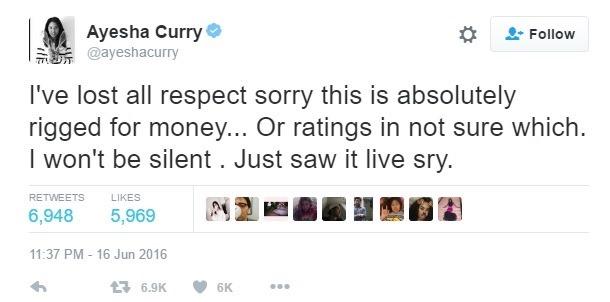
About a week ago, The World Anti-Doping Agency (WADA)  issued an unexpectedly tough report calling for Russia to be banned from international athletics at all levels for flagrant doping violations and a “deeply rooted culture of cheating at all levels” within Russian athletics. WADA also urged the International Association of Athletics Federations to ban five Russian athletes and five coaches for life. Why the Draconian measures?

The verdict was doubtless bolstered by considering the repeated examples of Russian cheating going back to the bad old Soviet Union days, when the gargantuan Press sisters were winning gold medals over female athletes half their size and East German female swimmers had shoulders as wide as Volkswagon buses, often because they had been dosed with testosterone without their knowledge. More recently, WADA found that Russia “intentionally and maliciously” destroyed 1,400 urine and blood samples of its athletes and, WADA says, the Russian government was directly involved.

WADA President Dick Pound’s report conceded that “corruption and bribery practices at the highest levels of international athletics” were rampant, but that Russia was in a league of its own. “For the 2016 Olympics our recommendation is that the Russian Federation is suspended. One of our hopes is that they will volunteer that so they can undertake the remedial work needed.”

Then he told another funny joke about a horse, a rabbi and an octopus walking into a bar. Continue reading

Ethics Hero: Washington Nationals Star Bryce Harper

Bryce Harper

The knock on Bryce Harper, the Nationals’ 22 year-old burgeoning superstar who will soon be named the 2015 NL MVP, is that he’s immature, cocky, and self-destructive. But he seems to have proven himself to be far less so than the same sportswriters who have so often leveled such doubts about his character. This is good news for the Nationals and their fans, and also for suckers like me, who believe that baseball stars have an obligation to be good role models.

I wrote here about the late September, mid-game dugout fight between Harper and Jonathan Papelbon, a late season acquisition by the Nats whose arrival as a new bullpen ace coincided with team’s collapse in the National League East race. Post hoc ergo propter hoc being as seductive a logical fallacy as it is, Nats fans and, less excusably, the D.C. sports press blamed much of the Nats failure on the ex-Phillies, ex-Red Sox closer, along with manager Matt Williams, who was fired immediately after the regular season. Papelbon was also blamed for the fight, which is fair: he started it.

I noted in a follow-up post: Continue reading

Now THIS Is Hate Speech…No, Wait, It’s A Gay Writer Hating A Straight Baseball Player, So It’s All Good

Daniel Murphy


In March, in a post about Dr. Ben Carson’s awful apology for his ignorant statement on CNN about prison turning prisoners gay, I compared his ignorance to that of Mets second-baseman Daniel Murphy, who had just listened to Billy Bean, a former major league baseball player who is gay, and had been appointed as the sport’s “ambassador for inclusion.”  Murphy said,

“I disagree with his lifestyle.I do disagree with the fact that Billy is a homosexual. That doesn’t mean I can’t still invest in him and get to know him. I don’t think the fact that someone is a homosexual should completely shut the door on investing in them in a relational aspect. Getting to know him. That, I would say, you can still accept them but I do disagree with the lifestyle, 100 percent.”

His statement loosely translated means, “I don’t know anything about gays except what I have been told by people who also know nothing about gays but think they do.  I believed all of it, since, honestly, I don’t think about the topic much. But the question was about whether the fact that a team mate was gay would cause me to distrust him or not want to play with him, and my answer is no.”

Later Murphy elaborated,

“Maybe, as a Christian, that we haven’t been as articulate enough in describing what our actual stance is on homosexuality. We love the people. We disagree the lifestyle. That’s the way I would describe it for me. It’s the same way that there are aspects of my life that I’m trying to surrender to Christ in my own life. There’s a great deal of many things, like my pride.”

I mentioned Murphy then because he, unlike Carson, is just a baseball player, and his having ignorant ideas about gays (what does “disagreeing” with the fact that someone is gay even mean? He’s gay–you can’t “disagree.” Anyone using “lifestyle” to describe gays has just written his ignorance in sky-writing. If one knows any gays at all, the idiocy of this is manifest. What would ever make an 8 year old wake up one morning and say, “I’ve weighed the options, and made my choice: I want to be gay!” This literally never happens.) and stating the ideas out loud only hurts Murphy, while Carson’s ignorance is relevant to the job he’s seeking and his qualifications for it. Carson is a narrow, biased, irresponsible amateur, and thus unqualified to hold office. Nobody, however, should care what Murphy thinks, as long as he can hit and field his position.

For someone who is clueless, Murphy’s comments are even admirable. He’s not going to judge a man’s character based on “his lifestyle” or wish him ill, which makes him infinitely preferable to Slate’s gay issues blogger, Mark Joseph Stern. Continue reading

Comment of the Day: “World Series Ethics: Another Pine Tar Sighting, As Baseball Ethics Rot Gets A Thumbs Up From Legal Ethics Rot”

Volquez, unaware...

Volquez, unaware…

I think I made a poor call deciding not to write about the interesting ethics question that arose during Game #1 of the just completed World Series.

We learned during the broadcast of Game 2 on Fox that Daniel Volquez, the father of Kansas city Royals Game #1 starting pitcher Edinson Volquez, had died of heart trouble during the day in the Dominican Republic. But Volquez’s family had asked the team not to inform Volquez until after the game, and the team, on behalf of the family, asked the same of the broadcasters, directing them to withhold the news from the TV audience. I decided to pass on the story because I couldn’t confirm that Volquez didn’t know about his father’s passing, though it now appears he did not. That was foolish: the ethics issues are the same regardless of whether he knew.

Fortunately Ethics Alarms reader Noah D. insisted that the issue was attention worthy, and wrote his own commentary. I’ll have some comment at the end. Here is his Comment of the Day on the post, World Series Ethics: Another Pine Tar Sighting, As Baseball Ethics Rot Gets A Thumbs Up From Legal Ethics Rot: Continue reading

“Whining”

Whining

I said that we would learn a lot about individual political commentators fairness and integrity by observing their reactions to the nakedly anti-GOP bias displayed by the CNBC moderators, especially John Harwood, in the recent Republican debate, and indeed we have. To any objective analyst who isn’t poisoned by partisan prejudice—and no such analysts has any business practicing journalism until they are cured of the malady—the breach of objectivity and professionalism evinced by such antagonistic queries as…


  • “Is this a comic book version of a presidential campaign?” (Harwood to Trump)
  •  “I talked to economic advisers who have served presidents of both parties. They said that you have as chance of cutting taxes that much without increasing the deficit as you would of flying away from that podium by flapping your arms.” (Harwood to Trump)
  • “So what analysis got you to the point where you think this will work?” (Quick to Carson)
  • “You want to bring 70,000 pages to three? Is that using really small type? Is that using really small type? (Quintanilla to Fiorina)

…is obvious, alarming and unacceptable. Those are attacks framed as questions, and the moderators are not supposed to attack the candidates.  Debate questions should be tough; here is one of the first televised debate questions ever from journalist Sander Vanocur to Richatrd Nixon in the initial Nixon-Kennedy debate:

VANOCUR:  Mr. Vice President, since the question of executive leadership is a very important campaign issue, I’d like to follow Mr. Novins’ question. Now, Republican campaign slogans – you’ll see them on signs around the country as you did last week – say it’s experience that counts – that’s over a picture of yourself; sir- implying that you’ve had more governmental executive decision-making  experience than your opponent. Now, in his news conference on August24, President Eisenhower was asked to give one example of a major idea of yours that he adopted. His reply was, and I’m quoting; “If you give me a week I might think of one. I don’t remember.” Now that was a month ago, sir, and the President hasn’t brought it up since, and I’m wondering, sir, if you can clarify which version is correct – the one put out by Republican campaign leaders or the one put out by President Eisenhower?

Tough. Yet there is no sarcasm, or editorializing insults in the question, no mockery, as in the “really small type” crack. Indeed, Vanocur’s question could be from a friendly journalist and Nixon ally (giving him a chance to defuse an embarrassing incident) or a hostile one. That is professional journalism…ah, I had almost forgotten what it looks like! Faced with across the panel hostility, however, the 2016 class of Republican candidates had two choices: accept the status quo, represented by

  • CNN’s Candy Crowley interfering with the last 2012 debate and throwing President Obama a misleading life-line when he was being pressed by Mitt Romney on his participation in the same lie that Hillary’s e-mails exposed regarding the Benghazi attack
  • ABC’s Martha Raddatz allowing Joe Biden to flout debate ettiquette by constantly interrupting Paul Ryan in the 2012 Vice Presidential debate.
  • Anderson Cooper shutting out the one moderate in the Democratic debate, James Webb, several times not asking him questions that the other fur candidates were given chances to answer.*
  • Obvious and documented favoritism toward Barack Obama in both the 2008 and 2012 debate
  • The evisceration of Sarah Palin based on her “lack of experience” in the 2008 campaign, with Obama’s greater lack of experience virtually ignored,
  • The major news organizations, except for Fox, openly lobbying the public for Democratic proposed policy measures, like gun control, amnesty for illegal immigrants, the Affordable Care Act, and more.
  • Statistics showing that progressives outnumber conservatives in the media by more than 4-1.

…or to start objecting to it, as well as the dangerous warping of the democratic process it represents. They have, and it should be taken as a non-partisan boon to the nation.

It is not healthy, and indeed dangerous to have journalists so lopsidedly supporting  one party against  the other, so allied with the government, and so far from objective. The danger, and the fact that CNBC crossed any reasonable limits of bias and unfairness  were immediately acknowledged by such predictable liberals as Juan Williams, Piers Morgan, Tina Brown’s Daily Beast, Bill Maher, and Carl Bernstein, among others.

Another segment of the media, however, those who believe that their occupation gives them the license and obligation to tilt news reporting and public opinion the “right” way, as well as Democrats, who hope to hold on to power with the news media as their front line, hit on a proven strategy from the playground to marginalize and trivialize the issue. Dismiss the complaints as “whining.”

Those who abuse their power to the detriment of others have always used this unethical tactic. Continue reading