Gray Afternoon Ethics, 3/24/2022: The Nose Edition

1. And I thought Navage was nuts…Those Navage commercials showing someone smiling like a zany while water is being forced up one nostril and out the other make me nauteous, but there are worse nose products for even bigger suckers. Since Tik-Tok viewers will probably believe anything, tanning nasal sprays are being advertised on the social media platform. They are supposed to be inhaled to boost the effects of sun exposure or a tanning bed. They haven’t been FDA approved, and nobody is quite sure what’s in them, but go ahead, shoot them up your nose.

Some of the products claim to contain melanotan or melanotan II, which are synthetic chemicals that act like hormones the body makes naturally. Both can have can have far-reaching side effects, like cancer and sexual reactions. Asked by reporters to comment, TikTok said, “Our community guidelines make clear what content is allowed on TikTok. Our policy on illegal activities and regulated goods prohibits the promotion of nasal tanning sprays, and we have removed the videos that you have shared with us.” In other words, TikTok doesn’t police advertising of quack drugs unless someone points them out. This is not a surprise.

You have to be exposed to ultra-violet rays for these sprays to work, so a target audience for the ads is anyone who would get in a tanning bed. That explains a lot. Remember this scene from ‘Final Destination 3″?

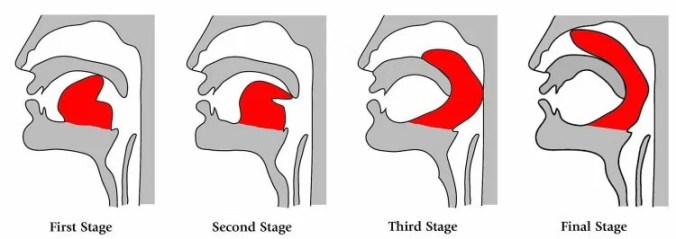
2. Then there is this…Khecarī Mudrā, the controversial yoga practice of sticking the tongue into the nasal cavity. Sounds fun, no? It involves gradually severing parts of the tongue and then curling it back until it enters parts of your head it was never meant to go. In the early stages of khecarī mudrā, practitioners curl back their tongues as far back as possible so that the tip touches the soft palate at the back of the mouth or even the uvula. Don’t worry, it gets easier as you practice. Khecarī mudrā is said to seal the energy of Bindu and give one supernatural powers, IF you can curl your tongue back far enough to then insert it into the nasal cavity to “lick the supreme nectar of immortality flowing there.”
See?

3. I smell popcorn popping! Donald Trump is suing 2016 Democratic Presidential nominee Hillary Clinton,  accusing her of conspiring with dozens of others to topple his presidency. The new lawsuit, filed  in federal court in Fort Pierce, Fla., accuses Clinton, her campaign, various campaign aides, former FBI Director James Comey, the Democratic National Committee and others of racketeering conspiracy for allegedly joining in “an unthinkable plot” to falsely accuse Trump of colluding with Russia in the 2016 presidential election. Continue reading →

Ethics Observations On The Judge Ketanji Brown Jackson Senate Hearings, Part 1

Now take The Washington Post….please.

Yesterday’s Editorial Board screed about the hearings serve a single useful purpose for any readers with a smidgen of memory and a dash of objectivity. It serves as the equivalent of a neon sign reading, “We are shameless partisan hacks!”

Consider its headline: “Republicans boast they have not pulled a Kavanaugh. In fact, they’ve treated Jackson worse.”

Did Republicans dig up a witness (and pro-abortion activist—merely a coincidence, I’m sure) who used a three decade old “discovered memory” to accuse a a 50-year-old judge with an impeccable record as a responsible citizen and a devoted father and spouse of an attempted sexual assault when he was a teenager? No. Did they do this despite the fact that the alleged incident had no individual other than the accuser who could confirm it, nor even a definite date or place where the “assault” occurred? No. Has anything said in the hearings resulted in demonstrators calling the judge a rapist? Continue reading →

Morning Ethics Warm-Up, 3/23/22: Those Were The Days…

On this date in 1775, Patrick Henry, during a speech before the second Virginia Convention, made what is perhaps the most definitive statement of ethical values in U.S. history: “I know not what course others may take, but as for me, give me liberty or give me death!”

Those were the days. How many Americans would stand with Henry today? A recent poll found that the number was less than 60%, and that, incredibly, a majority of those who identify with one of our national parties would not choose to fight for their rights.

Moving on…I had to ban another Ethics Alarms commenter yesterday. These episodes follow a pattern, with smugness yielding to snark, then insults to other commenters, and finally to attacks on my good faith and alleged fealty to “Fox News.” In this case I offered a week’s suspension, with the caveat that a violation would produce a permanent ban. The response was another insult. I am determined to so what I can to combat the perception of an “echo chamber” here, but if the only remedy is allowing obnoxious and non substantive trolling, “I say it’s spinach, and I say to hell with it!”

Little known fact: Patrick Henry said that, too.

1. Slightly related: for some reason, a comment thread raised the question of whether supporting any or all of Putin’s rationalizations for invading Ukraine was more evidence of Republican Party evil. I don’t comprehend why any conservatives or Republicans are bothering to make the argument that Ukraine is not as pure as the driven snow—in short, so what? International law applies; the Golden Rule applies. Ethics applies.

Ukraine took no adverse action against Russia to justify an attack. Russia is in the wrong and Ukraine is blameless, and it doesn’t matter if Ukraine is as corrupt as the Corleones, or as squeaky clean as Utopia. However, it is legitimate to make the point that the sanctification of Zelinski and his nation as a reaction to Putin and Russia is an exercise in whitewashing.

However, it appears that the latest GOP-smearing operation involves accusing the party of spreading Putin/Russia disinformation and propaganda. Enter the New York Times, which prodded Candace Evans, the black, female GOP gadfly, thusly:

Candace is not one to be trifled with: no weenie she. Her response:

Here is one of those Times pieces. It is especially delicious that it is a Editorial Board proclamation. I know it’s six years old, but there is no reason to believe that the nation has suddenly reformed. Excerpts: Continue reading →

Bias Makes You Stupid, And If You Are Already Ignorant To Begin With…Wow: The Gay Dog Saga

I showed this story to Spuds, and now he’s so depressed he won’t go out for his walk.

Fezco, a four or five year old Rottweiler mix, is desperately in search of a home before he is euthanized. The Stanly County Animal Shelter in North Carolina wrote in a Facebook post that the it seeks a new owner for the dog after its owners had surrendered him to the shelter.

He was, they explained, gay. After all, he humped another male dog, not that there’s anything wrong…no, I take that back. Fezco’s previously loving owners were convinced that there is enough wrong with that to justify killing him.

Continue reading →

So Many Unethical Laws Are Being Passed, They Get Shut Down Before We Can Get Properly Outraged By Them: D.C.’s Sinister “Minor Consent for Vaccinations Amendment Act of 2020”

At least that was my initial reaction to the news that in the District of Columbia, Federal Judge Trevor McFadden temporarily halted the Minor Consent for Vaccinations Amendment Act of 2020, which I had never heard of before. The law would have allowed children as young as 11 years old to get vaccinated without the knowledge of their parents if a provider deemed them capable of informed consent. 

What?

Continue reading →

Ethics Irritations And Escalations, 3/21/2022: This Stuff Isn’t Helping Me Feel Better…

This is a banner date in the Civil Rights movement, when. on 1965, 3,200 civil rights demonstrators led by Martin Luther King Jr. began a historic march from Selma, Alabama to Montgomery, Alabama’s capital. Federalized Alabama National Guardsmen and FBI agents accompanied them on the march. Alabama’s pugnacious governor, George Wallace, opposed civil rights for blacks, bolstering local authorities in Selma in their efforts to foil  the Dallas County Voters League and the Student Nonviolent Coordinating Committee (SNCC) as the worked to register local blacks to vote.

On March 7, 600 demonstrators, led by SCLC leader Hosea Williams and SNCC leader John Lewis, began the 54-mile march to the state capital, where they were met by Alabama state troopers who attacked them with nightsticks, tear gas and whips. The incident was seen on national television and helped to catalyze sympathy for the civil rights movement. Rev. King, who was in Atlanta at the time, promised to return to Selma  and lead another attempt. After another failed attempt, U.S. Army troops and federalized Alabama National Guardsmen finally escorted the marchers safely into Montgomery on March 25, where on the steps of the Alabama State Capitol, King addressed a crowd of 25,000 and the nation on live TV.

1. Nah, there’s no mainstream media bias! In its effort to ally itself with trans activists and women’s swimming cheativists, NBC altered its photo of a victorious Lia Thomas (on the left) to the more feminine version on the right.

And yet there are still people who insist that the news media is trustworthy on national news and affairs. Continue reading →

The New York Times Scandal Regarding The Mainstream Media’s Cover-Up Of The Hunter Biden Laptop Story Is Bigger Than The Laptop Story Itself

And, dammit, I don’t have the energy or clarity of mind to cover it properly right now.

I hate using clips and cuts from other sources to examine ethics stories, though it is a common technique around the web, perhaps the most common technique. I can do better, but as I have noted here several times of late, I’m shot full of pain-killers and antibiotics, and have approximately the mental acuity of Joe Biden along with the energy deficits of the United States, so I’m reduced to something less than my preferred methodology. Still, attention must be paid. As recently as last week, several counter-“echo chamber warriors were still making the absurd claim that the New York Times was not the outrageously biased Democratic Party propaganda organ it so clearly is, an assertion that literally requires that one stick fingers in both ears and hum like mic having a feedback crisis.

On March 17, the New York Times admitted that the Hunter Biden laptop report was accurate and genuine, more than a year after it allowed the Biden disinformation machine to falsely claim it was all “Russian disinformation.” This prompted a rare (but delicious editorial by the New York Post, which broke the story on October 14, 2020, while the 2020 Presidential election was up for grabs and got itself banned from social media for printing the truth. The Post’s victory lap said in part,

Forgive the profanity, but you have got to be s–tting us.

First, the New York Times decides more than a year later that Hunter Biden’s business woes are worthy of a story. Then, deep in the piece, in passing, it notes that Hunter’s laptop is legitimate.

“People familiar with the investigation said prosecutors had examined emails between Mr. Biden, Mr. Archer and others about Burisma and other foreign business activity,” the Times writes. “Those emails were obtained by The New York Times from a cache of files that appears to have come from a laptop abandoned by Mr. Biden in a Delaware repair shop. The email and others in the cache were authenticated by people familiar with them and with the investigation.”

Authenticated!!! You don’t say. You mean, when a newspaper actually does reporting on a topic and doesn’t just try to whitewash coverage for Joe Biden, it discovers it’s actually true?

But wait, it doesn’t end there. In October 2020, the Times cast doubt that there was a meeting between Joe Biden and an official from Burisma, the Ukrainian gas company for which Hunter was a board member.  “A Biden campaign spokesman said Mr. Biden’s official schedules did not show a meeting between the two men,” the Times wrote, acting as a perfect stenographer. Yet in the latest report, published Wednesday night, the Times said the meeting likely did happen. Biden had attended the dinner in question. Funny how this works when you don’t just take someone’s word for it.

In the heat of the presidential race of 2020, the Times never missed a chance to cast doubt on the laptop, saying the information was “purported” and quoting a letter from former Democratic officials who claimed — with no evidence — that it was Russian disinformation. As recently as September 2021, the Times called the laptop “unsubstantiated” in a news story.

Why was it unsubstantiated? Because of willful ignorance and the Times’ curious lack of curiosity. Hunter’s business partner Tony Bobulinski came forward immediately after The Post’s reports and confirmed that the emails bearing his name were legitimate. The Bidens didn’t even deny it was true! They just deflected, with the media’s help, saying it was a dirty trick or not a story. Mostly, the press just ignored it.Now we’re 16 months away from the 2020 election, Joe Biden’s safely in the White House, and the Times finally decides to report on the news rather than carry the Biden campaign’s water. And they find that hey, Hunter Biden’s business interests benefited from Joe Biden’s political status to a suspicious degree. Perhaps this is a topic worthy of examination.

How did the Times “authenticate” the laptop? It doesn’t say. Unlike The Post’s reporting, which detailed exactly how we got the files and where they came from, the Times does a hand wave to anonymous sources. No facts have changed since fall 2020. They knew the laptop was real from the start. They just didn’t want to say so….

Twitter banned us for supposedly publishing “hacked materials” that weren’t hacked. The company’s CEO apologized, but by that point, they had accomplished what they wanted. Like the Times, they cast enough doubt to avoid making their preferred candidate look bad.

Readers of the Times have discovered in March 2022 that Hunter Biden pursued business deals in Europe and Asia, and may have leveraged his father’s position as vice president to do it. Hunter also may not have properly registered with the government or declared all his income. All legitimate topics of discussion about a presidential candidate’s family, no?

The NY Post’s obvious bitterness should be matched by that of fair, civically competent, objective citizens who don’t like the idea of elections being stolen and the public having the metaphorical wool pulled over its eyes. Continue reading →

Sunday Ethics Reformation, 3/20/22: The Brits Still Don’t Get That Freedom Of Thought Thingy…

Almost a lost week, but not quite. Starting today, I’m just going to “bugger on” in Churchill’s phrase; falling behind in all of these ethics issues and developments and debates has me feeling worse than my the effects of the various drugs and maladies I’ve been coping with the past 10 days or so.

I owe much gratitude to those of you who have been sending along encouragement, good wishes and suggested topics. Thanks.

1. I don’t understand this at all, but I know it’s ominous…

Sent to EA’s attention by a puzzled Curmie, esteemed blogger and Ethics Alarms commenter, the job announcement above tells potential applicants that The Department of Chemistry and Biochemistry at UCLA seeks to hire an Assistant Adjunct Professor on a “without salary basis.” While guaranteeing consideration for employment “without regard to race, color, religion, sex, gender identity, national origin, disability, age, sexual orientation or protected veteran status,” the announcement does make it clear that viewpoint discrimination will be applied, as all applicants must include

a “Statement on Contributions to Equity, Diversity, and Inclusion – An EDI Statement describes a faculty candidate’s past, present, and future (planned) contributions to equity, diversity, and inclusion. To learn more about how UCLA thinks about contributions to equity, diversity, and inclusion, please review our Sample Guidance for Candidates and related EDI Statement FAQ document.

This is for an Assistant Adjunct Professor of Biochemistry, remember. Clearly diversity of viewpoints is not encouraged at UCLA; it is being actively discouraged.

2. Now THAT is an unethical protest. The Ethics Alarms Protest Ethics Checklist would score this silly ass’s conduct protesting for more and better anti-climate change mitigation as a worthless failure. Louis McKechnie, a mechanical engineering student, ran out onto the field during a soccer game between Newcastle United F.C. and Everton F.C. last week and tied himself to a goalusing a zip-tie. This brave and pointless act halted the game for all of eight minutes, after which he was hauled off by police and arrested.

Grandstanding is not protesting. Now, if the game of soccer was an existential threat to human survival, the eight minutes might have arguably meant something more than “I am a moron.”

Continue reading →

Apparently Black Voters Are Disproportionately Unable To Meet Reasonable Mail Ballot Security Measures. Now What?

From the New York Times:

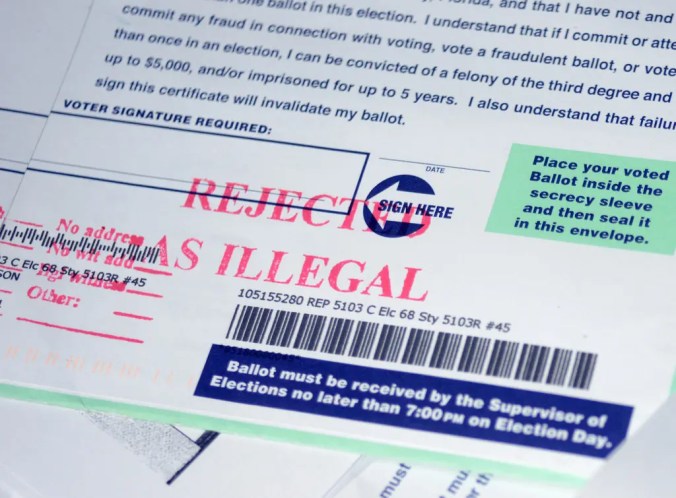
More than 18,000 voters in Texas’ most populous counties had their mail-in ballots rejected in the state’s primary election this month… a surge in thrown-out votes that disproportionately affected Black people in the state’s largest county and revealed the impact of new voting regulations passed by Republicans last year. In Harris County, which includes Houston and is the state’s most populous county, areas with large Black populations were 44 percent more likely to have ballots rejected than heavily white areas…The analysis also found that Black residents made up the largest racial group in six of the nine ZIP codes with the most ballot rejections in the county.

The Times concludes that the ballot rejections and the racial disparity in those rejections provide “the clearest evidence yet that the major voting law passed last year by the Republican-controlled Texas Legislature has prevented significant numbers of people from voting.” Is that a fair analysis? Doesn’t it matter why the disparity occurred?

In the Times piece, that question, which I would rank as indispensable to answering the basic ethics question “What’s going on here?” to begin the quest for a solution, is never asked, answered, or even speculated upon. “We have concrete evidence of the impact that it is having on primarily people of color,” Mayor Sylvester Turner of Houston,who is black, said in an interview. “People’s right to vote is being taken away. It’s almost like the 21st-century version of the poll tax, so to speak, when they were asked, ‘How many bubbles are in this bar of soap?’”

That’s some analogy you got there, Mayor. First of all, you are alluding to voter literacy tests, not poll taxes. With poll taxes, there was discrimination on the basis of the ability to pay. “How many bubbles are in this bar of soap?” is obviously an impossible question designed to illegally exclude voters. What is the similarly impossible requirement that black voters found so difficult to comply with in the Texas primaries? We are told, Continue reading →

End Of A Rotten Week Ethics Wind-Up, 3/18/2022

A nearly completely lost week for me, ProEthics, its clients and Ethics Alarms mercifully comes to a close. One positive note: yesterday I spoke at the first live, face-to-face seminar I have participated in since March of 2020, though I had to do so while stuck in my Godfather impression. At least there was more audience interaction than with the far inferior Zoom versions of my presentations, but it was disheartening to be so worn out by a mere 75 minutes on my feet. Another good sign: nobody in the room wore a mask.

I also had an encouraging conversation with my cab driver, whose name is Duke; it was also my first cab ride in two years. He was an immigrant from Ghana, and launched into spontaneous an eloquent speech about how much he loved living in the U.S., “the greatest country in the world.” I gave him a 35% tip for cheering me up and giving me the boost of enthusiasm I needed to get through my program. Thanks, Duke. I needed that.

1. A Times opinion column today includes what should be an unnecessary headline: “It’s Possible to Learn the Right Thing From the Wrong Person.”

My initial reaction was that the op-ed is about four years late, and should have been plastered on the Times front page when the Left started pulling over statues and re-naming college dorms. Writer Margaret Renkl initiated her piece by referencing an ethics exemplar dear to my heart and that of Ethics Alarms: Sir Thomas More, who was simultaneously inspiring and brutal. She concludes,

But part of living comfortably in a complicated world means recognizing the complexity of human beings — their inscrutability, their ever-changing priorities, above all their capacity for self-contradiction. Much as we might prefer it to be otherwise, it is possible for a person to do unforgivable things and also things that are remarkably beautiful and good. We do human wisdom a great disservice when we expect it to be perfectly embodied in a flawed human being.

Perhaps even more important, we profoundly misunderstand the very nature of art when we think we know in advance what readers — or audience members or gallery visitors — will derive from it. Or, worse, when we presume to tell them what they should derive from it.

Whether it’s a painting or a film or a play or a dance or a poem or a novel or a sculpture or a symphony or any other artifact of creativity made by a restless, curious, questing human mind, a great work of art finds its completion in the restless, curious, questing mind of the person who encounters it. And there is no predicting how that act of transformation, that experience of utter intimacy, might unfold.

Great art of every kind allows people to place themselves, safely, into the larger world. It is transformative precisely because it is one way we come to understand our own part in the expansive, miraculous human story. A great work of art reminds us that our own lives, which too often feel small and insignificant, are part of a story that can be full of cruelty and suffering, yes, but that can also be astonishing. Very often it is magnificent.

When someone tells me that a book should no longer be read — or a film should no longer be screened or a painting hung or a play performed — because of some problematic history attached to the work or its creator, I think of the girl I was in 1980, discovering a truth I desperately needed to find, in just that moment, from a story that might or might not be true about a human being who might or might not be good. A human being who, I know now, was almost certainly both.

Exactly. Continue reading →