Fake History Ethics, Baseball Division.

Yesterday was the anniversary of a famous day in baseball and American race relations history. From Nationalpastime.com:

May 13, 1947: During the pregame infield practice, a barrage of racial slurs is directed at Jackie Robinson by the Cincinnati fans during the Dodgers’ first visit to Crosley Field this season. Brooklyn shortstop Pee Wee Reese, a Southerner from Kentucky with friends attending the game and captain of the team, engages the black infielder in conversation, and then put his arm around his teammate’s shoulder, a gesture that stuns and silences the crowd.

This  episode in the well-known saga of Jackie Robinson breaking the color line in baseball has taken on the status of legend. It is in the (excellent) biopic about Robinson, “42.” It was re-told in Ken Burns’ documentary “Baseball.” Most enduring of all, the moment is memorialized forever in the statue outside Dodger Stadium—well, forever until Robinson or Reese is cancelled because something unforgivable is unearthed in their past, whereupon UCLA students will pull the thing down as progressives cheer.

I’m preparing a program for the Smithsonian Associates on how baseball has influenced American values, culture, politics, language and society, so it is of special interest to me that there is considerable controversy over whether Reese’s mid-game gesture ever happened. Writes much-lauded baseball essayist Joe Posnanski,

“There is no mention at all of the embrace in the newspapers. Quite the opposite, in fact. The Cincinnati Enquirer wrote that very day that Robinson “was applauded every time he stepped to the plate.” Meanwhile, there is no mention of it in the black press either; Burns insists that the embrace had happened, the black papers “would have done 15 related articles.” There is no photo of it. Robinson’s 1948 book about his first season called “Jackie Robinson: My Own Story” does not mention any such incident….There isn’t a single contemporary account of the embrace in any of the newspapers or magazines.”

Theories abound. The episode happened on a different date. It happened, but not in view of the fans. It is a story that accurately describes what Reese’s support of Robinson—Reese was a white southerner and a team leader, and he and Robinson did become close friends—meant to the black rookie as he battled abuse and racism in that first season of 1947, but there was no literal arm around the shoulder.  Craig Calcaterra, recycling  the controversy yesterday on his NBC blog, theorized, Continue reading

Sexist Broadway Musical Lyric Ethics: Carousel’s “Soliloquy”

“Soliloquy,” also known as “My Boy Bill,” may be my favorite Broadway musical song of all time. (I don’t know, it’s between that and “Losing My Mind” from Sondheim’s “Follies.”) It certainly is among the most ambitious of all the songs from the genre, an emotionally wide-ranging, musical equivalent of a Shakespearean  monologue. Both the song’s lyricist, Oscar Hammerstein, and especially its composer, Richard Rodgers, were at the top of their form when they created it, and the top of their form can match any songwriter who ever lived. It’s also a tour de force for the singer, a seven-and-a-half minute musical mountain that only the very best even dare try to scale

The song comes at a key moment in the plot of “Carousel,” when the brutish and none-too-bright hero, Billy Bigelow, has learned that his wife is pregnant. The arrested-development adolescent muses about the joys and ultimately the responsibilities of his impending fatherhood, and having accepted the fact that his child might be a girl, makes a fateful vow at the song’s climax: Continue reading

Monday Morning Ethics Warm-Up, 5/11/2020: NBC’s Tipping Point, Joe’s Gaslighting, A Judge’s Dead Ethics Alarms, And Kroger’s Grandstanding Backfires

It’s May!

1. More thoughts on “Meet the Press” and Chuck Todd. Pause now to reflect on last night’s post on the “Meet the Press” cheat, leaving out the key portion of AG Barr’s answer to an interview question, then having anchor Chuck Todd criticize Barr for not saying what he in fact said and that he withheld from his audience.

  • Does anyone think NBC’s “oops!” apology after being called on this by CBS (from whence the original interview came) and Justice (in a tweet by Barr’s spokesperson) is credible? The only way one could believe this was accidental is to assume there are no standards of review and oversight in network news. With all the preparation that goes into a weekly show, how could the anchor not review the entire interview he is planning on discussing? True, Todd is uniquely stupid for an anchor, somewhere in the Chris Cuomo range, but applying Hanlon’s Razor here strains the rule. This was almost certainly malicious.
  • The example ought to be aggressively and relentlessly shared on social media, with enablers and apologists being dealt with harshly. (I just posted it on my Facebook page. I know what’s coming. To hell with them.) This is a smoking gun and signature significance: a journalism culture where this happens is corrupt and agenda-driven The episode also ought to be a tipping point where the public, all of it, wakes up to how it is being manipulated by propagandists. Note I say “ought” but not “will.”
  • For this reason, the episode isn’t just about news, it is news. It should be a headline on every news broadcast and in every newspaper. “Meet the Press,” even as diminished as it is, still holds a symbolic place in the industry. This is a scandal, and an important one.
  • Is it of greater national and historical importance than most of the items on my Times front page this morning? Absolutely.
  • To those who will argue that Todd’s cheat was an innocent mistake that conservatives, Republicans and “Trumpers” are “pouncing” on, I would ask, “Where is the parallel instance of an Obama official, a Democratic leader, or a progressive being similarly misquoted on a network news show?” The closest example I can recall was when NPR falsely edited an interview with…Ted Cruz.
  • The standard increasingly becoming the norm in the mainstream media is not “how can we inform our viewers?” but rather “how can we advance our agenda by manipulating the content and get away with it?” The latter begins with the assumption that their partisan and ignorant audiences will tolerate being deceived, and that is how democracies die.

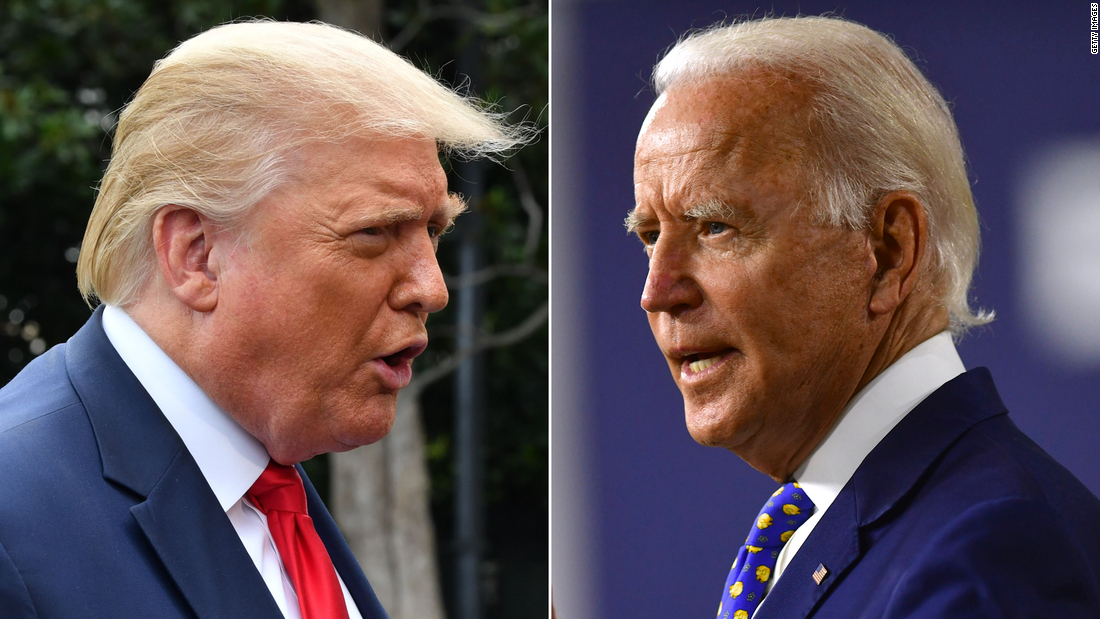
2.  The point when I stopped reading Joe Biden’s op-ed in the Post:President Trump is reverting to a familiar strategy of deflecting blame and dividing Americans. His goal is as obvious as it is craven: He hopes to split the country into dueling camps…”

The reason shifting blame and dividing the country is a familiar strategy is that Biden’s party has been doing this continuously from the moment Hillary Clinton called Trump supporters “deplorables.” Well, let’s reconsider that: maybe the strategy started when President Obama’s mouthpieces began using “racist!” as the default response to any criticism of him, and “xenophobe!” as the response to those wanting to enforce our borders. Either way, Biden’s attack ( or that of whoever wrote it for him while he was working on his coloring book) is gaslighting. Imagine anyone trying to divide Americans over public policy!

PS: Here’s an Atlantic article from a few days ago: “The Coronavirus Was an Emergency Until Trump Found Out Who Was Dying.”

Post Post Script: Why look! “Dr. Gregg Gonsalves, who teaches about microbial diseases and law at the Ivy League school, took to Twitter recently to slam the administration, saying:

“How many people will die this summer, before Election Day? What proportion of the deaths will be among African-Americans, Latinos, other people of color? This is getting awfully close to genocide by default. What else do you call mass death by public policy?”

3. In related news...Yesterday, Atlanta’s Mayor Keisha Lance Bottoms  called the shooting death of  black jogger Ahmaud Arbery “a lynching”and blamed President Trump. Continue reading

Prelude To “The Pandemic Creates A Classic And Difficult Ethics Conflict, But The Resolution Is Clear, Part II”

No, I am not satisfied with the current draft of Part II, but I trust it’s obvious what the resolution referred to is. The lock-down has to end, and before vaccines, cures, or adequate medicine are available. One of the components of my research has been reading as many of the pro and con articles as I can stand. It is quite striking: the arguments for continuing the lockdown indefinitely are almost entirely authored by progressives, and are without exception characterized by bad logic, emotionalism, manipulated facts, biased analysis, fearmongering, and suspect motives. The majority of the arguments for opening up the economy soon are markedly more logical, unemotional, and based on sound statistics and analysis. Certainly one cannot choose between two options based on the quality of the advocates for each. Nonetheless, the divide is striking.

Ann Althouse chose such an essay today to critique, “Whose Freedom Counts?/Anti-lockdown protesters are twisting the idea of liberty” by Dahlia Lithwick, who has periodically been discussed here, the first time in 2010. It is e fair to say that her mind and mine run in different metaphorical riverbeds, not that there’s anything wrong with that. Lithwick’s article endorses yet another one of the  same ilk, Ibram X. Kendi’s  current piece in The Atlantic called “We’re Still Living and Dying in the Slaveholders’ Republic/The pandemic has brought the latest battle in the long American war over communal well-being.”

Ann makes short work of both, writing,

Aha! We see what you’re doing! What a distraction! But I suppose that because slavery was invoked, I’m expected to listen without protest while Kendi’s solemn, censorious lecture is promoted by an over-excited Lithwick. I resist. Sorry. I do hear what you’re saying, and I see how well it works to justify depriving us of all freedom. There’s never enough freedom from all the things in the world that might hurt us if we’re not kept in eternal lockdown.

Excellent. Althouse is a liberal, much as she tries to hide it, but she is not an aspiring totalitarian, like such a large swath of the current mutated progressives and Democrats. Her last sentence echoes two of my favorite quotes, “In order to have enough liberty, it is necessary to have too much,”  (Clarence Darrow), and “Those who would give up essential Liberty, to purchase a little temporary Safety, deserve neither Liberty nor Safety,” (Benjamin Franklin).

I have another screed to deconstruct: a New York Times editorial  by Charlie Warzel titled “Open States, Lots of Guns. America Is Paying a Heavy Price for Freedom,” or in my print edition, “Will We Get Used To The Dying?” I’ll let you read it first without my comments, here. That’s only fair.

***

Done? Maybe you don’t even need this: eviscerating Warzel ‘s analysis shouldn’t be too hard. Rebutting most of these essays isn’t hard.

Away we go…

The coronavirus scenario I can’t stop thinking about is the one where we simply get used to all the dying. I first saw it on Twitter. “Someone poke holes in this scenario,” a tweet from Eric Nelson, the editorial director of Broadside Books, read. “We keep losing 1,000 to 2,000 a day to coronavirus. People get used to it. We get less vigilant as it very slowly spreads. By December we’re close to normal, but still losing 1,500 a day, and as we tick past 300,000 dead, most people aren’t concerned.”

How old is Warzel, 15? We accept the mortality of modern life, just as our ancestors accepted the mortality of their own periods. That tweet is simply making sinister the adjustments that human beings have to make to get on with civilization. To that, it adds scaremongering, and Warzel joins in the virtue-signalling. Anyone who isn’t willing to keep the lockdown in force indefinitely isn’t concerned.

That’s crap. I’m concerned: both my wife and I are in the high-risk category; so is my sister; so are most of our extended family. I do not advocate the destruction of American society for my own self interest, that’s all. That’s how members of a community and democracy are supposed to feel.

This hit me like a ton of bricks because of just how plausible it seemed. The day I read Mr. Nelson’s tweet, 1,723 Americans were reported to have died from the virus. And yet their collective passing was hardly mourned. After all, how to distinguish those souls from the 2,097 who perished the day before or the 1,558 who died the day after?

People die every day, and from predictable causes, many of them a direct result of our way of life and societal choices. The Times has been running a feature showing selected photographs of recently succumbed victims of the Wuhan virus with a biographical sketch. I have wondered each time I see it: why are these people more worthy of ostentatious memorials in the Times than anyone who has died in the same period? The answer is, they aren’t. This is part of the news media’s effort to build anxiety and hysteria, which will be weaponized for political purposes. Hardly mourned? Every American is supposed to mourn everyone who dies every day? We mourn our loved ones. I am still mourning Dennis Nollette, a former law school roommate who was among the best human beings I have ever had the honor of knowing.  He was carried off by the epidemic within a few days. That’s plenty for me right now. I’m not becoming callous because the deaths of strangers don’t hit me as hard as the death of a cherished friend.

Furthermore, it is not “plausible” that the pandemic will continue forever; pandemics don’t. And indeed, if they did, it would be an irrefutable reason to open up now.

Such loss of life is hard to comprehend when it’s not happening in front of your own two eyes. Add to it that humans are adaptable creatures, no matter how nightmarish the scenario, and it seems understandable that our outrage would dull over time. Unsure how — or perhaps unable — to process tragedy at scale, we get used to it.

Talk about complaining about an unchangeable feature of human life, sanity,  and reality! But that kind of lament is irresponsible progressiveness in a nutshell.

There’s also a national precedent for Mr. Nelson’s hypothetical: America’s response to gun violence and school shootings.

Here we go, down the rabbit hole.

We often talk here about incompetent analogies. This is a lulu. It is embarrassing that the New York Times would consider such a contrived and illogical argument to be published as an editorial—embarrassing, and signature significance.

You should skim the next part; I know my eyes glazed over. It’s standard CNN/Don Lemon/ David Hogg propaganda and emotionalism.

As a country, we seem resigned to preventable firearm deaths. Each year, 36,000 Americans are killed by guns — roughly 100 per day, most from suicide, according to data from the Giffords Law Center. Similarly, the Everytown for Gun Safety Support Fund calculates that there have been 583 “incidents of gunfire” on school grounds since 2013. In the first eight months of 2019, there were at least 38 mass shootings, The Times reported. Last August, 53 Americans died in mass shootings — at work, at bars, while shopping with their children. Some of these tragedies make national headlines; many don’t. The bigger school shootings and hate-crime massacres can ignite genuine moral outrage and revive familiar debates: over safe storage practices, gun show loopholes, red flag laws, bump stocks, comprehensive background checks, stringent licensing systems and, of course, the accessibility of endlessly customizable semiautomatic weapons like AR-15s. In every case, the death tolls climb but we fail to act. There are occasional marches and protests but mostly we continue on with our lives.

Yes, we are monsters for understanding the importance of the rights of self-defense and bearing arms to a functioning democracy. In reality, while there are usually, in hindsight, ways that any single abuse of firearms could have been prevented, gun deaths are not preventable as long as there are guns, law abiding citizens have access to them, and a police state doesn’t abuse its power to make us “safe.”

Notice that Warzel’s gun-virus analogy breaks down immediately. There is no societal value to pandemics. There is no right to get fatally ill. There are no Constitutional amendments preventing the government from eliminating a disease. Continue reading

Comment Of The Day: “The Pandemic Creates A Classic And Difficult Ethics Conflict, But The Resolution Is Clear, Part I: Stipulations”

The second Comment of the Day to come out of  Part 1 of the pandemic analysis ethics conflict analysis, like the first, does a lot of the work I would otherwise have to do to complete Part 2. A couple more like these, and the issue might be thoroughly covered without any input from me at all!

Here is Michael R’s Comment of the Day on the post,  “The Pandemic Creates A Classic And Difficult Ethics Conflict, But The Resolution Is Clear, Part I: Stipulations”:

The global warming cult has conditioned leaders and the media to trust models over data. If the data doesn’t match the model, it is the DATA that must change, which is why they keep adjusting the temperature measurements more and more to match the model. As with global warming, the model does not match reality and we are being told to trust the model, not the data.

Just to put things in perspective:

—Roughly 2.8 million Americans die each year. Around march, that is roughly 8000 people/day.

—If 5% of the population has asymptomatic coronavirus, that means that 400 dead people with test positive for coronavirus each day, even though it did not contribute to their deaths. Under current practice, that means 400 coronavirus deaths that really weren’t coronavirus deaths (or 12,000/month).

—It is hard to tell, but the number of deaths/month does not seem to be rising over previous years. It seems that most ‘coronavirus deaths’ are due to reclassifying cause of death, not actual effects of the virus. You can view the California doctor’s censored interview about that somewhere, if you can find it anymore.

—The number of actual extra deaths from coronavirus appears to be within the yearly standard deviation of deaths. Meaning: Deaths from coronavirus are not statistically significant yet.

—The fatality rate appears to be less than 0.1%. The flu is about 0.1% and the flu without the flu vaccine is about 0.3%, so this appears to be not as dangerous as the flu. More people are getting it, however, because it is new and people don’t have an natural immunity to it yet. This is why everyone needs to get it.

—Roughly 500,000 people die each year from medical mistakes.

—Places that had more restrictive lockdowns did not suffer from worse outcomes. They seemed to have suffered less.

Verdict: It seems that our ‘experts’ are morons. Let’s look at some of the policies from those ‘best people’. Continue reading

Morning Ethics Warm-Up, 5/6/2020: Question, Questions…

Good morning?

1. Is this is a Catch 22 or what? In order to start using Adobe Acrobat in the Creative Cloud “suite,” you must agree to Adobe’ s new Terms of Use. However, a user can’t  read the Terms of Use until after he or she agrees to the Terms of Use.  Among the provisions in those terms is this…

14.1 Process. If you have any concern or dispute, you agree to first try to resolve the dispute informally by contacting us. If a dispute is not resolved within 30 days of receipt by us, any resulting legal actions must be resolved through final and binding arbitration, including any question of whether arbitration is required, except that you may assert claims in small claims court if your claims qualify. Claims related to the Terms, Services, or Software are permanently barred if not brought within one year of the event resulting in the claim.

That’s right: you have to agree not to sue  them.

Rob  Beschizza posted a video online showing him futilely  clicking the “Terms of Use” link only to be prevented from reading them because he hadn’t agreed to the Terms of Use.  As he points out, almost nobody—yes, not even lawyers—reads these fine print, intentionally verbose and obscure conditions before they agree to  terms of use, but that’s the users’  fault. Being forced to agree to terms before it is possible to read them is another kettle of fish. That’s con-man stuff. That makes it an invalid contract.

Of course, a company that tries this stunt assumes that when it produces a lawyer-signed statement reminding  dissatisfied customers of the terms they signed, that will be sufficient to discourage any further action.

2. In a mass shooting any excuse for this? Watch this video of an arrest by Canadian police in Lethbridge, Alberta:

A  young woman  dressed as an Empire Storm Trooper and carrying a plastic “blaster” on May the Fourth (…”be with you!”) to promote her employer’s cafe was surrounded by four officers, guns drawn, then tackled—bloodying her nose—cuffed and arrested. Lethbridge Police Inspector Jason Walper said  his department received  two 911 calls regarding  someone brandishing a weapon.

Apparently there really are people, at least in Canada, who have never seen “Star Wars.” But what are the odds that none of the four police were aware that this was a costume? Surely the rational approach to the silly situation would be to ask the woman to  take off her helmet and explain what she was doing before they attacked her. If the girl had been black, and this had occurred in the U.S., the NAACP would be demanding an investigation.

Canadians are trying to mitigate the stupidity here by noting that everyone is traumatized by the nation’s  mass shooting last month that left 22 dead. And, I suppose, a Storm Trooper outfit could have been a diabolical hit man’s clever disguise. I suppose.

Only 22? Heck, in the U.S., that’s chicken feed! Continue reading

The Pandemic Creates A Classic And Difficult Ethics Conflict, But The Resolution Is Clear, Part I: Stipulations [CORRECTED]

[Warning: I’m sure there are typos below; I’ll be fixing them, but I’m a bit swamped, and I want to get this post up. It’s a utilitarian decision. Update: I think I’ve fixed them all.]

I have been consciously avoiding wading into this issue, first, because its components are beyond my expertise in two fields, second, because to do a proper job would take a book rather than a  blog post, and third, because to even do an inadequate  job, I will have to quote extensively from the arguments of others, which I try to do as little as possible (believe it or not). I detest appeals to authority, which is basically all I get from my deranged Facebook friends all day long.  Nonetheless, I can’t put this post off any longer, because this is an ethics issue encompassing several related ethics issues. I also can’t cover it in a post of reasonable length, so this will be Part I.

The grand ethics issue facing the nation, the public, the President and our future is when to begin re-opening the  economy, allowing people to get on with their lives. Let’s begin with ten stipulations:

1. This is an ethics conflict, not an ethics dilemma. There are ethical considerations and values on both sides of the equation.

2. Many, too many, of those involved in the problem are going to approach it as an ethics dilemma, in which ethical values compete with non-ethical considerations. Unfortunately, that group includes almost all, and maybe all, politicians and elected officials, including the President.

3. It is a cruel trick of fate, or a bizarre joke by a sadistic Creator, that this crisis is occurring in an election year, and with a national leader with the personal characteristics, chaotic leadership, management style, and divided constituency of Donald Trump….but that’s the situation. It is particularly unfortunate that he does not have a reserve of public trust, because that, if not essential now, would sure help a lot as he makes some difficult decisions. He is significantly responsible for that trust deficit; the media and “the resistance” are even more responsible. That doesn’t matter right now. It is a different issue, though a related one.

4. We still do not have adequate information to make a fully informed decision, and will not have before a choice is unavoidable. That’s a fact. We still aren’t certain how the virus is transmitted, or the degree of infectiousness by the asymptomatic. We don’t know why some areas of the country are experiencing higher rates of infection than others. We cannot compare the U.S. statistics with other countries, because we can’t be sure of the accuracy of those foreign statistics. We aren’t even sure of the effectiveness of the supposedly essential precautions, like masks and social distancing. For example, I have articles on file from the last 30 days by credentialed medical professionals arguing that wearing masks may increase the likelihood of infection. I don’t care if this is a minority opinion; minority opinions are often right. Meanwhile, I just watched HLN interviewing a researcher who claims that social distancing should be 12 feet or more, after measuring how “droplets” from coughs spread. But a social distance requirement of much more than six feet is impractical, meaning that it’s not worth talking about.

5. Making important decisions without perfect information is what effective leaders have to do. Two recent weak Presidents, Barack Obama and Jimmy Carter, were marked by a habitual reluctance to make difficult and urgent choices without “all the facts,” and this resulted in multiple fiascos. The danger in making a premature decision, as defined by those two intelligent men, is that the decision will be subject to second guessing after the missing facts are known. President Trump has to be courageous and responsible and make any choice, knowing that whatever he does will be attacked whatever happens. He has to place his fate in the hands of moral luck, and the fate of the country as well. That’s a terrible situation to be in, but that’s the job. Continue reading

Monday Morning Warm-Up, 5/4/2020: Six Reasons To Be Cynical [Corrected]

“May The Forthe be with you!”

As Daffy Duck would thay…

1. Following a familiar unethical pattern...Eva Murry’s allegation about Joe Biden making a remark about her breasts at a political even when  she was 14 seems to have been decisively debunked. Biden’s schedule shows he didn’t attend the event, and the chair at the time confirms he wasn’t there.

What would possess someone like Murry to be so vocal and self-righteous about something that didn’t happen? As with the Kavanaugh mess, subsequent fake stories undermine the main one. Even though they have nothing to do with each other, Murry’s fiction, if Biden really didn’t attend the event, increases cynicism about Tara Reade’s account.

2. What a surprise…Harvard’s dedication to feminism stops at the bank vault. Harvard, while it was violating the constitutional rights of male students by punishing them if they belonged to men-only clubs off-campus, was also giving aid and comfort to convicted sex trafficker Jeffrey Epstein. The regime of first female Harvard President Drew Faust was full of dubious and virtue-signaling measures to ensure the esteemed university was sufficiently woke, including discriminating against one ethnic group (Asian-Americans) to elevate another ethnic group (African-Americans). Yet when it came to its attitude toward an infamous sexual predator, what mattered to Faust and Friends was, you guessed it, money.

Epstein, who was provided his own office at the school following his 2008 sweetheart plea deal that incredibly allowed him a quick release from prison to continue his <cough!> hobby, visited the campus more than 40 times between 2010 and 2018 often accompanied by young women who acted as his assistants, according to a report on the Harvard-Epstein alliance released last week. Apparently Epstein’s primary value to Harvard was connecting academics and scholars with financiers, VIPs and other sources of contributions, including Wall Street wheeler-dealer Leon Black, the founder and chief executive officer of Apollo Global Management Inc., one of the world’s largest private equity funds. Epstein also provided access to his pal Bill Clinton and retail billionaire Leslie Wexner. Continue reading

Evening Ethics Cool-Down, 4/28/2020: Ethics Clouds In My Coffee

Good evening.

1. Here’s an ethics quote I need to use more often…I was watching the 1941 film “The Devil and Daniel Webster,” about a jury trial to determine whether the Devil will get a farmer’s soul as contracted.  It reminded me of a quote by Kurt Vonnegut: “A soul is the part of you that let’s you know when your brain isn’t working properly.”

A better definition of an ethics alarm you could not devise.

2. So where were the souls of the judges who voted for this? Thousands of prisoners have been released from incarceration to protect them from the outbreak of the Wuhan virus inside jails and prisons.  The theory is that subjecting prisoners to this special peril is cruel and unusual punishment. The theory’s not wrong, but it’s a bit unbalanced. Their peril is not entirely  society’s fault, after all.

There are activists at the extreme end of the progressive spectrum —a division getting larger all the time, it seems—who seem to want to eliminate penal punishment completely.  Not letting a crisis go to waste, a group of them , Columbia Legal Services, began pushing for inmates over 50 years old in Washington state to be released as a compassionate act to save them from the virus.

Among the intended beneficiaries: Gary Ridgeway, the Green River Killer, and Isaac Zamora,  serving a life sentence for going on  a shooting rampage and killing six  people. Ridgeway is one of the nation’s most frightening serial killers, eventually confessing to 71 murders. Over the three decades of the 1970s, ’80s and ’90s, Ridgeway captured women and girls, raped them, and  strangled them. He loved watching the life go out of their eyes as they died by his hand, though sometimes he used a  rope. Then he  would pose with the corpses. If he really liked his victim,  he’d have post mortem sex with her body. His first victims were found in the Green River, giving him a catchy name.

Ridgeway was sentenced to 500 years in prison with no possibility of parole. The victim’s families were promised that he would never be released. Ah, but poor Gary is 71 now, and thus at risk of succumbing to the pandemic, and presumed to be too feeble to be a threat. That, at least, is what Columbia Legal Services argued. (You know, I’m not much younger than Ridgeway, and I’m pretty certain I could murder someone. In fact, I’m getting ideas…)

Q13 News reported  that prosecutors protested that “the Petitioners [Columbia Legal Services] demand that 2/3 of the prison population be released into the community, a number which includes serial killers and capital murderers.” You would think that their argument would be a slam dunk. You would be wrong. Continue reading

Comment Of The Day: “Facebook Users Are Actually Posting This. It Shows Scrambled Ethics Alarms.”

It’s story time, courtesy of Steve-O-in -NJ, who was inspired by the obnoxious, hopefully fake internet message going around the web purporting to be a dressing-down of “inconsiderate” shoppers who “browse.”  He recounts a related episode I apparently missed, with trenchant commentary.

Here is Steve-O-in -NJ’s Comment of the Day on the post, “Facebook Users Are Actually Posting This. It Shows Scrambled Ethics Alarms.”

It reminds me of the list some bitter soon-to-be-former employee of Borders Books and Music wrote on a whiteboard and put up right before the whole chain closed in 2011 due to various factors, mostly the expansion of amazon and missing the boat on the e-reader market. I’ll run through it, adding my own commentary:

Things you never knew about Borders Employees:

    • We hate when a book becomes popular simply because it was turned into a movie.

What, so it means you’ll sell more of that book? How does that hurt you?

    • It confused us when we were asked where the non-fiction section is.

It shouldn’t. Anyone older than eight knows the difference between fiction and non-fiction. Yes, non-fiction is pretty broad, but that’s easily answered with a question to try to narrow what the person is looking for.

    • Nicholas Sparks is not a good writer … if you like him, fine, but facts are facts.

No, that’s your opinion, which counts for exactly nothing here. Just who made you, a skinny, bored, can’t-be-bothered-to-do-more-than-the-bare-minimum, clueless twenty-something, an authority on what constitutes a good writer? Your job is to sell books, not critique them, and certainly not to pass judgment on customer choices. You want to become a book critic, see if the local paper is hiring.

    • We greatly dislike the phrase “Quick question.” It’s never true. And everyone seems to have one.

Then get a job flipping burgers. Answering questions is part of the job.

    • Your summer reading list was our summer reading NIGHTMARE. Also, it’s called summer reading, not three days before school starts reading. Continue reading