Here’s another planned post from those lost notes on a Sunday Times I just found from two weeks ago:
In the New York Times Magazine, the Times announced the results of an online poll of 2, 903 subscribers by its research-and-analytics department. 72% Times loyalists would prefer to have done something horrible that only they knew about than to have everyone think they did a horrible thing that they really didn’t do.
Wait…what?
See, if you did a secret horrible thing, there really was someone hurt by your conduct. If people just think you did a horrible thing, you in fact hurt nobody, and did nothing wrong. This was a sneaky way of asking, “Are you a selfish and unethical human being, or not?” Well, sneaky assuming that Times subscribers are incapable of thought, or that they let their 12-year-old kids answer Times research questions. About 3/4 answered, “Oh, I’m completely unethical!”
For the sake of clarity, let’s assume that both sides of the question involve the same horrible act, agreed? After all, if the real act is setting an orphanage on fire, and the wrongly believed act is farting loudly during a funeral service, or vice versa, the question is ridiculously easy.
So…72% of Times subscribers would rather have murdered a child than have everyone wrongly think they murdered a child? Molested a child? Broiled and eaten a child? Committed adultery? Spousal abuse? Spousal torture? Buried a spouse alive? Keeping a spouse locked in a dungeon? Locking a spouse in a dungeon with rabid wolverines?
What does this poll result tell the Times? What were they trying to learns? What does it tell us?
I guess it might explain the continued presence of the likes of Charles Blow, Thomas Friedman and Paul Krugman on the Times op-ed pages.
Or maybe their presence explains why Times subscribers reason as they do.
1 Damn First Amendment! I’m hoping that everyone was watching the Macy’s Thanksgiving Day Parade and missed it, but yesterady’s New York Time front page had very strange headline above the fold: “Using Freedom To Lead Attack On Gay Rights.” The online version was more descriptive of te tone of the article: “Fighting Gay Rights and Abortion With the First Amendment.” The article seeks to paint the Alliance Defending Freedom, which opposes policies that its members believe infringe on their right to live according to their religious beliefs, as sinister. By emphasizing the fact fact that the guarantees of the First Amendment aid and abet the dastardly objcetives of these horrible people, the Times appears—to me, anyway–to be questioning the First Amendment itself. Don’t all advocacy groups “use freedom” to argue for their positions? Doesn’t the New York Times fight the Republican Party and Donald Trump “with the First Amendment”? Yes, we have free speech in this country, at least until progressives acquire sufficient power to limit it, as their rhetoric increasingly portends. Where is the Times headline, “Progressive Use Freedom to Lead Attack on Liberty”?
From the article:
“We think that in a free society people who believe that marriage is between a man and a woman shouldn’t be coerced by the government to promote a different view of marriage,” said Jeremy Tedesco, a senior counsel and vice president of United States advocacy for the group, which is based in Scottsdale, Ariz. “We have to figure out how to live in a society with pluralistic and diverse views.”
But civil liberties groups and gay rights advocates say that Alliance Defending Freedom’s arguments about religious liberty and free expression mask another motivation: a deep-seated belief that gay people are immoral and that no one should be forced to recognize them as ordinary members of society.
Oh, no doubt, the civil liberty groups are correct about that, but so what? Motives have never been the criteria whereby legitimate use of the First Amendment is measured and limited. Whether religious groups believe that LGBT individuals should not have the same rights as other citizens because they have been condemned by God, or whether they just think they are inherently icky, or whether they are inherently icky because they have been condemned by God, or whether they have been condemned by God because God thinks thet thinks they are inherently icky, part of the First Amendment states that they have a right to their beliefs, and another part says that they have a right to argue for those beliefs without government interference. Yup: they are dead wrong about gays (though not necessarily about abortion), just as the Times is wrong about many, many things. But implicating the First Amendment while attacking Alliance Defending Freedom’s positions is a dangerous game, and one more bit of evidence that a large swathe of the ideological Left regards the nation’s core principles of freedom or speech and religion as problems rather than blessings. Continue reading →
Last year (to the day) when I posted the Ethics Alarms ethics guide to Frank Capra’s 1946 masterpiece “It’s A Wonderful Life,” one of the great ethics movies of all time, as this blog’s official welcome to the holiday season, I wrote, “I suspect we need it more in 2016 than usual.” As it turned out, we need it even more in 2017.
Multiple forces have been hard at work for a full year now, roiling the nation, painting the future as dire and the present as unbearable, trying to divide us and even to encourage discord and conflict during this special time when we are supposed to remember what is most important in life. In case you have been infected, it’s not politics and not partisan agendas, but love, family, community, kindness, and friends. The simple message of Frank Capra’s masterpiece—it has aged far better than his other films, including, and maybe especially, “Mister Smith Goes To Washington”—that no one is a failure who has friends, is vital to recall when so many are rejecting friends because they don’t conform to some ideological talking point. This is madness, and watching and heeding “It’s A Wonderful Life” is a better remedy than Thorazine.
Senate Minority Leader Chuck Schumer actually told his Twitter followers this week to bring a chart prepared by a think tank to attack the Republican tax plan during Thanksgiving dinner. This is part of the effort to politicize everything in our lives, by zealots who value power over humanity, country, and spirituality. They belong with Mr. Potter, not George and Clarence.
I need this movie more in 2017 than usual for other reasons. It has been a year in which I have lost many peers and cherished friends, and listened to too many of the living bemoan the passage of time and looming mortality. I don’t think like that—a lifetime gift from my brave and fatalist father—but I can’t pretend that the game clock isn’t running out, or not face the fact that I have not sunk anywhere near the baskets I could have and should have. Fortunately, what I wrote in an earlier year introducing this post still resonates…
Everyone’s life does touch many others, and everyone has played a part in the chaotic ordering of random occurrences for good. Think about the children who have been born because you somehow were involved in the chain of events that linked their parents. And if you can’t think of something in your life that has a positive impact on someone–although there has to have been one, and probably many—then do something now. It doesn’t take much; sometimes a smile and a kind word is enough. Remembering the lessons of “It’s a Wonderful Life” really can make life more wonderful, and not just for you.
Have a terrific Thanksgiving, everyone.
And here we go:
1. “If It’s About Ethics, God Must Be Involved”
The movie begins in heaven, represented by twinkling stars. There is no way around this, as divine intervention is at the core of the fantasy. Heaven and angels were big in Hollywood in the Forties. The framing of the tale seems to advance the anti-ethical idea, central to many religions, that good behavior on earth will be rewarded in the hereafter, bolstering the theory that without God and eternal rewards, doing good is pointless.
Yet in the end, it is an ethics movie, not a religious one. George lives an ethical live, not out of any religious conviction, but because step by step, crisis after crisis, he chooses to place the welfare of others, especially his community and family, above his own needs and desires. No reward is promised to him, and he momentarily forgets why we act ethically, until he is reminded. Living ethically is its own reward.
We are introduced to George Bailey, who, we are told, is in trouble and has prayed for help. One has to wonder about people like George, who resort to prayer as a last resort, but they don’t seem to hold it against him in Heaven. The heavenly authorities assign an Angel 2nd Class, Clarence Oddbody, to handle the case..He is, we learn later, something of a second rate angel as well as a 2nd Class one, so it is interesting that whether or not George is in fact saved will be entrusted to less than Heaven’s best. Some lack of commitment, there— perhaps because George has not been “a praying man.” This will teach him—sub-par service!
2. Extra Credit for Moral Luck
George’s first ethical act is saving his brother, Harry, from drowning, an early exhibition of courage, caring and sacrifice. The sacrifice part is that the childhood episode costs George the hearing in one ear. He doesn’t really deserve extra credit for this, as it was not a conscious trade of his hearing for Harry’s young life, but he gets it anyway, just as soldiers who are wounded in battle receive more admiration and accolades than those who are not. Yet this is only moral luck. A wounded hero is no more heroic than a unwounded one, and may be less competent as well as less lucky.
3. The Confusing Drug Store Incident
George Bailey’s next ethical act is when he saves the life of another child by not delivering a bottle of pills that had been inadvertently poisoned by his boss, the druggist, Mr. Gower. This is nothing to get too excited over, really—if George had knowingly delivered poisoned pills, he would have been more guilty than the druggist, who was only careless. What do we call someone who intentionally delivers poison that he knows will be mistaken for medication? A murderer, that’s what. We’re supposed to admire George for not committing murder.
Mr. Gower, at worst, would be guilty of negligent homicide. George saves him from that fate when he saves the child, but if he really wanted to show exemplary ethics, heshould have reported the incident to authorities. Mr. Gower is not a trustworthy pharmacist—he was also the beneficiary of moral luck. He poisoned a child’s pills through inattentiveness. If his customers knew that, would they keep getting their drugs from him? Should they? A professional whose errors are potentially deadly must not dare the fates by working when his or her faculties are impaired by illness, sleeplessness or, in Gower’s case, grief and alcohol.
4. The Uncle Billy Problem
As George grows up, we see that he is loyal and respectful to his father. That’s admirable. What is not admirable is that George’s father, who has fiduciary duties as the head of a Building and Loan, has placed his brother Billy in a position of responsibility. As we soon learn, Billy is a souse, a fool and an incompetent. This is a breach of fiscal and business ethics by the elder Bailey, and one that George engages in as well, to his eventual sorrow.
Harvey Weinstein, you recall, announced that he would devote himself to crushing the NRA. Analysis:Desperate deflection and virtue-signalling.
Kevin Spacey decided to finally announce that he was gay. Analysis: Appeal for support and sympathy from a minority group he had spurned for decades
Bill O’Reilly continues to insist that he never did anything wrong, and that it was all a partisan hit job. Analysis:Deny, deny, deny.
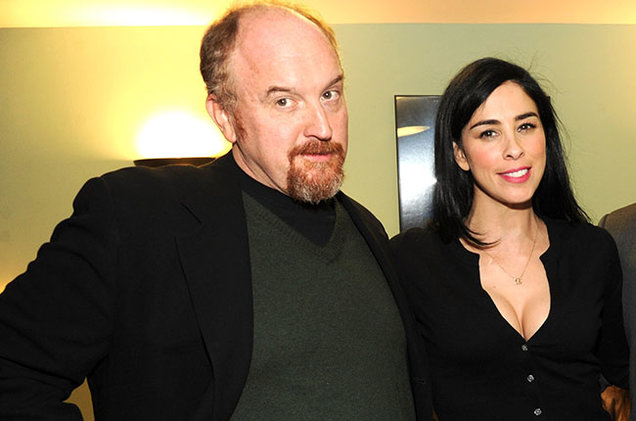
Louis C.K. explained that he misread signals—as if there is any signal from a woman that says, “I want to see a chubby, homely, middles aged guy masturbate nude.” Analysis:Ridiculous and pathetic.
George H.W. Bush sought sympathy—he’s old and in a wheelchair—and anyway, it was all in good fun. Analysis: Generational ignorance
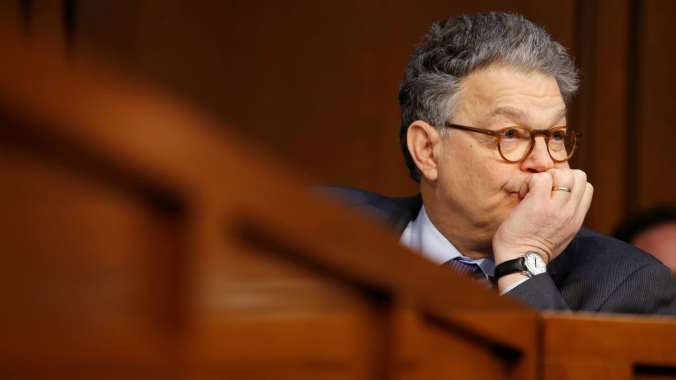
Al Franken gave an apology that said that female accusers should be believed, though he didn’t agree with his female accusers account, and that there was no excuse for his conduct, though he was just joking and jokes sometimes look bad in retrospect. Analysis: Cynical double-talk
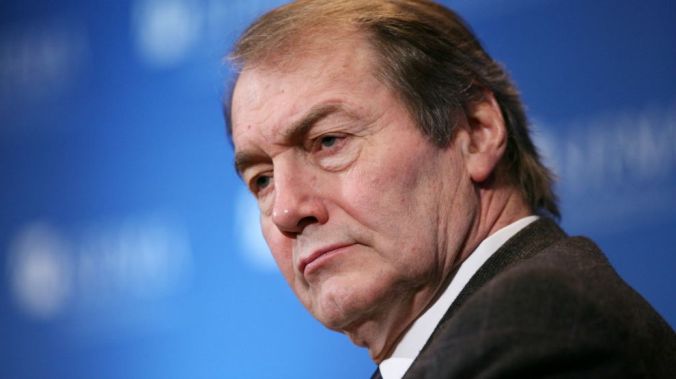
One common thread that cannot be missed is that all of these men are assholes. Their words brand them as such. This figures, since only assholes harass women in the workplace, or anywhere else. I think this is why Charlie Rose’s statement angers me so much, specifically when he said,
“I have learned a great deal as a result of these events, and I hope others will too. All of us, including me, are coming to a newer and deeper recognition of the pain caused by conduct in the past, and have come to a profound new respect for women and their lives.”
Don’t drag me into this, Rose, or any of the millions of men who always treat women as equals, respectfully, and fairly, both socially and professionally. I don’t need any “newer and deeper” recognition, you fecal creep, that putting hands on women’s upper thighs uninvited, parading naked, groping butts, making lewd phone calls to co-workers and making young interns watch sexually explicit films are all unambiguously wrong and intolerable. I didn’t need it 40 years ago, and I don’t now. Continue reading →
As I was preparing to publish Humble Talent’s comment regarding the state of feminism, a new commenter, a feminist herself, weighed in on the president of NOW’s hateful and bigoted blanket indictment on men. Thus I am pairing the comments as complementary.
Getting back to the topic of Toni Van Pelt, someone that I feel really good about myself for mustering the willpower to not mock, kind of puts a face to something I’ve known… But maybe not known how to put into words, for quite a while now.
“Feminists” aren’t bad people, generally. The vast majority of feminists really do believe in equality of the sexes. They’re people, men and women, who were told that feminism is just about equality, they believed it, and they went on with their life. They can even be forgiven that, because despite people identifying as “feminist” being less than 20% of the American population and 13% of the British population, basically every talking head on mainstream news is, and they refuse to comment on anything that puts feminism in a negative light.
Therefore, they can be forgiven for not knowing about Toni Van Pelt, head of NOW, who hates men, and thinks we’re all criminals. They can be forgiven for not knowing Nancy Silberkleit, who inherited Archie Comics and called her male co-workers “penis” at meetings. They can be forgiven for not knowing about Mary Koss, who nudged the CDC in a way that defined rape as something that only happens only to women, and only by men (men are now “forced to penetrate”), they can be forgiven for not knowing Valerie Solanas, author of the SCUM (Society For Cutting Up Men) manifesto, who shot Andy Warhol because… reasons. They could be forgiven for not knowing Robin Miller, editor of Ms. Magazine, who said “I feel that ‘man-hating’ is an honourable and viable political act, that the oppressed have a right to class-hatred against the class that is oppressing them.” Or the late, best-selling, sex negative feminist Andrea Dworkin, who said “I want to see a man beaten to a bloody pulp with a high-heel shoved in his mouth, like an apple in the mouth of a pig.”
Authors open up a whole new barn door. How about Sally Miller Gearhart, author of six toxic sludgepools, who said “The proportion of men must be reduced to and maintained at approximately 10% of the human race,” or Marilyn French, who penned more than 30 ill-conceived tomes, and who wrote “All men are rapists and that’s all they are”.
1 Good-bye Charlie! To get things off to a happy start this Sunday, let’s ponder the news that Charles Manson’s death is imminent. Good. What’s worth pondering is why our society allowed him to live at our expense since 1969. If the justice system has to maintain some ultimate punishment for the worst of the worst crimes if only to stake out the position that some conduct forfeits the right to exist in a civilized nation—and it does—then Manson should have shuffled off this mortal coil, or rather had it shuffled off for him.
Mark this down as one more area where California has arrived at the wrong answer to an ethics problem.
2. “Knock-knock!” Who’s there? “Child molester!” Child molester who? “Child molester? What child molester? We don’t see any child molesters…” According to internal documents, the Jehovah’s Witnesses has instructed congregation leaders, called elders, to keep child abuse secret from law enforcement as a matter of policy since at least 1989.
The religious group’s headquarters, known as the Watchtower, sent a letter in 1997 to local elders across the U.S instructing them to send to a written report about anyone currently or formerly serving in a position of responsibility known to be have sexually abused a child. A California appeals court last week upheld an order for the Witnesses to pay $4,000 for each day it does not turn over the documents to the court, and the tab currently stands at $2 million. The ruling stems from a case in San Diego, where a man sued the Jehovah’s Witnesses for failing to warn congregants that a child predator was in among them.
Osbaldo Padron was sexually abused as a child by an adult member of his congregation named Gonzalo Campos. Campos confessed to sexually abusing seven children, but although leaders at the Watchtower knew this, they continued to promote him to higher positions of responsibility and took no action to protect tne children he came in contact with.
Nice. I guess I’m not going to be polite and chat with those people who knock on my door with copies of the church’s newsletter—you know, “The Watchtower”?—any more.
Is it possible that everyone in the church’s leadership missed the Catholic Church’s scandal in this area? Nobody saw “Spotlight”? Nobody there has a drop of decency or integrity?
Fascinating. Perhaps after he loses his Senate race, maybe Roy Moore will consider a new gig at the Watchtower. Continue reading →
“I love Louie, but Louie did these things. Both of those statements are true. So, I just keep asking myself, can you love someone who did bad things? Can you still love them? I can mull that over later, certainly, because the only people that matter right now are the victims. They are victims, and they’re victims because of something he did.”
I hope Sarah doesn’t have to ponder her question too hard, because the answer should be obvious.
Of course you can love someone who did bad things. Everyone of us has, and probably does. Good people do bad things. Loving and lovable people do bad things, even terrible things. Being loved is one of the crucial life experiences that makes people better.
There are limits, of course. Still, at the root of Silverman’s question is the narrow intolerance and self-righteousness that are polarizing and fracturing our society. I find it ominous that she would ask the question.
The hypocritical Left is discrediting itself for the foreseeable future by contriving ways to pretend that what Al Franken was credibly accused of doing to a fellow performer during a 2006 USO tour wasn’t so bad, and what about Roy Moore and Donald Trump? As Ed Driscoll wrote today,
The media’s ability to pivot on a dime in the same week from throwing a dissipated Bill Clinton overboard and attacking Roy Moore to granting Franken a very ‘90s-era one free grope rule is amazing to watch. Decades of these sort of power politics by the left (see also: supporters of Kennedy, Ted) explain why many continue to circle the wagons around Moore. Or as Sean Trende of Real Clear Politicstweeted on Tuesday, “I don’t think you can underestimate the degree to which many conservatives have this attitude: (a) we fought a battle over whether character counts, and got our asses handed to us and (b) liberal leaders always circle the wagons around their guys, and ours always cave.”
Franken was in a position to make such embarrassments unnecessary, and to show how responsible elected officials expected to be role models should conduct themselves when accountability knocks. Instead, he made not one but two unethical apologies, the second worse than the first. The fact that his enablers in his party and the media rushed to accept them doesn’t make either less awful. As I explained, in his ultimate apology he 1) never specifically apologized to Ms Tweeden, lumping her into a mass apology to thousands 2) simultaneously said that women should be believed when they accuse men of sexual misconduct, and undermined Tweeden’s account by saying that he didn’t recall it as she described, and 3) said there was no excuse for his conduct while excusing it as just another joke that misfired, an occupational hazard of being a comedian—remember folks, I was a comedian then!
At the risk of repeating myself, I designated Franken Apology Take Two as a #10 on the Apology Scale, and I am convinced that was fair. (The final straw? Asking for a Senate ethics investigation that could only prove Tweeden’s account unsupported, or simply confirm what we were already told. Why couldn’t Franken just accept the account of his accuser? The reason is that he wants to discredit her without appearing “not to believe the victim of sexual misconduct.” Yechhh.) This is the description of a #10, the bottom of the barrel:
10. An insincere and dishonest apology designed to allow the wrongdoer to escape accountability cheaply, and to deceive his or her victims into forgiveness and trust, so they are vulnerable to future wrongdoing.
It didn’t have to be this way. Senator Franken could and should have delivered a Level 1 apology, and would have been better served by it, as would our culture, political system and all of us:
1. An apology motivated by the realization that one’s past conduct was unjust, unfair, and wrong, constituting an unequivocal admission of wrongdoing as well as regret, remorse and contrition, as part of a sincere effort to make amends and seek forgiveness.
5. Why journalism is beyond hope…Shepard Smith, the #1 Fox New anchor who is reliably skeptical, independent and brave pointed out that the reporting, especially by his own colleagues at Fox, on the Hillary/Russia/Uranium One scandal:
“Now, here’s the accusation,” Smith said.
Nine people involved in the deal made donations to the Clinton Foundation totaling more than $140 million. In exchange, Secretary of State Clinton approved the sale to the Russians, a quid pro quo. The accusation [was] first made by Peter Schweizer, the senior editor-at-large of the website Breitbart in his 2015 book “Clinton Cash.” The next year, candidate Donald Trump cited the accusation as an example of Clinton corruption.
Smith pointed out that the statement was “inaccurate in a number of ways.” “The Clinton State Department had no power to veto or approve that transaction,” he noted, explaining that it had to be approved by an interagency committee of the government consisting of nine department heads, including the Secretary of State.
“The accusation is predicated on the charge that Secretary Clinton approved the sale,” Smith said. “She did not. A committee of nine evaluated the sale, the president approved the sale, the Nuclear Regulatory Commission and others had to offer permits, and none of the uranium was exported for use by the U.S. to Russia.”
This was reported by the Washington Post as Smith “debunking his network’s favorite Hillary Clinton ‘scandal'” Now I have to debunk the Washington Posts’ false’ characterization of what Smith did and said.
Smith had obviously read the fact-check by the most reliable and objective of the various fact-checking organizations, Fact-Check.org. It makes the same point Smith does, but also concludes,
“It may be that individuals and companies sought to curry favor with Hillary Clinton and even influence her department’s decision on the Uranium One sale. But, as we’ve written before, there is no evidence that donations to the Clinton Foundation from people with ties to Uranium One or Bill Clinton’s speaking fee influenced Hillary Clinton’s official actions”
There’s no evidence that fugitive Marc Rich’s ex-wife’s huge gift to the Clinton Library influenced President Clinton to pardon her scumbag, irredeemable ex, either, but the timing was sufficiently suspicious that most have conclude that it was indeed a quid pro quo. These transactions are notoriously hard to prove, which is why there are ethics rules requiring Secretaries of State to avoid harming the public trust by engaging in “the appearance of impropriety.” Allowing her foundation to accept millions from foreign entities with a matter of interest before Clinton’s department was a direct violation of the conditions under which she was confirmed by the Senate. The fact that she alone didn’t have to approve the sale doesn’t alter the fact that she had a major conflict, and was obligated to recuse herself entirely. She didn’t. Scandalous, and suspicious. If Bill didn’t get all taht money, far more than his usual fee, because of the pending approval of the uranium deal, why was he paid so much? Suspicious. Scandal.
Yes, we know the Clintons were masters at influence peddling, and covered their tracks better than most. Smith explained to viewers that his own network and President Trump, among others, were misrepresenting the facts. Good for him.
But he did not “debunk” the accusation that the Clintons’ conduct was suspicious, irresponsible, a breach of government ethics standards, and quite possibly corrupt. A Fox anchor corrected his own network’s hyping, and then the left-biased news media used that clarification to mislead the public in the other direction.
Wait, how does that go again? What is it that “dies in darkness”?
Good morning (or, as I first typed it, “good monging”), everyone!
1 CNN’s walking, talking, “mistake…CNN’s alleged ethics watchdog, Brian Stelter, is really an embarrassment. He sees his job as defending the news media, not making its conduct better through objective criticism. He especially works up a sweat defending CNN, perhaps the most rooutinely unethical of all…but then, CNN pays his salary, the fools. He’s useless.
In a podcast,, both he and CNN token conservative S.E. Cupp blamed the mean conservative media and commentators unfairly dwelling on “mistakes” to undermine public trust in journalism. See Rationalization #19. The Perfection Diversion: “Nobody’s Perfect!” or “Everybody makes mistakes!”
This is a legitimate defense if, in fact, an individual has been accused of not being perfect. Usually, however, it is an attempt to minimize the significance of genuine misconduct. When an act suggests that more than an honest mistake or single instance of bad judgment was involved, and that an individual’s conduct indicates a broader lack of character or ethical sensitivity, “Nobody’s perfect!” and “Everybody makes mistakes!” are not only inappropriate and irrelevant, but are presumptively efforts to change the subject. The fact that nobody is perfect does not mean that it isn’t necessary and appropriate to point out unethical conduct when it occurs. It also does not argue for failing to make reasonable assumptions about the ethical instincts of the actor if and when the unethical nature of conduct strongly suggests that it is not an aberration, but a symptom.
Though nobody is perfect and everyone makes mistakes, we are all still accountable for the mistakes we make.
It’s not a mistake when CNN shows itself to be blatantly biased, it’s dishonest and a breach of integrity. It’s not a mistake when CBS, ABC and NBC refuse to report a Democratic Senator’s trial for bribery until it ends in a mistrial, its deliberate refusal to report the news. (CBS recently devoted 45 second to the President drinking from a water bottle.) It’s not a mistake when NBC reinstated a news anchor (Brian Williams) who was shown to have lied repeatedly, its contempt for journalism, and irresponsible. It’s not a mistake when ABC ignores basic conflict of interest principles to allow former Clinton staffer and current Clinton Foundation donor George Stephanopoulos to interview both Hillary Clinton (nice, easy interview)and the author of a book criticizing her (hostile interview), it’s incompetent journalism. Etc, meaning I could go on for, oh, 50,000 words or so without having to check my notes.
The fact that CNN lets an unqualified dolt like Stelter talk about ethics isn’t a mistake either.
When mistakes—and fake news, the description of misconceptions as facts, and bias-driven choices regarding which stories to cover and which to bury are not mistakes—by professionals reach a critical mass, they implicate trust.
2. Like THIS mistake, for example…Here, courtesy of Newsbusters, is veteran CNN journalist Gloria Borger spinning for Al Franken:
Borger …immediately went into spin mode by downplaying the fallout, stating that KABC radio host Leann Tweeden “did not call for him to step down or say he ought to step down” and didn’t render an opinion upon being told an investigation had been launched.
Gloria really needs to 1) read Ethics Alarms and 2) take Ethics 101. What a victim chooses to say about an unethical act that harmed her doesn’t alter the seriousness of the act in any way.
From there, Borger continued proving this segment as one of political tribalism, declaring that what matters most is “the context in which all of this occurring, which is Moore — Judge Moore — and that has been, you know, brewing and percolating, whatever you want to say, for days and days and days.”
In other words, “Look over there!” This is also Ethics 1o1 stuff: Whether the conduct of individual A is better or worse, the unrelated conduct of individual B must be judged on its own ethics breaches. Borgia is appealing to Rationalization #22, “It’s not the worst thing.” (This is also the current favorite of my Facebook friends, who are embarrassing themselves. At least they aren’t posing as journalists.) Continue reading →





 Ethics Alarms
As I was preparing to publish Humble Talent’s comment regarding the state of feminism, a new commenter, a feminist herself, weighed in on the president of NOW’s hateful and bigoted blanket indictment on men. Thus I am pairing the comments as complementary.
First, here is Humble Talent’s Comment of the Day on the post, Unethical Quote Of The Month: Toni Van Pelt, President Of The National Organization for Women: