The US’s Existential Ethics Dilemma

take-it-or-leave-it1No, I don’t mean how to hold on to our core values while taking responsible measures to prevent a fatal cultural infestation by radical Islam, though that’s a tough one too.

The U’S.’s existential dilemma is how to prevent a 2016 Presidential election between Hillary Clinton and Donald Trump. Such a race would represent a holistic failure of the assumptions of American democracy, including the belief that ordinary Americans can be trusted with responsible self-governance.

I just forced myself to watch an entire Donald Trump campaign appearance in Iowa. Unbelievable. Just unbelievable.

He is a pathological narcissism case study. He’s having a ball, just being in front of a beaming crowd. Not a word of genuine substance came out of his mouth. Mostly, he talked about himself—how popular he is (He’s ahead in the polls! He’s ahead in the polls!), how nice he is, how he gets along with everybody, how he’s always right. Good God. Get the hook. If a high school candidate gave that kind of preening, hubris-gagging, “I’m the greatest thing since string cheese” speech running for student body president, he’d be jumped by the football team after the assembly. People who act like Trump are not well: this is about him being desperate for affection, not leading the country. Why do so many people fail to see that?

Well… Continue reading →

Race-Baiting Scalia (For Doing His Job)

Ignore them, Nino.

Ignore them, Nino.

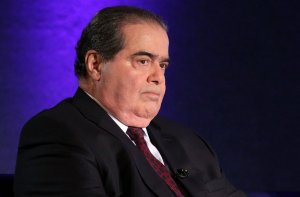
As is often the case with topics here, I heard about the uproar over Justice Antonin Scalia’s controversial question during oral argument on the latest challenge to affirmative action accidentally, when a Facebook friend re-posted a furious message from his friend calling Scalia a moron and a racist. Even reading a second hand account of what somebody read that Scalia said (the transcript hadn’t been released, but never mind: that was enough for my friend’s African-American friend to call a Supreme Court Justice a racist and for my friend, who is a liberal-minded professor, to endorse it), I could tell that the attack was unfair and worse, outright race-baiting.

What Scalia was alleged to have asked a lawyer was whether affirmative action actually hurt blacks by putting them in “more advanced” institutions, that they “don’t belong” in elite schools. I knew, no matter what Justice Scalia really said, that he was talking about some blacks, not all blacks. That’s obvious: if an African American student can be admitted to an elite school without the “thumb on the scale” of affirmative action, obviously he or she is qualified and belongs there. But more importantly, I knew from personal experience that being admitted to a top school when the student’s credentials wouldn’t normally warrant it could be disastrous.

I worked in the administration of Georgetown Law Center in the late seventies and early eighties, as the school was trying to increase its percentage of black students. I was involved in the process sometimes, and was stunned by its unfortunate revelations: for example, some of the black students we accepted from elite colleges lacked basic reading, writing and critical thinking skills. I remember one Yale grad in particular who could not write a comprehensible sentence.

Georgetown Law set up a special class for these minority students (and a couple of  white “legacy” admits who were sons of wealthy alums, one of which I had specifically told his father could not possibly graduate, based on his college grades and test scores.) Then the school was sued by one of the affirmative action students, who claimed that making him take the remedial class was demeaning and racist. Of course he would have been better off in a less demanding law school. Affirmative action did none of these students any favors. In my opinion then and now, their welfare, confidence and self-esteem was  sacrificed so Georgetown could look progressive, and to the dubious objective of diversity for diversity’s sake.

It wasn’t just my Facebook friend’s friend that was bashing Scalia as a racist. It was much of the news media. “Justice Scalia Suggests Blacks Belong at ‘Slower’ Colleges” reported Mother Jones. “Scalia: Maybe black students belong at ‘less-advanced’ schools” reported The Hill. MSNBC’s slur was Justice Antonin Scalia floats ‘lesser schools’ for black students.  A New York Times editorial—the paper has, it appears, lost its mind– said that Scalia raised an “offensive premise which has not gotten such a full airing at the Supreme Court since the 1950s.” The New York’s Daily News  headlined“SUPREME DOPE” over a photo of Nino. Continue reading →

New Chicago and California Carnage: Can Anything Stop The Ferguson Ethics Train Wreck?

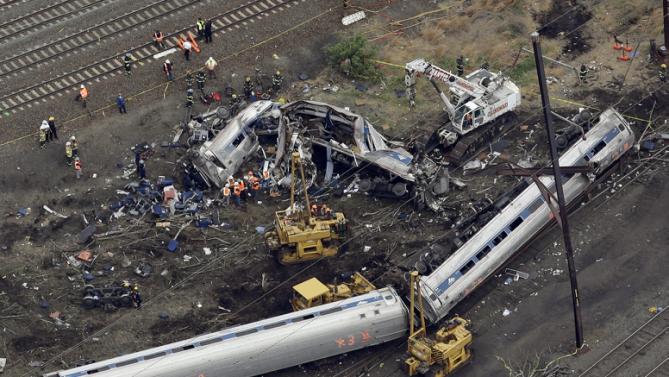
Emergency personnel work at the scene of a deadly train derailment, Wednesday, May 13, 2015, in Philadelphia. The Amtrak train, headed to New York City, derailed and crashed in Philadelphia on Tuesday night, killing at least six people and injuring dozens of others. (AP Photo/Patrick Semansky)

…or will it continue to gain speed?

The Ferguson Ethics Train Wreck, created by a deadly collision of a corrupt and racist local law enforcement system in Missouri, a young hoodlum, an irresponsible news media, a sinister lie, and a civil rights and racial spoils conglomerate eager to build on the societal upheaval  it authored in the earlier Trayvon Martin-George Zimmerman Ethics Train Wreck, continues to rip apart the races and and trust in the law enforcement system.

At this point, I don’t see how any police department can do its job.  I don’t see why any black criminal wouldn’t fear being shot for being black; I don’t see how any white police officer can shoot his gun to defend himself without fearing he will be branded a racist killer regardless of the circumstances.

I don’t see how prosecutors can objectively decide whether of not to prosecute in such cases when there will be so much pressure to punish the police and exonerate the victim, who is almost always going to have been engaged in some unlawful conduct and usually resisting arrest. While the train wreck rolls, I don’t see how police can be proactive in preventing crimes, or why criminals, especially black criminals, won’t take full advantage of their reluctance. I don’t see how indicted police officers can get a fair trial.

What I see is all of the above getting worse, and the Federal government doing nothing to stop the train. Continue reading →

On the Importance Of Christmas To The Culture And Our Nation : An Ethics Alarms Guide

christmas-hero-H

I don’t know what perverted instinct it is that has persuaded colleges and schools to make their campuses a Christmas-free experience. Nor can I get into the scrimy and misguided minds of people like Roselle Park New Jersey Councilwoman Charlene Storey, who resigned over the city council’s decision to call its Christmas tree lighting a Christmas Tree Lighting, pouting that this wasn’t “inclusive,” or the  CNN goon who dictated the bizarre policy that the Christmas Party shot up by the husband-wife Muslim terrorists had to be called a “Holiday Party.”  Christmas, as the cultural tradition it evolved to be, is about inclusion, and if someone feels excluded, they are excluding themselves.  Is it the name that is so forbidding? Well, too bad. That’s its name, not “holiday.” Arbor Day is a holiday. Christmas is a state of mind. [The Ethics Alarms Christmas posts are here.]

Many years ago, I lost a friend over a workplace dispute on this topic, when a colleague and fellow executive at a large Washington foundation threw a fit of indignation over the designation of the headquarters party as a Christmas party, and the gift exchange (yes, it was stupid) as “Christmas Elves.” Marcia was Jewish, and a militant unionist, pro-abortion, feminist, all-liberal all-the-time activist of considerable power and passion. She cowed our pusillanimous, spineless executive to re-name the party a “holiday party” and the gift giving “Holiday Pixies,” whatever the hell they are.

I told Marcia straight out that she was wrong, and that people like her were harming the culture. Christmas practiced in the workplace, streets, schools and the rest is a cultural holiday of immense value to everyone open enough to experience it, and I told her to read “A Christmas Carol” again. Dickens got it, Scrooge got it, and there was no reason that the time of year culturally assigned by tradition to re-establish our best instincts of love, kindness, gratitude, empathy, charity and generosity should be attacked, shunned or avoided as any kind of religious indoctrination or “government endorsement of religion.”  Jews, Muslims, atheists and Mayans who take part in a secular Christmas and all of its traditions—including the Christmas carols and the Christian traditions of the star, the manger and the rest, lose nothing, and gain a great deal. Christmas is supposed to bring everyone in a society together after the conflicts of the past years have pulled them apart, What could possibly be objectionable to that? What could be more important than that, especially in these especially divisive times? How could it possibly be responsible, sensible or ethical to try to sabotage such a benign, healing, joyful tradition and weaken it in our culture, when we need it most?

I liked and respected Marcia, but I deplore the negative and corrosive effect people like her have had on Christmas, and as a result, the strength of American community. I told her so too, and that was the end of that friendship. Killing America’s strong embrace of Christmas is a terrible, damaging, self-destructive activity, but it us well underway. I wrote about how the process was advancing here, and re-reading what I wrote, I can only see the phenomenon deepening, and hardening like Scrooge’s pre-ghost heart. Then I said…

Christmas just feels half-hearted, uncertain, unenthusiastic now. Forced. Dying.

It was a season culminating in a day in which a whole culture, or most of it, engaged in loving deeds, celebrated ethical values, thought the best of their neighbors and species, and tried to make each other happy and hopeful, and perhaps reverent and whimsical too.  I think it was a healthy phenomenon, and I think we will be the worse for its demise. All of us…even those who have worked so diligently and self-righteously to bring it to this diminished state.

Resuscitating and revitalizing Christmas in our nation’s heart will take more than three ghosts, and will require overcoming political correctness maniacs, victim-mongers and cultural bullies; a timid and dim-witted media, and spineless management everywhere. It is still worth fighting for.

More than five years ago, Ethics Alarms laid out a battle plan to resist the anti-Christmas crush, which this year is already underway. Nobody was reading the blog then; more are now. Here is the post: Continue reading →
RETRACTED: Unethical (And Head Exploding! ) Quote Of The Month: Atty. General Loretta Lynch

head large

RETRACTED WITH APOLOGIES

I’m pulling this post. It was based on bad information; I didn’t check it correctly; I cited the original source without making sure the secondary source had quoted it accurately, and my commentary ended up completely misleading and unfair in every way. Stupid. Incompetent. Careless. Inexcusable.

…

I’m the Ethics Dunce here.

…

The Loretta Lynch statement that I was under the impression that she made was not what she said. Thanks, so much, to commenter Zanshin for flagging my error.

…

I’m pulling this down rather than leaving it up with a correction because as of now the post constitutes web pollution of the sort I rail about regularly. It is the equivalent of a hoax. Those who come to read it should be told immediately that the miscreant in this case was me, and the source that misled me, but mostly me. I’m not even going to mention that source either, though it has been reliable in the past. This is my fault, and nobody else’s.

…

I offer my apologies to Ethics Alarms readers, and anyone they may have misled as a result of my carelessness. I also apologize to Attorney General Lynch, who did not say, for the most part, what I criticized her for saying.

…

Frankly, I’m relieved about that.

…

This is the phenomenon of being so focused on a trend–in this case, anti-gun forces enthusiastically using gun-related tragedies to advance their agenda—that I was primed to accept a pretty outrageous example that was so outrageous it should have sparked skepticism. I allowed confirmation bias to dull my judgment, and let that be a lesson to me, and everyone else.

…

Also: never write a post right after your head explodes.

…

I’m sorry, angry at myself, and embarrassed.

…

You deserve better, and I will intensify my efforts to ensure that you get better going forward. You have to trust me, and this time I let Ethics Alarms down.

…

 UPDATE (12/5): As of 2 PM today,both Instapundit and the National Review are sticking with the   misrepresentation of Lynch’s remarks, either because, like me, they relied on an inaccurate source, or because they want to.


Hey! GOOD Answer, Hillary! Wait…Oh, Right. Never Mind.

guilty-until-proven-innocent1

Twice, Hillary Clinton has publicly made the astounding statement—especially for the supportive and enabling spouse of Bill Clinton, an accused rapist himself—that “every survivor of sexual assault” has “the the right to be believed.” Ethics Alarms noted this both times, here and here, and opined the last time, in November:

Is she that deluded? That convinced of her corrupted supporters’ willingness to believe anything she says, or to excuse every cynical, shameless maneuver?  Has she finally reached the point where she has issued so many, many lies that she can no longer keep them all straight, and now blunders into obvious contradictions? Or is she trying to sabotage her own campaign, taking her copious skeletons out of the closet and hanging them from the roof for all to see?

Words have consequences (though following Hillary’s rise, you wouldn’t know it), and as might have been predicted, a questioner at a campaign event in New Hampshire yesterday asked Hillary if believing all “survivors” meant believing Bill’s accusers as well, including Juanita Broaddrick, Kathleen Willey and Paula Jones. I have to hand it to Hillary; she was ready. She had thought about an answer, maybe even had a meeting with her advisors to craft the perfect response. Here is what she said:

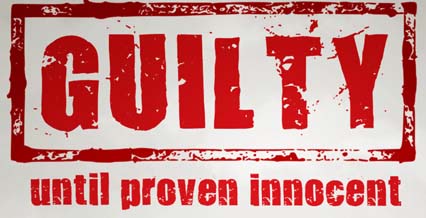
“I would say that everybody should be believed at first until they are disbelieved based on evidence.”

What is a lawyer and a candidate for the Presidency doing advocating the un-American principle of “guilty until proven innocent”?  OK, we know what: pandering to the Pro-Vagina vote. Nevertheless, Clinton knows this is not how the law works, so she is apparently advocating a significant and frightening change. Continue reading →

Ethics Film of the Year: “Spotlight”

No spoiler alerts necessary; I’m not going to say much about the film’s plot. Just go see it.

Sure, I was predisposed to like “Spotlight.” It’s about Boston, my home town; Fenway Park even appears in it, Red Sox and all.  I had also followed the unfolding Catholic Church sexual molestation scandal there that the Boston Globe broke in 2002. This was the Globe’s momentous investigative journalism series which showed the extent to which high-ranking Church officials allowed child predator priests to continue harming trusting kids, as the Church paid for confidential settlements to victims and transferred the criminal priests to other parishes, where they could, and did, strike again. “Spotlight” tells the story of how a group of Globe editors and reporters finally exposed a local conspiracy of corruption that spread across institutions and professions, and that pointed to a world-wide scandal that still haunts the Catholic Church today.

It’s a better ethics movie than “All The President’s Men,” to which it will inevitably be compared. Whether it’s a better movie or not is a matter of taste. (I liked it better.) Where the movie really shines, however, is how it raises so many of the ethics issues we routinely cover here, such as…

  • Legal ethics: the duty of lawyers to represent clients, confidentiality, and when, if ever, human ethics require the breaching of professional ethics.
  • Ethics corruptors, and what happens when admired, trusted and powerful people and institutions require their followers to show their loyalty by ignoring, rationalizing or covering up wrongful acts.
  • Journalism ethics: the business of journalism’s conflict with the duty of journalists to find and publicize the truth; how ambition, personal biases and non-professional concerns can warp perspective and performance
  • Ethics and religion, hypocrisy, and the institutional utilitarian choice to protect the whole when it means sacrificing individuals
  • Rationalizations, including the Saint’s Excuse and the King’s Pass, in which prominence and “good deeds” seem to justify double standards.
  • Hindsight bias, Moral luck, and more.

Continue reading →

Ethics Quiz: Ann Rice O’Hanlon’s Fresco

Fresco

In 1934, under the auspices of the New Deal’s Public Works of Art program, artist Ann Rice O’Hanlon painted a fresco (the largest ever painted by a woman up to that time) in the University of Kentucky’s Memorial Hall. It has become famous and is much admired by art historians, and thousands of Kentucky students have walked past it through the decades. The large, six section artwork depicts many events, industries, traditions and activities that were significant to the state, invented in Kentucky or by Kentuckians, as well as historical events. Among the scenes shown are black slaves picking tobacco and black musicians serenading whites.

Ann Rice O’Hanlon’s masterpiece became the target of choice at Kentucky as the University ‘s black students were seeking to emulate the power plays by their equivalents at the University of Missouri, Yale, Amherst, Harvard Law, Dartmouth and other institutions. The Kentucky students held a meeting with president Eli Capilouto and argued that the fresco was offensive, as it relegated black people to roles as slaves or servants, and did not portray the cruelty of slavery and the later Jim Crow culture that existed in the state.  Capilouto capitulated, agreeing to move the work to “a more appropriate location.” In the meantime, Kentucky will cover up the 45-by-8-foot fresco while adding a sign explaining why the mural is obscured.

Your Ethics Alarms Ethics Quiz of the Day is this:

Should a university remove works of art on campus because particular groups of students or individual members of such groups find the artwork upsetting, offensive, or a negative influence on their experience?

Continue reading →

At Revere High, An Explanation For Campus Anti-Free Speech Demands And Pew’s Shocking Poll

Free Speech diagram

Our rising generations don’t respect free speech because that’s what the public schools teach them, and nobody’s protecting them from indoctrination in un-American values by already indoctrinated teachers and peers.

Is that too assertive?

It’s correct.

Last week, the Pew Research Center released a poll that indicated that 40% of millennials believe that the government should regulate offensive speech. Of course, when black students at colleges across the country are demanding protection from speech, thought, and microagresssions, this revelation should not prompt a cardiac event. Other groups that the poll indicates should be hanging their heads in shame: women (33% to their apparently less delicate male counterparts’ 23%), Democrats (35%…Who would have thought that this party would have seen its core values deteriorate to this point?”), and non-whites, even higher at 38% ( Does the melting pot still function, or are anti-speech attitudes coming in from across the border and melting ours?).

At Revere ( Mass.) High School, a senior cheerleader named Caley Godino was kicked off the team for issuing a politically incorrect (and  incoherent) tweet, which read as follows:

‘When only 10 percent of Revere votes for mayor cause the other 90 percent isn’t legal’

Other students complained, and instead of responding, as they should, “Her opinion was expressed off campus on her own private social media account, didn’t involve school matters or personnel, and is none of the school’s business or concern. Take it up with her, preferably on social media, and stop appealing to authority to protect you from free speech. This isn’t Yale,” the school banned her from cheering for the rest of the year. Continue reading →

From Princeton, Something To Be Thankful For: The Princeton Open Campus Coalition

woodrow+wilson

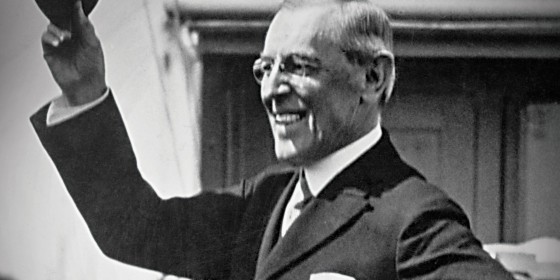
If the  plague of students ordering administrators to protect them from the stress of contrary views and unwelcome thoughts on campuses is not to reduce the U.S. academic environment to an apartheid, indoctrinating disgrace, it is obviously going to have to be the rational side of the student populations that staves off disaster. Fortunately, the Princeton Ethics Heroes Allie Burton, Evan Draim, Josh Freeman, Sofia Gallo,  Solveig Gold, Andy Loo, Sebastian Marotta,  Devon Naftzger, Beni Snow, Josh Zuckerman and their colleagues at Princeton Open Campus Coalition are equal to the task.

The students covered their institution in glory by delivering this civil and well-reasoned rebuke to the outrageous demands of the Black Justice League, which occupied Princeton administration building earlier this week. Here is their letter:

Dear President Eisgruber,

We write on behalf of the Princeton Open Campus Coalition to request a meeting with you so that we may present our perspectives on the events of recent weeks. We are concerned mainly with the importance of preserving an intellectual culture in which all members of the Princeton community feel free to engage in civil discussion and to express their convictions without fear of being subjected to intimidation or abuse.

Thanks to recent polls, surveys, and petitions, we have reason to believe that our concerns are shared by a majority of our fellow Princeton undergraduates. Academic discourse consists of reasoned arguments. We simply wish to present our own reasoned arguments and engage you and other senior administrators in dialogue. We will not occupy your office, and, though we respectfully request a minimum of an hour of your time, we will only stay for as long as you wish. We will conduct ourselves in the civil manner that is our hope to maintain and reinforce as the norm at Princeton. Continue reading →