Unethical Website of the Month: “I Love Dogs”

This isn't the puppy in the post, but I've been looking for an excuse use this photo...

This isn’t the puppy in the post, but I’ve been looking for an excuse use this photo…

I love dogs too, but encouraging people to beat alleged animal abusers to the verge of death just doesn’t seem right to me. I’m funny that way.

Indeed, I wonder about the values and mental stability of those who think this is a rational and ethical response to the perpetrator of any kind of crime, not just animal abuse.

“I Love Dogs” has sent into the web a virtual “Wanted Poster” with a photo of a real human being, ostensibly a canine abuser who “nearly beat this pup”—also pictured—“to death.” The poster suggests that readers should share the poster if they “believe that he deserves the same.”

Sure enough, many do. The post has gleaned many thousands of likes, about 5000 shares, and a wave of comments like those that follow here. I’ve included the names of the posters, who obviously didn’t think their comments were anything to be ashamed of. I wish I could include the thousands more like them, but there is too much anonymity in crowds. Posting the commenters’ names that appear below is a public service. I suggest avoiding them. Also proofreading their work, as they all appear to have dropped out of the third grade…

Continue reading

Further Thoughts On “The Vampire Candidate”

dracula for congress

I don’t want to make this Vampire Day, but after reading the comments so far on today’s Ethics Quiz involving Florida Congressional candidate/ fantasy vampire role-play enthusiast Jake Rush, I realize that the original post omitted some important points and queries. Here, in no particular order, are my further thoughts:

  • The Ick Factor? Both conservative and liberal commentators are ridiculing Rush, essentially concluding that his hobby disqualifies him as a serious candidate. The most quoted source referred to the images embraced by Rush’s role-playing group as “disturbing,” “bizarre,” and “unsettling.” Do these reactions signal a rejection of Rush’s values, or is this a clear-cut example of the “Ick Factor,” which is often mistaken for unethical conduct? Strange does not mean wrong or unethical.
  • Trust. When we elect leaders, we must trust them. “Strange” by definition suggests unpredictability; if we don’t understand why people do what they do, it is hard for us to know how they will behave, and if we don’t know how they will behave, we can’t rationally trust them.
  • Integrity. I should have raised the issue of integrity, for it is critical to the problem. Integrity is essential to trust, and a candidate like Rush raises the question: “Who, or what, is this guy?” Is he a “straight-shooting” conservative who likes to play vampire in his spare time, just like some politicians like to play poker or watch synchronized swimming (now that’s what I call weird), or is he a wannabe creature of the night who is just playing a conservative Republican in the daytime to conform to the expectations of conventional society? If there is doubt about that, then his integrity is in question.

Continue reading

Hope Lives! D.C. Votes For Ethics

Time for a new fish head in the District of Columbia.

Time for a new fish head in the District of Columbia.

A continuing battle on Ethics Alarms, one that bursts into flame when elections loom, is whether it is responsible to vote for an unethical candidate for office because he or she supports policies the voter favors. I resolutely vote “no” on that proposition, believing that in the long run, government and society are better served by plodding but trustworthy public servants than wily and corrupt ones. The ideal, of course, is to find candidates who are competent, trustworthy, dedicated and who pursue effective policies. Good luck.

Few cities have embraced the opposite of the Ethics Alarms approach more consistently than the District of Columbia. The nation’s most liberal region has traditionally chosen to ignore corrupt city officials, and has paid a high price. A culture of corruption has been festering in the District for decades, spear-headed by the smug, machine-politics reign of Marion Barry, elected both before and after a prison sentence for possessing crack (in the midst of an anti-drug campaign for schoolchildren, naturally). Barry still pollutes D.C. government as a city councilman, but his legacy is complete: the whole government is an ethics sewer.

In 2013, more than thirty D.C. employees were arrested, indicted, pleaded guilty or were sent to jail from  such diverse cesspools as the D.C. Department of Employment Services, the Department of Human Services, the Children and Youth Investment Trust Corp., a city-owned hospital, the Office of Campaign Finance, D.C. Medicaid, the Corrections Department, a charter school and Medicare. The tally of money embezzled, accepted in bribes, defrauded or spent on illegal political campaign contributions was about $19 million. Former D.C. Council member Harry Thomas Jr. pleaded guilty to stealing $350,000 in taxpayer money meant to benefit children. Former council chairman Kwame Brown pleaded guilty to a felony bank fraud charge; and former council member Michael A. Brown confessed to an illegal bribery scheme. Colbert King, the Washington Post’s city beat columnist who tirelessly urges the city to clean up its act cataloged the extent of D.C.’s corruption last year. He pointed out:

Continue reading

Unethical Quote of the Month: OkCupid

Not OK...

Not OK…

“Hello there, Mozilla Firefox user. Pardon this interruption of your OkCupid experience. Mozilla’s new CEO, Brendan Eich, is an opponent of equal rights for gay couples. We would therefore prefer that our users not use Mozilla software to access OkCupid. Politics is normally not the business of a website, and we all know there’s a lot more wrong with the world than misguided CEOs. So you might wonder why we’re asserting ourselves today. This is why: we’ve devoted the last ten years to bringing people—all people—together. If individuals like Mr. Eich had their way, then roughly 8% of the relationships we’ve worked so hard to bring about would be illegal. Equality for gay relationships is personally important to many of us here at OkCupid. But it’s professionally important to the entire company. OkCupid is for creating love. Those who seek to deny love and instead enforce misery, shame, and frustration are our enemies, and we wish them nothing but failure.”

—Dating website OkCupid, calling for a boycott of Mozilla, including Firefox, its webserving software, because of the past political/social/religious views of Mozilla CEO Brendan Eich

Full disclosure: 1) I use Firefox. 2) I detest boycotts,and 3) I am biased against them by nature, because they are almost always coercive, extortive, and unfair.

This statement, however, has more wrong with it than just its advocacy of a boycott.

Continue reading

I Repeat: April Fools Day Is Not For Ethical Professionals

april-fools-day-banner

In a much attacked post here way back in 2010, I offered some ethical guidelines for April Fool’s Day, which was just beginning to get out of hand. I was right, my critics were wrong, and maybe some of the mockers who are now trying to figure out when their favorite news organization is lying to them today for fun, as opposed to the rest of the year when it lies to them out of bias or incompetence, are beginning to appreciate my position.

I just watched three different morning news shows that contained fake news or commentary that the reporters and anchors, at least, seemed to think was hilarious. In one case, on Fox, conservative talk-show host Laura Ingraham dead-panned a remarkably even-handed and fair explanation for HHS Secretary Sibelius’s much-maligned TV silence when asked about the Affordable Care Act’s unpopularity.  April Fool! Laura wasn’t being fair or objective, she was just tricking Fox’s audience into being angry at her for being fair and objective, or, in my case, admiring her integrity for pointing out that the incident had more than one plausible interpretation. Got me, Laura. I just heard an NPR host plead with the audience not to regard the upcoming segment as a hoax because of the date, an especially difficult plea since NPR springs virtual hoaxes on its audience all year.

The first and most important of my April Fools guidelines was this:

1. April Fools’ Day tricks are not for professionals to play on those who depend on them, trust them, or otherwise rely on them for information or services, unless there is a special relationship as well. The risks of harm and abuse are too great.

The succeeding four years have validated my position. Journalism, government and politics are the prime examples. CNN played a video that showed Jay Carney crowing yesterday about the Affordable Care Act’s success even as the Healthcare.gov website had crashed. Wait..is this a joke? Did the Obama White House film this for fun and games? They wouldn’t do this, you say? Government officials don’t use their high office for jokes and hoaxes? Really?

Sen. Ted Cruz, also on Fox, showed his new tattoo, apparently an April Fools’ joke, but also said he was certain that the Affordable Care Act would be repealed. Which is more likely, that the AFA will be repealed, or that wacky Ted Cruz would get a tattoo? Slate has a post up by someone called Rehan Salan, which is, clearly, a clever anagram for “En Anal Rash” or something, arguing that adults without children should be forced to pay extra taxes to support parents. Hah! Good one, Slate! That should turn the “pro choice” crowd on its head: lets; punish the choice not to have children via a penalty—I’m sorry, Chief Justice Roberts, a tax, wink-wink. Wait…that isn’t a joke? Ok, well, I’m sure about this, then: that fake video showing famous tough guy Don Baylor, a record holder for being hit by pitches when he played and now a coach for the Los Angeles Angels, “breaking his leg” catching the ceremonial first pitch of the baseball season. April Fools, right ESPN? No????

Continue reading

Jerry and Jared Remy, Parental Accountability, Hindsight Bias, and The Bad Seed

This is a tragic local story with vast ethics significance.
Father and son.

Father and son.

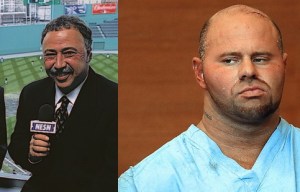
Long-time Boston Red Sox broadcaster Jerry Remy, a native Bostonian and former player who has been a vivid part of the Boston sports scene since 1977, was stunned by tragedy last summer when his oldest son, Jared, 35, allegedly murdered his girlfriend by stabbing her to death as their  ive-year-old daughter looked on. Prior to the incident, most New Englanders were unaware of Jared Remy’s problems, but his ugly past soon found its way into the newspapers.

A recent Boston Globe investigative report appeared to be the saga of a “bad seed” right out of a horror movie, for Jared Remy, son the popular, affable Jerry, had been arrested, and released, 19 times, for an assortment of alleged crimes, many of them violent. They included battering and threatening a high school girlfriend; pushing a pregnant girlfriend out of a moving car; texting death threats to her, and attempting to beat her up; threatening to kill yet another girlfriend;  terrorizing a fourth sufficiently that police were called to their apartment eight times; and involvement in steroid peddling and abuse. The Globe also obtained the testimony of a woman who alleges that Jared joined her in brutally beating a high school boy, causing him permanent brain injuries.

The Globe story (and others) raised the question of how and why the Massachusetts justice system kept releasing Jared. It is a valid question, not peculiar to his case, unfortunately. Many have speculated that Jared’s  status as the son of popular Boston sports figure played a part in getting him extraordinary leniency, but as Remy’s lawyer pointed out, several of the incidents also involved complainants and alleged victims who refused to testify or withdrew their complaints. In the realm of domestic abuse, evidently Jared Remy’s specialty, this is too common. The Globe writer, Eric Moskowitz, also insinuated that the Remys went too far in supporting their disturbed, violent and troubled son, who had learning disabilities and other clinical behavioral problems. They apparently paid for psychiatric treatment, counseling and legal fees, and helped with his rent and other expenses, though the extent of this has not been confirmed by the Remys, the only ones who could be authoritative on the topic. The rest is hearsay.

Jerry Remy, who has battled depression his whole adult life, withdrew from his role as color commentator after his son’s arrest, missing the Red Sox championship run. Outside of a brief statement condemning his son’s actions and expressing condolences to the parents of the victim, Jennifer Martel, Remy was silent until announcing this Spring that he would try returning to the broadcast booth for the upcoming season. Then, as Spring Training for the Red Sox ran down and Remy seemed, outwardly at least, capable as ever of being an affable presence with whom to watch the home team’s exploits,  the Globe story appeared. The revelations about Jared unleashed an unexpected (by me, at least) backlash against his father, and Bostonians in droves bombarded the sports radio talk shows, blogs and news media websites with the opinion that Remy should step down as Red Sox color man for cable broadcasts. How they reached this ethically indefensible position is instructive regarding how inept and unskilled most people are in day-to-day ethical analysis, how emotion becomes a substitute for objectivity and logic,  how hindsight bias makes experts and judges out of individuals with the credentials of neither, and also how ignorant most of the public is about the ethical obligations and duties of the legal profession.

Here are the reasons being cited for why Jerry Remy should give up his career:

Continue reading

Ethics Diagnosis: #SueyParkisanirresponsiblepowerhungrypoliticalcorrectnessbully

Colbert gag

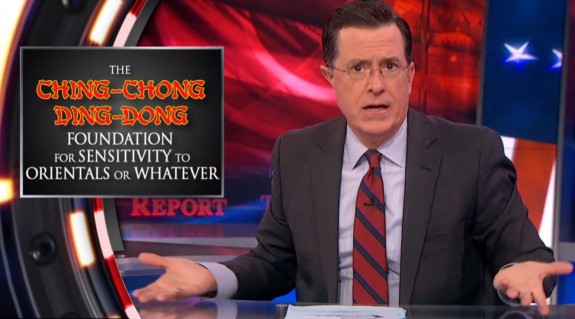
Suey Park has declared war on Stephen Colbert over a promotional tweet made in his name by some Comedy Central PR employee. Not that there was anything wrong with the tweet*, unless you chose to willfully misconstrue it. The line was a quote from Colbert during a comic riff on his show mocking Redskins owner Daniel Snyder’s lame effort to deflect criticism of his team’s name as being ‘racist.’ (Reminder: It isn’t—not in the context in which is being used. Tasteless? Perhaps…) Anyone who is familiar with Colbert’s schtick—it is all tongue in cheek, exaggeration, irony, sarcasm and satire—understands that the Twitter quote is mocking the idea that one can continue being “racially insensitive” as long as you set up a foundation to show sensitivity to the group you have been accused of being racially insensitive about. Here is an explanation of how Park saw an opening for some cheap social media muscle-flexing, from Slate:

“On Wednesday night Stephen Colbert made sport of Washington football team owner Dan Snyder and his plan to undercut criticism of the team name by founding an organization for the uplift of “original Americans.” Colbert ran though all the reasons why this was funny, then called back to a skit from one of the show’s first episodes, way back from the fall of 2005—a joke about the host being caught on a “live feed” playing a racist Asian stereotype (Ching Chong Ding Dong, from Guanduong), then not understanding why it was racist. Colbert would make amends with his new “Ching Chong Ding Dong Foundation for Sensitivity to Orientals or Whatever.” He’d played versions of the game since then, dressing up in a sombrero for “Hispanic heritage month.” It’s one of the Colbert character’s oldest gags—he “doesn’t see color,” so he can’t ever be blamed if he accidentally does something horribly racist.”

The rest of the story: Suey Park pounced, first telling Colbert “Fuck you” and then sending her many followers a directive to flood the twitterverse with   …. and so they did, and have. Continue reading

The Shame Of Inadequate Government Susidized Child Care

burglar family

What’s a single parent burglar to do?

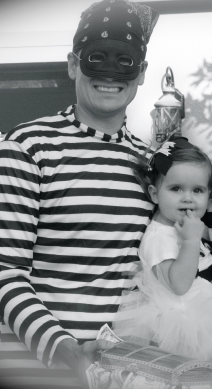
In Arlington, Virginia, police stopped and arrested Nehemiah Guillermo Gonzalez, 30, fleeing the scene of a burglary he had just committed. Inside the Jeep , along with antique silverware and gold coins  stolen from the home was the criminal’s four-year-old child. After all, he couldn’t leave the little tyke alone while Dad plied his profession. You know how hard it is to find babysitters, and he had to rob someone to pay for child care, but couldn’t rob anyone without child care. So it had to be “Bring Your Kid to Work Day.”

Yes, I think better subsidized day care for criminals is essential. Think of the children! Sure, we can keep charging caring, desperate, single working parents like Nehemiah with child endangerment, or we can do something kind, compassionate and productive.

What are the odds that some legislator will actually make this argument?

_________________________

Spark and Pointer: Lianne Best

Facts: NBC

Graphic: Lilly and Bliss


Fundraising Ethics Controversy in Michigan! Naming Buildings After Big University Donors: Ethical or Not?

Enron-Field

I worked in the development (capital fundraising) office of Georgetown University for many years, and am well aware of the sausage-making that goes into attracting big donations. Thus the controversy that recently erupted in Michigan is of interest both for its ethical content and the way it dances around inconvenient truths.

With the college student’s wonderful knack for avoiding the obvious, the student newspaper of Grand Valley (Michigan) State University declared ethics war on what it called “billboards”: buildings and lecture halls named after corporate and individual donors. With naivete and boundless ignorance of the world of philanthropy and non-profit fundraising, the editorial declared (among other things)…

  • “What’s next? Will we turn Lake Huron 133 into the “Amway Lecture Hall?” Will the backs of our chairs have plaques dedicated to the lower-level donors?” COMMENT: For enough money, of course the university would rename the hall. Why should it care what a lecture hall is called, if it can avoid having to raise tuition? As for the backs of seats: did the editors do any research at all? Opera companies, theaters, museaums and other non-profit entities do exactly this. So what?

Continue reading

What Is An Ethical Tiger Lily?

Believe it or not, this is Disney's version of an Indian chief.

Disney’s version of an Indian chief.

I recently watched the Disney “Peter Pan,” long my favorite of the classic animated films, which I had not seen from beginning to end in decades. I was genuinely shocked at the portrayal of the Indians, which would make the average movie Western seem politically correct and the Washington Redskins seem like a compliment. I know the story is a fantasy; I know that these are not supposed to represent real Native Americans, but a Victorian child’s visualization of the villains of their games. Nevertheless, it is hard to imagine the effect of such a film on a Native American child as being anything but devastating. The Neverland Indians, and their heroine, Tiger Lily, have been a human relations problem since at least the civil rights era, and the provocation is legitimate: did you recall (I had forgotten) that Tiger Lily belonged to the “Piccaninny tribe”? That James Barrie was a funny guy. Continue reading