Robert E. Lee and the Abuse of Principle

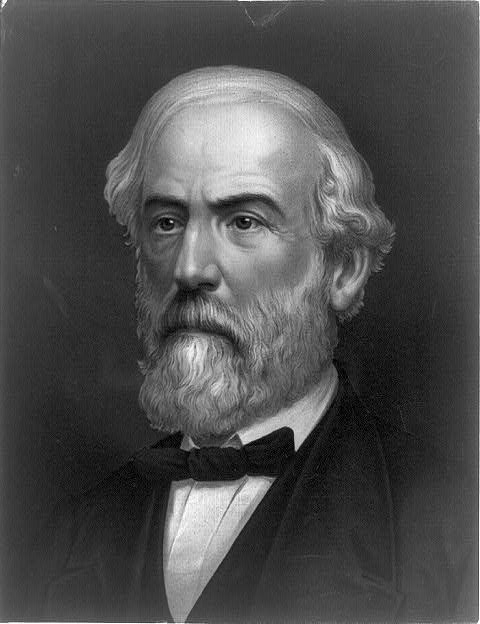
Lee: Use his life as a warning, not an inspiration.

As both political parties and the President of the United States seem to be determined to subject the American people, economy and standing in the world to disaster in the defense of principles, it might be a good time to reflect on the fact that principles detached from reality have little value, and that rigidly adhering to principles to the detriment of the community and civilization is not a virtue.

In the current issue of Humanities, historian James Cobb makes these points vividly, if tangentially, while reflecting on the odd reverence with which Americans, and not just Southerners, regard Robert E. Lee. I am proud to say that the lionization of Lee never made sense to me, not even when I was a small boy. But he is the epitome of someone who is revered as a role model and hero for his supposed character and values rather than what he actually did with them.*

Cobb begins his essay with this anecdote:  Continue reading →

The Raymond Jefferson Mystery: Isn’t There Ethics Training for Obama Administration Officials?


Raymond Jefferson's government ethics tool box

Based on the sorry Raymond Jefferson scandal, I would assume that the answer to that question is: “What’s ethics training?” Sure, there are reams and reams of government ethics regulations; I’ve read a lot of them. Apparently there is no one making sure that high-ranking officials have read them or understand them, however.

Jefferson, the Assistant Secretary of the Labor Department’s Veterans’ Employment and Training Service appointed by President Obama to oversee a job-training program for veterans, has resigned following an inspector general’s finding that he violated federal procurement rules and ethics principles by fast-tracking lucrative consulting contracts to his friends. Jefferson, says the report from the Labor Department’s inspector general, engaged in “a pattern of conduct . . . which reflects a consistent disregard of federal procurement regulations, federal ethics rules and the proper stewardship of appropriated dollars.” Continue reading →

An Appropriate Limit on the First Amendment Right To Be A Total Jerk

"Pardon? I'm not sure I understood that last remark."

If you peruse the various debates on Ethics Alarms, you will note that every time someone writes or says something cruel, dishonest or uncivil that appropriately brings down criticism or worse on the miscreant’s noggin, he and his defenders  will argue that the First Amendment should render them immune from the consequences of their words. This is not what the First Amendment is about, however. It is about the government not being able to punish them for what they say, with some exceptions. Even then, it is possible to be so inarticulate in your jerkish expression that your utterances are beyond even that constitutional protection.

For example, when you bark like a dog.

Or to be more accurate, when you set out to tease and annoy a police dog by barking. Mason, Ohio has an  ordinance making it a crime to “willfully and maliciously taunt, torment, [or] tease … any dog used by the Police Department in the performance of the functions or duties of such Department.” That’s exactly what Mason Police Officer Brad Walker found a drunken Ryan Stephens doing to Timber, a K-9 German Shepard behind a screen in his police cruiser. Continue reading →

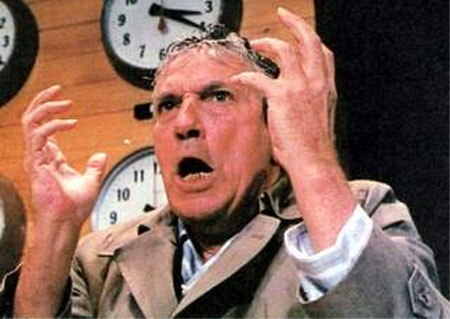
MSNBC Hires Al Sharpton, As “Network” Becomes Reality

Satire no more.

Noting that MSNBC has given Rev. Al Sharpton his own show, I am compelled to ask: What is broadcast journalism’s accepted criteria now that justifies an individual’s enshrinement as a cable news commentator?

Is it name recognition? The “right” political orientation, in this case, knee-jerk liberal? A ready-made fan base?  Theatrical presence? If these are the criteria, by all means, hire Al Sharpton. Hire Alec Baldwin, Donald Trump, Rod Blagojevich and Jane Fonda, too. Gary Busey. Manny Ramirez. Hulk Hogan. Bozo the Clown.

Or is the proper and responsible criteria credibility, integrity, honesty, fairness, and journalistic credentials? If those archaic standards are still in place, or if MSNBC wants to pretend that they are, then the hiring of Sharpton marks a new low in broadcast news coverage cynicism and recklessness. Continue reading →

Comment of the Day: “The Provocative T-Shirt Problem”

Rick Jones, whose excellent blog posts on ethics, academia, politics and life can be read here, at Curmudgeon Central, again delivers the Comment of the Day, on my post about the gay couple asked to hide an innocuous T-shirt message while visiting Dollywood.

“It strikes me that attempting to draw clear lines of demarcation in terms of either content or location is inherently fraught with peril. The best determinant may indeed be the Golden Rule. But that inevitably touches on intent. The purpose of a “marriage is so gay” t-shirt isn’t to “get in the face of” opponents of gay marriage; it’s to make a mildly humorous point about an issue without being strident.

“The guy who wore the “I’m a Muslim. Don’t Panic” t-shirt to the Ground Zero celebration after the killing of Osama bin Laden—not terribly clever, but not at all offensive, either.

I wouldn’t be offended by a t-shirt backing a political candidate I’d never support (I might have an indication of whether to engage in conversation with this person as we wait in the queue, but that’s another matter); I would be by a t-shirt defaming that same candidate: comparing him to Hitler, for example. Yes, intent matters. Continue reading →

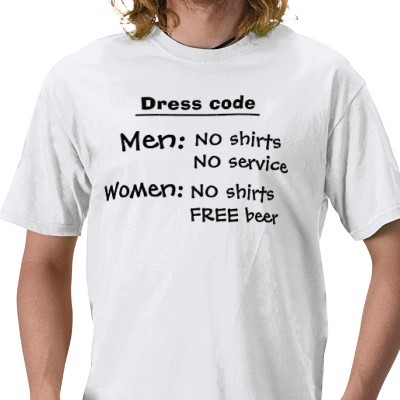
The Provocative T-Shirt Problem

Dress codes+grievance-mongers+freedom to be rude...oh, it's hopeless.

An ethical dilemma occurs when a clear ethical principle clashes with a strong non-ethical consideration. An ethical conflict occurs when multiple ethical principles suggest diametrically opposed results. The question of what is ethical conduct when it comes to wearing apparel bearing controversial messages has the elements of both a dilemma and a conflict.

                                                                                Welcome to Dollywood!

A same-sex couple visiting Dollywood Splash Country with friends and their children was told by a park gatekeeper that one of the women had to wear her T-shirt inside-out because its message—“Marriage is so gay”— “might be objectionable” to some visitors at the “family-friendly” park.

   <Sigh.> Continue reading →

Did Amy Winehouse Cheat the World?


A mark of failure, or betrayal?

I appreciated Amy Winehouse’s talent rather than enjoyed it. Nevertheless, her death-–many have said her completely predictable death—of a drug overdose at 27 once again causes me to ponder the recklessness with which gifted artists who can give so much to the world throw their lives away.

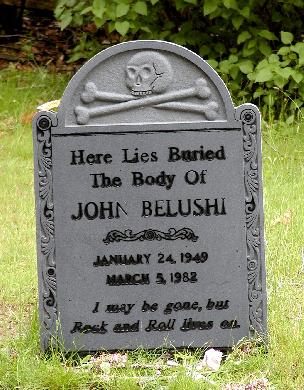
As an ethicist who never hesitates to hold individuals ethically responsible for conduct that harms others, I have not completely worked out in my own mind how to characterize the many artists and performers whose self-engineered destruction have robbed the world of laughter, enlightenment, and joy. Every time I watch John Belushi in “Animal House” or an old Saturday Night Live clip, I get angry at him—I admit it. I know Belushi didn’t want to die young any more than I wanted him to die young, but he treated his life as if it was disposable and without value, when it really was of extraordinary value. When Belushi sacrificed it in a stupid drug binge, it was more than a tragedy for his friends, lovers, colleagues and family; it was a tragedy for the art and history of comedy. Much the same can be said of Amy Winehouse—and James Dean, Jimi Hendrix, Billy Holiday, Heath Ledger, Michael Jackson, River Phoenix, Marilyn Monroe, and Elvis. Continue reading →

In Marion’s Footsteps: the Jaw-Dropping Shamelessness of Harry Thomas Jr.

A true role model: Washington D.C. politicians ask, "What would Marion Barry do?"

The most notable scoundrel in recent Washington D.C. government history is former mayor and current City Council member Marion Barry, he of  “The bitch set me up!” fame. What marked Barry was and is his remarkable shamelessness. Whether he was caught smoking crack, or giving government salaries to girlfriends, or not paying his taxes, or engaging in any number of other public and personal outrages, his attitude has always been to shrug his shoulders and presume that everyone will just let him go on being an elected political leader, as if his complete disrespect for law, honesty and responsibility is irrelevant to his qualifications to serve. And you know what? In the District of Columbia, he is correct.

He is also not alone in this attitude, in part because Barry has helped mightily to warp the ethical culture in his city over the past three decades. His most recent disciple is D.C. Council member Harry Thomas Jr. (D-Ward 5), who has just agreed to repay the District $300,000 of the taxpayer dollars he misappropriated  for his personal and political use. D.C. Attorney General Irvin B. Nathan announced last week that his office was withdrawing a one million dollar lawsuit against Thomas in exchange for that settlement, saving the District the cost of litigation. The lawsuit had been backed up with strong evidence that Thomas used public funds to fund golf trips to Pebble Beach, buy himself an Audi SUV, and in a nice touch of class, pay for a $143.71 visit to Hooters. Funds budgeted by the council for youth baseball was diverted by Thomas to Team Thomas, a nonprofit founded and controlled by the Council member. Naturally, Thomas also was shown to have engaged in plenty of old-fashioned graft,  soliciting gifts and contributions from private businesses contracting with the city.

Is Thomas ashamed? Contrite? Apologetic? Nah! And he isn’t planning on leaving his job, either. Instead, he issued this nauseating statement, saying in part: Continue reading →

Texas: Resisting Creationism, Embracing Enlightenment

Uh...NO.

Lost in the hysteria over the U.S. government’s self-created default crisis was some good news for integrity, education, and the advance of human knowledge.The Texas Board of Education unanimously (8-0) approved scientifically accurate high school biology textbook supplements from established mainstream publishers that cover the origins and implications of evolution theory and findings, rejecting the creationist-backed supplements from International Databases, LLC. (The creationist-crafted materials submitted by that group was not only “laced with creationist arguments,” said one reviewer, but was also “shoddy”, “teeming with misspellings [and] typographical errors,”and “mistaken claims of fact.”)

The efforts of creationists and Christian fundamentalist forces to ignore and discredit overwhelming scientific evidence of evolution on earth, along with the many biological, anthropological, geological and historical conclusions that spring from the body of research in the field, have created hurdles for educators, impediments to students, and embarrassment to organized religion for more than a century. Continue reading →

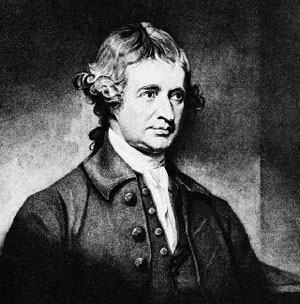
Ethics Quote of the Week: Edmund Burke (1729-1797)

So...any chance of you coming out of retirement, Ed?

“Parliament is not a congress of ambassadors from different and hostile interests; which interests each must maintain, as an agent and advocate, against other agents and advocates; but parliament is a deliberative assembly of one nation, with one interest, that of the whole; where, not local purposes, not local prejudices, ought to guide, but the general good, resulting from the general reason of the whole. You choose a member indeed; but when you have chosen him, he is not member of Bristol, but he is a member of parliament. If the local constituent should have an interest, or should form an hasty opinion, evidently opposite to the real good of the rest of the community, the member for that place ought to be as far, as any other, from any endeavour to give it effect.”

—-Edmund Burke, British political theorist, philosopher and statesman, in his speech to the electors at Bristol, November 3, 1774

Why Burke’s principles are relevant today should be obvious. What is depressing is that I have to resort to quoting an 18th Century statesman to express them, because no current elected officials in the United States seems to be capable of either articulating such ideals or acting accordingly.

Thanks to Ethics Bob Stone for reminding me of one of Burke’s best speeches.