Comment of the Day #2, On the Pointless Marriage of Bert and Ernie

Marrying a puppet is illegal in all 50 states, plus the Dictrict of Columbia.

This is where maintaining integrity and consistency becomes tricky.

Obviously the Comment of the Day suggests only one, yet for some reason this particular day has generated an unusual number of contenders, all deserving. If I refuse to highlight any of these because a Comment of the Day was already posted, I am obscuring important content to maintain a rule, in a situation where the rule doesn’t have any benefits.

But if I have more than one “Comment of the Day,” that creates a precedent and suggests that the designation is more of a formal verdict on comment quality than it is meant to be.  I simply do not, and do not have the time to, give Comment of the Day status to every deserving post. One is usually plenty, and will remain so. But it is foolish, and a contradiction of the principles I argue for on Ethics Alarms, to withhold recognizing a valuable comment for no reason other than an admittedly arbitrary limit.

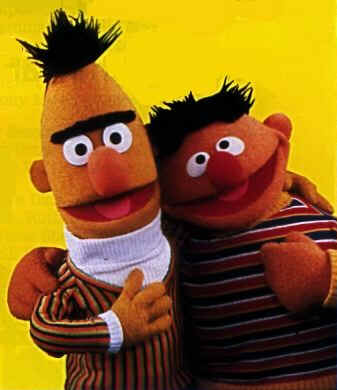
So here is Comment of the Day #2, on what I will, for this time only, designate as Comment of the Day Friday, as Jeff is inspired by the discussion of bigotry in the continuing discussion generated by Enzo and the Contessa, to weigh in on a particularly stupid news story, the appeal by some gay marriage advocacy groups to have Bert and Ernie, of Sesame Street, tie the knot…if gay marriage is legal on Sesame Street.

(Yes, I know: this is a Comment of the Day on a Comment of the Day on a Comment of the Day. Curse you, Jeff!) Continue reading →

Comment of the Day: “Comment of the Day: ‘The Barefoot Contessa and the Compassion Bullies'”


Does the truth matter?

No, that wasn’t a typo: Karl Penny just achieved a first for Ethics Alarms, a Comment of the Day in response to a Comment of the Day.

The COD at issue was Gary’s assertion that he had no obligation to align his ethical preferences according to my analysis (or any other) of the “Ina Garten rejects Make A Wish” dispute, and that to him it was “just a story” that he could use or ignore according to what he chose to believe.

This inspired Karl’s excellent Comment of the Day, which also contains one passage that would justify another Ethics Alarms first, an Ethics Quote of the Week in a Comment of the Day on a Comment of the Day. I bolded it. Thanks, Karl: Continue reading →

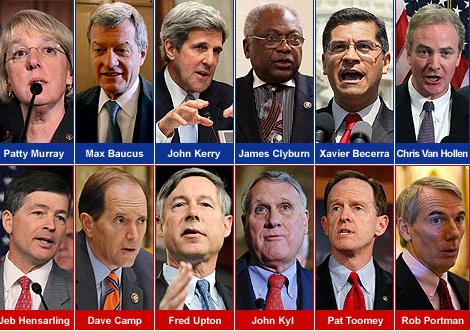
Ethics Dunces: The Senate and House Leadership

The names are in.

As part of the pathetic, cynical and inadequate budget deal to raise the nation’s debt ceiling, Republicans and Democrats were called upon to assemble a bi-partisan “super committee” of twelve House members and Senators, chosen by the respective leaders from both parties, to come up with a way to close the deficit. Now that the S&P ratings downgrade has embarrassed the nation, destabilized foreign markets and sent an unambiguous message that the United States has to get serious about balancing the books and fast, have our political leaders responded to the challenge by choosing elected representatives of states and districts who have track records of collaboration, political courage, truthtelling and placing the best interests of the nation over narrow electoral fundraising and ideological objectives?

Naaa.

What, are you surprised? The leaders of the House and Senate have met our lowest expectations, and have chosen a hyper-partisan group to make up the super committee, guaranteeing that it will be super-contentious and super-ineffective. The degree to which this represents an abdication of their duties of leadership and responsible government is impossible to exaggerate. Continue reading →

Web Ethics Complaint File: Rotten Etiquette in “Etiquette Hell”

The topic: rude behavior in public dining

There is nothing quite as exquisitely frustrating as having one’s commentary misrepresented elsewhere by a sloppy blogger, and then watching the nasty comments pile up by posters who never bother to read the original post. That is what is happening to Ethics Alarms, and thus me, over at an otherwise virtuous site called Etiquette Hell.

The site, or blog, or forum, or whatever the hell it is commented on the Starbucks post, with the inept headline: “Hogging all the tables in a crowded establishment.” That’s not what the post was about. That is a misrepresentation. The post was specifically about coffee shops that provide free wi-fi, and how customers abuse the privilege and benefit by camping out with their laptops for unreasonable amounts of time,  forcing patrons who need to use the tables for the primary purpose they exist to provide—allowing someone to eat and drink comfortably—to go elsewhere, or to stand. Continue reading →

The Starbucks Principles

Hey you squatters! I'm coming over!

The First Starbucks Principle: If you create a free and open public benefit, the use of which is contingent on mutually understood conditions of fairness and reasonableness, eventually the utility of the benefit will be destroyed by individuals who refuse to be either fair or reasonable.

The Second Starbucks Principle: Once this occurs, there will necessarily  be rules and enforcement, conflict leading to consensus and a new social norm, or the elimination of the benefit.

Starbucks is in the midst of the First Starbucks Principle, but the Second is on the way. The nice, absurdly expensive coffee shops that created a culture where coffee-lovers could drink their lattes at leisure while working at their laptops or perusing  books and newspapers, are being choked to death by arrogant and cheapskate squatters who stake out the tables and remain for hours on end, often driving out customers who just want to sit down briefly and sip.

I had read about Starbucks’ New York City shops covering up outlets at the store, limiting the squatters to the battery storage limits of their laptops, a pretty mild reform. Then, last week, I saw the problem up close: a companion and I purchased coffee at a Starbucks clone, Caribou Coffee, and found that every table was occupied by one squatter with a laptop. Out of eight tables, only one had a cup or food of any kind. We had to go outside and find a bench; I guarantee that Caribou lost some business, because I would have purchased another drink. Continue reading →

American Lessons from the English Riots

I am going to refrain from joining the ranks of amateur psychologists trying to identify the “root cause” of the English riots. People of any age or economic status who riot are, it is fair to say, assholes, like lesser social miscreants such as vandals, computer virus inventors, Leroy Fick and Pastor Terry Jones. If I were convinced that these riots were in response to necessary government cutbacks in social programs, I would have something arguably useful to say, but that doesn’t seem to be the case.

There is no question, however, that in allowing the riots to go on so long and harm so many citizens, businesses and homes, the British government has failed one of its most basic duties. Great Britain has been the anti-gun zealot’s Nirvana for a long time: not only can’t citizens own guns for their personal protection, neither can the police. That can work, if the culture is reliably non-violent, and if social and community institutions do a good job making sure that the culture of non-violence is strong, self-reenforced, and deep.

Well, it isn’t, is it?

Continue reading →

Ethics Quiz: Is It Wrong For A Rescuer To Sue The Victim He Rescued?

"OK, Princess, you'll get my bill for this rescue in five to seven business days."

On March 11, 2009, Mark Kinkaid and David Kelley were riding in Kinkaid’s truck when they saw a detached bumper, headlights and all, lying in the middle of Rt. 23.  Smoke was rising up from the highway embankment,  and the two men concluded that someone was in trouble. The truck stopped, and they got out, hopped a barbed-wire fence, made their way down the steep highway embankment, where they saw a flaming Hummer. Theresa Tanner was trapped inside, screaming for help. They forced their way into the vehicle, pried a door open and pulled Tanner out. She was injured and burned, but after weeks in intensive care, survived.

Now Kinkaid and David Kelley are suing Tanner, claiming that the crash was her fault and that she is liable for the injuries they sustained in rescuing her. They have filed a lawsuit asking for damages of at least $25,000 each. “All I know is that I am not the same man I used to be,” says Kelley, a 39-year-old truck driver and father of five, who says the heavy smoke and fire that day damaged his lungs so that he can’t carry a laundry basket up the three flights of stairs in his home.

The law provides a rationale for such a lawsuit. “The precedent is clear: danger invites rescue … and if you’ve acted recklessly or negligently and someone gets hurt rescuing you, you could be in trouble,” says Stan Darling, a tort law specialist. A well-established principle known as “the Rescue Doctrine” holds that if someone is in peril because of their own negligence or recklessness, an injured rescuer can recover damages if he acted reasonably and can prove that his injuries were caused by the rescue attempt.

That’s the law, however. This is ethics, and your Ethics Quiz today is:

Is it ethical for a rescuer to sue the person he rescued? Continue reading →

Ethics Quote of the Day: Ken, of Popehat

“Listen to me: a law school calculated to make students feel good about themselves is as ridiculous as a Marine boot camp designed to make enlistees feel good about themselves. Law students, God help us, will one day be lawyers. When they are, nobody will care about their self-esteem. The prosecutors seeking to jail their clients will not be seeking to foster a sense of community. The opposing civil lawyers seeking to bankrupt their clients will not be promoting a culture of dignity and respect. Most law practice is about conflict. It’s a bloody, ugly street fight. Self-esteem borne of law-should-be-harmony is useless to clients. The only self-esteem useful to clients is self-esteem earned by hard work, determination, command of the subject matter, and the willingness to stand up to adversity. People who object to law professors being wickedly Socratic, and classmates being cutthroat, are missing the point. If you’re put off by a Socratic professor, Mr. Fluffy Bunny, a run-of-the-mill judge is going to make you soil yourself. If nasty, backstabbing classmates upset you, the first time you get into a nasty letter-writing campaign with an opposing counsel you’re going to have a breakdown. Law school is not a fucking spa day. It’s training to stand between your client and whatever the world throws at him.”

—– Ken, the astute lawyer/sage/Don Rickles of the libertarian social commentary website Popehat, excoriating the University of St. Thomas Law School for, among other things, extolling the values of self-esteem, collaboration, harmony and community among their students.

What Ken is really talking about is zealous representation, that once universally accepted bedrock of the  lawyer’s duty that has gradually fallen into disfavor with many academics and lawyers. Continue reading →

Comment of the Day: “The Provocative T-Shirt Problem:

"Oh yeah? Well, your good manners and dignity offend ME!"

Sometimes I receive terrific comments to posts via e-mail, and sometimes I decide to make them Comments of the Day. And sometimes I decide to do that and forget, like I did with this comment, from Neil Penny, in response to my July 26 post about Dollywood forcing a patron to cover the mild political message on her T-shirt that “might offend some.” Neil’s comment was about the anecdote included in my post, relating how the dress code at my college was brought down by a concerted effort to comply with its letter rather than its spirit, and how the subsequent loss of decorum in the dining hall was regarded my many students, including me, as a diminishment of the experience.  Here is that lost “Comment of the Day”—my apologies to Neil for the delay: Continue reading →

Dear Newsweek: We Can Figure Out That Michele Bachmann Is A Little Off Without The Crazy Photos, But Thanks For Your Concern.

Holy Crap!

When I put up yesterday’s post about Nancy Pelosi’s excessive and uncivil accusations about Republicans, I went searching for an appropriate photo. I found one that I came this close to using, because it was angry, like the quote, and just a little bit deranged-looking. (Pelosi has a lot of photos out there that make her look quite mad.) I didn’t use it. I decided it wasn’t fair.

Of course, I have to try to be fair; I’m an ethicist, and this is an ethics blog. Journalists, however, don’t…wait, aren’t they supposed to be fair too?

Not in Tina Brown’s book, or rather magazine. Newsweek made the choice to be the MSNBC of pulp even before Brown took over, and now it is officially shameless. Because Newsweek, like its almost as moribund rival Time, once was a respected journalistic enterprise, some of Newsweek’s now non-operable reputation for integrity remains. It can still do damage with its cheap tricks. That’s why its wild-eyed cover photo of Michele Bachman is so despicable. Continue reading →