The Attack of the Grievance Bullies Continues…on “Napoleon Dynamite”???

So...I guess "Tropic Thunder" is out of the question, right?

A bulletin from the Austin (Texas) Parks Foundation:

“The Austin Parks Foundation is canceling tonight’s (Wed, 5/25) showing of Napoleon Dynamite at Republic Square. A new movie will be shown next month. A number of people contacted us objecting to a word used by actors in the movie. We didn’t recall that this word was used and we did not mean to offend anyone. Our apologies for this as well as for the last minute cancellation.”

The PG movie, you see, about a maladroit teen, upset advocates and defenders of the mentally challenged, or whatever code words are deemed politically correct these days–I haven’t checked my “Offense-O-Meter” in the last couple days—because one of the characters uses the word “retarded” exactly once…not to describe someone who is actually laboring with a disability, mind you, but to insult his friend, as teenagers are wont to due, and as they were especially wont to do in the Eighties, when “retarded” was used the way my generation used “spaz.” In other words, there was no justification whatsoever for either the complaint or the movie’s cancellation. Continue reading →

A Faint Cheer For MSNBC, and A Search for Civility Standards

MSNBC class act Ed Schultz

When I learned that MSNBC’s human hate-machine Ed Schultz had called conservative radio talk-show host Laura Ingraham a “right wing slut” on his syndicated radio show, I wondered if the cable network would take any action. It did, suspending Schultz for one week while issuing a statement that “Remarks of this nature are unacceptable and will not be tolerated.”  It’s good that MSNBC has some standards of discourse, however low, though having some one like Schultz on the air dispensing his crude, angry, frequently mistaken and dishonest rants is pretty intolerable as it is. But what does it mean by “of this nature”?

MSNBC’s action does distinguish it from HBO, which took no action at all against Bill Maher when he called Sarah Palin a “dumb twat.” What are we to take from this disparate treatment? That at HBO “dumb twat” is acceptable and will be tolerated?  Apparently so. Is the difference because HBO is a premium channel, and MSNBC is not? That’s a strange definition of “premium”: “HBO, where political commentators can call women twats!” Would “slut” have gotten Maher in trouble? Should Ed have called Ingraham a “twat” instead? Continue reading →

Is Corporate Philanthropy Unethical? No, But It’s Important to Ask the Question

I gather not very many readers sample the links on Ethics Alarms, which is a shame. They contain a lot of different approaches to ethical issues, from many philosophical approaches. Well, heck…I use them , which is really what they are here for. One of the more original thinkers represented among the various sites is Jason Christopher Cockrell, author of The Worst-Case Scenario. It appears that he has abandoned blogging, which is a shame, but his last post, at the end of 2010, was full of surprises. In it, he offered an argument against corporate charity, something I have never heard anyone criticize on any level, except to say that there isn’t enough of it.

The theory behind corporate philanthropy is that it is a win-win for everyone involved. The corporation enhances its public reputation and visibility, improving employee moral and making investors proud to hold stock. Society benefits from substantial contributions that support everything from cancer research to Sesame Street to regional theater. It is hard to imagine what the charitable landscape would look like without corporate philanthropy, but the thought of eliminating it is sufficient to give any professional fundraiser hives. I know—both I and my wife were development officers for many years. Continue reading →

Oxymoron Alert: “Ethical Cheating”

What will they think of next?

From Arthur M. Harkins, Associate Professor based in the Department of Organizational Leadership, Policy, and Development, University of Minnesota, and George Kubik, comes a scholarly paper that will have students cheering. Here is the abstract…you can buy the paper here.  Personally, I can tell where this is going, and I can think of more productive ways to spend my money.

Here is the abstract…a good workout for those of you who like to spot euphemisms, buzz words, and looming rationalizations:

Title:    “Ethical” cheating in formal education Continue reading →

Unethical Quote of the Month: Tim Gannon

The choice came down to Greg Anderson or Jack the Ripper...

“Some parents have a problem with him being a coach, but it’s not like he was caught stealing or did some bad things with children.”

— Tim Gannon, a real estate broker and father, explaining why he has no problems with Barry Bonds’ steroid-pushing trainer, Greg Anderson, serving as an assistant coach for his son’s Capitol Electric team in the Burlingame Youth Baseball Association, according to an article in Sunday’s New York Times.

It’s seldom that one sees in print a more perfect example of my least favorite rationalization for unethical conduct, “It’s not the worst thing.” This popular and despicable rationalization seeks to excuse bad conduct by comparing it to worse conduct, an intellectually dishonest device that can be used to try to minimize the seriousness of literally any behavior, no matter how heinous. (“Sure, Jack the Ripper did some bad things, but he was no Hitler!” ) It is the ethics embodiment of the dishonest rhetorical technique of the false choice. Continue reading →

Ethics Heroes: The U.S. Supreme Court

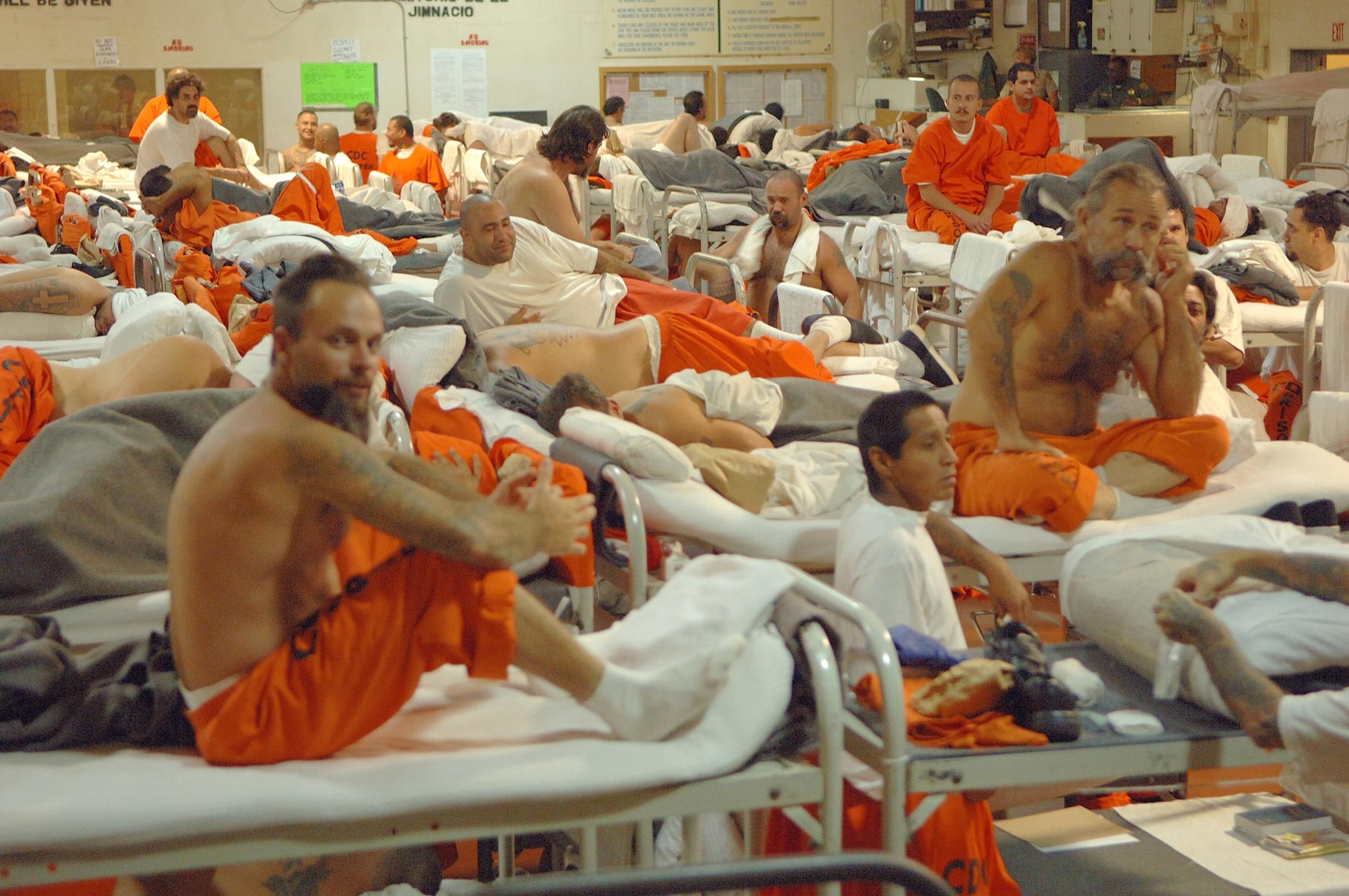
To be more accurate, the heroic component in this instance is the liberal wing of SCOTUS ( Justices Sotomayor, Kagan, Ginsberg, and Breyer) plus the swing vote, Justice Kennedy, who wrote the majority opinion in Brown v. Plata.  The decision upheld a court order requiring California to release a staggering 46, 000 inmates of its prisons, more than a fourth of the those sentenced there. The majority concurred with the lower court’s assessment that California prisons were so obscenely over-crowed that conditions amount to a human rights violation and a breach of the constitutional prohibition on “cruel and unusual punishment.”

Some Supreme Court decisions come down to ethics as much as law, and this was certainly one of those times. At issue from a legal standpoint was  whether federal judges had the power to order the release of state prisoners as a necessary means of curing a constitutional violation. But the brilliant legal minds on the conservative side of the Court’s divide had no problem answering that question in the negative, and persuasively too.  The dilemma is that California’s least sympathetic citizens, its residents of the state’s penal institutions, are being kept in conditions that violate their constitutional rights, and despite many years of knowing about the problem, the state hasn’t found a way to rectify it. Continue reading →

Ethics Quote of the Week: Salon Columnist Joan Walsh

Apparently I'm the pigeon in the lower left box.

“No one can be given credit for speaking from genuine moral or political conviction anymore; everyone can be dismissed or derided with a nod to their personal background. This may be the logical end of identity politics, where ultimately we’re each locked inside whatever little box we check, tiny caucuses of one, and common ground is impossible.”

—-Joan Walsh in Salon, bemoaning the accelerating tendency in public debate to discredit all beliefs, assertions and opinions, no matter how sincere or well-supported, as the product of bias and narrow self-interest.

Her comment could not be better timed, from my point of view. How tired I am of having readers demonstrate the trend Walsh describes by reflexively attributing every post I write as being proof of bias and a pre-existing agenda. If I criticize an atheist, I am a religious zealot; if I find fault with Obama, I must be a racist; if I point out that a production of “The Mikado” doesn’t really call for Sarah Palin to be beheaded, I’m a Left-winger. The problem is, unfortunately, that many prominent positions in the public square and blogosphere are driven by agendas and biases. It is so common that the concepts of independent judgement, an open mind and objectivity seem quaint and unrealistic.

I don’t know how to combat the problem, which is as serious as Walsh suggests. Recognizing it is a start.

Sending Teenagers To Prison Forever

He's only 14. Could he really be irredeemable?

The Wisconsin Supreme Court has upheld a life sentence for a man who helped throw a boy off a parking ramp when the prisoner was only 14 years old. At issue was whether sentencing someone to life imprisonment without parole for a crime committed at such a young age was prohibited by either the U.S. or the Wisconsin Constitution. The Court ruled not, finding that no national consensus has formed against such sentences.

I can accept that this is the proper legal standard, and that the decision may be correct regarding the law. It is also ethically wrong.

All such problems involve line-drawing and its well-known slippery slopes: if a 19-year old can be sentenced to jail forever, how different is an 18-year-old? 17? 16? Before you know it, we are sentencing 6-year-olds to life imprisonment. We do not have to fall into that trap, however, to declare that it is unethical, though legal, to sentence a 14-year-old boy to an endless jail term. Why? The sentence lacks compassion, mercy, proportion and common sense.

Certainly the crime was a horrible one. Omer Ninham was convicted of first-degree intentional homicide for his role in the death of 13-year-old Zong Vang  in 1998. Ninham and four others between the ages of 13 and 14 accosted the boy  as he was riding his bike home from the grocery store. Ninham and another member of the group teased Vang, punched him, and when Vang ran into a nearby hospital parking ramp, assaulted him on the top floor. Ninham and a friend seized Vang by the wrists and ankles, and as Vang screamed for help, threw him over the edge. He fell five stories, and hit the ground “like a wet bag of cement hitting the pavement,” as a witness put it. Two years later, when Ninham was 16, a judge sentenced him to life without parole. Continue reading →

Herman Cain Flunks The Presidential Candidate Competency Test

Herman Cain's Consitution

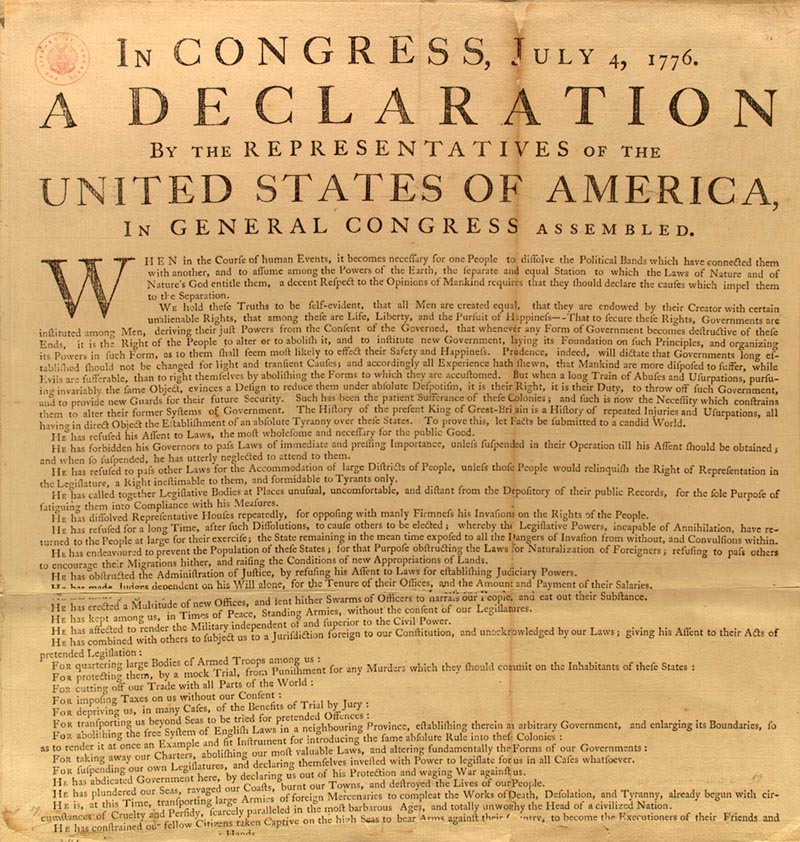
The legal ethics standards do not require that a lawyer be fully knowledgeable and competent to handle a particular representation when he or she accepts the assignment, but does require that the lawyer be sufficiently up-to-speed in the legal area at issue when the work commences. That standard is reasonable for the law,  but the American public should expect more when an individual has the audacity to pronounce himself fit to be President of the United States. One area I would hope a candidate wouldn’t need to bone up on after the fact: the nation’s founding documents.

Former pizza CEO and conservative radio host Herman Cain officially entered the contest for the GOP nomination over the weekend with this statement, following his exhortation to America’s public to read the Constitution:

“Keep reading! Don’t stop at life, liberty and pursuit of happiness.”

Meet me at the bridge; I’ll be jumping at noon. Continue reading →

More on “The Atheist, the Graduation, and the Prayer”

Damon Fowler, School Adminstrator-In-Training?

Either by design, bias, or because I was not sufficiently clear (always a distinct possibility), a lot of readers seem to have misunderstood the central principle in my post about Damon Fowler, the Louisiana high school senior who singled-handedly bluffed his school out of including a prayer in his graduation ceremonies. Let me clarify.

The post is only incidentally about atheism vs. religion. The ethical issue arose in that context, but it just as easily could have been raised in other circumstances. The ethical values involved here were prudence, tolerance, self-restraint, proportionality, consideration, generosity, and empathy. Fowler’s actions assumed that preventing what he believed was a violation of the Constitution’s prohibition on the government favoring one religious belief over another justified ignoring all of these. They don’t, and the same conclusion applies whether we are discussing a technical legal violation, a breaching of organizational rules, or personal misconduct.

Anyone who reads Ethics Alarms knows that I believe that the culture only becomes and stays ethical if all its participants accept the responsibility of flagging and, when necessary, condemning and stopping harmful societal conduct, as well as unethical personal conduct that will be toxic to society if it becomes the norm. Nevertheless, society becomes oppressive and intolerable if every single misstep, offense, violation, possible violation, arguable violation or mistaken judgment is cause for confrontation, conflict and policing, without regard for context and consequences. Indeed, much of the challenge in ethical analysis involves deciding what kind of misconduct matters, even once the question of whether something is misconduct has been settled. Continue reading →