Obama’s Leadership Incompetence, Now Getting Dangerous

Bad poker bluff

Nice hand, Mr. President.

Not everybody should be a leader, and it is no shame if you have no talent for it.  It is tempting to think that all intelligent, educated, articulate people within a certain range of emotional stability and sanity can learn to be effective leaders, but history and experience tell a different story, and it has many tragic chapters.

I know many readers think that I get great joy out of criticizing President Obama for his lack of leadership skills and instincts, but in truth I find myself consciously avoiding writing about this almost every day, because the problem is on display that regularly*, and this isn’t a Bash Obama blog. I do find it remarkable that such an obviously intelligent man is so immune to leadership instincts, and that he hasn’t resolved to at least try to learn from his more naturally leadership-gifted predecessors. For example, the White House made a point of noting that the President was a great admirer of Doris Kearns Goodwin’s “Team of Rivals,” which recounts how Abraham Lincoln assembled a Cabinet made up of political enemies, adversaries and rivals whose perspective and abilities he managed and used to great advantage. Yet Obama’s choice of Cabinet members and advisors, as even his supporters have pointed out, is unusually insular, passive and narrow, with the same loyalists being recycled into position after position (Hillary was the exception). True, this may reflect the President’s recognition of his own leadership limitations, for Abraham Lincoln, a once-in-a-century example of a born leader, is a daunting model. This is a pattern, however. When various voices in the Obama-worshiping media, such as did the New York Times last week, lament that Lyndon Johnson would have been able to get gun control measures through Congress, they are commenting on the same phenomenon. LBJ was a natural leader, and Obama, whatever his other virtues, is not. Continue reading
Ethics Hero Emeritus: Ewald-Heinrich von Kleist-Schmenzin

The first Nazi soldier Ethics Hero.

The SECOND Nazi soldier Ethics Hero!

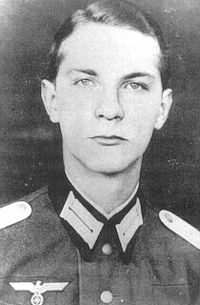
Ewald-Heinrich von Kleist-Schmenzin didn’t accomplish anything heroic, but boy, did he try. The last surviving member of the most famous and closest call of the many failed plots to kill Adolf Hitler, von Kleist-Schmenzin is a ringing example of how the only difference between a a deathless hero and some guy with an unspellable name that you never hear of until he dies sometimes is just luck, and moral luck at that.

von Kleist-Schmenzin was 90 when he perished at his home in Munich this week, outliving almost all of his fellow conspirators in Operation Valkyrie by just short of seven decades. After that near-miss assassination attempt failed (because the bomb-in-a-briefcase dropped near Hitler’s feet by chief conspirator Claus von Stauffenberg was inadvertently moved just enough to save Der Fuhrer’s miserable life), von Kleist-Schmenzin managed to convince Gestapo interrogators that he wasn’t part of the plot, though in truth he was originally given the assignment of planting the bomb. He ended up in prison (the fact that his father was also involved in the plot and was one of those executed guaranteed that) and later was sent back onto the battlefield, but only random chance prevented him from being remembered as the man who ended the war…in fact, it foiled him twice. Continue reading

Comment of the Day: “More School Abuse of Students and Culture: The Deadly Cupcake Caper”

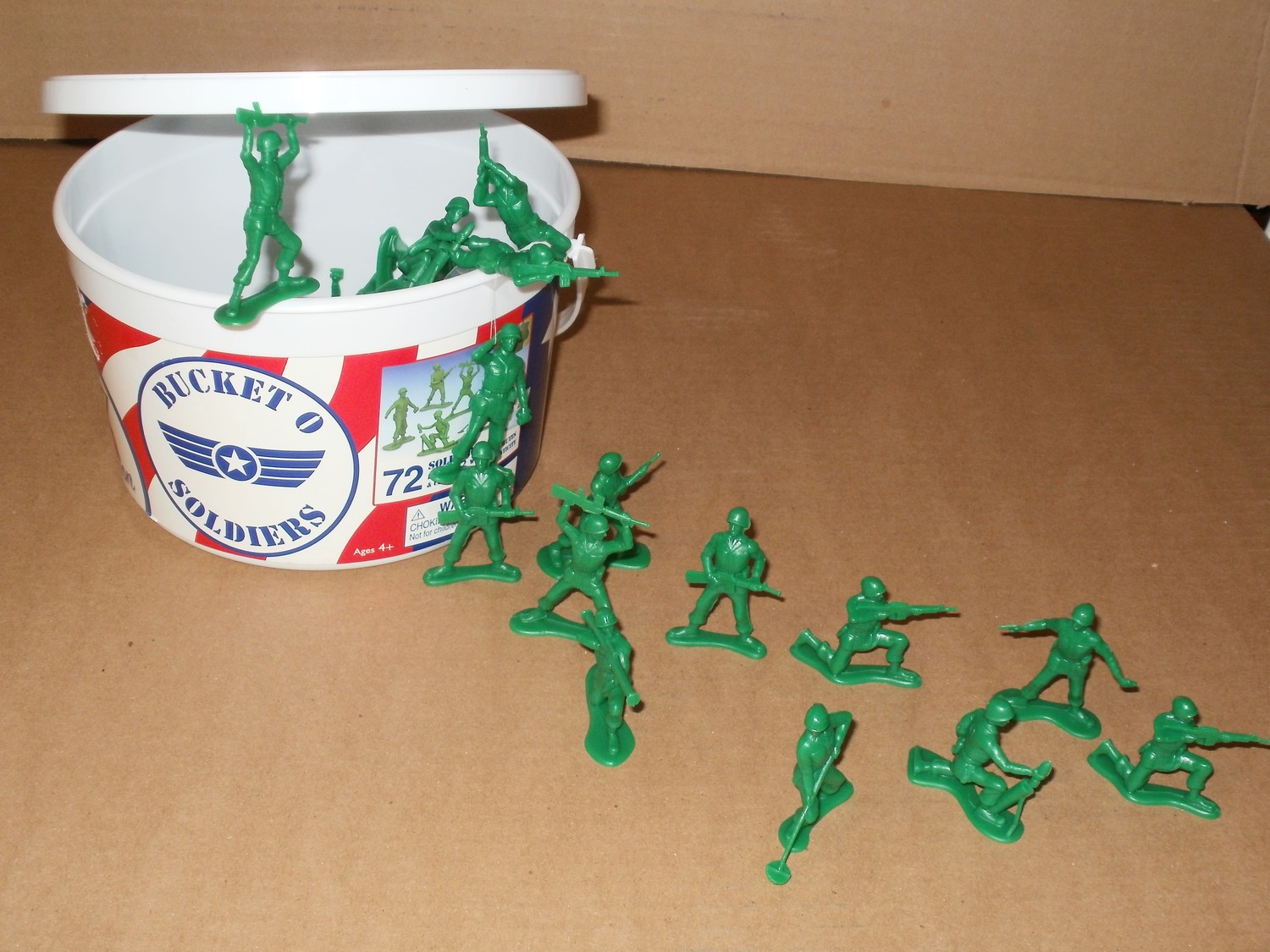
Kids playing soldiers

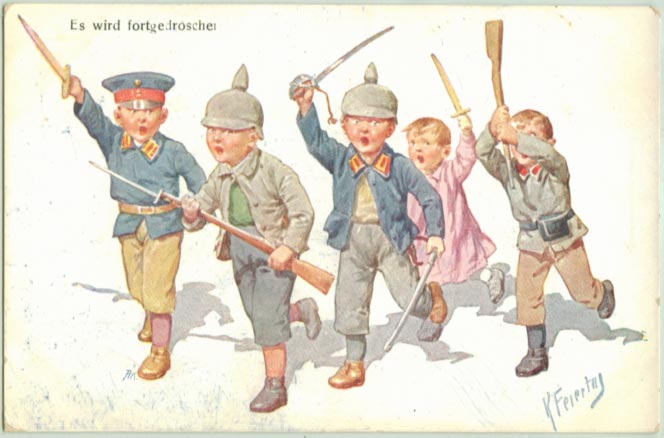
Karl Penny adds some useful perspective on children’s war games, which were referenced in my post about the school that deemed tiny toy World War II soldiers like the ones featured in “Toy Story” a threat to student peace and safety. Here is his Comment of the Day to the post, More School Abuse of Students and Culture: The Deadly Cupcake Caper:

“My friends and I used to organize war games, armed with toy guns, with which we would industriously go about “killing” each other. Today, of course, we are all psychopathic, gun-obsessed, would-be killers, just waiting for the trigger event that will send us off to wreak the next massacre at someplace where people gather.

“If I had uttered the preceding sarcasm at any sort of school function, I’d shortly be explaining to the police that no, officer, I’d never dream of shooting up anyplace, and I just spoke carelessly, and I’ll never do it again, and please don’t take me to jail…. For heavens sake. Continue reading

More School Abuse of Students and Culture: The Deadly Cupcake Caper

Wait...these are bad guys now?

Wait…these are bad guys now?

In Michigan, Schall Elementary School principal Susan Wright defended the latest example of attempted public school thought-control prompted by Sandy Hook hysteria, the seizing of 30 plastic toy soldiers (you’ll recall them as among the heroes in “Toy Story”) that the mother of a 9-year-old boy had placed on his home-made birthday cupcakes. She said in a statement,

“These are toys that were commonplace in the past. However, some parents prohibit all guns as toys. In light of that difference, the school offered to replace the soldiers with another item and the soldiers were returned home with the student. Living in a democratic society entails respect for opposing opinions. In the climate of recent events in schools we walk a delicate balance in teaching non-violence in our buildings and trying to ensure a safe, peaceful atmosphere.”

I will come to the point with uncharacteristic economy. Ms. Wright is a disgrace to her profession, a fearful, compliant, incompetent fool who is a danger to the development of the young minds placed in her charge. Let’s consider her outrageous “defense”: Continue reading

Rand Paul’s Dumb, Wasteful and Irresponsible Fillibuster

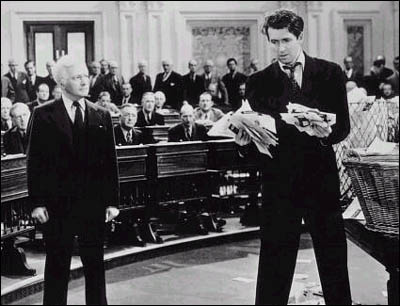
The sequel, "Mr. Smith Gets Stupid" was not a success.

The sequel, “Mr. Smith Gets Stupid” was not a success.

Sen. Rand Paul proved to my satisfaction that he doesn’t have the intellectual chops to be a U.S. Senator with his foolish argument in 2010 that the 1964 Civil Rights Act was unconstitutional, while suggesting that he would have voted against it. (For the record, Paul’s been targeted on Ethics Alarms for various ethics transgressions five times since 2010. He is not our favorite Senator.) You can hide IQ inadequacies a long time on Capitol Hill—look at Joe Biden—but those missing points are telling at the moment, as Paul stages an embarrassing, silly, and wasteful filibuster in the old style, doing his best “Mr. Smith” impression to block the inevitable confirmation of John Brennan as CIA director.

Sen. Paul says he’ll talk until he drops or until the Obama administration states definitively that it doesn’t have the right to “kill an American on American soil.” Why is this such a high priority for Paul? Eric Holder answered his office’s query on the topic with this eminently reasonable response, which Paul has managed to completely misconstrue. Holder said in part, Continue reading

Just What Every President Doesn’t Need…A Traitor

"My observations while serving in the President's trust are held in strictest confidence, and...HOW much? Sure, I'll write a book!"

“My observations while serving in the President’s trust are held in strictest confidence, and…HOW much? Damn! Sure, I’ll write a book!”

President Obama is hardly the first President to be blind-sided by a “tell-all” exposé authored by someone who had an obligation to keep his mouth shut and his keyboard quiet. The unethical practice of a President’s former advisors, cabinet members, secret security agents, servants and others who held his trust cashing in and publishing often bitter, agenda-driven books detailing juicy and uncomplimentary details of what went on behind closed doors began gaining steam during the Reagan years (something else to detest David Stockman for) and has accelerated in every administration since.

The latest sniper shot from a grassy knoll is the work of Vali Nasr, a professor and former senior State Department adviser who worked with Richard Holbrooke, previously Obama’s special envoy to Afghanistan and Pakistan. In his new book, which, of course, had to be published while Obama was still in office to have a chance of making the former advisor the money he craves, Nasr relates details of what he regards as the incompetent White House foreign policy decision-making apparatus, in which vital calls that should have been left to experts were run through Obama’s political team, whose judgment was based on polls and narrow, short-term political considerations. Continue reading

Drone Ethics: The Policy and the Memo

Hey, Fox News! INCOMING!!!

Hey, Fox News! INCOMING!!!

With the leak of the Obama Administration’s Justice Department memo laying out  alleged legal and Constitutional justification for targeted drone killings abroad, the ethical debate over this practice finally began in earnest. Back in October of 2011, I visited this topic in a post titled, “The Ethically Messy, Legally Muddled, Drone Killing of Anwar al-Awlaki,” who was an American citizen and also an al-Qaida leader and terrorist, and wrote…

“I am far less confident of a conclusion that the killing was legal than I am that the killing was ethical in a situation where traditional rules and considerations don’t fit the situation well, meaning that decision-makers must go outside the rules to find the right, meaning ethical, course of action.  And I’m even not 100% confident of that.”

This still accurately encompasses my view, although my confidence in the position has declined materially, in part because of the memo. However, my position in 2011 was based on the assumption, using the Bush Administration’s position, that the United States was engaged in a de facto war with al-Qaida, and as a tool of war, killer drones  are within ethical bounds by my analysis. The leaked memo, however, begins with the assumption that the drone strikes are not part of ongoing declared warfare, but rather a new variety of cross-border lethal intervention that has no legitimate statutory basis. I think that under those assumptions, targeting drone killings are illegal, unethical, and to the extent that they give the President of the United States the power to kill someone in any nation based on his assessment that person needs killing, ominous.

I’ll leave the legal analysis of the memo to others. For now, other than pointing readers to my earlier analysis of drone killings in the context of warfare, I just have some observations: Continue reading

Are Gentlemen Sexist?

"Oh, Tommy---you're such a pig!"

“Oh, Tommy—you’re such a pig!”

On the flip side of the hit post about Emily Heist Moss’s open letter to her harassers, we have the B-side (I know this metaphor marks me as a fogy ): my objections to a New York Times essay by Lynn Messna, who declares that she doesn’t want her son to be gentleman, because gentlemen are sexist.

She writes:

“Start to complain about your preschooler adopting gentlemanly behavior and you quickly discover how out of step you are with the rest of the world. Almost everyone I mention it to thinks it’s lovely and sweet. What’s the harm in teaching little boys to respect little girls?..But I don’t think it’s an overreaction to resent the fact that your son is being given an extra set of rules to follow simply because he’s a boy. His behavior, already constrained by a series of societal norms, now has additional restrictions. Worse than that, he’s actively being taught to treat girls differently,  something I thought we all agreed to stop doing, like, three decades ago. Continue reading

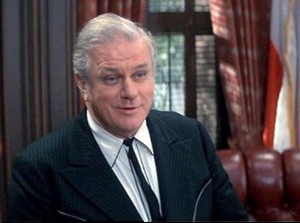
Ethics Hero Emeritus: Charles Durning, 1923-2012

Charles DurningWorld War II veterans are dying by the thousands every year now; “the Greatest Generation” is running out of members. When one of the survivors of World War II combat who became famous in subsequent pursuits leaves us, it is important to remember that their brave service to their country was probably the most important thing they did in their lives, and was their invaluable gift to all of us. In most cases, that is how the veterans looked at it too. I know my late father did.

I can’t be sure about the great character actor Charles Durning in this regard, because he generally refused to talk about his World War II experiences, which resulted in his being honored by a Silver Star and three Purple Hearts. This too is admirable. His military service was his duty, but having to kill other human beings, no matter who they are, is something that throw most ethical people into a searing conflict of values and emotions. Durning, who died today at the age of 89, preferred to discuss his acting.

He was as talented and brave at entertaining us as he was in combat. Never a leading man, Charles Durning could play drama and comedy with equal deftness, and given the chance to be in a musical, the (awful) film version of “The Best Little Whorehouse in Texas,” he proved that he could sing and dance well too. He was outstanding in such classic films as “The Sting,” “Dog Day Afternoon” and “Tootsie,” an actor who seemed incapable of seeming false or inauthentic  while never playing the same kind of character twice. Perhaps the performance that was closest to the real Charles Durning was in his Emmy-winning role on “NCIS” in the episode “Call of Silence,” in which he played an elderly Marine veteran and Congressional Medal of Honor recipient who is tortured by the belief that he had been responsible for the death of his best friend in combat.

Durning’s own military service would have made an exciting movie on its own.  His highest rank was Private First Class, and like many others, he did the most dangerous and dirtiest work of the war. On D-Day, June 6, 1944, and was among the first troops to arrive at Omaha Beach in Normandy, after overshooting  his landing zone and having to fight his way to the beach.  He was severely wounded by a German “S” Mine on June 15, 1944 at Les Mare des Mares, France, but despite suffering from the effects of shrapnel in the left and right thighs, the right hand, his head, and his chest, he declared himself fit to return to the lines, which he did just in time for the Battle of the Bulge. During that battle he was wounded again, captured, and survived the German massacre of American prisoners at Malmedy, one of the most heinous war crimes perpetrated in the field.

We should honor the memory of Charles Durning as a wonderful actor who contributed a great deal to films and popular culture, entertaining millions in the process. We should also honor him as a patriot, a soldier, a citizen, a World War II veteran and a hero, not because he was unique, but because he was not, and when we salute him as he passes from this world, we also honor all the anonymous and forgotten fighting men like him who never became famous, saved the United States and the human race, and who, like Charles Durning, refused to boast about it.


Comment of the Day: Ethics Bob Asks: “Did Torture Lead Us To Bin Laden”? My Answer: “So What If It Did? It Was Still Wrong.”

How did we end up discussing torture on Christmas Eve?

Sorry about that.

timebombHere is a stimulating comment by Zoebrain in the “Zero Dark Thirty” torture thread. I’m especially fond of it, because as theoretical and probably impossible as her resolution would be in practice, it neatly addresses the central problem conflict in the “torture is an absolute wrong but you might have to use it to save the world” scenarios, like the familiar “ticking bomb” hypothetical.  In her analysis. one violates the absolute rule, but accepts a proportional penalty for doing so.

I advocate a similar approach in legal ethics in situations where a lawyer decides as a matter of personal conscience that he or she must violate core legal ethics values, like keeping the confidences of a client, in furtherance of a higher objective not recognized be the Rules of Professional Conduct, such as keeping a serial killer from going free.

Here is Zoebrain’s Comment of the Day on the post, Ethics Bob Asks: “Did Torture Lead Us To Bin Laden”? My Answer: “So What If It Did? It Was Still Wrong.” Continue reading