Drone Ethics: The Policy and the Memo

Hey, Fox News! INCOMING!!!

Hey, Fox News! INCOMING!!!

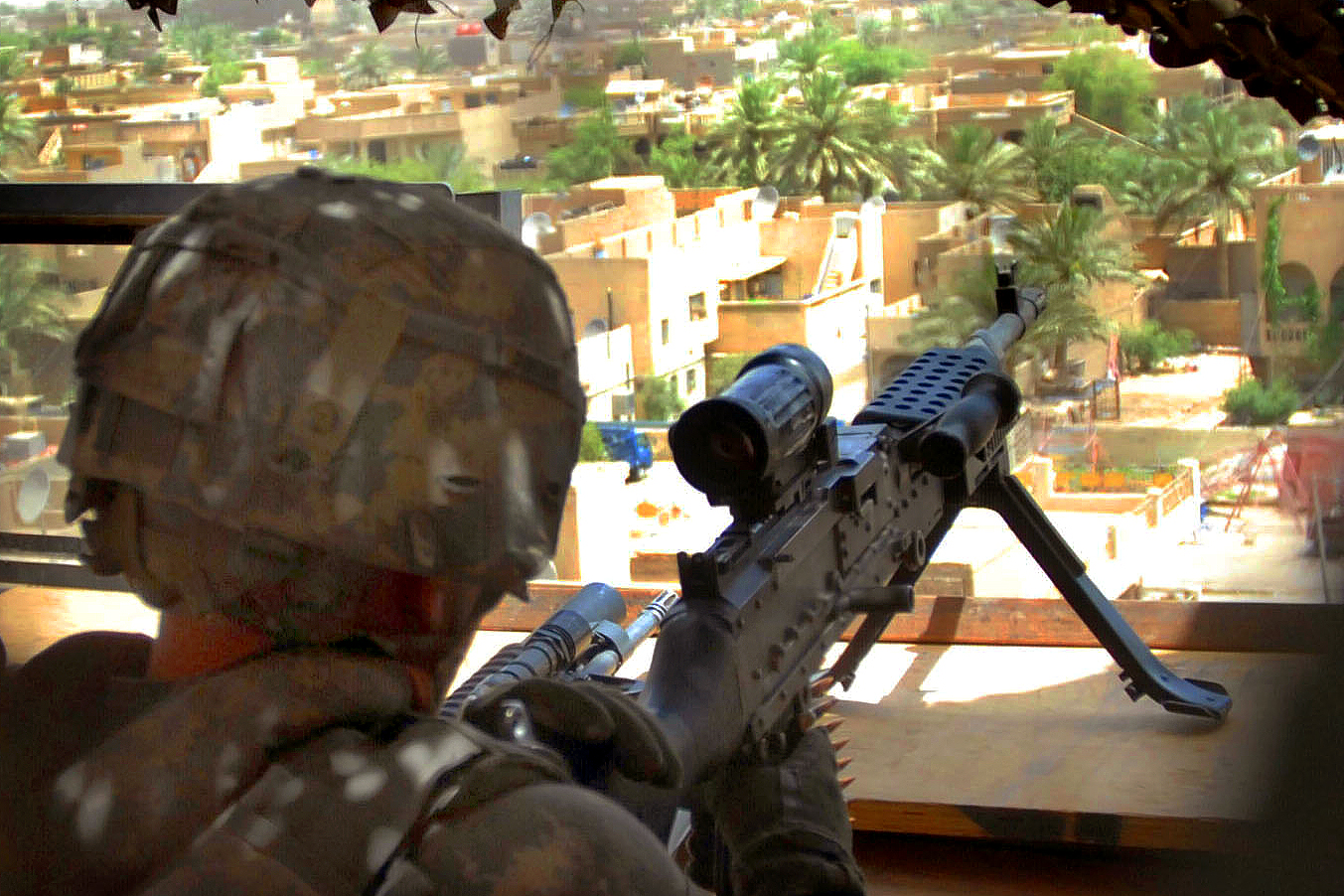
With the leak of the Obama Administration’s Justice Department memo laying out  alleged legal and Constitutional justification for targeted drone killings abroad, the ethical debate over this practice finally began in earnest. Back in October of 2011, I visited this topic in a post titled, “The Ethically Messy, Legally Muddled, Drone Killing of Anwar al-Awlaki,” who was an American citizen and also an al-Qaida leader and terrorist, and wrote…

“I am far less confident of a conclusion that the killing was legal than I am that the killing was ethical in a situation where traditional rules and considerations don’t fit the situation well, meaning that decision-makers must go outside the rules to find the right, meaning ethical, course of action.  And I’m even not 100% confident of that.”

This still accurately encompasses my view, although my confidence in the position has declined materially, in part because of the memo. However, my position in 2011 was based on the assumption, using the Bush Administration’s position, that the United States was engaged in a de facto war with al-Qaida, and as a tool of war, killer drones  are within ethical bounds by my analysis. The leaked memo, however, begins with the assumption that the drone strikes are not part of ongoing declared warfare, but rather a new variety of cross-border lethal intervention that has no legitimate statutory basis. I think that under those assumptions, targeting drone killings are illegal, unethical, and to the extent that they give the President of the United States the power to kill someone in any nation based on his assessment that person needs killing, ominous.

I’ll leave the legal analysis of the memo to others. For now, other than pointing readers to my earlier analysis of drone killings in the context of warfare, I just have some observations: Continue reading

Are Gentlemen Sexist?

"Oh, Tommy---you're such a pig!"

“Oh, Tommy—you’re such a pig!”

On the flip side of the hit post about Emily Heist Moss’s open letter to her harassers, we have the B-side (I know this metaphor marks me as a fogy ): my objections to a New York Times essay by Lynn Messna, who declares that she doesn’t want her son to be gentleman, because gentlemen are sexist.

She writes:

“Start to complain about your preschooler adopting gentlemanly behavior and you quickly discover how out of step you are with the rest of the world. Almost everyone I mention it to thinks it’s lovely and sweet. What’s the harm in teaching little boys to respect little girls?..But I don’t think it’s an overreaction to resent the fact that your son is being given an extra set of rules to follow simply because he’s a boy. His behavior, already constrained by a series of societal norms, now has additional restrictions. Worse than that, he’s actively being taught to treat girls differently,  something I thought we all agreed to stop doing, like, three decades ago. Continue reading

Ethics Hero Emeritus: Charles Durning, 1923-2012

Charles DurningWorld War II veterans are dying by the thousands every year now; “the Greatest Generation” is running out of members. When one of the survivors of World War II combat who became famous in subsequent pursuits leaves us, it is important to remember that their brave service to their country was probably the most important thing they did in their lives, and was their invaluable gift to all of us. In most cases, that is how the veterans looked at it too. I know my late father did.

I can’t be sure about the great character actor Charles Durning in this regard, because he generally refused to talk about his World War II experiences, which resulted in his being honored by a Silver Star and three Purple Hearts. This too is admirable. His military service was his duty, but having to kill other human beings, no matter who they are, is something that throw most ethical people into a searing conflict of values and emotions. Durning, who died today at the age of 89, preferred to discuss his acting.

He was as talented and brave at entertaining us as he was in combat. Never a leading man, Charles Durning could play drama and comedy with equal deftness, and given the chance to be in a musical, the (awful) film version of “The Best Little Whorehouse in Texas,” he proved that he could sing and dance well too. He was outstanding in such classic films as “The Sting,” “Dog Day Afternoon” and “Tootsie,” an actor who seemed incapable of seeming false or inauthentic  while never playing the same kind of character twice. Perhaps the performance that was closest to the real Charles Durning was in his Emmy-winning role on “NCIS” in the episode “Call of Silence,” in which he played an elderly Marine veteran and Congressional Medal of Honor recipient who is tortured by the belief that he had been responsible for the death of his best friend in combat.

Durning’s own military service would have made an exciting movie on its own.  His highest rank was Private First Class, and like many others, he did the most dangerous and dirtiest work of the war. On D-Day, June 6, 1944, and was among the first troops to arrive at Omaha Beach in Normandy, after overshooting  his landing zone and having to fight his way to the beach.  He was severely wounded by a German “S” Mine on June 15, 1944 at Les Mare des Mares, France, but despite suffering from the effects of shrapnel in the left and right thighs, the right hand, his head, and his chest, he declared himself fit to return to the lines, which he did just in time for the Battle of the Bulge. During that battle he was wounded again, captured, and survived the German massacre of American prisoners at Malmedy, one of the most heinous war crimes perpetrated in the field.

We should honor the memory of Charles Durning as a wonderful actor who contributed a great deal to films and popular culture, entertaining millions in the process. We should also honor him as a patriot, a soldier, a citizen, a World War II veteran and a hero, not because he was unique, but because he was not, and when we salute him as he passes from this world, we also honor all the anonymous and forgotten fighting men like him who never became famous, saved the United States and the human race, and who, like Charles Durning, refused to boast about it.


Comment of the Day: Ethics Bob Asks: “Did Torture Lead Us To Bin Laden”? My Answer: “So What If It Did? It Was Still Wrong.”

How did we end up discussing torture on Christmas Eve?

Sorry about that.

timebombHere is a stimulating comment by Zoebrain in the “Zero Dark Thirty” torture thread. I’m especially fond of it, because as theoretical and probably impossible as her resolution would be in practice, it neatly addresses the central problem conflict in the “torture is an absolute wrong but you might have to use it to save the world” scenarios, like the familiar “ticking bomb” hypothetical.  In her analysis. one violates the absolute rule, but accepts a proportional penalty for doing so.

I advocate a similar approach in legal ethics in situations where a lawyer decides as a matter of personal conscience that he or she must violate core legal ethics values, like keeping the confidences of a client, in furtherance of a higher objective not recognized be the Rules of Professional Conduct, such as keeping a serial killer from going free.

Here is Zoebrain’s Comment of the Day on the post, Ethics Bob Asks: “Did Torture Lead Us To Bin Laden”? My Answer: “So What If It Did? It Was Still Wrong.” Continue reading

Ethics Bob Asks: “Did Torture Lead Us To Bin Laden”? My Answer: “So What If It Did? It Was Still Wrong.”

It's all for the best.

It’s all for the best.

The last time my friend “Ethics Bob” Stone blogged about ethics, it was way back in August, and he was writing about some guy named “Romney.” Now he’s back on the job, thank goodness, with a comeback post titled “Zero Dark Thirty: Did torture lead us to Osama bin Laden?”. And he’s ticking me off.

“Zero Dark Thirty” is Hollywood’s treatment of the search, apprehension and execution of Osama Bin Laden. The film suggest that methods of torture were employed by the CIA to uncover crucial intelligence that led to the terrorist mastermind’s demise. Torture opponents, including some U.S. Senators, are alarmed by this, and disputing the film’s account. (Imagine that: a movie that misrepresents history!) Meanwhile, conservatives, neocons, Bush administration bitter-enders, talk radio hosts and admirers of Dr. Fu Manchu and James Bond villains are citing the film as confirmation that they were right all along: torture is a wonderful thing.

I am puzzled that Bob got in the middle of this debate as an ethicist. “It worked!” and “It came out all right in the end!” are not valid ethical arguments or justifications. The first is an embrace of a pure “the ends justify the means” rationale, a favorite tool of Auric Goldfinger and Dr. No. The other is consequentialism. When ethicists and principled opponents of torture allow the issue to be adjudicated on this basis, they are surrendering their principles at the outset. “Torture doesn’t work” is a pragmatic argument, not an ethical one. If the societal consensus regarding torture is going to be determined by how much we can benefit by returning to the rack and wheel, then ethical considerations have already been jettisoned. Continue reading

Comment of the Day: “Unethical Quote of the Month: The Washington Post”

militia

I don’t agree with everything in Michael’s  take-down of a comment by Eric R. to my post, “Unethical Quote of the Month: The Washington Post,” but as an example of the genre ( mastered on Ethics Alarms by the 2011 Commenter of the Year tgt and others), it’s a gem. The main point, that the Second Amendment has significant symbolic value as a right that reminds the government that the citizens of a democracy will not bare their throats to central power, is a crucial one, which I touched on in an earlier Ethics Alarms post. An armed insurrection against the government would be a catastrophe, of course. Still, while those Americans who believe that arming citizens against possible government tyranny trust too little, the citizens who argue that the government should be able to disarm the populace in the name of safety trust far too much.

I did remove one small non-substantive part of the post, because I really dislike mockery as a device on Ethics Alarms (the unedited comment is still under the original post.) I particularly think Michael’s identification of the reasons underlying the recent spate of mad dog killings is seriously off the mark. My own list, in order of influence would be…

  1. The difficulty of getting seriously disturbed individuals institutionalized, and the lack of places to keep and treat them.
  2. The availability of assault-type weapons to such disturbed individuals.
  3. The failure to enforce existing gun regulations
  4. The increasing difficulty and complexity of life generally, making it harder for those who are poor, poorly trained, not especially bright, or emotionally fragile to compete and succeed.
  5. The pervasive media, which creates false norms of success and happiness that are unachievable for most Americans.
  6. The culture of guns and violence, which is intensified by the entertainment media, but which is also a core American characteristic that isn’t going away.
  7. The publicity given to mass murderers by the news media.

But I digress.

Here is Michael’s tough Comment of the Day, to the post “Unethical Quote of the Month: The Washington Post”. The bold sections below are quotes from Eric’s comment: Continue reading

Lindsay Stone Scores A Jumbo: The “I Didn’t Intend To Do What I Did When I Intentionally Did What I Did” Excuse

I have to give Lindsay Stone credit. You will seldom see as pure an example of an outrageous denial of the undeniable in a public apology as the one she just authored. Brava! And good luck with the job hunt.

Stone, who is an idiot, and her friend, who is an idiot whose name has yet to be tracked down by the media, collaborated on a photo showing Stone giving an upturned middle finger to the Tomb of the Unknown Soldier, while yelling something by the sign there that says “Silence and Respect.” The photograph was posted on Stone’s Facebook page and naturally went viral. Thousands of protesters bombarded the website of their employer, Living Independently Forever, with demands that the two be fired. Today, they were.

Before the inevitable axe fell (more on that in a bit), Stone posted this remarkable explanation:

Continue reading

Ethics Dunces: The Petraeus Defenders

I know I have touched on this before regarding the Petraeus scandal (and elsewhere), but it bears emphasizing—especially since so many seem to be unable to process the concept. Leaders cannot be seen as willing to violate their own rules, principles and those of the organizations they represent. Arguing that the rules violated are foolish, or outdated, or too restrictive does not rebut this fact of leadership in any way, but making that argument does show beyond question that the pundit making it doesn’t comprehend the most basic facts of leadership and the building of ethical cultures.

Today’s Sunday papers are awash in editorials and op-ed pieces by former intelligence personnel, lawyers, social scientists and other pundits blaming the widening Petraeus scandal ( now focusing on Gen. John Allen, the U.S. commander in Kabul, and the significance of his exchanging thousands of inappropriate emails with Jill Kelley, the Tampa socialite who is apparently the military equivalent of a rock-and-roll groupie, only older) on antiquated morals and political opportunism. There are too many of these bewildered commentators to count, but their views all ooze from the same basic, shockingly facile, and in some cases intentionally misleading theory, which is that Petraeus’s and Allen’s conduct are irrelevant to their ability to do their jobs. The Washington Post’s David Ignatius, usually one of the more rational and objective of that paper’s leftward chorus, actually reprints verbatim an e-mail he received from an Arab diplomatic source as if it contains illumination rather than naiveté:

“He needs to resign cause he has an affair? What da hell??? He is brilliant!!!! Why like this????” Continue reading

Accountabilty Check: President Obama’s Bizarre Defense of Susan Rice

“Don’t pick on my poor. defenseless, untrustworthy ambassador!”

Add to the list of the Top Ten Outrageous Remarks of President Obama this stunner, the low-light of his first full press conference since March.

“If Sen. McCain and Sen. Graham and others want to go after somebody they should go after me. For them to go after the UN ambassador who had nothing to do with Benghazi…to besmirch her reputation is outrageous.”

“Accountability” continues to be an alien ethical concept to the President, and this proves it. U.N. Ambassador Rice went on the Sunday morning TV shows four days after the deadly Benghazi attack and after U.S. intelligence had determined that the attack that killed the American ambassador in Libya was not a spontaneous demonstration sparked by an anti-Islam video, but a planned, organized, terrorist enterprise. She did this while asserting in no uncertain terms that the attack was not what U.S. intelligence had told the State Department and the White House that it was. Rice, in making this mistaken or dishonest case on behalf of the administration, put her name, her status, her credibility and her position behind it. From the moment she became the Administration’s spokesperson on Benghazi, she had something to do with Benghazi. Continue reading

Gen. Allen, Lockheed, John Edwards, Restraint Bias,and Further Musings on the Petraeus-Broadwell Ethics Train Wreck

Run away!

In no particular order:

  • In a tack that is being duplicated by other commentators on the left, MSNBC’s Rachel Maddow essentially pronounced the scandal as much ado about nothing (Columnist E.J. Dionne dismissively referred to Petraeus’s affair as his “little secret”). See, as long as an incident involves sex, the Left’s default position is that it can’t be that bad. Maddow mocked the actions of Jill Kelley, the woman who Broadwell threatened and who alerted the FBI, saying, “Who contacts the FBI because of threatening e-mails? If I did that, they would have to set up a special division just for me.” Ha ha.  How many of your threatening e-mails credibly suggested that the head of an intelligence agency was having an illicit affair with an unstable wacko, Rachel? Kelley did the responsible, intelligent thing given the possible national security implications. But it’s certainly good to know that you wouldn’t…because it’s only sex, of course.
  • Other pundits are complaining that the FBI became involved when what Petraeus did “wasn’t a crime.”  Yes,  it’s the “It’s legal” rationalization. Why people who can’t comprehend that dangerous, destructive, serious misconduct can occur without breaking any laws are allowed to write newspaper columns, I’ll never understand. Petraeus’s affair was a violation of the ethics rules, in an intelligence agency with major responsibilities in national security. That is serious, inherently dangerous, and easily could have led to security breaches that were illegal. If a leader materially, knowingly and publicly violates an ethics rule, he cannot lead. This is why Petraeus, who understands this, resigned, despite the certainty that the Rachel Maddows of the media would have been happy to shrug off his actions as “no big deal.” because it’s only sex, and “it’s legal.”
  • Kelley still boarded the ethics train wreck, not because of her actions in response to Broadwell’s threat, but in light of the revelation that she was maintaining a hot e-mail relationship with Gen. John R. Allen, the commander of U.S. and NATO troops in Afghanistan. The FBI has uncovered between 20,000 and 30,000 pages of primarily e-mails containing “potentially inappropriate” communication between Allen and Kelley. Wait, what? Between 20,000 and 30,000 pages? What the hell is going on with our generals? This is obsessive, unhealthy behavior, even if he’s just writing her limericks and recipes. Something is serious amiss in the ethical culture of the U.S. military leadership Continue reading