Musings On The Jason Collins Announcement

Jason-Collins

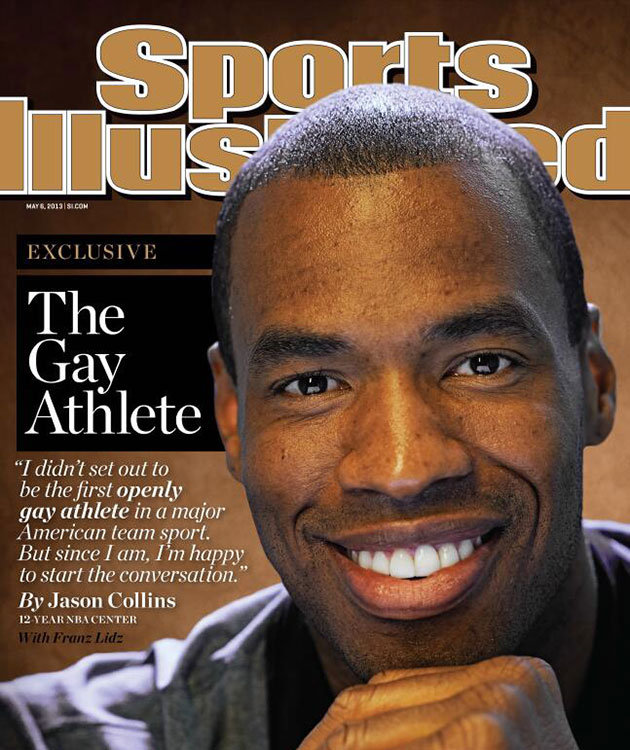
Jason Collins, a reserve NBA center, became a huge news story as well as symbol of increasing gay acceptance in America when he announced his sexual orientation in a Sports Illustrated cover story this week. This made him,technically at least, the first active athlete in one of the U.S’s major professional sports to “come out.” Since his team is not in the NBA play-offs, and since Collins is a free agent going into 2014, the NBA has yet to see its first openly gay player take the floor in a game, and Collins may not be the one who does it.

What does it all mean?

  • Collins is courageous.
  • I hate the fact that the state of celebrity economics, fame and popular culture makes me think like this, but it does: How can we know that Collins, a borderline and largely obscure NBA player nearing the end of his career, didn’t see a chance at the kind of fame, stardom and popularity, not to mention guest appearances, sponsorships and endorsements that have eluded him in his playing career, and grabbed it? We don’t. This was the kind of act that has nothing but good results whatever the motives of the actor, and so it is an ethical act by definition. Was it a truly selfless act, as it is being portrayed? I think Collins deserves the benefit of the doubt, but I sure have some. Continue reading

Professionism 101: What Not To Do At Your Desk

desknonos_1

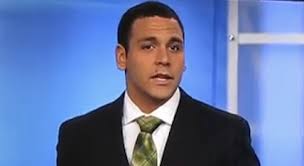
A confused commenter who wanted to take the side of that potty-mouthed TV broadcaster fired for making his first words on the job “…fucking shit” has argued that A. J. Clemente should be re-hired because “it could happen to anyone.” Wrong. It could not “happen to anyone,” I explained to her, because civil professionals don’t say “fucking shit” in public or on the job. A.J. is further displaying his cluelessness and gray matter deficit by trying to exploit his 15 minutes of infamy, appearing on Letterman and thus bidding to be known forever as “the guy who said ‘fucking shit’ in his first seconds on TV.”  Why would he think this is the way to start anew and make potential employers believe in his professionalism? Is he bidding to be a reality show cast member?

Who is advising this poor guy? Politicians, like Texas governor Rick Perry, go on shows like Letterman after a well-publicized gaffe to show they are good sports and that they understand that they messed up, but these are celebrities who are already famous for the mistake. For them,the  tactic is designed to remove the sting by laughing along with everyone else. For an unknown like Clemente to do this is self-destructive: it makes far more people aware of the embarrassing incident, it looks like he is exploiting his incompetence, and suggests that he doesn’t understand how serious his conduct was. Letterman doesn’t care if A.J. wrecks his future on the show; Dave just wants some cheap laughs. Not only is A.J. not professional or bright, he apparently has no friends or family members who are, either.

Well, enough of A. J. He has offered a vivid example of one kind of career-killing job conduct, and Salary.com has some more, in a feature it calls “Crimes in the Cubicle.” The list by Heather Dugan suggests 15 varieties of conduct to eschew at one’s desk, and it is all about professionalism, as well as etiquette, civility, decorm, dignity, office demeanor, respect for others…ethics, in short. It is a good collection: send the link to the young man or woman of your acquaintance who is starting their first office job. Or send it to A. J. Clemente.

Perhaps he should start here.

_______________________________

Source and Graphic: Salary.com

Ethics Dunces: Bismarck, N.D. Supporters Of A.J. Clemente, The Obscene Ex-Newscaster

A.J. Clemente.

A.J. Clemente.

In an earlier post I referenced A.J. Clemente, a newscaster for KFYR-TV in Bismarck who debuted in his new role by saying “…fucking shit!” on the air, because he didn’t know his mic was on. Not surprisingly, he was fired. Now, apparently, many viewers have come to his defense and are admonishing the station for being too harsh.

The station is not being too harsh. The station is upholding correct professional standards, and removing an unprofessional employee whom they do not trust and have no reason to trust. The episode showed him to be careless, reckless and, obviously, subject to obscene outbursts, which only are appropriate if you are David Ortiz. Ah, but some of the good citizens of Bismarck, displaying the same entrenched ethics cluelessness that led to the nomination of the ridiculous Mark Sanford, ex-Romeo governor, to lose a GOP House seat in South Carolina, don’t comprehend accountability, trustworthiness or responsibility, because to them, the only values that matter are forgiveness and compassion. The technical terms for such people are “patsies” and “marks.” They would cripple society, business and government with their mindless, deadly niceness. Examples: Continue reading

The Dilemma of the Oblivious Questioner

"Where was I? Oh, right...so what you were saying about client perjury reminds me of a trial in the Boer War...well, it wasn't a trial exactly; that was what Churchill's cousin called it---wait, not Churchill's cousin...the other guy, the one who was such a good canasta player. Nobody plays canasta any more..."

“Where was I? Oh, right…so what you were saying about client perjury reminds me of a trial in the Boer War…well, it wasn’t a trial exactly; that was what Churchill’s cousin called it—wait, not Churchill’s cousin…the other guy…no, it was a girl, I misspoke… the one who was such a good canasta player. Nobody plays canasta any more…”

I launched a new legal ethics seminar today. This is always nerve-wracking, because it has to last exactly three hours, has to cover the topics I’ve included in the printed materials, and the programs are interactive, meaning that the degree of attendee participation is unpredictable. After I’ve done a program a couple of times, I usually have a good idea about which segments prompt a lot discussion and which don’t, so I can time my own comments accordingly. The first time, however, it is pure guesswork.

This one, a country-music themed program, was going to be tight, but was close to schedule until an elderly lawyer burdened with various medical paraphernalia raised his hand. I called on him by reflex, and then realized that he was the same attendee who had blathered on earlier in the program, telling an irrelevant and pointless anecdote that ate up five minutes. Sure enough, the second he got his hands on the mic he was off again, this time making an obscure and convoluted comparison between what I had been discussing and Japanese war crime trials, but it was even worse. He went on tangents; he forgot names; he backtracked; he never made any coherent point. Some people got up and left. It was easily a ten minute filibuster, and permanently killed any chance I had of covering all my material. He finally reached the end, never making clear what the story had to do with anything. I went on to the next segment.

Now I wonder if I handled the situation properly and made the right ethical call, which was to tolerate his clueless intrusion and not embarrass him by cutting him off. Continue reading

Different Symptoms, Same Ethics Illness: The Mike Rice-Rutgers Scandal And The Sandusky-Paterno-Penn State Tragedy

Missed out on your statue by thaaaat much, Mike.

Missed out on your statue by thaaaat much, Mike.

The question isn’t, as many news reports would have us believe, whether the Mike Rice affair mandates an administrative house-cleaning at Rutgers. Of course it does. The question is why, after the far uglier Penn State scandal, anyone possessing the gray matter of the Scarecrow from “The Wizard of Oz” thinks otherwise.

In case you are really smart and pay no attention to the dire ethics swamp known as college sports: Mike Rice was a very successful Rutgers basketball coach until ESPN got a hold of a video compilation of him abusing his players on multiple occasions. Though the Rutgers athletic director had seen the damning evidence in November, he let Wise off with a fine and suspension; then the recent national exposure forced him to fire Wise. This prompted Rutger’s president, Robert Barchi, to fire the athletic director (Tim Parnetti) for not taking appropriate action once he had discovered his coach was hitting, assaulting, and taunting players. And Barchi? Even though he knew, or should have known, that Rice’s methods were unacceptable, he never looked at the video (or so he says) that was available to him six months ago, until April. The New York Times reports that many Rutgers officials as well as the university’s outside attorneys knew that Rice was abusing his players,and that he had been doing so for years.

The net lessons learned from the Penn State disaster are zero. As the Times article says, “interviews and documents reveal a culture in which the university was far more concerned with protecting itself from legal action than with protecting its students from an abusive coach.” Yes, a coach attacking student is far short of child-molesting, but that’s  irrelevant: the corrupt cultural syndrome is exactly the same.  Rutgers, top to bottom, placed winning basketball games above sportsmanship, decency, fairness, and protecting their own students. The difference between Rutgers and Penn State is Joe Paterno and moral luck.

Let us be clear: if a teacher physically assaults a student, anywhere, at any level, ever, that teacher has to be fired, and probably prosecuted. A coach is no different. This isn’t open to debate. Yet I listened, as my gorge rose, to the glib and simple-minded conservative radio host Sean Hannity jabber with ex-Notre Dame football coach and facile “inspirational speaker” Lou Holtz about how Parnetti got a raw deal. Why? Parnetti built a great program! So he lets his coaches assault his players—anyone can make a mistake! Isn’t this hindsight? Second-guessing?

“Players are spoiled today; they just aren’t ready to be criticized,” said Holtz, who speaks in platitudes and nostrums that cover a Neanderthal sensibility (so you know he’s much in demand for corporate speaking gigs.)  These men are both ethics-challenged fools, but they have plenty of company.  Rutgers’ report on Rice’s abusive treatment assembled excuses and rationalizations by the authors and others. Rutgers athletic assistants said the video clips showing Rice kicking his players and throwing objects at them “were taken out of context.” What?? In what “context” is it appropriate for a college coach to do this? None! Many of Rice’s players said he prepared them well for tough competition. The report noted that under Rice’s abusive, tortious methods, the players’ grades rose to a B average. Oh! Well, that must mean assault and battery is okay, then, because it works!  This is the ethical standard Rutgers is teaching its students.

Parents everywhere: grab your student and run.

Elsewhere, Rutgers’s internal report called Rice “passionate, energetic and demanding” and concluded that his intense tactics were only aimed at improving his team and “were in no way motivated by animus.” Ah! So beating kids is okay, as long as it’s well-intentioned! This culture is sick, sick, sick and as with Penn State, it is part of a large sick culture that pervades university sports. Here’s one official from another sick school defending Parnetti:

“I think it was unfair for them to fire Pernetti. There were probably a lot of things that went into the decision not to fire Mike Rice in December. And as gruesome as that tape was, it was also a first offense for Mike Rice. I think Pernetti is taking the heat for everything and sometimes in leadership roles you take the glory probably more than you deserve and you take the heat more than you deserve. I think right now Pernetti is taking the heat more than he deserves.”

A first offense???? The video was compiled from dozens of incidents, and Rice’s penchant for violence and abuse were already known! Yeah, there were  “a lot of things that went into the decision not to fire”  Rice, none of which add up to a single good reason not to get rid of any coach who beats up kids in his charge.

The New York Post interviewed a college official who believes its all Facebook and Twitter’s fault:

“The whole situation, top to bottom is a shame. But my opinion is that there is no manual or rule book for how to handle these types of situations. To say (Pernetti) should have handled this situation a certain way, well unless you’ve been in his shoes, it’s hard to comment on it. Obviously there was a reason why Pernetti kept Mike Rice around. What was that reason? We don’t know. But one thing I saw was that his kids, his players backed him. So In my opinion do you know what got Mike Rice and Tim Pernetti fired? Social media got them fired. People make comments and form opinions without knowing all the facts sometimes. That’s the world we live in now.”

Yes, there is a rule book, and it’s called ethics, not that this guy, or whatever college he works for, would recognize it. “Unless you’ve been in his shoes”? The translation of this fatuous and offensive rationalization is simple: “Hey, there’s a lot of pressure on this guy to win, and he’s not going to let a couple of bruised sophomores jeopardize the won-lost record and alumni support. I bet you’d let the kids get beat up too.”

I wonder what schools those two anonymous officials work for? That’s the frightening part;  they could be working at almost any big time sports school, because that’s the predominant culture there.

__________________________

Sources: New York Times, Sean Hannity, New York Post
Q: What Do You Get When You Cross The Cheerleading Prosecutor With President Obama? A: An Unethical Quote of the Week!

“You have to be careful to, first of all, say she is brilliant and she is dedicated and she is tough, and she is exactly what you’d want in anybody who is administering the law, and making sure that everybody is getting a fair shake. She also happens to be, by far, the best looking attorney general in the country.”

—- President Obama, introducing California’s attorney general (and a possible future gubernatorial candidate) Kamala Harris, at a party fundraiser in Atherton, a wealthy suburb of San Francisco

Hey, she IS hot! I'd love to see HER shake her pom-poms! What is it she does again?

Hey, she IS hot! I’d love to see HER shake her pom-poms! What is it she does again?

You see, all you nay-sayers, another reason why it is inappropriate and unethical for a prosecutor to prominently display herself in the role of unadulterated male eye candy is that it reinforces this kind of subtle (well, not so subtle, really), insidious marginalization of female professionals that occurs daily in offices and places of business all over America. I have taught this in sexual harassment seminars for decades: when a male boss, manager, or superior references a woman’s attractiveness, beauty, or allure in a public settling, it relegates her and all women in that organization to second-class status, and reinforces the glass ceiling. Women who are the target of this sexist, if often innocently intended, practice are usually lulled by the flattery into dismissing such incidents. That has to change. They must register their objections to the speaker for their own sake and that of generations of women to come. Continue reading

Ethics Hero: Michael Bublé

This video, and therefore the incident, is three years old now and viewed on YouTube by millions,  but it’s new to me, and it raises my opinion of Michael Bublé , an old-fashioned but youngish Vegas-style crooner in the Andy Williams mold, but cuter.

Here is what’s ethical about the singer’s spontaneous conduct:

  • He was kind. Few performers allow their concerts to be hi-jacked like this.
  • He was courageous. Professionals know that any time you give up control, anything can happen.  Bublé was confident that he could handle whatever came his way, but it is still a risk.
  • He was generous. His reaction to realizing the kid could really sing was pitch-perfect.
  • He demonstrated the Golden Rule, and explicitly so, when he made the decision to bring the 15-year-old on stage, saying, “I remember being your age.”

…all marks of an Ethics Hero, and a lucky one, because this could have gone horribly wrong.

_________________________________

Pointer: Kathleen Dunn (via Facebook)

Jay Leno, Age Discrimination, And Our Cultural Hypocrisy

Jay Leno, when he was talented.

Jay Leno, when he was talented.

One of the purposes of laws is to point the culture toward more ethical awareness and eventually, conduct. In the case of age discrimination, however, this isn’t working very well, and the recent foofaraw surrounding Jay Leno’s forced exit from the “Tonight Show” gives us some hints of why this is so.

NBC and the TV reporters covering the situation (in case you have a life: Leno has been forced to give up his 30 year reign at NBC’s flagship late night show in favor of his current follow-up on the NBC schedule, the lighter-than-air Jimmy Fallon) do not disguise the reason for Leno’s ouster: he is old, or at least considerably older than Fallon. Never mind that Jay still leads in the ratings over the despicable David Letterman, the Hell-spawn Jimmy Kimmel, and Jay’s former victim, poor, betrayed Conan O’Brien at TBS. Leno is 62, so he and his gray hair are being jettisoned by NBC in its fear that Kimmel, recently installed as competition by ABC, will siphon off more and more of the younger demographic that sponsors crave. I would think it would be much easier to tell Leno to start encouraging parents to torture their children too, but hey, what do I know?

What is telling is that nobody seems to see anything wrong with this. Old guys are a drag, we all know that, I guess. How many MSNBC hosts and Democratic Party flacks have loudly proclaimed that the Republican Party’s problem is that it is run by old guys? Old guys are trouble, sooner or later, so it certainly makes sense that anyone running a business or an organization figures out ways to dump them in favor of new blood, unless that pesky law stuff gets in the way. Then, of course, age discrimination is bad, bad, bad. Continue reading

Further Reflections On The Cheerleading Prosecutor (and an Ethics Pop-Quiz!)

"By the way, counselor, nice work last Sunday..."

“By the way, counselor, nice work last Sunday…”

I wrote the post about Ina Khasin, the Fulton County assistant district attorney in the morning yesterday as I prepared for a morning ethics session for new D.C. lawyers, and had not made up my mind about whether there was or was not a legitimate “Cheerleading Prosecutor Principle” by the time I posted it. I returned to my keyboard late in the day to read the comments on the post, and finally had a chance to consider the issue carefully, benefiting from the varying perspective of the commenters. My conclusion is that for a prosecutor to indulge herself by moonlighting in a high-profile, frivolous and cognitive dissonance-generating activity like NFL cheerleading is not only weird (Ick!) but also irresponsible, and yes, unprofessional.

I’m pretty sure I’m right, too. Continue reading

Is There A “Cheerleading Prosecutor Principle”? Apparently Not.

irina-k-falcons

Fulton County (Atlanta) Assistant District Attorney during the week, sultry, pom-pom-waving Atlanta Falcons cheerleader on the weekend, attorney Ina Khasin (That’s her, above) has, at least so far, dispelled my suspicions that there would be “Cheerleading Prosecutor Principle” along the theory behind the “Naked Teacher Principle” and its relatives, which is that when one’s  sex-related internet images clash dramatically with the expectations and duties of one’s profession, one’s days in that profession are numbered. Apparently Khasin shares some of those suspicions, since she cheers under the (sort of) alias “Irina K.” If there’s nothing about the activity that anyone would find inappropriate, why hide the name?

Now I am assuming this is all in the open, approved by her superiors, and no longer an issue. I am also assuming that there might just be some kinds of cases that the DA’s office might not want prosecuted by a professional cheerleader. In any event, Khasin has dewn a bright line between being a lawyer-cheerleader and being a lawyer-dominatrix, which, as you will recall from this story, didn’t work out so well.

This is clearly not the “ick factor” for me, and perhaps more of a “Humunahumuna!” Factor, but I am not yet certain that professional cheerleading is in fact compatible with the ethical obligations of a prosecutor. I am very sure that it would not be consistent with the dignity and decorum requirements of a judge.

I think I’ll just have to look at the evidence for a while…

__________________________

Facts and Graphic: Above the Law