Ethics Quote of the Day: Ken, of Popehat

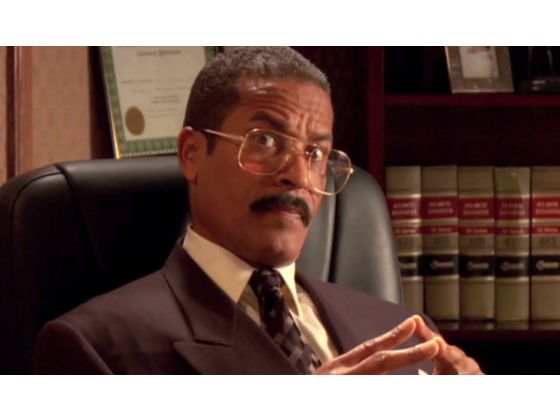
“Listen to me: a law school calculated to make students feel good about themselves is as ridiculous as a Marine boot camp designed to make enlistees feel good about themselves. Law students, God help us, will one day be lawyers. When they are, nobody will care about their self-esteem. The prosecutors seeking to jail their clients will not be seeking to foster a sense of community. The opposing civil lawyers seeking to bankrupt their clients will not be promoting a culture of dignity and respect. Most law practice is about conflict. It’s a bloody, ugly street fight. Self-esteem borne of law-should-be-harmony is useless to clients. The only self-esteem useful to clients is self-esteem earned by hard work, determination, command of the subject matter, and the willingness to stand up to adversity. People who object to law professors being wickedly Socratic, and classmates being cutthroat, are missing the point. If you’re put off by a Socratic professor, Mr. Fluffy Bunny, a run-of-the-mill judge is going to make you soil yourself. If nasty, backstabbing classmates upset you, the first time you get into a nasty letter-writing campaign with an opposing counsel you’re going to have a breakdown. Law school is not a fucking spa day. It’s training to stand between your client and whatever the world throws at him.”

—– Ken, the astute lawyer/sage/Don Rickles of the libertarian social commentary website Popehat, excoriating the University of St. Thomas Law School for, among other things, extolling the values of self-esteem, collaboration, harmony and community among their students.

What Ken is really talking about is zealous representation, that once universally accepted bedrock of the  lawyer’s duty that has gradually fallen into disfavor with many academics and lawyers. Continue reading

You Thought THAT Was Outrageous Sexual Harassment? No, THIS Is Outrageous Sexual Harassment…

Yes, disbarred judge Ted Abrams’conduct was terrible.  His harassing behavior towards a female lawyer, however, was chivalry itself compared to what Derek Wright, the owner of Pleasant Grove-based Lone Peak Controls and D& L Electric Control Company, subjected the company’s office manager to during her five year tenure, before he fired her for complaining about him.

In her sexual harassment law suit filed this week, Trudy Nycole Anderson alleges that Wright…

  • Gave her a Monday-through-Friday “schedule” outlining what she should wear, with “Mini-skirt Monday,” “Tube-top Tuesday,” “Wet T-shirt Wednesday,” “No bra Thursday” and “Bikini top Friday.”
  • Repeatedly asked her about her breast size and talked about her breasts in front of other employees.

Now THIS is Sexual Harassment!

The Arizona Supreme Court has both censured  former municipal court judge Theodore “Ted” Abrams, prohibiting him from serving as a judge again, and disciplined him as an attorney, suspending his law license for two years. Why, you may well ask?

Well, it seems that before he resigned as a judge there was  a bit of a woman problem: if an attractive woman appeared before Abrams as an attorney, she had a problem.

The State Bar of Arizona determined that Abrams, while serving as a judge, “engaged in a prolonged and relentless effort to sexually harass a female assistant public defender who appeared in his court,” as well as, “in a gross misuse of his power, … inflict[ing] his retribution from the bench for the victim’s refusal to yield to his pursuit.”  Over a 14-month period, Abrams sent the woman at least 28 voice mails and 85 text messages, many of which were sexually overt, including one in which he described a sex act he wanted to perform on her. He repeatedly pressured the lawyer for sex, made slurping noises—I’m pretty sure there is something in the judicial code of conduct that prohibits that-– and once fondled her buttocks. Continue reading

“Congratulations! Here’s a Bonus for Doing Such An Outstanding Job Investigating That Fiasco That Happened Because You Screwed-Up In The First Place!”

"Iolanthe's" Lord Chancellor has nothing on me: his nightmare* was only "love unrequited." Mine is the SEC.

[  I read about the following outrage before going to bed last night, and vowed to write a post on it in the morning. It literally gave me nightmares and an upset stomach, so disrupting my repose that I gave up and headed to the keyboard. I am writing this at 4:30 AM. I have never written anything at 4:30 AM before, but I have learned something useful for future reference: I’m not in a good mood then.]

And here we have a prime example of why 1) many people don’t trust the Federal government and 2) why they are 100% right to feel this way.

I’ll take “Incompetence, Failure of Accountability and the Appearance of Impropriety” for a thousand, Alex!

SEC  Inspector General H. David Kotz has issued a thorough report on the U.S. Securities and Exchange Commission, revealing that an employee who investigated Bernie Madoff in 2005 and 2006 and failed to notice that he was running a $50 billion Ponzi scheme was later rewarded by the agency with a cash bonusfor his fine work on the Madoff scandal after it was discovered, the lives ruined, the damage done. Continue reading

Comment of the Day: “The Folly of Sacrificing Integrity to Kindness in Competitions”

Today’s Comment of the Day is on the post about using awards and honors to make the less fortunate and unqualified feel good, as Michael carries the issue into the related matter of grading:

“I run into this every semester. I can’t give anyone a C in a class. I can’t give anyone a B in a class. You have to earn it by demonstrating that you understand and can apply the relevant material. You may be the most attractive, most charitable, most loved person on the planet, but if you can’t do this work, you can’t pass. Usually, they still don’t understand, and I have to give a speech I title “What a C student does.”

“Where do my ‘C’ students go? What do ‘C’ students do after they leave? ‘A’ and ‘B’ students go to graduate school, medical, and dental school. They may hold people’s lives in their hands in their careers. But what about the ‘C’ student? Surely there is no harm in letting someone squeak by with a ‘C’? Well… they test your water to make sure it is safe. They determine what amounts of new pesticides can be used without causing harm. They run the tests that determine if you raped someone or if that really was a bag of cocaine in your car, or just some borrowed powdered sugar (as you insisted). My ‘C’ students work jobs where people die if they mess up. The ‘C’ stands for competence. If you don’t have it, you don’t get a ‘C’. Continue reading

Comment of the Day: “Scent Branding, Mind-Control, and Ethics”

Elizabeth was the first one to dive into this murky, interesting, science fiction/ “Brave New World” issue that I examined in  “Scent Branding, Mind-Control, and Ethics,” on a topic that confused me more the longer I considered it. What resulted was unusually long, perhaps accounting for the lack of comments, and Elizabeth’s reaction is long as well, but worth reading. There is something potentially sinister here, or perhaps around the corner—or just in our imagination and fears. Scent manipulation, and all it implies, is in the wilderness of ethics, where human nature, science and commerce meet.

Here is the “Comment of the Day”:

“I agree this is a complicated issue.  As you said, restaurant smells (natural, I assume) tend to make people hungry (or more hungry than they really are), as do waiters with large platters of beautiful food which often encourage patrons order more, different, and perhaps more expensive food than what they may have had in mind.  The goal of the restaurant is to sell food:  if memory serves, it’s only been in the last 20 years or so that restaurants had at least parts of their kitchens open to the dining area so “good smells” could waft out from them.  My memory from childhood of elegant restaurants were the multiple green baize doors that completely closed the kitchen off from the dining room.  So was this change intentional or simply simpler and cheaper as restaurant designs?  I don’t know, but it’s different. Continue reading

Ethics Hero: Jim Brown

Wne Jim Brown talks, people tend to listen.

I have mixed feelings about Jim Brown, the legendary N.F.L. running back and former movie star (“The Dirty Dozen”), stemming from the fact that loving a woman and beating her up never seemed to be mutually exclusive actions to him. His domestic problems aside, however, Brown has also periodically used his fame and status to draw needed attention to important issues, and he has just done so again, calling out the N.F.L. players’ union for apparently failing to make the welfare of retired players part of their impending deal with the league’s owners.

“Why isn’t the union talking about health care, better health care?” Brown recently told reporters. “Why aren’t they talking about better pensions? You definitely need a health plan that goes beyond five years; you definitely need a better pension plan.” Continue reading

Attention FCC: What the News of the World Scandal Reveals About Rupert Murdoch

Rupert Murdoch

Concluding that the News of the World scandal in Great Britain shows that Rupert Murdoch has less than a sufficient reverence for ethics, journalistic or otherwise, is an intellectual achievement well within the powers of Forrest Gump.  Concerns about the integrity of the Australian media magnate have been voiced since he first stuck his kangaroo’s nose in the American media tent. As is too often the case here, legitimate points were minimized by their linkage to political bias: was Murdoch bad for American journalism because he was unethical, or because he was conservative? His most vocal critics, being from the Left, regard the two as the same, which allowed Murdoch to accumulate defenders on the political right who should have been just as wary of his methods and ethical deficit.

Now his flagship tabloid, The News of the World, has folded in the midst of a still-unfolding scandal. You can read details here; the important thing to know is that the tabloid was essentially lawless. Continue reading

Thanking Dick Williams…Finally

The late Dick Williams, doing what great leaders do

If you are not a baseball fan, or under the age of thirty, you probably never heard of Hall of Fame manager Dick Williams, who died yesterday at the age of 84. I never met Williams myself, but I have been indebted to him for four decades. I never told him the immense difference he made in my life, just by doing his job.

In the winter of 1967, I was a devoted fan of my home town team, the Boston Red Sox, and had been since 1962.  Over that period I had listened to every single baseball game on my transistor radio when a game wasn’t on TV, which was most of the time, or when I wasn’t at the game, which was almost always the case. I was the only person I knew who followed the team, and for good reason: it was torture. The Red Sox were hopelessly mediocre on the way to awful, and hadn’t had a winning season in more than ten years.

It is a great character builder to follow the fortunes of a terrible baseball team. Almost every day, for six months, you are let down, and yet return to the scene of your despair the next, attempting to muster hope while steeling yourself against likely disappointment. You find yourself finding things to appreciate other than winning: the gallant veteran player who “plays the right way” (Eddie Bressoud, shortstop, 1962-1965); the exciting rookie who gives promise of a better future (Tony Conigliaro, right fielder—rest in peace, Tony); the unique talent who is worth watching for his own sake (Dick Radatz, relief pitcher, 1962-1966). These things help, but following a perennial losing team and caring about them is like being punched in the gut four or five days a week without knowing which day you’re getting it.

Since 1965, I had always reserved seats for the first day of the season and one of the last two home games, just in case those last games would be crucial to a (hahahaha!) Red Sox pennant drive. This was especially pathetic, since the team was getting worse. They had finished in a tie for 9th place in 1966, and as the 1967 season loomed, Vegas had them installed as 100-1 underdogs to win the American League pennant. In truth, the odds should have been longer. Nonetheless, I wrote the Red Sox and got my tickets, this time for the next to last day of the season.

The team was full of rookies and near rookies, and appropriately had hired a minor league manager, Dick Williams, to be the new skipper. Williams was something else, however: he was a gifted leader. One day, in the middle of Spring Training, a Boston scribe asked the new manager what the prospects were for the upcoming season. Would the team escape the cellar? Would there be forward progress? Williams’ answer was instant front page news:

“We’ll win more than we lose.” Continue reading

Ethics, Porn, and the Creepy Professor

The Ronald Ayers saga raises the intriguing, Weiner-esque ethical issue of whether a college professor being creepy is sufficient reason to fire him.

The former economics professor was fired by the University of Texas for viewing pornography on an office computer, which the University’s policies forbade. The chain of facts has the ring of Kafka: 1) a student claims he hears “sexual noises” emanating from Ayers’ office, which 2) is considered sufficient provocation (the professor denied the accusation that he was not “master of his domain” at work) for the school to search his computer, which 3) uncovers evidence that he looked at some pornographic sites, and 4) also that he searched for the term “teen,” which 5) the university deems sufficient to indicate that he was searching for child pornography, so 6) they fired him, after three decades and tenure on the faculty.

University records say Ayers at first denied the allegations that he viewed pornography, but when confronted with a printout of his computer records, admitted that it may have happened “at the end of a long work day.” Ayers later told administrators seeing the porn was for “academic research.”

Uh-huh… Continue reading