Just So We’re Clear: Some School Sexual Predators Are More Unethical Than Others

lunchladyJanelle Foley, 32,  who works in the cafeteria of Chapman Middle School in Weymouth, Mass., was charged with four counts of statutory rape for having sexual relations with a 15 year old student at the school during the Thanksgiving and New Year holidays.

This is statutory rape, and wrong, but approximately half as wrong as when the sexual predator’s target  is her (or his)  student rather than someone she glops mashed potatoes for in the lunch line. True, every employee in a school has to be worthy of some level of trust, but a teacher is blatantly misusing her authority and blurring roles to the detriment of education as well as social development when she exploits the position of teacher/role model/ authority figure/mentor for the purposes of sexual gratification. A lunch lady is just picking up horny teens. One is a professional breach and a sleazy crime. The other is a sleazy crime, and nothing more.

On the other hand, the role betrayal involved when a friend’s mother seduces her son’s underage friend is every bit as reprehensible as the acts of a predator teacher. I tend to think the Sexual Predator Lunch Lady is not a serious threat in our schools.

And where does “The Summer of ’42” land along this spectrum?

I ‘m not certain, but closer to the lunch lady than to the teacher, I think.

_______________________________

Pointer: Fark

Facts: Boston.com

Ethics Observations On Sticks, Leadership, And Chris Christie’s Vindictive Bridge Closing Scandal

Christie apologizes

Before we delve into the starting point for most ethics inquiries—What’s going on here?— a summary…

Last September, the Port Authority of New York and New Jersey closed all but one lane of the George Washington Bridge , horrifically tangling commuter transportation in Fort Lee, New Jersey, just across bridge from Manhattan. The lane closures  delayed emergency responders to four calls, and may have resulted in at least one death. New Jersey Governor Chris Christie’s office had attributed the lane closures to a traffic study.  But smoking gun e-mails emerged proving beyond the shadow of a doubt that the bridge closing was far more sinister: top Christie aides engineered the gridlock specifically to cause problems for Fort Lee, whose mayor had angered the Governor by refusing to endorse him for re-election. It was political payback of a particularly brutal and Machiavellian sort.

“Time for some traffic problems in Fort Lee,” wrote Bridget Anne Kelly, a deputy chief of staff to Christie, in an email on Aug. 13 to David Wildstein, Christie’s appointee at the Port Authority. Wildstein resigned in December after news of the scandal first broke; he has since refused to answer questions in a hearing on the matter, citing the Fifth Amendment. Christie fired Kelly yesterday, and in a long and emotional press conference, profusely apologized while insisting that he knew nothing of the plot, but accepted responsibility for the actions of his staff. The incident is attracting national interest because Christie, a Republican,  is an intriguing and controversial  potential candidate for a 2016 Presidential run.

Observations:

  • This is bad, and there is no defense for it. Government power should never be abused like this, by anyone. Distorting one’s duties to the public to harm members of the public out of such motives as spite, revenge, retribution, intimidation or personal and political gain is the moral equivalent of a crime.
  • In fact, it should be a crime. It can’t be, because the problem is that some degree of such distortions of the duty to act in the public’s best interest are essential political tools that cannot be jettisoned without undermining effective leadership as well. Politics works through the carrot and the stick, and the stick virtually always causes collateral damage. At every level of government, refusing to do what a powerful leader wants must have negative consequences, or nobody will do what the leader wants, and he or she will no longer be effective. That, in the end, hurts the public too–presumably more seriously than the short-term harm from political payback. Continue reading →

The Fifth Annual Ethics Alarms Awards: The Worst of Ethics 2013 (Part Two of Three)

Snowden

The Ethics Alarms review of a truly disheartening year in ethics continues with fallen heroes, ficks, fools and follies with Part Two of the 2013 Worst of Ethics awards….and there’s one last section to come. Be afraid..be very afraid:

Fallen Hero of the Year

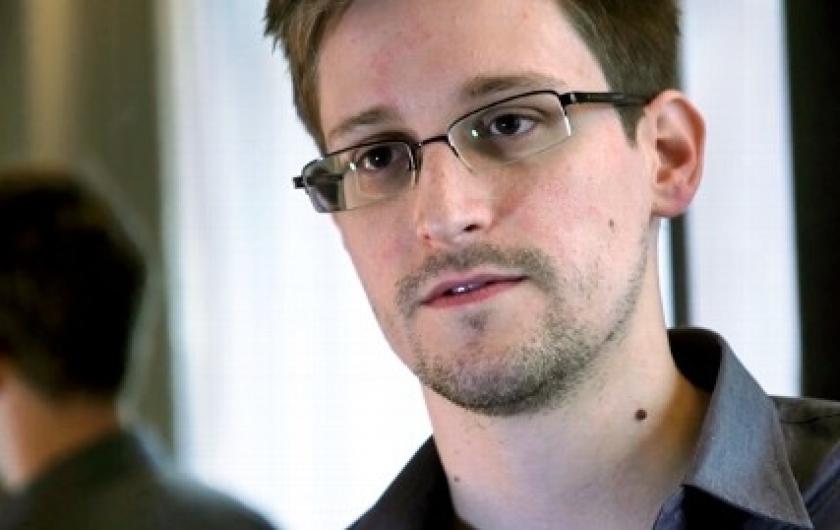
Edward Snowden, whose claim to civil disobedience was marred by his unwillingness to accept the consequences of his actions, whose pose as a whistle-blower was ruined by the disclosure that he took his job with the intention of exposing national secrets, and whose status as a freedom-defending patriot lies in ruins as he seeks harbor with not only America’s enemy, but a human rights-crushing enemy at that. The NSA’s over-reach and mismanagement is a scandal, but Snowden proved that he is no hero.

Unmitigated Gall of  The Year

Minnesota divorce lawyer Thomas P. Lowes not only violated the bar’s ethics rules by having sex with his female  client…he also billed her his hourly fee for the time they spent having sex , a breach of the legal profession’s rule against “unreasonable fees.” Yes, he was suspended. But for not long enough…

Jumbo Of The Year

(Awarded To The Most Futile And Obvious Lie)

Jumbo film

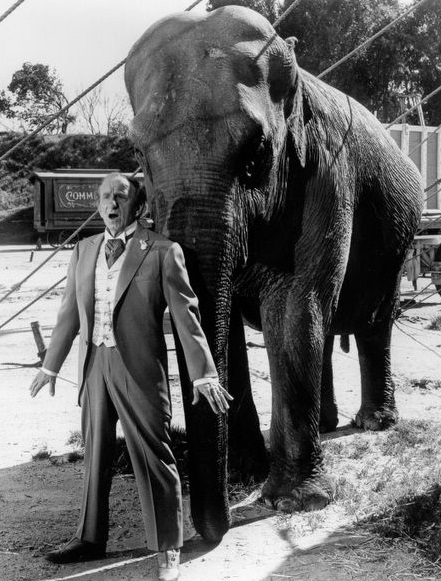
“Now, if you had one of these plans before the Affordable Care Act came into law and you really liked that plan, what we said was you can keep it if it hasn’t changed since the law passed.”

—–President Obama

2013 Conflicts of Interest of the Year Continue reading →

The Strange Case Of The Brain Dead Mother-To-Be

In happier times; Mr. and Mrs. Munoz with their first child. And she really wanted her second child to die with her?

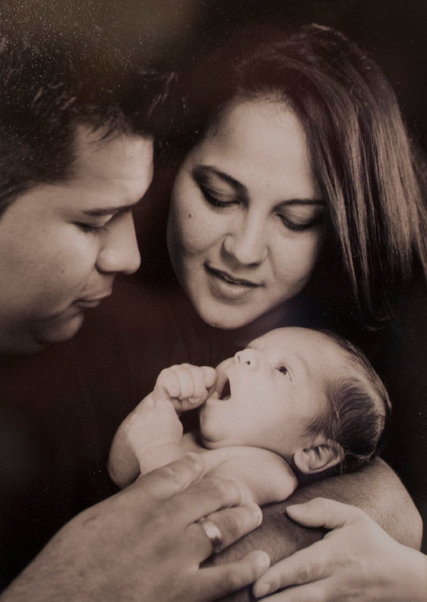
In happier times; Mr. and Mrs. Munoz with their first child. Did  she really want her second child to die with her? Is that a respectable request, if she did?

Dead people are causing a lot of anguish in the ethics world lately. First, a family wants to force a hospital to keep their brain-dead, which is to say, dead, daughter on life support just in case a miracle occurs, while the rest of society pays for it. Now, in Texas, we have a true brain death dilemma that once again highlights the problem with U.S. abortion law and ethics.

Texan mother Marlise Munoz was 14 weeks pregnant with her second child when she collapsed and later died from a blood clot in her lungs. Her parents and husband told the intensive care unit at  Fort Worth’s John Peter Smith Hospital to honor her stated wish not to be left on life support, but the hospital has so far refused to comply with their instructions.  Texas is one of 31  states that prohibit medical officials from cutting off life support to a pregnant patient. Now, more than a month after her brain stopped functioning, the late Marlise Munoz is still connected to life-support machines, and her unborn child is now in its 20th week of development. Continue reading →

“Jack Reacher” Ethics, Or Why It’s No Fun Going To Movies With Me

Jack ReacherI thought the Tom Cruise action film “Jack Reacher” would be a good way to escape from an aggravating day at the ethics grindstone, but no. It was rapidly apparent that this would be one of these movies with a sociopathic vigilante hero—Reacher (Cruise) is kind of a cross between Steven Segal and Billy Jack, summarily executing bad guys and completely uninterested in nuances like trials. The character, from the pen of British writer Jim Grant, is supposed to be 6’5″ tall and weigh about 250, so having the diminutive Cruise play him is a bit like having Danny DeVito play Fezzik in “The Princess Bride.”

The main annoyance was the typical persistent misrepresentation of legal ethics, especially the attorney-client privilege. Reacher is dark, free-lance, drifting Mr. Fix-it, and he is engaged by lawyer Helen Rodin as an investigator to prove her client, an ex-military sniper who is being prosecuted by her father, the DA, for apparently gunning down five random innocent victims in a shooting spree, is something more than a mad dog killer. In their initial conversation about the case, Cruise asks if what he is telling her is privileged. She assures him that it is, but the sequence is misleading, for Reacher and for the audience. Continue reading →

Betrayal: Robert Gates Gets Even

dutygates

When General George Marshall, World War Two military leader, former Secretary of State, and architect of the Marshall plan, was offered a million dollars to write his memoirs in the 1950s, he demurred, saying that there was no way he could write a truthful memoir without undermining people still at work in the government and military.

And then there was David Stockman…Paul O’Neill

…and Robert Gates.

Bottom line: these people betray their colleagues for money, and often, as is Robert Gates’s case, out of spite. Former Defense Secretary Gates, like the others, was given an opportunity to serve his country in a high executive branch position. He was privy to policy discussions and the inner workings of the administration. He was trusted. To reveal details of his tenure while the administration he worked for is still in office, done in a way designed to provoke criticism and embarrass his former associates and boss, is the height of disloyalty, and a breach of implicit confidentiality.

The honorable and ethical way to write such a book would be to wait until it could not actively interfere with the work of the Executive Branch. The people may have a right to know, but they do not have a right to know everything immediately. People in high policy-making positions must be able to be themselves, express opinions, and have productive meetings with the confidence that those they work with are not collecting notes for a future Book-of-the-Month sellout. Books like Gates’s undermine that trust, make it more difficult to get candid and controversial opinions and ideas into the decision-making process, and ultimately hurt all of us. The former  Secretary and those who appreciate the additional ammunition for administration-bashing can assemble a lot of rationalizations for the  book, but they all boil down to “Everybody Does It,” the most threadbare and cowardly rationalization of all.

The ethical thing would have been for Gates to write the book in a few years, or not to write it at all. The ethical conduct for the reading public is to discourage betrayals, no matter who is the one betrayed, by sending such books to the remainders bin.

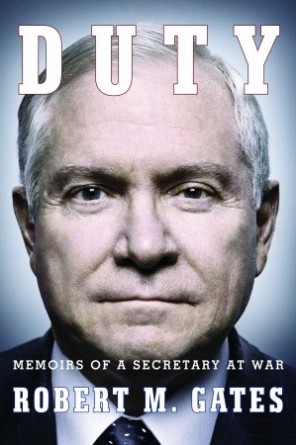
I suppose I should mention that except for the substitution of Robert Gates’ name for that of Paul O’Neill, and replacing “Treasury” with “Defense,” every word above was written in 2004, when I condemned the sell-out of fired Bush Treasury Secretary O’Neill, who had just provided the information used in a Bush-bashing tell-all called “The Price of Loyalty: The Education of Paul O’Neill.” (Yes, the old Ethics Scoreboard is coming in handy today.) Every word applies with equal force to the new memoir by Gates, who was President Obama’s Secretary of Defense and whose current tell-all attack has set Washington buzzing, except that Gates’s conduct is ethically far worse. Continue reading →

Michael De Beyer, Like Don Bedwell, An Exemplary Ethics Hero To Inspire Us

Mathis and hero

Writing about my favorite Ethics Hero of all time, Don Bedwell, in 2005, I began, “There are special and rare people whose ethical instincts are so pure and keen that they can make the rest of us feel inadequate.” Like Don Bedwell, Micheal De Beyer is such an individual.

Brittany Mathis, 19, works for De Beyer at his  Kaiserhof Restaurant and Biergarten in Montgomery, Texas, . Her mom and older sister work at the restaurant as well, so she would describe her boss as a family friend. In December, Brittany learned that she has a 1.5 inch brain tumor  She can’t afford to find out whether the tumor is benign or malignant, but her father died from a similar tumor years ago, so her situation is dire. She doesn’t have health insurance.

De Beyer has decided to sell his restaurant, which he opened more than 15 years ago and has an estimated worth of $2 million, to pay for whatever medical treatments are necessary to save Brittany’s life. “I’m not able to just sit by and let it happen,” De Beyer told a local paper. “I couldn’t live with myself; I would never be happy just earning money from my restaurant knowing that she needs help.” Continue reading →

The Fifth Annual Ethics Alarms Awards: The Worst of Ethics 2013 (Part One)

This is the first installment of the Worst.  It says something, and not something happy, that this segment of the year-end awards are more than twice as voluminous, and far more competitive, than the “Best” of 2013 ethics. Well, nobody said it would be easy….

Ethics Train Wreck of the Year

trainwreck

Obamacare, a.k.a Affordable Care Act. This is quite an achievement, as there were at least two other three Ethics Train Wrecks rolling along in 2013 that would have been easy victors in a less horrible year. One of them, The Trayvon Martin- George Zimmerman Ethics Train Wreck, was last year’s winner, and still wreaked ethics carnage across the culture, thanks to Zimmerman’s trial (which never should hev been brought), the biased media coverage, the incompetent prosecution, the inept judge, and then afterward, the ignorant and/or racially motivated attacks on the jury for doing its job well and fairly against overwhelming odds. Yet as bad as this hangover from 2012 was, the Sandy Hook Ethics Train Wreck was arguably even worse. The news media decided to go Soviet and abandon all pretense of objectivity, essentially becoming an Obama Administration propaganda tool for gun control. Elected officials lied their heads off; so did the aroused NRA. Gun owners talked and behaved like they were about to be Gulaged. Legislators shamelessly used the grief of victims to stampede public opinion; children became props; fake statistics were everywhere; brain-damaged Gabby Gifford was programmed to read child-like messages as if they were the conclusions of research papers. The President’s total lack of political leadership skill again came front and center, then, when he had failed to do what he promised to do, the opposition was vilified by celebrities like Jim Carrey, who called them murderers and worse.

But the Affordable Care Act lapped both of these. It revealed itself to be a five-year long train wreck that just took a break after an earlier stretch where the bill was passed without due diligence by its supporters and using a cynical by-passing of due process. A Presidential lie intentionally devised to deceive the public was repeated for the five-year span, and then exposed when the law began to take affect….but not before the law inspired Republicans to force a reckless and irresponsible shut-down, a mini-train wreck within the train wreck.  The website debacle was initially spun by the news media (not working worth a damn isn’t a “glich”), then the evidence of near criminal ineptitude became impossible not to report. The indisputable evidence that the President of the United States had sold a program under false pretenses came to light, prompting dozens of politicians, bloggers, pundits and reporters to destroy their credibility forever (I hope) by desperately trying to either rationalize the lie ( “the ends justify the means”), call it something other than what it was (The New York Times’ disgraceful “incorrect promise” was one low point), or simply deny that it was a lie at all (Democratic Chair Debby Wasserman Schultz, setting a new low for personal dishonesty, itself an achievement in her case). Then, when the public pressure and political fall-out became unbearable. the President just began amending the provisions of his own law on the fly, except that it was the nation’s law, and it’s unconstitutional to do that—this, after the mantra from Democrats and the news media during the shut-down debate was that the ACA was “settled law.”  HHS Secretary Sibelius misled Congress, the White House denied that her stated goals were goals once it was obvious they wouldn’t be met; and nobody was held responsible for yet another Obama Administration debacle. And there’s a lot more, with the train wreck still moving at top speed.

Fraud of the Year

Iowa State University biomedical sciences assistant professor Dong-Pyou Han, who resigned after admitting he tainted blood samples to get desired outcomes in research animals, allowing him to claim a break-through in the effort to develop an AIDS vaccine. The National Institutes of Health had awarded Han’s research team $19 million in multi-year grants.

Incompetent Elected Officials of the Year

  • Elected Body (National): House Republicans, who staged a wholly useless, expensive and damaging government shut-down on “principle,” without ever articulating what that principle was sufficiently for anyone responsible to agree with them. Runner-Up: The California House Legislature, which passed a law allowing illegal aliens to practice law.
  • National Elected Official:  President Obama.  From being incapable of working with Congress, to refusing to fire incompetents, to not knowing what was going on in his own administration, to drawing red lines he wasn’t willing to defend (and then advocating killing people just to show he was willing to defend them), to undermining the trust and faith in both his office and himself by uttering unequivocal lies, President Obama had one of the worst years of self-inflicted miscalculations, errors, failures and reversals of any U.S. President in history. I’m sorry to have to say it, but it’s true.
  • Local Elected Official: Storey County (Nevada) Assemblyman Jim Wheeler (R). Wheeler told a group that if his constituents demanded it, he would vote (with a heavy heart)  to reinstate slavery, as he felt doing so would be his duty as a representative. Runner-up: Maryland House of Delegates Member Don Dwyer (R), who after a drunk driving and drunk boat piloting episode, the latter injuring several people, blamed his conduct in part of feeling betrayed over his colleagues approval of gay marriage in Maryland.

Sexual Harasser Of The Year Continue reading →

Here’s The Ethics Lesson From The Hall Of Fame Voting Results Tomorrow…

HOF

And that lesson is: sportswriters have no clue when it comes to ethical analysis, or any other kind of analysis, really.

Tomorrow the results of the Major League Baseball Hall of Fame voting will be announced, and those former stars receiving at least 75% of the vote will be officially enshrined as immortals. Every year before the steroid era, the voting was preceded by weird arguments that made no sense, like the one about whether a former player should be a “first time electee.” Some writers would concede that a given player was great enough for the Hall, but not vote for him because “he wasn’t good enough to get in on the first ballot.” This was, and is, ridiculous, and unfair. The question is, “Was this player great enough to deserve enshrinement, when the standards are unchanging?” It’s a yes or no question. “Maybe next year” is not a valid answer.

Thus I suppose that it should be no surprise that these same clods, faced with some really difficult ethical lines to draw in the wake of the so-called steroid era, show themselves to be not merely dunces, but ethics dunces as well. I just heard a sportswriter, Marty Noble, tell a baseball talk show that he won’t vote for any player about whom there is any question whatsoever regarding whether he cheated with steroids, including doubts based on rumors, whispering campaigns, looks, suspicions and drug tests. But he still voted for some players, he says. Well, that’s just wrong, by his own standards—he can’t be 100% sure about anyone. He also said that while he can vote for up to ten players, and agreed that there are more than ten players this year who have strong Hall credentials, he’s only voting for three. Why? Because, he says, the induction ceremony is too long.

Yes, he’s an idiot. Continue reading →

Ethics Hero: Former Brooklyn Judge Frank J. Barbaro (Zimmerman Furies: Is This Your Future?)

We can hope.

From the NY Times...

 The judge’s conscience gnawed at him a little more every year after he retired from the bench. With every news article he read about a wrongful conviction, Frank J. Barbaro, the former Brooklyn judge and assemblyman, would return to a particular murder case in 1999, and question whether he had made the right decision to send a man to prison for 15 years to life. Not long ago, Mr. Barbaro, 85, decided to contact the lawyer for the man, Donald Kagan. He got a transcript of the trial, during which Mr. Kagan had waived his right to a jury and put his fate in Judge Barbaro’s hands.

“As I read it, I couldn’t believe my eyes,” the former judge said in an interview. “It was so obvious I had made a mistake. I got sick. Physically sick.”

Mr. Barbaro’s change of heart led to a highly unusual spectacle this week in a Brooklyn courtroom: He took the witness stand in State Supreme Court to testify at a hearing that his own verdict should be set aside. His reason was even more unusual: As a die-hard liberal who had fought as a politician against racism in Brooklyn and weathered the race conflicts in Bensonhurst, he said he had been biased against Mr. Kagan because he was white and the shooting victim, Wavell Wint, was black.

“I believe now that I was seeing this young white fellow as a bigot, as someone who assassinated an African-American,” Mr. Barbaro testified on Wednesday before Justice ShawnDya L. Simpson. He added: “I was prejudiced during the trial.” Continue reading →