Rationalizations From The Victim Of A Tragedy

A week ago, I briefly discussed the report on the 2017 death of major league pitcher Roy Halladay who crashed his plane into the Gulf of Mexico on Nov. 7, 2017. The 13-page report said Halladay had 10 times the recommended level of amphetamine in his system, plus an antidepressant, a muscle relaxant, a sleep aid and morphine. He was also attempting aerial acrobatics and stunt flying.
Now his widow, Brandy Halladay, has issued a statement through the now Hall of Fame pitcher’s last team, the Philadelphia Phillies. She wrote,
“Yesterday’s NTSB report on Roy’s accident was painful for our family, as it has caused us to relive the worst day of our lives. It has reinforced what I have previously stated, that no one is perfect. Most families struggle in some capacity and ours was no exception. We respectfully ask that you not make assumptions or pass judgment. Rather, we encourage you to hug your loved ones and appreciate having them in your lives.”
From one perspective, it seems unkind to be critical of the lament of a grieving family member in the wake of such a tragedy. From another—mine—I can’t let public endorsements of multiple rationalizations like that one pass. I just can’t, and I have an obligation as an ethicist not to. It’s a dirty job but someone has to do it: the reason so people make terrible decisions by defaulting to rationalizations rather than ethics is that the culture marinates them, day after day, in these excuses for bad conduct. After a lifetime of hearing the contrived arguments , most people accept such self-deceptions as true. In turn, they engage in conduct, or excuse conduct in others, that causes extensive harm. Continue reading
A Professional Ethics Case Study…From Broadway
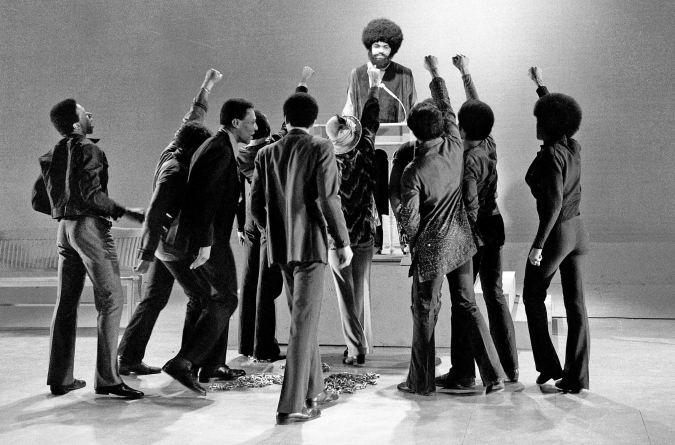
Before you read the post, can you guess who that actor is in the Afro?
Lately I’ve been helping a lot of lawyers seeking to create so-called Rule 5.4 law firms in the District of Columbia. In these firms, unique to the District, non-lawyers can be full partners. This means that they can share in the firm’s fees, which is something otherwise forbidden and a major ethics breach in the 50 states. Lawyers cannot, must not, dare not share their fees with non-lawyers…unless those non-lawyers are partners in the same firm.
There are certain requirements for that to happen, and the main one is that the non-lawyers must be supervised by a lawyer in the firm to ensure that the non-lawyers don’t engage in conduct that would be unethical for a lawyer. The legal profession is justifiably wary that the unique priorities of the legal profession cannot be easily absorbed or understood by those who have been trained and influenced in a different culture.
It is right to be wary. Lawyers have enough trouble avoiding violations of their own rules; doctors, accountants and others, steeped in different alignments of values, can’t just shift gears like suddenly being in a law firm is like test driving a sports car. For so-called “non professionals,” a category that is increasingly contentious, it may be even harder to adjust, if not impossible.
Lawyers are often overly optimistic about their non-lawyer partners’ ability to learn the importance of keeping all client confidences, not crossing over into the unauthorized practice of law, sensing possible conflicts of interest and illicitly soliciting clients, or engaging in misrepresentation and deceit, to name just a few. Lawyers tend to think that all professional ethics should be fungible. It’s a dangerous misconception, and there is a little cautionary tale from, of all places, Broadway, that illustrates it.
It has been mostly forgotten, but in 1969, a musical called“Buck White” opened at the George Abbott Theater. Its unlikely star: draft-resisting ex-heavyweight boxing champion Muhammad Ali.
Yes, you read that correctly. Continue reading
The Dumb Ad-lib/Malicious Reporting/Confirmation Bias/Big Lie Cycle, ‘Inject Disinfectant’ And ‘Shine Light In The Body’Chapter

Boy, am I ever sick of these stories.
The pattern is so familiar its completely familiar and would be boring if it weren’t so annoying. President Trump ad-libs something that popped into his head, using his unique stream of consciousness/if James Joyce had a 1000 word vocabulary version of communication. The news media rushes to interpret it in the most negative way possible, and reports that as what he both said and meant. Democrats, “the resistance” and especially social media addicts who barely have vocabularies over 1000 words themselves rush to say and write that the President is a Nazi, or racist, or moron, based on the deliberately misleading reports by people starting from the assumption that he is all three….the essence of confirmation bias.
Then people like me, being reasonable, public spirited and unbiased, point out that this is not a fair interpretation of what he said, whereupon such people are attacked as enablers of Nazis, racists and fools. Even after the original report is shown to be malicious fake news or close to it (my position is that if it’s almost fake news, it’s fake news), politicians, and unscrupulous pundits like Joe Scarborough, and your Trump Deranged friends and mine continue to repeat them. The President said that the white supremacists were “good people.” He said that Mexicans were rapists. He said the Wuhan virus was a hoax. Now, thanks to yesterday’s blather, they will be saying that he told people to “inject” or drink bleach and disinfectant as a cure for the virus. Continue reading
No A Study Did Not Prove That Trump’s “Touted” Drug Didn’t Work. Not Exactly Fake News, But Close Enough.

Salon: Trump-touted hydroxychloroquine may increase risk of death from COVID-19; “largest study yet finds no benefits but higher deaths,”
CNN: Study finds no benefit, higher death rate in patients taking hydroxychloroquine for Covid-19.
Fox News: COVID-19 treatment hydroxychloroquine showed no benefit, more deaths in VA virus study
The Washington Post wrote, “On Tuesday, a new government study was published suggesting the drug didn’t offer any benefit in fighting covid-19, the disease caused by the virus, and worse, that its use was correlated with more deaths.”
To be fair to the Post, at least it said that the study should be be viewed “with caution,” and provided a link to the study, not that most of its readers would actually read it. If they had, they would have realized that the study was wildly over-hyped in the media, and didn’t really “suggest” anything of the sort. Once again, this was another example of the news media playing to the confirmation bias of those who want to see the President be wrong. Are they cheering for the pandemic to do as much damage as possible? I refuse to believe that, but some of them sure manage to sound like they do.
I wasn’t going to discuss this tonight, but a smart, usually fair Facebook friend wrote a false description of the study calculated to appeal to the Trump Deranged. I don’t think he would have done that if he had read it, but he hates Trump too, and he doesn’t think the news media is biased—they agree with him, after all, so they must be fair– so he’ll trust the headlines, or the spin, every time. Continue reading
Comment Of The Day: “Facebook Users Are Actually Posting This. It Shows Scrambled Ethics Alarms.”
It’s story time, courtesy of Steve-O-in -NJ, who was inspired by the obnoxious, hopefully fake internet message going around the web purporting to be a dressing-down of “inconsiderate” shoppers who “browse.” He recounts a related episode I apparently missed, with trenchant commentary.
Here is Steve-O-in -NJ’s Comment of the Day on the post, “Facebook Users Are Actually Posting This. It Shows Scrambled Ethics Alarms.”
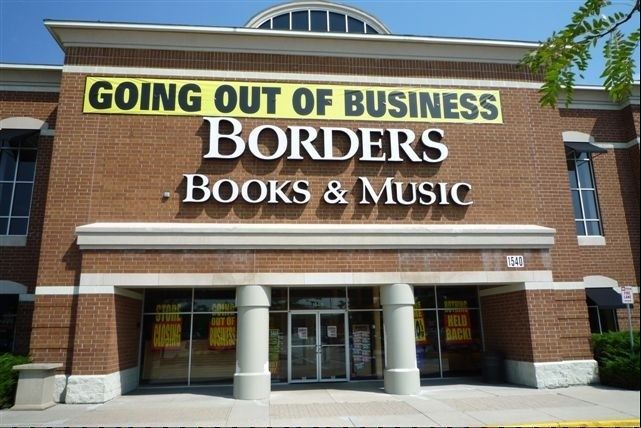
It reminds me of the list some bitter soon-to-be-former employee of Borders Books and Music wrote on a whiteboard and put up right before the whole chain closed in 2011 due to various factors, mostly the expansion of amazon and missing the boat on the e-reader market. I’ll run through it, adding my own commentary:
Things you never knew about Borders Employees:
- We hate when a book becomes popular simply because it was turned into a movie.
What, so it means you’ll sell more of that book? How does that hurt you?
- It confused us when we were asked where the non-fiction section is.
It shouldn’t. Anyone older than eight knows the difference between fiction and non-fiction. Yes, non-fiction is pretty broad, but that’s easily answered with a question to try to narrow what the person is looking for.
- Nicholas Sparks is not a good writer … if you like him, fine, but facts are facts.
No, that’s your opinion, which counts for exactly nothing here. Just who made you, a skinny, bored, can’t-be-bothered-to-do-more-than-the-bare-minimum, clueless twenty-something, an authority on what constitutes a good writer? Your job is to sell books, not critique them, and certainly not to pass judgment on customer choices. You want to become a book critic, see if the local paper is hiring.
- We greatly dislike the phrase “Quick question.” It’s never true. And everyone seems to have one.
Then get a job flipping burgers. Answering questions is part of the job.
- Your summer reading list was our summer reading NIGHTMARE. Also, it’s called summer reading, not three days before school starts reading. Continue reading
Wuhan Virus Ethics Updates, Part 1

1. Why keep calling it the Wuhan virus? Because the largely successful news media and political correctness assault on the completely legitimate (and non-racist) label continues to bolster Chinese Communist propaganda and blame-shifting, and because the effort emerged as yet another use of Big Lie #4: “Trump Is A Racist/White Supremacist.”
As for me personally, I will keep using the term because I resent being told that what cannot possibly be racist is racist, especially when my capitulation enables similar political correctness bullying. See the Third Niggardly Principle.
2. Because it’s so darn difficult to maintain social distancing while playing tennis... About 200 yards from my home in Alexandria, Virginia, the public tennis courts have their nets removed by another proto-fascist. Yesterday, I saw two people playing on one of the courts using a self-rigged net. Good for them.
3. The problem is, you can’t force bank employees to come to work. Our bank, a large national chain, has all of its offices closed in this area, Banking is certainly an essential service, but the fact is that you can’t do banking completely remotely, though the bank is pretending you can. Its website asks for a social security number at the same time as scammers are sending out fake emails that lead you to an authentic-looking clone of the bank’s site so they can steal your personal data. Try to call to clarify or address any problem, and you get a message about how wait times are longer than usual. I’ll say they are: to try to get a fraudulent $4000 charge to our account cancelled, I had to wait for an hour and 40 minutes, then be transferred to wait another 35 minutes, then be cut off when a transfer failed.
Meanwhile, the bank’s on-hold music is played at an unbearable volume, and is an endless loop of some hellish arrangement of a melody that would have been rejected for a theme park ride. I am certain that the recording is designed to make you hang up, or, in the alternative, go crazy and run into the street naked. It is exactly like the deliberately uncomfortable seats and garish color schemes fast food outlets use to ensure you vacate the premises the second you finish eating. I swear that there cannot be a single person on the globe who would find this music anything but torture. The genre is “loud, abrasive, repetitious semi-music,” and there is no market for that. It makes hip-hop seem like Chopin.
Banks are essential, and rather than stopping stores from selling “non-essential” items, the government ought to require really essential services to have open outlets to serve depositors and bank customers experiencing their own emergencies. If a 7-11 clerk can come to work, so can a bank employee. Banks have my property within their control, and in exchange for the privilege, they are obligated to respond when I need service related to that money. Continue reading
Baseball May Be Missing, But Baseball Ethics Marches On; The MLB Verdict On The Boston Red Sox Sign Stealing Allegations
If you are just joining us, the Houston Astros (if you don’t know that’s a baseball team, then none of this will make sense to you, and neither does the United States in all likelihood) were slammed by Major League Baseball after it was determined that the team, primarily through the efforts of then-coach Alex Cora and veteran player Carlos Beltran, systematically utilized cameras at home games to steal catchers’ signs to opposing pitchers and relay them to Astros batters during their at-bats. This, the investigation found, continued through the 2017 season, post-season and World Series, which the Astros won. (Ethics Alarms covered the cheating scandal from many aspects, here.) The punishment meted out to the Astros was substantial, though not as severe as some, including me, would have liked. I think the team should have been stripped of their 2017 World Championship.
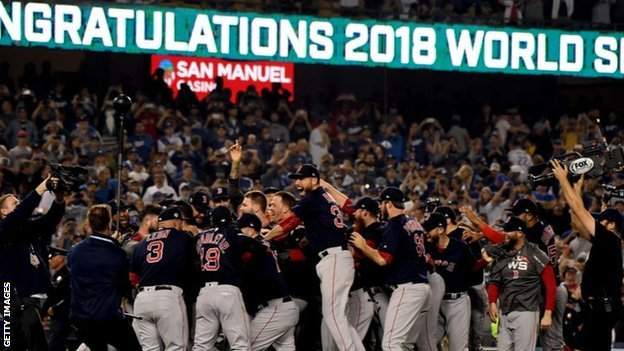
Shortly after the Astros scandal was first revealed by the baseball news media, the next year’s World Champions, the Boston Red Sox, were accused of another sign stealing scheme during 2018, one that involved using the team’s video replay equipment, which is near the dugout during games, to study the opposing team’s signs and relay them to batters. This seemed especially ominous since the bench coach who had been identified as the mastermind behind the Astros scheme in 2017 was the manager of the Red Sox in 2018, and had led them to a record-setting World Series run.
MLB interviewed Red Sox players and management in a mysteriously long investigation, and only yesterday revealed the results and the sanctions. Boston’s video replay system operator J.T. Watkins was suspended without pay for one year, and banned from holding that same position with any team. Boston was stripped of the its second-round draft pick in the2020 amateur. Alex Cora, who was fired by the Red Sox in January after the revelations from the Astros investigation, was suspended for this year, but only for his Astros conduct in 2017. The investigation exonerated him of any role in the Sox matter, which MLB found to be confined to Watkins acting on his own intermittently, and a few players. Continue reading
“1,825 Words You Can Never Say On Facebook”
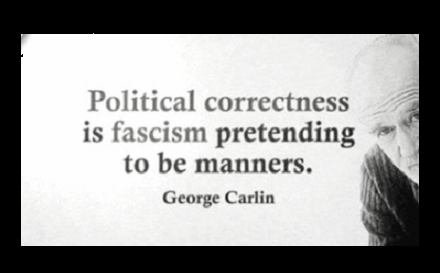
This is ominous: it’s the second time this month that I’ve had good reason to quote George. Did the Democrats already take over?
In 1972, the late George Carlin debuted his famous routine called “ “The Seven Words You Can Never Say on Television.” The words were: shit, piss, fuck, cunt, cocksucker, motherfucker, and tits, all of which you can hear on television today. (Who says life doesn’t keep getting better? ) But George would be fine: I have it on good authority that in Stand-Up Heaven, where Henny Youngman has St. Peter’s job, George is knocking celestial audiences dead (metaphorically, of course,) with his new monologue, “1,825 Words You Can Never Say On Facebook.”
It’s hilarious, if a little long.
The Foundation For Individual Rights In Education has released a report based on its investigation of how public universities—that’s the government, remember—engage in surreptitious censorship of student expression. Censorship of student expression is illegal, but The FIRE exists because so many universities find that concept too complex to grasp.
Implicated in the results: Facebook, which provides the tools for censorship, including its automated content filters. These allow state institutions to automatically “hide” users’ comments if they contain words included on Facebook’s undisclosed list of offensive words, or a government entity’s customized list of prohibited words. The filters allow public universities to quietly remove critical Facebook posts, restricting open campus and public discourse.
The FIRE surveyed over 200 public universities and colleges across 47 states and the District of Columbia. It found that fully half of the surveyed institutions use Facebook’s “strong” profanity filter, while nearly a third use the “medium” filter. That means about 77% of surveyed institutions use an undiclosed blacklist of prohibited words. Nearly a third of the universities surveyed (59, or 30.3%) created a custom blacklist, collectively censoring 1,825 words and phrases in order to, among other unconstitutional objectives, “block animal rights activists’ criticism of food vendors,” suppress “debate over the fate of a campus Confederate monument,” and stifle debate over controversial faculty, politicians, and sports teams.
Public universities can and do manipulate Facebook comments to distort the public discourse. Wright State University, FIRE tells us, deleted comments supporting a faculty strike from its Facebook page, confining debate over the action to a rigged community forum that appeared supportive of the university’s administration while being critical of striking faculty.
Yup, that’s how fascism works!
Facebook doesn’t alert a user when their post has been removed, or tell the public that comments have been censored, so this system is perfect for mind and opinion molding. FIRE says,
These automated methods of censorship are not only contrary to a commitment to freedom of expression, but also provide government actors with tools that—in light of recent federal court rulings concerning President Trump’s Twitter feed—violate the government actors’ legal obligations under the First Amendment.
Below are the words that Facebook helps universities control speech and thought by censoring. Some will be relieved to know that “retard” is on it. Then again, so is “poor”…
You Know, Harvard, When You Have To be Embarrassed And Shamed Into Doing What Should Have Been Your Automatic Response Anyway If You Had Any Decency, It’s Too Late To Save Face.

The cat, as they say, is out of the bag. Harvard is arrogant, ethically inert, and avaricious. But we knew that.
Yesterday I noted that Harvard had accepted nearly $9 million from the pandemic relief package. “With a 40 billion dollar dollar endowment, Harvard is better off financially than the U.S. government,” I wrote. “There is no excuse for the school accepting the money. It is getting widely criticized for taking it, and ought to be.”
Harvard’s disingenuous rationalization was unconvincing:
“By federal formula laid out in the CARES Act, Harvard was allocated $8.6 million, with 50% of those funds to be reserved for grants to students. Harvard is actually allocating 100% of the funds to financial assistance for students to meet their urgent needs in the face of this pandemic. Harvard will allocate the funds based on student financial need. This financial assistance will be on top of the significant support the University has already provided to students — including assistance with travel, providing direct aid for living expenses to those with need, and supporting students’ transition to online education.”
My conclusion: “The only issue is that Harvard has plenty of money to do all of this without any hand-outs from the government, and many other institutions need the money more, which is an easy calculation because no institution needs money less than Harvard does.”
Others, including President Trump, chided The Greatest University In The World for its indefensible greed. The school pushed back earlier today with a word-parsing justification that made no sense. It has 40 billion dollars sitting in investments. That’s the end of the debate.
The double talk didn’t work, and by this afternoon, with the backlash growing and the episode becoming a public relations nightmare, the Crimson had capitulated. Trump and the other critics were right. Harvard was wrong. The University announced that it would not apply for or accept emergency relief, joining Stanford and Princeton. Continue reading


Veteran commenter Tim Levier comes to the defense (sort of) of both Harvard and nuance.
Here is his Comment of the Day on the post, “You Know, Harvard, When You Have To be Embarrassed And Shamed Into Doing What Should Have Been Your Automatic Response Anyway If You Had Any Decency, It’s Too Late To Save Face.”